

In this article11 sections
- What Is the Big Four Grammy Awards? The General Field Defined
- Album of the Year: The Broadest Artistic Statement
- Record of the Year vs. Song of the Year: The Confusion Explained
- Best New Artist: Breakthrough, Not Lifetime Achievement
- 2026 Big Four Winners at the 68th Grammy Awards
- How the Big Four Are Voted On
- Why the Big Four Dominate the Telecast
- Big Four History: From Three Trophies to Four
- Big Four vs. Genre Awards: Why Both Exist
- Quick Reference: What Is the Big Four Grammy Awards
- Explore More Grammy Coverage
What is the big four Grammy awards is the question every casual viewer asks when the CBS telecast lingers on four trophies that feel interchangeable — Album of the Year, Record of the Year, Song of the Year, and Best New Artist. Together they form the General Field, the only cluster every eligible Recording Academy voting member may influence in the final round regardless of specialty credentials. The Big Four anchor headline coverage, drive social-media debates, and separate career-defining nights from genre-category sweeps. At the 68th Annual Grammy Awards on February 1, 2026 at Crypto.com Arena in Los Angeles — hosted by Trevor Noah in his sixth and final year behind the podium — those four envelopes delivered historic results: Bad Bunny won Album of the Year for DeBÍ TiRAR MáS FOToS, Kendrick Lamar with SZA took Record of the Year for “luther,” Billie Eilish earned Song of the Year for “Wildflower,” and Olivia Dean claimed Best New Artist. This guide explains what each trophy actually measures, why the distinctions matter, how voting works, and where the Big Four fit inside the broader 90-plus category ballot. Link to our Grammy winners complete list 2026, how are Grammy winners chosen voting, Grammy categories explained full guide, most memorable Grammy performances ever, biggest Grammy snubs of all time, Grammys most shocking moments history, and who is hosting the Grammys 2026 for full ceremony context.
Understanding what is the big four Grammy awards is not trivia — it is the framework for every fairness argument that follows each ceremony. Fans conflate “best song” with “best record” constantly. Artists who dominate rap or country fields still lose all four general-field races when the broader membership splits differently. Producers and engineers share credit on Record and Album wins while songwriters alone claim Song of the Year. Once you map those lanes, outcomes at Crypto.com Arena — and every prior Grammy night — start making sense.
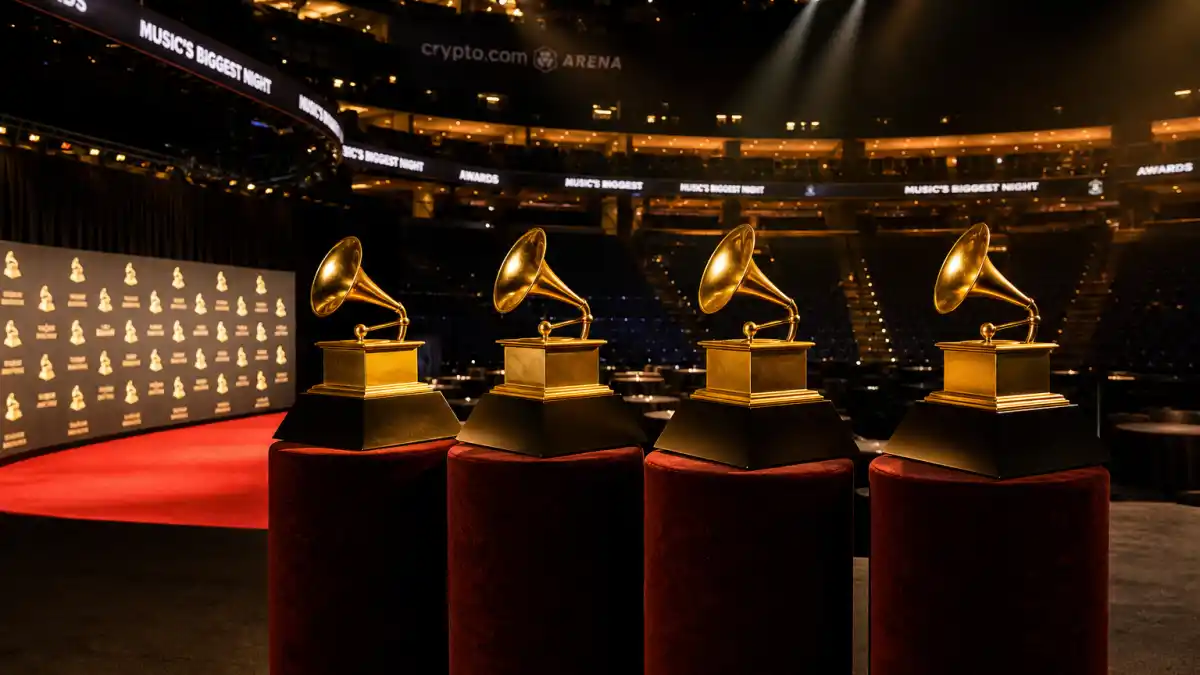
What Is the Big Four Grammy Awards? The General Field Defined
The Recording Academy labels the quartet the General Field because they transcend genre silos. Unlike Best Rap Album or Best Country Song — where voters with demonstrated expertise in those styles carry extra weight during nomination rounds — the Big Four are open to every eligible voting member in the final ballot. That design makes them the closest thing the Grammys have to a universal popularity-and-craft referendum across the entire membership.
The four categories are:
- Album of the Year (AOTY): Honors the full album — performance, production, sequencing, and overall artistic statement — credited primarily to the artist and featured performers. Producers and engineers on the winning album also receive trophies.
- Record of the Year (ROTY): Honors a specific recording — the finished track as heard — regardless of whether it appears on an album or standalone single. Performers and the production team share credit.
- Song of the Year (SOTY): Honors the composition — melody and lyrics — credited to songwriters, not necessarily the performing artist unless they co-wrote the track.
- Best New Artist (BNA): Honors artistic breakthrough during the eligibility period; not a lifetime achievement prize. Strict rules exclude veterans with prior nomination history in certain performance categories.
When search traffic spikes for what is the big four Grammy awards, the confusion usually begins here: an artist can win three rap trophies yet lose all four general-field races if the broader membership votes differently than genre specialists. Our Grammy winners complete list 2026 shows exactly who took each slot on February 1.
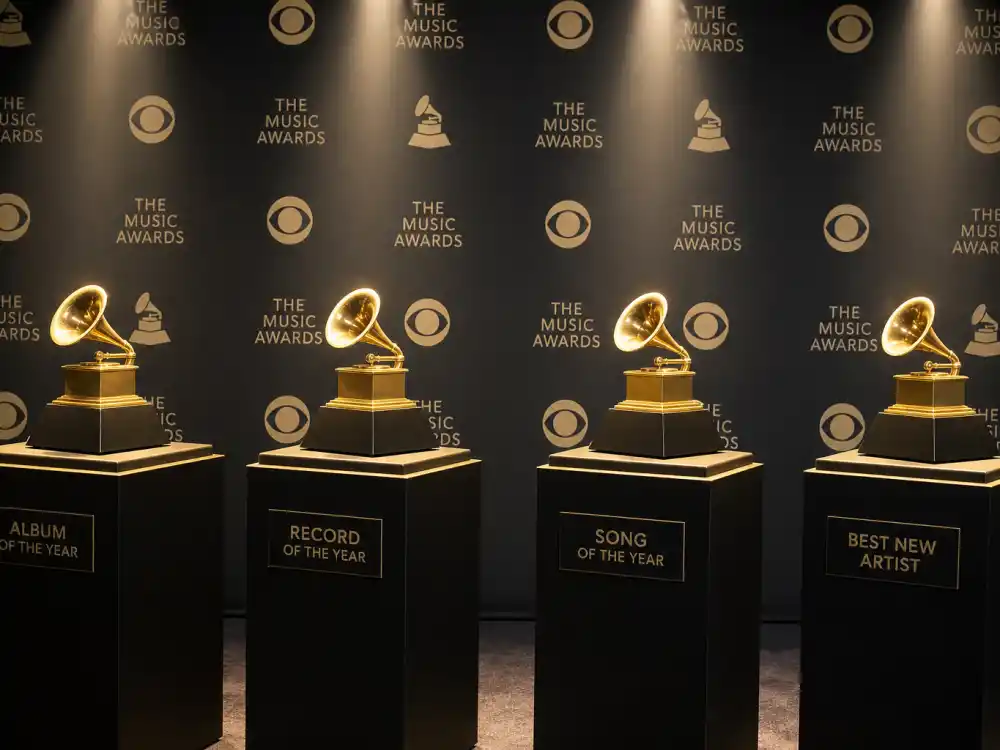
Album of the Year: The Broadest Artistic Statement
Album of the Year asks the widest question on the Grammy ballot: did this body of work, taken as a whole, represent the most outstanding achievement in recorded music during the eligibility window? Judges consider tracklist cohesion, sequencing, vocal and instrumental performances across every cut, production consistency, and the album’s cultural footprint — not just whether one single went viral.
Credit rules matter. The artist receives the headline trophy, but producers, engineers, and featured performers listed on the winning album also get gramophones. That is why a surprise AOTY win can put a half-dozen names on stage — each person contributed to the sonic whole. A perfect standalone single cannot win Album of the Year without a nominated parent album behind it.
Historic AOTY wins — from Thriller to 21 to Folklore — share a pattern: cultural dominance plus critical respect across multiple tracks, not just one monster hit. At the 68th Grammys, Bad Bunny’s DeBÍ TiRAR MáS FOToS made history as a Spanish-language Album of the Year winner, signaling how the General Field has expanded beyond English-language pop dominance. For the full category map beyond AOTY, see our Grammy categories explained full guide.
Record of the Year vs. Song of the Year: The Confusion Explained
No section of what is the big four Grammy awards generates more social-media arguments than the Record-versus-Song split. Think of three different jobs on one hit:
- Record of the Year judges one recording’s performance and production quality — the sonic product listeners stream. The vocalist, instrumentalists, producers, and engineers share the trophy.
- Song of the Year judges songwriting craft — structure, lyrics, melody. The writers take the trophy even if a different performer won Record for the same track.
- Album of the Year requires the parent album to be nominated and win on aggregate merit across all tracks.
Concrete frame from the 68th Grammys: Kendrick Lamar and SZA won Record of the Year for “luther” — honoring the finished recording’s performance and production. Billie Eilish won Song of the Year for “Wildflower” — honoring the composition’s writing. The same artist can theoretically win both Record and Song for one track when they performed and co-wrote it, but the categories remain distinct questions on the ballot.
Imagine a powerhouse vocal on a track written entirely by outside songwriters. Record of the Year credits the singer and producers; Song of the Year credits the writers; Album of the Year requires the parent album to compete separately. That split is why what is the big four Grammy awards matters for fairness debates — fans conflate “best song” with “best record” every February.
Best New Artist: Breakthrough, Not Lifetime Achievement
Best New Artist is the most misunderstood Big Four trophy. It does not honor the best debut album, the best newcomer to pop culture, or the artist who had the biggest year by chart metrics alone. It celebrates an artistic breakthrough during the eligibility period — the moment the Recording Academy recognizes a new voice establishing a durable career lane.
Eligibility rules disqualify artists who have already been nominated in certain performance categories or released multiple albums before the breakthrough window. That is why established session musicians, child stars with prior nominations, or viral one-hit acts sometimes miss the category despite massive buzz. The “Best New Artist curse” — the folklore that winners fade afterward — is a separate superstition; the category itself is narrowly constructed.
At the 68th Grammys, Olivia Dean won Best New Artist after a breakout eligibility year that positioned her as a defining voice in contemporary soul-pop. Her win sat alongside veteran heavyweights in the other three Big Four slots — a common pattern when the membership rewards fresh arrival in one envelope and established excellence in the others.
2026 Big Four Winners at the 68th Grammy Awards
The February 1, 2026 ceremony at Crypto.com Arena — with Trevor Noah hosting his sixth and final Grammy telecast — produced one of the most geographically and linguistically diverse Big Four slates in recent memory:
- Album of the Year: Bad Bunny — DeBÍ TiRAR MáS FOToS
- Record of the Year: Kendrick Lamar with SZA — “luther”
- Song of the Year: Billie Eilish — “Wildflower”
- Best New Artist: Olivia Dean
Bad Bunny’s Album of the Year victory marked a milestone for Spanish-language full-length projects in the General Field — a category historically dominated by English-language pop and rock. Kendrick Lamar and SZA’s Record of the Year win extended Lamar’s Grammy legacy while spotlighting one of the year’s most streamed collaborations. Billie Eilish’s Song of the Year trophy added another writing credit to a catalog already stacked with general-field history. Olivia Dean’s Best New Artist win introduced a younger soul-pop voice to the prime-time stage.
For every genre-category result beyond the Big Four — rap, pop, country, global music, production, engineering — see our complete Grammy winners complete list 2026. For telecast highlights, browse most memorable Grammy performances ever.
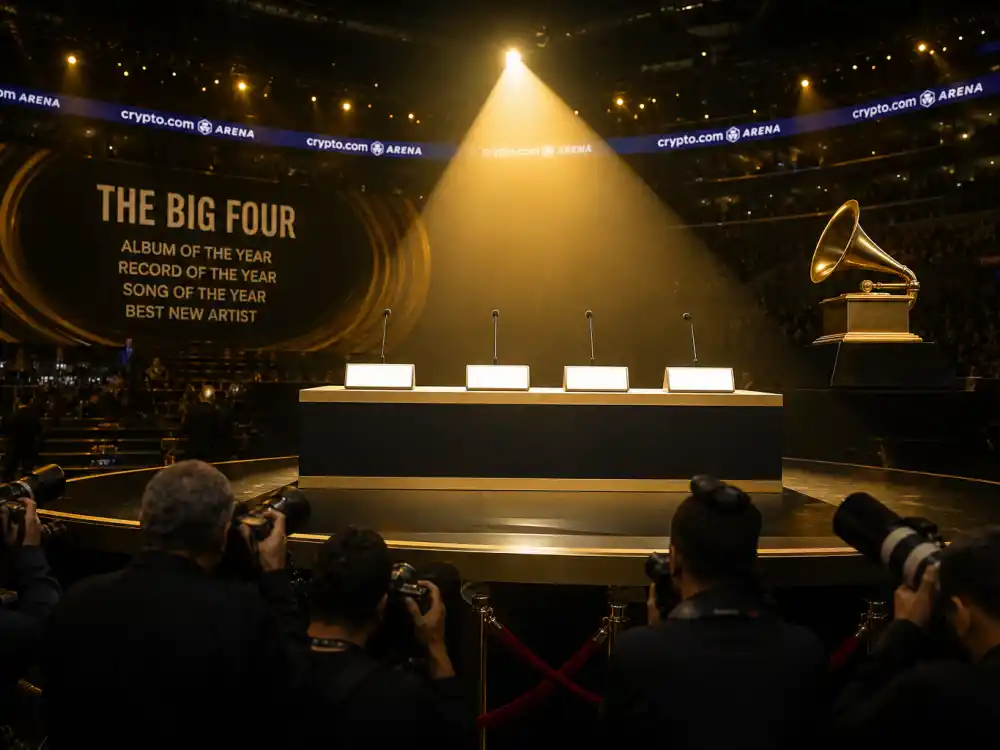
How the Big Four Are Voted On
Categories are labels; voting mechanics decide winners. The Big Four follow a two-round process distinct from most genre fields:
- Nomination round: Field-weighted voting produces five finalists per Big Four category (sometimes expanded to eight in recent reforms). Genre specialists and general members both participate, but credential weighting shapes who advances.
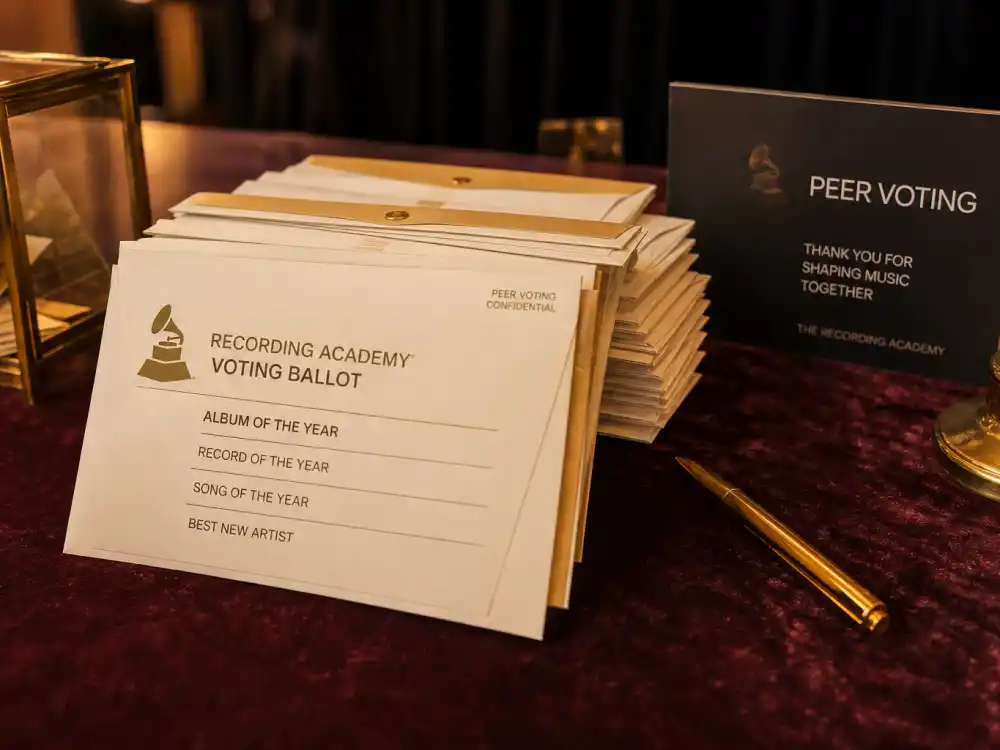
- Final round: All eligible voting members may vote every Big Four category regardless of specialty — the democratic core of the General Field.
That structure explains recurring patterns: an artist who sweeps rap field categories can still lose Album of the Year when the full membership splits across rock, pop, country, and global voters. It also explains surprise wins — a moderate genre-field showing plus broad final-ballot appeal can top a genre-dominant favorite. Peer voting details — membership tiers, conflict rules, and ballot timing — are documented in our how are Grammy winners chosen voting explainer.
Why the Big Four Dominate the Telecast
CBS prime time typically reserves its most prominent segments for the General Field — envelope openings, acceptance speeches, and audience reaction shots. Roughly 10 to 12 competitive categories air live; the Big Four are almost always among them because they are the trophies casual viewers recognize and search engines prioritize the morning after.
That visibility creates a distortion effect. An engineer winning Best Engineered Album, Non-Classical at the Premiere Ceremony receives the same gold gramophone as an Album of the Year winner — but only the latter trends on Twitter. When fans ask what is the big four Grammy awards, they are really asking which trophies the telecast treats as the main event. The answer: the four that every voter influences in the final round.
Trevor Noah’s final hosting turn in 2026 leaned into that hierarchy — monologue jokes about the Big Four races, reaction cutaways during envelope opens, and callbacks to prior shocking moments documented in our Grammys most shocking moments history guide. Host context lives in who is hosting the Grammys 2026.
Big Four History: From Three Trophies to Four
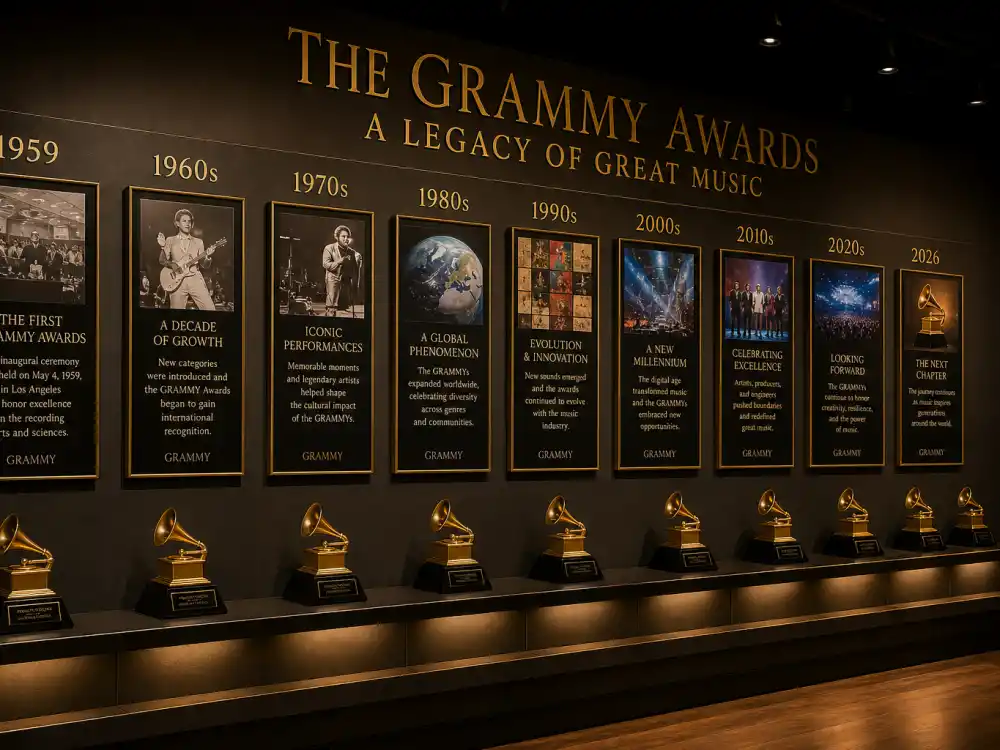
The first Grammy Awards in 1959 presented 28 categories but only three General Field trophies — Album of the Year, Record of the Year, and Song of the Year. Best New Artist arrived in 1960, completing the modern Big Four. The quartet has survived every category consolidation since, even when the Academy trimmed the total ballot from 109 categories to 78 in 2012 and rebuilt toward the current 91-to-94 competitive slate.
Landmark Big Four moments that shape how fans understand what is the big four Grammy awards today:
- 1960: Best New Artist added — Bobby Darin won the inaugural trophy.
- 1971: Paul McCartney became the first solo artist to win both Record and Song of the Year in the same night.
- 1984: Michael Jackson’s Thriller dominated Album of the Year en route to a record-setting night.
- 2010: Taylor Swift’s Fearless won Album of the Year as a country-crossover breakthrough.
- 2020: Billie Eilish became the youngest artist to sweep all four General Field categories in one ceremony.
- 2026: Bad Bunny’s Spanish-language DeBÍ TiRAR MáS FOToS won Album of the Year at the 68th Grammys.
Snubs and upsets live in parallel — our biggest Grammy snubs of all time catalog documents legendary albums and artists that never won a Big Four trophy despite genre dominance.
Big Four vs. Genre Awards: Why Both Exist
The Grammy ballot contains roughly 90 competitive categories because excellence in recorded music is not monolithic. A jazz instrumental solo, a country song, an immersive audio album, and a rap performance each demand different craft expertise. Genre fields let specialist voters shape nomination outcomes in those lanes.
The Big Four sit above that map as cross-genre prizes. An album can win Best Rap Album and Album of the Year in the same night — different questions, different voter pools in round one, overlapping membership in the final. Understanding what is the big four Grammy awards means accepting that genre sweeps and general-field losses are features of the system, not bugs.
For the full category taxonomy — pop, rock, R&B, country, Latin, global, classical, production, and engineering — see Grammy categories explained full guide.
Quick Reference: What Is the Big Four Grammy Awards
- Album of the Year: Full album — performance, production, sequencing, artistic statement
- Record of the Year: Specific recording — sonic performance and production of one track
- Song of the Year: Composition — melody and lyrics credited to songwriters
- Best New Artist: Eligibility-year breakthrough — not lifetime achievement
- 2026 winners: Bad Bunny (AOTY), Kendrick Lamar & SZA (ROTY), Billie Eilish (SOTY), Olivia Dean (BNA)
- Ceremony: 68th Grammys, Feb. 1, 2026, Crypto.com Arena, host Trevor Noah
Explore More Grammy Coverage
- Every 2026 winner in Grammy winners complete list 2026.
- Peer voting mechanics in how are Grammy winners chosen voting.
- Full category map in Grammy categories explained full guide.
- Telecast highlights in most memorable Grammy performances ever.
- Legendary oversights in biggest Grammy snubs of all time.
- Shock moments in Grammys most shocking moments history.
- Host coverage in who is hosting the Grammys 2026.
- Visit our Awards archive for ceremonies, records, and history guides.