

In this article14 sections
- Biggest Grammy Snubs of All Time: How We Define a Snub
- The Weeknd — Zero Nominations for After Hours (2021)
- Beyoncé's Album of the Year Losses — Lemonade and Before
- Kendrick Lamar — DAMN. Loses Album of the Year (2018)
- Metallica vs. Jethro Tull — Best Hard Rock/Metal (1989)
- Prince — Purple Rain Loses Album of the Year (1985)
- Fleetwood Mac — Rumours Loses to Saturday Night Fever (1979)
- Public Enemy and Nirvana — Genre-Era Blind Spots
- Beck Over Beyoncé — Morning Phase (2015)
- Career Droughts That Feel Like Permanent Snubs
- Honorable Mentions and Near-Misses
- Why Grammy Snubs Keep Happening
- Quick Reference: Biggest Grammy Snubs of All Time
- Explore More Grammy Coverage
Biggest Grammy snubs of all time are the losses and omissions that still fuel Reddit threads, think pieces, and living-room arguments decades after the envelopes opened — because the Recording Academy’s peer-vote system routinely crowns safe consensus while era-defining albums, zero-nomination shutouts, and category misfires slip through the cracks. This ranked guide walks through the most consequential Grammy snubs using official Recording Academy records, reporting from Variety, Billboard, and The Hollywood Reporter, with unconfirmed campaign anecdotes marked reportedly. Link to our Grammy winners complete list 2026 for the 68th Annual Grammy Awards at Crypto.com Arena (Feb. 1, 2026 — Bad Bunny’s DeBÍ TiRAR MáS FOToS for Album of the Year, Kendrick Lamar and SZA’s “luther” for Record of the Year, Billie Eilish’s “Wildflower” for Song of the Year, Olivia Dean for Best New Artist), plus how are Grammy winners chosen voting, Grammy categories explained full guide, and most memorable Grammy performances ever for ceremony context beyond trophy counts.
We rank by lasting cultural impact and surprise factor — not personal taste alone. A snub can mean losing a competitive category to a weaker rival or receiving zero nominations despite chart dominance. Competitive wins only; Lifetime Achievement Awards and Hall of Fame inductions are excluded because they do not erase competitive droughts documented in our famous artists who never won a Grammy companion guide.
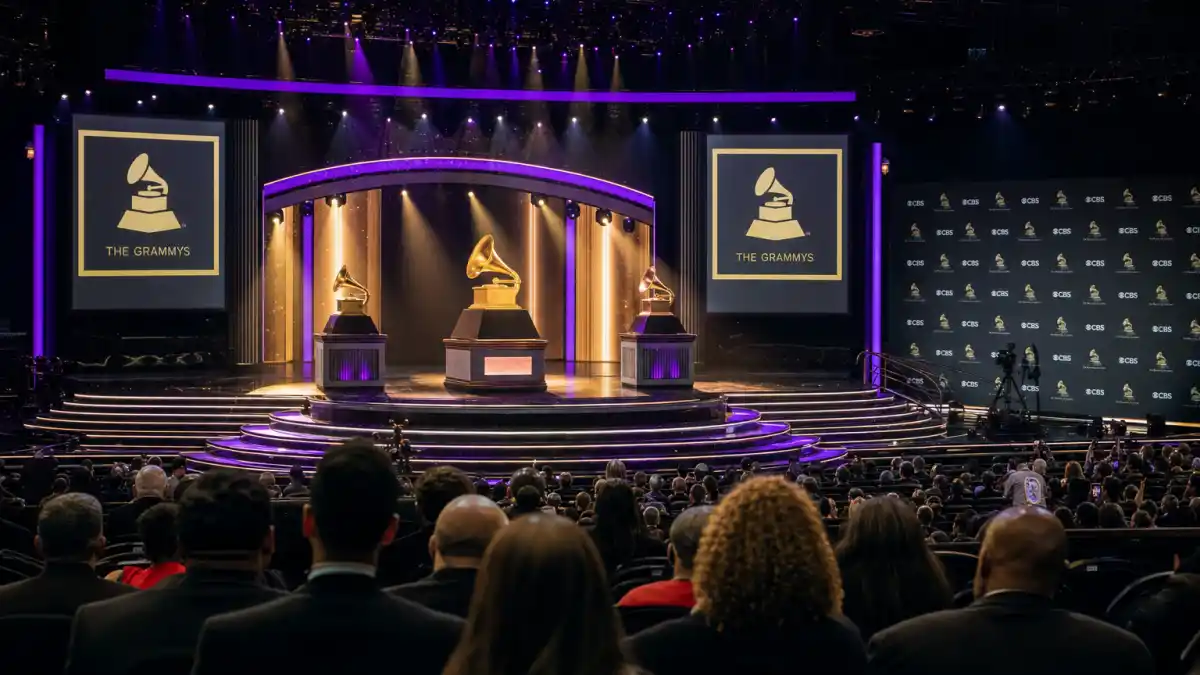
Biggest Grammy Snubs of All Time: How We Define a Snub
A Grammy snub, for this ranking, means either (a) a widely acclaimed work lost a competitive category it was expected to win, or (b) an artist received zero nominations despite commercial and critical dominance in the eligibility window. We cite the Recording Academy artist database and ceremony-year press releases. Snubs differ from upsets when the loser was the overwhelming frontrunner — Adele beating Beyoncé’s Lemonade for Album of the Year at the 59th Grammys qualifies on both counts.
Three structural forces repeat across every entry on lists of the biggest Grammy snubs of all time:
- General Field vote-splitting: Album, Record, and Song of the Year go to the full voting membership — not genre specialists — which favors crossover pop over rap, rock, and experimental albums. Our Grammy categories explained guide maps why a rap album can sweep genre fields yet lose Album of the Year.
- Genre timing: Hip-hop categories matured slower than the culture; reggae and hard rock faced similar blind spots in earlier decades.
- Submission and eligibility rules: Artists who skip the process — Frank Ocean reportedly did not submit Blonde for 2017 — create self-inflicted snubs that still appear on fan lists.
Understanding how Grammy winners are chosen does not make snubs less painful; it explains why they keep recurring every February.
The Weeknd — Zero Nominations for After Hours (2021)
The 63rd Grammy nomination morning produced the loudest zero-nomination shock of the streaming era. The Weeknd’s After Hours spawned “Blinding Lights,” the longest-charting Hot 100 hit in history at the time, plus a Super Bowl LV halftime show — yet he received zero nominations across all categories for the 2021 ceremony. Recording Academy chair Harvey Mason Jr. told Variety the outcome reflected voting results, not a committee block, while acknowledging the shock. The Weeknd called the Grammys corrupt on social media and stopped submitting work for consideration.
The Academy later eliminated nomination review committees in most categories — a reform widely linked to the backlash. Whether the rule change would have saved After Hours is debatable; the snub itself tops modern lists of the biggest Grammy snubs of all time because it was not a loss — it was complete exclusion from a record that dominated every other metric.

Beyoncé’s Album of the Year Losses — Lemonade and Before
Beyoncé entered the 59th Grammy Awards with nine nominations and a pregnant, goddess-tier performance for Lemonade — a visual album that redefined pop auteurship. Adele’s 25 won Album of the Year instead. Adele herself reportedly said Lemonade deserved the trophy during her acceptance speech, a rare on-mic acknowledgment of a rival snub. Two years earlier, Beck’s Morning Phase defeated Beyoncé’s self-titled surprise album at the 57th Grammys — another General Field result that still anchors biggest Grammy snubs of all time threads.
Beyoncé finally won Album of the Year at the 67th Annual Grammy Awards (2025 ceremony) for Cowboy Carter, ending a drought that included I Am… Sasha Fierce and Beyoncé. The Lemonade loss remains the emotional peak of snub discourse because the album’s cultural footprint dwarfed its competition and because Adele publicly agreed. We do not analyze Grammys red-carpet looks here — only votes and outcomes.

Kendrick Lamar — DAMN. Loses Album of the Year (2018)
Kendrick Lamar’s DAMN. won the Pulitzer Prize for Music in 2018 — the first non-classical or jazz work to do so — yet lost Album of the Year at the 60th Grammy Awards to Bruno Mars’s 24K Magic. Lamar still won five trophies that night, including Rap Album of the Year, but the General Field snub crystallized genre-bias arguments: a rap masterpiece losing to a funk-pop nostalgia cycle. Billboard and THR coverage framed it as voters rewarding escapism over protest art the same year Kendrick opened the telecast with a chained medley.
Related: at the 56th Grammys, Macklemore & Ryan Lewis’s The Heist beat Kendrick’s good kid, m.A.A.d city for Best Rap Album — Macklemore later said he texted Kendrick an apology. Both losses rank among the biggest Grammy snubs of all time in hip-hop, with the DAMN. Album of the Year defeat carrying more weight because Pulitzer validation made the Grammy loss look institutionally out of touch.
Metallica vs. Jethro Tull — Best Hard Rock/Metal (1989)
The 31st Grammy Awards produced the category misfire fans still meme: Jethro Tull’s Crest of a Knave, a flute-forward folk-rock album, won Best Hard Rock/Metal Performance over Metallica’s …And Justice for All. Metallica had not attended, reportedly because they expected to lose. The Academy later split hard rock and metal into separate fields — tacit admission the taxonomy failed. No list of the biggest Grammy snubs of all time skips this moment; it is the template for “wrong winner in wrong category” snubs.
Prince — Purple Rain Loses Album of the Year (1985)
Prince’s Purple Rain — a landmark fusion of pop, rock, funk, and cinema — lost Album of the Year at the 27th Grammy Awards to Lionel Richie’s Can’t Slow Down. Prince still won two trophies that night and opened future Grammy telecasts with guitar heroics documented in our most memorable Grammy performances guide, but the Album of the Year snub persists because Purple Rain rewired 1980s pop while Richie’s album, though massively successful, aged as safe adult-contemporary consensus.
Fleetwood Mac — Rumours Loses to Saturday Night Fever (1979)
At the 21st Grammy Awards, Fleetwood Mac’s Rumours — one of the best-selling albums ever made — lost Album of the Year to the Saturday Night Fever soundtrack. The disco juggernaut swept commercially; Rumours became the classic-rock canon entry voters undervalued in the moment. Decades later, Rumours ranks on every greatest-albums poll while the snub remains a case study in soundtrack dominance overwhelming band albums in the General Field — a recurring pattern in the biggest Grammy snubs of all time conversation.
Public Enemy and Nirvana — Genre-Era Blind Spots
Public Enemy’s Fear of a Black Planet lost Best Rap Performance categories to less politically charged rivals in the early 1990s as the Academy learned to categorize hip-hop. Nirvana’s Nevermind lost Best Alternative Music Performance at the 34th Grammys to R.E.M.’s Out of Time — grunge’s mainstream explosion rewarded in sales but not in the alternative field that year. Radiohead’s OK Computer later lost Album of the Year to Bob Dylan’s Time Out of Mind at the 40th Grammys (1998), another rock-vs.-legacy-voter split.
Each loss reflects timing: voters rewarding established legends or safer alternatives while revolutionary work waits for Hall of Fame inductions that do not rewrite competitive columns.
Beck Over Beyoncé — Morning Phase (2015)
Beck’s Morning Phase won Album of the Year at the 57th Grammy Awards over Beyoncé’s self-titled visual surprise, Sam Smith’s In the Lonely Hour, and others. Beck’s album is a quiet, meticulously arranged folk-rock work; Beyoncé’s was a genre-hopping cultural event. Kanye West — who later interrupted Beck’s win with commentary comparing the result to his Taylor Swift VMA moment — briefly walked toward the stage before sitting down. The snub fueled years of General Field reform debate and remains a shorthand for “album of the year went to the quietest nominee.”
Career Droughts That Feel Like Permanent Snubs
Some artists accumulate nominations without wins until the drought itself becomes the story. Snoop Dogg entered the 2025 ceremony with 16 competitive nominations and zero wins, per the Recording Academy — among the most nominated hip-hop artists without a trophy. Katy Perry (13 nominations, zero wins through 2025), Björk (16 nominations, zero wins), and Nicki Minaj (12 nominations, zero wins) face similar fan verdicts. Queen, Diana Ross, and Bob Marley never won competitive Grammys despite Lifetime Achievement honors.
These are chronic snubs rather than single-night shocks, but they belong on any honest survey of the biggest Grammy snubs of all time because the Academy’s peer body never corrected the ledger — until Beyoncé’s 2025 Album of the Year win proved droughts can end late.
Honorable Mentions and Near-Misses
Ten ranked slots cannot hold every outrage. Additional entries circulating in biggest Grammy snubs of all time discourse:
- Frank Ocean — Blonde (2017): Ocean did not submit the album for Grammy consideration, a self-imposed snub he explained as protesting outdated categories.
- Esperanza Spalding over Justin Bieber (2011): Best New Artist upset that introduced a jazz prodigy by denying teen-pop frontrunner status — debated as snub or welcome surprise depending on taste.
- Milli Vanilli (1990): Wins revoked after lip-sync fraud — a different category of “snub” where the Academy reversed results.
- ABBA: Eurovision icons with competitive Grammy zeros despite global dominance — timing and category gaps again.
- 2026 context: Every year produces fresh debate; see our 2026 winners list after the 68th Grammys for the latest results at Crypto.com Arena.
Why Grammy Snubs Keep Happening
Peer voting rewards familiarity. Older membership skews toward rock and pop formats that dominated radio when voters came of age; rap and Latin pop breakthroughs face lag. Televised categories — roughly a dozen on CBS — represent a fraction of the full nomination list, so snubs in unwatched fields still sting artists even when the general public never sees the category announced.
Reforms after The Weeknd’s exclusion trimmed secret committees, but no system eliminates disagreement. The biggest Grammy snubs of all time persist because music taste is subjective and the Recording Academy votes by consensus, not by Spotify streams or Pulitzer boards. Compare outcomes to our voting explainer and category map before declaring any single snub a conspiracy — usually it is math, timing, and genre blocs.
Quick Reference: Biggest Grammy Snubs of All Time
- #1 The Weeknd (2021): Zero nominations for After Hours despite “Blinding Lights” dominance
- #2 Beyoncé — Lemonade (2017): Album of the Year lost to Adele’s 25
- #3 Kendrick — DAMN. (2018): Album of the Year lost to Bruno Mars’s 24K Magic
- #4 Metallica (1989): Lost Hard Rock/Metal to Jethro Tull
- #5 Prince — Purple Rain (1985): Album of the Year lost to Lionel Richie
- #6 Fleetwood Mac — Rumours (1979): Lost to Saturday Night Fever soundtrack
- #7 Beck (2015): Morning Phase over Beyoncé self-titled for AOTY
- #8 Macklemore over Kendrick (2014): Best Rap Album upset
- #9 Career droughts: Snoop, Katy Perry, Björk, Queen — competitive zeros
- #10 Radiohead / Public Enemy / Nirvana: Genre-era blind spots
Explore More Grammy Coverage
- Every 2026 winner in Grammy winners complete list 2026.
- Peer voting mechanics in how are Grammy winners chosen voting.
- Category map in Grammy categories explained full guide.
- Telecast highlights in most memorable Grammy performances ever.
- Visit our Awards archive for ceremonies, records, and history guides.