

In this article11 sections
- How Are Grammy Winners Chosen Voting: The Recording Academy Membership
- Nomination Round vs. Final Voting Round
- Genre Fields and Category Silos
- Review Committees and Screening Panels
- Vote-Splitting and Plurality Winners
- Macklemore vs. Kendrick Lamar (2014): What Fans Argued
- Beck vs. Beyoncé (2015): What Fans Argued
- Grammy Voting vs. Oscar Voting: A Brief Comparison
- What Changed Recently — and What Didn't
- Quick Reference: How Are Grammy Winners Chosen
- Explore More Grammy Coverage
how are Grammy winners chosen voting — How are Grammy winners chosen is one of the most searched questions every awards season — and the honest answer is more bureaucratic than a Vegas draft or a fan poll. The Recording Academy does not crown champions through ticket sales, streaming totals, or social-media votes. Instead, roughly 13,000 voting members — producers, engineers, songwriters, artists, and label executives who meet eligibility requirements — cast peer ballots in a two-round process that separates nominations from final winners. Genre-specific fields, anonymous review committees, and category rules shape who even appears on the ballot. That structure explains both the legitimacy the Grammys claim and the recurring fan outrage when results diverge from chart dominance. This guide walks through nomination rounds, final voting, field committees, vote-splitting dynamics, famous 2014 and 2015 controversies fans still argue about, and a brief comparison to Oscar voting — with links to our Grammy winners complete list 2026, Grammy nominations 2026 full list, and most Grammy awards won by an artist hubs.
Official mechanics come from published Recording Academy rules, membership handbooks, and post-ceremony reporting through the 67th Annual Grammy Awards in February 2025. Deloitte tabulates ballots under confidentiality agreements — the same accounting firm handles Oscar envelopes — so outsiders never see raw vote counts. What follows is the clearest public map of how are Grammy winners chosen voting works before you watch the next telecast or debate whether your favorite was “robbed.”
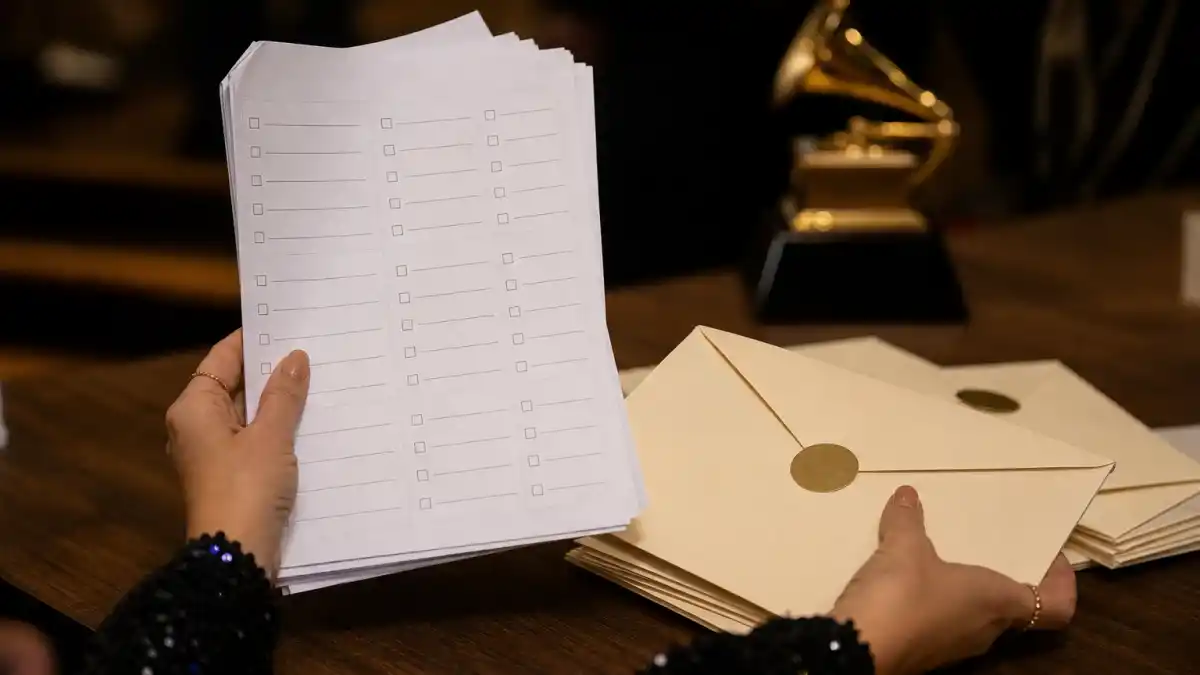
How Are Grammy Winners Chosen Voting: The Recording Academy Membership
Only Recording Academy voting members may nominate and elect winners in most categories. Membership is not automatic fame; applicants must document professional credits in the music industry and pay dues. Once admitted, members receive ballots for categories where they demonstrate sufficient expertise — a songwriter might vote in Song of the Year and certain genre fields but not in classical engineering categories they lack credentials for.
That peer-vote frame matters when fans ask how are Grammy winners chosen versus how Billboard No. 1s happen. Chart success can influence campaigning and voter awareness, but there is no public formula weighting streams. A jazz veteran’s ballot counts the same as a pop A&R executive’s in the final round for Album of the Year — which is why lifetime win totals like Beyoncé’s record run documented in our most Grammy awards won by an artist guide reflect decades of peer recognition, not a single viral year.

Nomination Round vs. Final Voting Round
Understanding how are Grammy winners chosen voting requires splitting the calendar into two distinct ballots:
- First round (nominations): Members vote from long eligibility lists — often hundreds of entries per category — to produce typically five nominees (eight in some categories after recent reforms). This round determines who appears on the second ballot, not who wins.
- Second round (final voting): All eligible members who participate may vote in the General Field (Album, Record, and Song of the Year, plus Best New Artist) and in genre categories where they qualify. The plurality winner in each category takes the trophy on Grammy night.
The gap between rounds is where strategy lives. An artist can dominate nomination chatter yet lose the final vote if opponents consolidate behind a rival. Conversely, a niche favorite can sneak onto the ballot in round one and build momentum before the telecast. Our Grammy nominations 2026 full list shows the output of round one for the current cycle; our Grammy winners complete list 2026 records round-two results once envelopes open.

Genre Fields and Category Silos
The Grammys organize most awards into genre fields — Pop, Rock, Country, R&B, Rap, Latin, Global Music, Classical, and more — each containing multiple specific categories. Field structure shapes how are Grammy winners chosen because voters with expertise in one silo rarely influence obscure categories elsewhere.
Example: Best Rap Album nominees are chosen primarily by members credentialed in the Rap Field, while Album of the Year pulls from the entire membership. That split explains recurring fan confusion when a rap blockbuster earns genre trophies but loses the general album prize — voters in round two for AOTY are a broader, often older, often rock- and pop-weighted pool than rap-field specialists.
Recent Academy reforms expanded nomination slots in major categories and adjusted genre definitions (country-rap crossovers, dance/electronic merges) to keep pace with streaming-era labels. The fields are not static; they evolve every few years, which means how are Grammy winners chosen voting mechanics shift subtly even when the two-round frame stays constant.

Review Committees and Screening Panels
Before members see certain ballots, review committees — anonymous groups of 15–30 genre experts — screen entries in selected categories. Committees can advance works to the nomination ballot even if they lack mass-market visibility, and they can block entries that fail quality or eligibility thresholds. The process is controversial: proponents say it prevents name-only nominees with weak bodies of work; critics argue it concentrates gatekeeping power.
Committees historically operated in categories like Pop, Rock, and Country where entry volume overwhelmed voters. The Academy has trimmed committee use in some fields amid transparency pressure, but screening remains part of how are Grammy winners chosen for many genre awards. Think of committees as a quality filter between eligibility lists and the nomination vote — not a second election, but a curatorial choke point.

Vote-Splitting and Plurality Winners
Grammy final rounds typically use plurality voting — whichever nominee earns the most votes wins, even without a majority. When three strong albums split a genre-loyal bloc, a fourth candidate with broader but shallower support can slip through. That dynamic is vote-splitting, and it is central to explaining how are Grammy winners chosen voting outcomes that feel “wrong” to fans who assume the most popular entry should prevail.
Vote-splitting interacts with campaigning: labels host listening parties, circulate screeners, and time interviews so voters finish ballots before the deadline. Unlike Oscars, where studios famously spend millions on For Your Consideration campaigns, Grammy FYC is quieter but still real — especially in Nashville, hip-hop, and pop A&R circles.

Macklemore vs. Kendrick Lamar (2014): What Fans Argued
The 56th Grammy Awards (January 2014) produced the decade’s loudest how are Grammy winners chosen debate. Macklemore & Ryan Lewis won Best Rap Album for The Heist over Kendrick Lamar‘s good kid, m.A.A.d city — an album fans and critics widely treated as a masterpiece. Macklemore himself texted Lamar apologizing after the show; Lamar later performed a searing medley at the 2016 Grammys widely read as a response.
Fans argued the result exposed racial bias and genre tourism: a white pop-rap duo with crossover radio hits outpolled a Black artist whose work defined street-level storytelling. Others noted Macklemore’s aggressive campaigning and that rap-field voters are a subset of the full membership — vote-splitting among Kendrick supporters and committee screening quirks entered conspiracy threads. The Academy did not release vote totals; the controversy lives in interpretation, not proof. Still, the episode became shorthand for “Grammys vs. hip-hop credibility” whenever how are Grammy winners chosen voting trends on social media.
Beck vs. Beyoncé (2015): What Fans Argued
At the 57th Grammy Awards (February 2015), Beck‘s Morning Phase won Album of the Year over Beyoncé‘s self-titled visual album — a shock because Beyoncé’s surprise drop had dominated culture and earned widespread critical praise. Fans argued voters rewarded understated rock craftsmanship over innovation, repeating a pattern of overlooking Black women in the general field despite genre wins.
Beck graciously acknowledged Beyoncé’s greatness onstage; Kanye West briefly stormed the stage in a staged echo of his 2009 VMA moment before sitting down. Adele — herself a beneficiary of surprise wins — later said Beyoncé deserved the trophy. Academy defenders pointed to rock-field strength among older voters and plurality math: Beck may have been many members’ second choice while Beyoncé and other favorites split progressive votes. The snub narrative fed Beyoncé’s eventual record-setting Grammy haul storyline when she finally won Album of the Year for Cowboy Carter at the 2025 ceremony — a redemption arc fans tracked for a decade.
Grammy Voting vs. Oscar Voting: A Brief Comparison
Both the Recording Academy and the Academy of Motion Picture Arts and Sciences use peer membership voting tabulated by Deloitte, but the details diverge:
- Membership: Grammy voters number ~13,000 music professionals; Oscar voters are ~10,000 film industry members invited by branch.
- Rounds: Grammys use two rounds for most categories; Oscars use branch nominations (actors nominate actors, etc.) then full-membership final ballots in most categories.
- Best picture: Oscars moved to a preferential ballot for Best Picture; Grammys still use plurality for Album of the Year — a major reason vote-splitting debates hit music harder than film’s top prize.
- Campaigning: Both allow FYC advertising; Oscar campaigns are louder and more expensive, while Grammy lobbying happens behind listening-party culture.
Readers tracking both seasons can compare our Grammy hubs above with Oscar coverage in the Awards archive. The shared lesson: how are Grammy winners chosen and how Oscar winners are chosen both reward industry relationships, screeners, and timing — not raw popularity alone.
What Changed Recently — and What Didn’t
Post-2020 reforms trimmed review committees in some fields, added nomination slots in major categories, and expanded membership outreach to younger, more diverse voters. The Recording Academy also separated its advocacy arm from voting governance to reduce conflict-of-interest headlines. Yet the core answer to how are Grammy winners chosen voting remains: members vote twice, Deloitte counts, winners are plurality picks in a peer system.
Transparency advocates still want ranked-choice or runoff voting in the General Field to reduce vote-splitting; the Academy has not adopted Oscar-style preferential ballots as of the 2025 cycle. Until that changes, expect more Macklemore-Beck-style fan arguments whenever the telecast crown diverges from streaming charts.
Quick Reference: How Are Grammy Winners Chosen
- Who votes: ~13,000 eligible Recording Academy members (peer professionals)
- Round 1: Nominations — typically five (or eight) finalists per category
- Round 2: Final voting — plurality winner takes the trophy
- Genre fields: Category silos filter expertise (Rap, Pop, Country, etc.)
- Review committees: Screen entries before nomination ballots in select categories
- Tabulation: Deloitte, confidential — no public vote counts
- Fan flashpoints: 2014 Macklemore over Kendrick (Best Rap Album); 2015 Beck over Beyoncé (AOTY) — as fans argued
Explore More Grammy Coverage
- Every 2026 winner in Grammy winners complete list 2026.
- Nomination shortlists in Grammy nominations 2026 full list.
- Career trophy records in most Grammy awards won by an artist.
- Visit our Awards archive for ceremonies, snubs, and history guides.