

In this article8 sections
- Jeff Bezos net worth over the years as dated prints
- 1997 – when the IPO created a public mark
- The 1999 high and the 2001 collapse
- Crossing an estimated $100 billion and taking first place
- The 2019 MacKenzie Scott transfer
- 2021 – leaving the CEO job while still first
- Losing the crown, then rebuilding
- 2025 and 2026 – fourth on the annual list, third by August
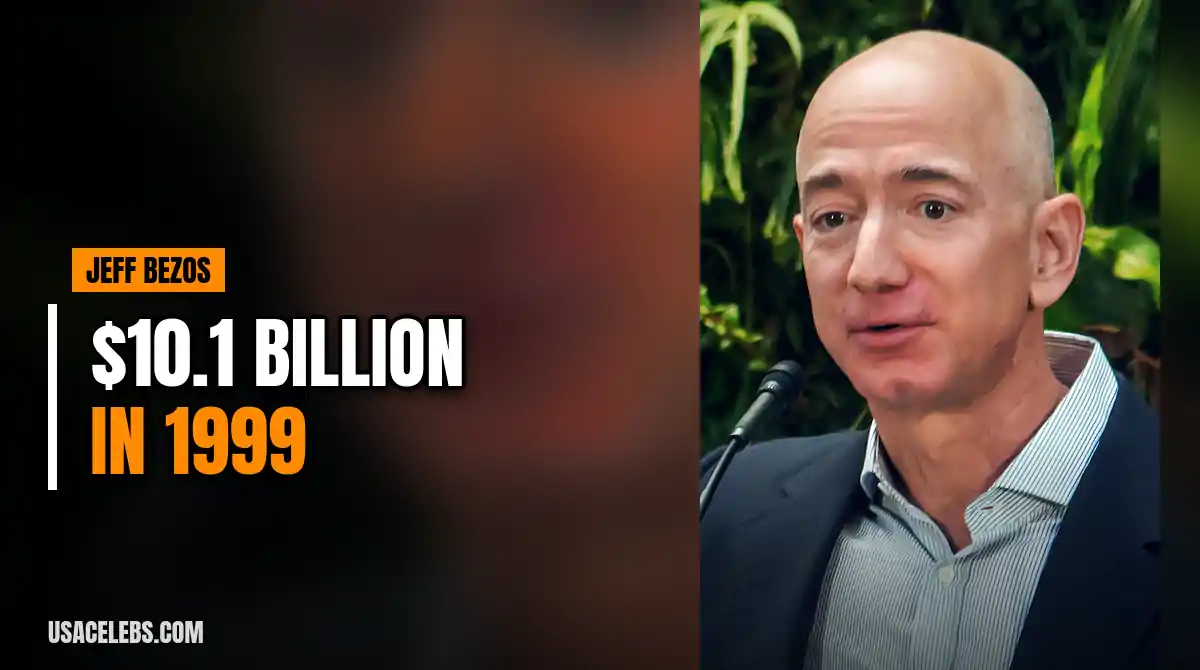
Jeff Bezos net worth over the years is a chronology of a 1997 listing that made him a paper billionaire, a crash that almost took the number back to earth, and a 2010s climb that put him first. Forbes’ World’s Billionaires list first printed him in 1999 at an estimated $10.1 billion. The 2001 Forbes 400 then put him about $1.2 billion after the dot-com wipeout. The 2026 annual list, using March 1 prices, printed an estimated $224 billion and fourth place. Between those snapshots sit the 2019 MacKenzie Scott transfer, a 2021 handoff of the chief-executive title, and a 2024–26 real-time mark that still lives and dies on Amazon’s close.
Forbes never published a daily bank statement. What it did publish, year after year, were spring snapshots and, later, real-time marks. Those dated prints are the spine of this timeline. Where a year has no trustworthy personal total, this article says so instead of interpolating a fake ladder. For the current composition of the fortune, see Jeff Bezos net worth 2026. For how fourth compares with Musk, Arnault, and Ellison, see how much is Jeff Bezos worth against those names.
Jeff Bezos net worth over the years as dated prints
Read the following as a sequence of magazine snapshots, not as an audited compound annual growth rate. Early figures come from the World’s Billionaires list and from the Forbes 400 in the United States. Later figures come from the annual global list, which uses a spring pricing date, and from intra-year real-time marks Forbes chose to write about. A Bezos year that treats a U.S. Forbes 400 snapshot, a spring World’s Billionaires print, and an intra-year real-time mark as the same unlabeled date is already a broken timeline.
1997: Amazon’s May 15 IPO, which recaps put as raising approximately $54 million, created the public mark. 1998 Forbes 400: estimated $1.6 billion on a then-40 percent stake, according to a later Forbes photo chronology. 1999 World’s Billionaires: estimated $10.1 billion, 19th in the world. 1999 Forbes 400: estimated $7.8 billion. 2000 World’s Billionaires: estimated $6.1 billion. 2001 Forbes 400: about $1.2 billion. 2001 World’s Billionaires compilations: estimated $2.0 billion. 2002: estimated $1.5 billion. 2007: estimated $8.7 billion. 2009: estimated $6.8 billion. 2010: estimated $12.6 billion. 2015: estimated $50.3 billion. 2016: estimated $45.2 billion. 2017: estimated $72.8 billion. 2018: estimated $112 billion, first. 2019: estimated $131 billion. 2020: estimated $113 billion. 2021: estimated $177 billion, still first. 2022: Forbes’ annual recap put him second, an estimated $48 billion behind Musk’s estimated $219 billion. 2023: estimated $114 billion, third. 2024: estimated $194 billion, third. 2025: estimated $215 billion, third. 2026 annual: estimated $224 billion, fourth. August 1, 2026: estimated $278 billion, third. August 28: approximately $273.2 billion.
Every dollar figure in that paragraph is an estimate tied to Forbes. None of it is a tax return. The magazine subject only becomes clean after the 1997 listing. Before that, there is a garage bookstore and a parents’ check Forbes-adjacent recaps have put at about an estimated $300,000, not a public wealth print.
1997 – when the IPO created a public mark
Amazon sold stock to the public on May 15, 1997. Recaps of that offering have put the raise at approximately $54 million and the company value at listing in the low hundreds of millions. Bezos was 33. Wall Street was still willing to call the two-year-old bookseller a toy. A later Forbes chronology noted that one analyst dubbed it “Amazon.toast” after Barnes & Noble said it would go online. The toast did not hold.
The first number that belongs on a United States rich list is the 1998 Forbes 400. The magazine later said he debuted thanks to a 40 percent stake then worth an estimated $1.6 billion. That concentration is the entire origin of the later 12-figure fortune. This chapter is a founder-share story, not a salary story. Amazon has never paid a dividend. The IPO did not create a coupon. It created a mark.
Those late-1990s prints look small only because later prints are enormous. They were already historically large for a three-year-old retailer. They also lock the identity of the fortune: founder shares, not a wage, not a tour, not a catalog sale.
The 1999 high and the 2001 collapse
The bubble year is the first violent chapter. Forbes’ World’s Billionaires list for 1999 put him at an estimated $10.1 billion, 19th on earth and 10th in the United States, according to later reconstructions that use that spring global snapshot. The 1999 Forbes 400, a different snapshot, put him at an estimated $7.8 billion. Time named him Person of the Year. Amazon’s stock had multiplied many times from the IPO print. Paper wealth is still wealth on a magazine list. It is also the thing that disappears when the listing does.
The crash is the second act of the same year-cluster. The 2000 World’s Billionaires snapshot fell to an estimated $6.1 billion, a drop later reconstructions put at about 40 percent. The 2001 Forbes 400 then printed about $1.2 billion. World’s Billionaires compilations for 2001 have sat near an estimated $2.0 billion, and 2002 near an estimated $1.5 billion. Different lists, different dates, same wipeout. Amazon’s shares lost the bubble multiple. The 1999–2002 stretch is a peak-and-floor, not a straight line that “always went up.”
Anyone who starts this timeline at an estimated $224 billion without the about $1.2 billion Forbes 400 floor is writing a founder myth. The company nearly ran out of cash. He borrowed. He cut. The later 12-figure fortune is what happened after that floor, not instead of it.

Crossing an estimated $100 billion and taking first place
The 2010s are the climb. Forbes’ March snapshots in this stretch include an estimated $12.6 billion in 2010, an estimated $18.1 billion in 2011, an estimated $23.2 billion in 2012, an estimated $28.9 billion in 2013, an estimated $30.5 billion in 2014, an estimated $50.3 billion in 2015, an estimated $45.2 billion in 2016, and an estimated $72.8 billion in 2017. Treat those as spring global snapshots, not as December 31 statements. The 2016 dip on the annual list did not freeze the intra-year mark. A later reconstruction has him about an estimated $66.5 billion by October 2016.
July 27, 2017, is the first time he briefly unseated Bill Gates on real-time marks, at just over an estimated $90 billion. On November 24, 2017, recaps say he crossed an estimated $100 billion for the first time after Amazon rose more than 2 percent. The 2017 annual list, priced earlier, still sat at an estimated $72.8 billion. Collapsing those dates into one “2017 net worth” is how viral graphics lie.
March 6, 2018, is the annual crown. Forbes designated him the wealthiest person in the world at an estimated $112 billion, unseating Gates at an estimated $90 billion. In July 2018, Bloomberg, Fortune, and Forbes described a print about an estimated $150 billion as the richest mark in modern history on those indexes. Jeff Bezos net worth over the years in this chapter is first on the spring list, then a summer that the later 2026 mark would treat as a starting gun.
The 2019 MacKenzie Scott transfer
The 2019 annual list still had him first, at an estimated $131 billion. Then the holdings split. After 25 years of marriage he transferred a quarter of his then-16 percent Amazon stake to MacKenzie Scott. She received 4 percent. He kept 12 percent. That transfer is a timeline event, not gossip. It moved a slice of the public company out of his personal column while the magazine was still printing him first.
Sales continued near the split. Forbes later calculated more than an estimated $49 billion of Amazon stock sold since the 1997 IPO. Those sales funded living costs, Blue Origin, philanthropy, and Bezos Expeditions. They also reduced the personal column. A founder who sells is not a founder who gave the company away. He is a founder who turned some of the listing into cash and left a concentrated leftover.
The 2020 annual list fell to an estimated $113 billion, still first, in a pandemic year that moved every technology mark. The personal figure was still a first-place Amazon leftover. The 2019 split had already done its arithmetic. Adding Scott’s later fortune back onto his 2026 print would count a transfer that already happened twice.
2021 – leaving the CEO job while still first
The 2021 World’s Billionaires snapshot is the last annual first-place print. Forbes put him at an estimated $177 billion. Musk sat second at an estimated $151 billion. Intra-year, Bloomberg reported that Musk passed him for the real-time top on January 7, 2021, and CNBC said Bezos reclaimed it on February 16. Those are mark dates. They are not the spring snapshot.
July 5, 2021, is the job-title date. He stepped down as chief executive and president, succeeded by Andy Jassy, and became executive chairman. On July 20 he flew on Blue Origin NS-16. The two events sit in the same month on the calendar. They do not print a new net-worth figure by themselves. They explain why later wealth is an investment leftover plus a rocket company he long funded himself, rather than a chief-executive wage. Amazon’s proxy has long listed an annual salary of about $81,840. That line did not build the estimated $177 billion print.
2021 is a two-snapshot year: a spring print still first at an estimated $177 billion, and a summer that changed the job without changing the identity of the fortune. Anyone who writes that he “left Amazon” in 2021 is describing a title. The 8 percent stub Forbes later marked is the wealth fact that followed years of sales after the 2019 split.

Losing the crown, then rebuilding
Forbes’ 2022 World’s Billionaires list is the first annual loss of first place. Musk sat at an estimated $219 billion. The magazine said that was an estimated $48 billion more than Bezos, who fell to second after a 3 percent drop in Amazon and charitable giving the recap said wiped an estimated $6 billion from his net worth. The 2021 estimated $177 billion first-place print and the 2022 second-place print are different photographs. Musk took the annual top. Amazon did not disappear.
2023 is the ugly spring. Forbes’ facts piece put him third at an estimated $114 billion, an estimated $57 billion poorer than in 2022, after a 38 percent decline in Amazon. Arnault sat first at an estimated $211 billion. Musk sat second at an estimated $180 billion. 2023 was a market year, not a company-failure year. The stub was smaller than 2018. The listing was also cheaper.
2024 rebuilt the spring number. The annual list put him third at an estimated $194 billion, just behind Musk at an estimated $195 billion and behind Arnault at an estimated $233 billion. The October 2024 Forbes 400 then printed an estimated $197 billion, still second in America behind Musk. In February 2024 he sold 24 million shares at a total value about an estimated $4 billion, according to later recaps, and said he intended to sell 50 million shares over the next year. Sales are a timeline fact. They are not a net-worth print. They explain why a 2024 leftover can sit near an estimated $194 billion after a 2023 estimated $114 billion without pretending he stopped selling.
2025 and 2026 – fourth on the annual list, third by August
Forbes’ 2025 World’s Billionaires list, using March 7 prices, put him third at an estimated $215 billion, behind Musk at an estimated $342 billion and Zuckerberg at an estimated $216 billion. He had been third on the 2023, 2024, and 2025 annual lists. Third is the mid-2020s habit. First is the 2018–2021 habit. Both can be true on one life.
The 2026 annual list, using March 1 prices, listed him fourth at an estimated $224 billion, behind Musk at an estimated $839 billion, Page at an estimated $257 billion, and Brin at an estimated $237 billion. That is the first annual fourth-place finish of the Amazon era on this timeline. Then the intra-year mark moved. Forbes’ August 1 roundup, after a July in which Amazon climbed 14 percent, put him third at an estimated $278 billion and said the month added an estimated $29 billion. The August 28 real-time profile showed approximately $273.2 billion, still third. In July 2026 the magazine described Blue Origin’s first outside round seeking approximately $10 billion at a pre-money valuation of about $130 billion. That is a private-mark date. It is not a replacement for the Amazon leftover.
Keep the labels attached and the timeline holds. Strip them, and 1999’s estimated $10.1 billion and 2026’s estimated $224 billion look like a miracle instead of a sequence of a listing, a crash, a divorce transfer, a title change, and a stock that still sets the daily print. Jeff Bezos net worth over the years is that sequence. For how cash actually arrives in a normal year, see how Jeff Bezos makes money when Amazon still pays no dividend.