

In this article13 sections
- What Happened to Tom Green? The Short Answer
- Ottawa Origins and the Public-Access Laboratory
- The Tom Green Show: Absurdist Pranks Before Jackass
- MTV Stardom and the Shock-Comedy Peak
- Freddy Got Fingered and the Hollywood Detour
- Cancer on Camera and the Human Turn
- Drew Barrymore, Tabloids, and the Marriage Flash
- After MTV: Exile, Experiments, and the Long Falloff
- Digital Reinvention: Podcasts, Streaming, and House Tonight
- Tom Green in 2026: Touring, Cult Legacy, and Reappraisal
- Why "What Happened to Tom Green?" Still Trends
- Legacy: Prank Godfather, Punchline, and Cable Pioneer
- Explore More
What happened to Tom Green is one of the loudest questions in late-1990s MTV nostalgia — because for a brief, chaotic window he was not just a comedian, he was a one-man guerrilla broadcast assault on polite television. Green turned a Canadian public-access experiment into an MTV phenomenon, pioneered the prank-and-shock format that Jackass later industrialized, directed one of the most divisive cult films of the 2000s, survived testicular cancer on camera, married and divorced one of Hollywood’s biggest stars, and then spent two decades trying to explain to the internet that he never really left. This is the full comedy-and-MTV answer to what happened to Tom Green — from Ottawa open mics through The Tom Green Show, Freddy Got Fingered, the falloff, and the 2026 streaming-and-stand-up chapter fans still search for.
If your mental image is Tom Green humping a dead moose or screaming through a pipe jammed through his cheek, you are remembering the peak — and only the most viral slice of the arc. Search traffic for what happened to Tom Green spikes whenever a 1990s countdown resurfaces, whenever a creator compares modern prank content to pre-Jackass chaos, or whenever millennials wonder whether the guy who horrified their parents still performs. Understanding what happened to Tom Green means tracking a comedy career with seven distinct chapters: Canadian club and cable-access grinding, MTV supernova, Hollywood’s most baffling auteur moment, cancer and tabloid marriage, network exile, digital-era reinvention, and the stubborn 2020s touring life of a comedian who helped invent a genre.
What Happened to Tom Green? The Short Answer
Here is what happened to Tom Green through a comedy-and-MTV lens, updated through 2026:
- 1971–1993: Born July 30, 1971, in Pembroke, Ontario; raised in Ottawa; started stand-up and campus radio while studying at Algonquin College.
- 1994–1998: Launched The Tom Green Show on Rogers community-access television in Ottawa — absurdist pranks, man-on-the-street chaos, and parents recruited as unwitting co-stars.
- 1999–2000: MTV picked up the show; Green became the network’s most polarizing star, influencing the prank-comedy wave that preceded Jackass.
- 2000: Diagnosed with testicular cancer; documented treatment publicly on his program, including surgery — one of the earliest celebrity health disclosures of the reality-TV era.
- 2001: Wrote, directed, and starred in Freddy Got Fingered — a surreal, gross-out comedy that Roger Ebert famously savaged yet later gained cult status.
- 2001–2002: Married Drew Barrymore in a Malibu ceremony; divorced after roughly five months amid intense tabloid coverage.
- 2003–2010s: MTV run ended; attempted network specials, rap experiments, and smaller tours; reputation split between visionary and punchline.
- 2010s–2026: Podcasting, Tom Green’s House Tonight streaming revival, stand-up dates, and nostalgia-driven reappraisal as a proto-influencer and prank-comedy godfather.
Ottawa Origins and the Public-Access Laboratory
Any honest answer to what happened to Tom Green starts in Canada, not on MTV. He was born in Pembroke, Ontario, and came of age in Ottawa — a city far from Hollywood but close enough to Canadian broadcast infrastructure that a hungry comic could rent airtime and test ideas without network notes. Green studied at Algonquin College, worked campus radio, and performed stand-up while developing the confrontational, low-budget style that would later make executives nervous and teenagers obsessed.
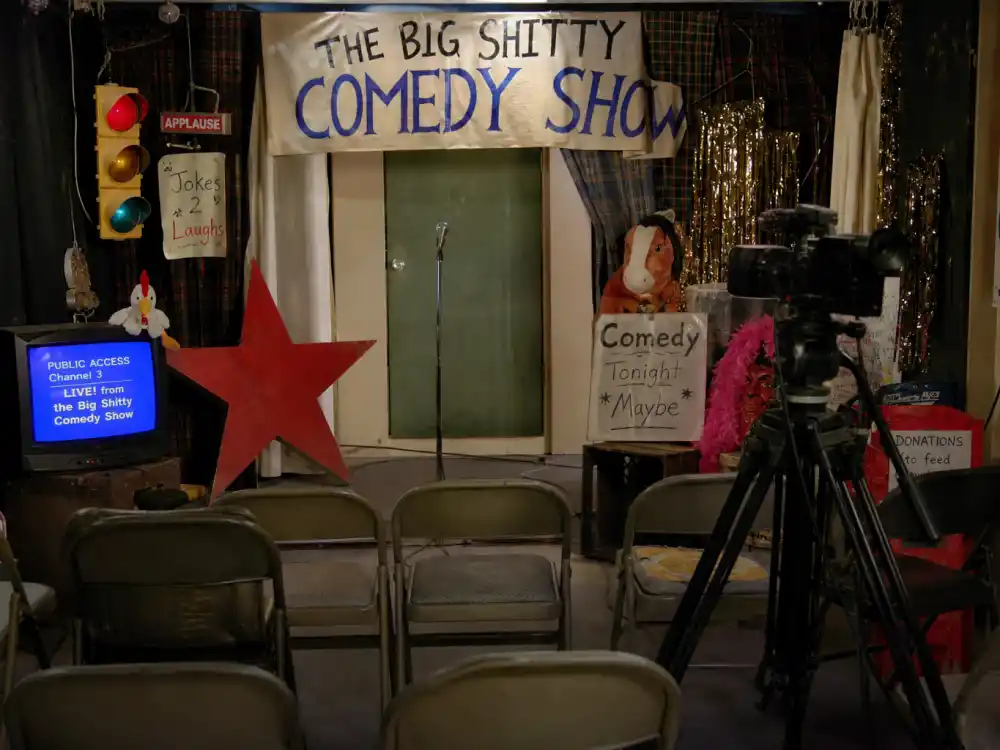
The critical innovation was not a single bit but a format: treat the city as a stage, strangers as props, and discomfort as the punchline. Before YouTube pranks or TikTok ambush videos, Green was filming in parking lots, fast-food drive-throughs, and his own parents’ house — turning domestic awkwardness into national television. Fans who ask what happened to Tom Green sometimes forget that the MTV version was already a hit on Ottawa cable; the move to New York was amplification, not invention.
The Tom Green Show: Absurdist Pranks Before Jackass
What happened to Tom Green in the late 1990s looks, in hindsight, like the missing link between Candid Camera and the stunt-comedy empires that followed. On Rogers community access and later The Comedy Network, Green refined segments that felt illegal even when they were not: disrupting fast-food counters, vandalizing his own signage, and recruiting his baffled parents — Dick and Mary Jane Green — as recurring characters in sketches that blurred prank, performance art, and sibling-level cruelty.
When MTV launched a U.S. version in 1999, the show’s aesthetic — handheld cameras, jump cuts, screaming, and genuine stranger reactions — felt like punk rock compared to polished late-night monologues. Critics called it juvenile; fans called it liberating. The program’s influence on Jackass and the broader prank-reality boom is routinely debated, but industry veterans have long acknowledged that Green proved young male audiences would watch dangerous-feeling comedy if it felt authentic. That proof changed what cable networks greenlit for the next decade.
MTV Stardom and the Shock-Comedy Peak
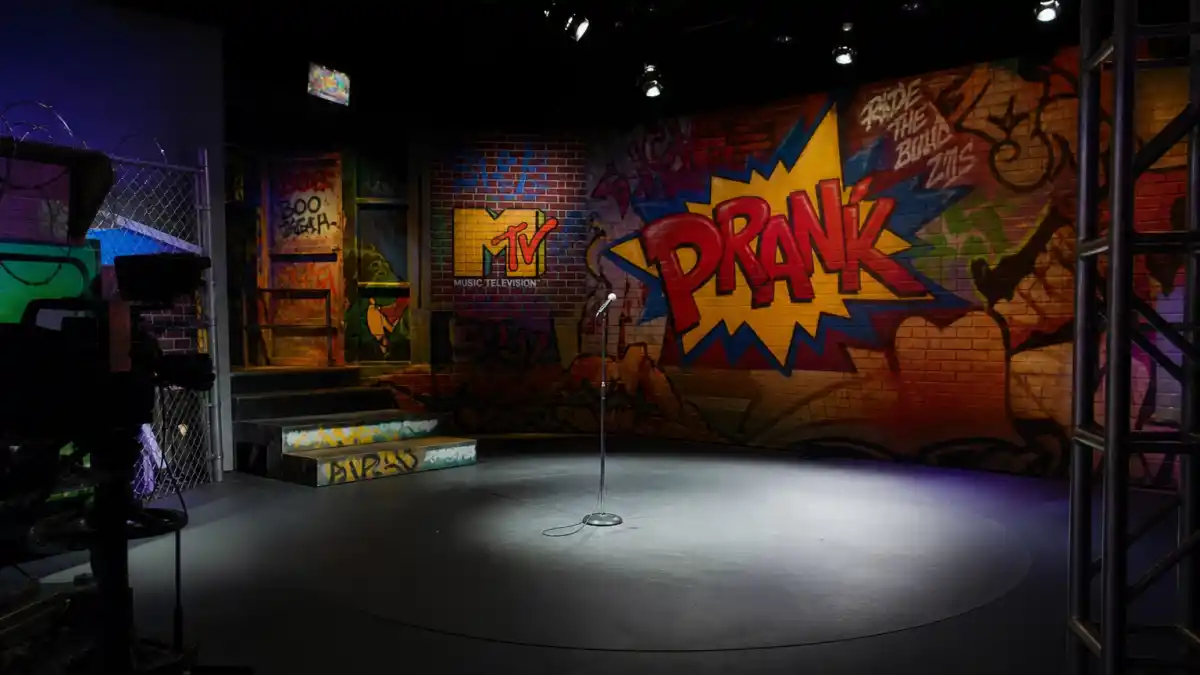
The spine of most what happened to Tom Green searches is the 1999–2001 MTV window. Green was everywhere: music awards red carpets, celebrity dating rumors, and segments so infamous they still circulate as reaction GIFs decades later. The “pipe through the cheek” stunt — later revealed as a prosthetic prank — became shorthand for his willingness to mutilate his own image for a laugh. The dead moose bit, the rapper Phil scene, the disruption of his parents’ dinner table: each segment argued that comedy’s job was to puncture decorum, not protect it.
MTV marketed him as a generational rebel at the exact moment the network still shaped youth culture. Green hosted events, dated actresses, and embodied the id of a pre-9/11 pop moment when gross-out humor could still feel transgressive rather than algorithmic. For a segment of viewers he was a hero; for others, especially parents and critics, he was evidence of cultural decline. Both reactions kept him famous.
Freddy Got Fingered and the Hollywood Detour
What happened to Tom Green also includes one of the strangest Hollywood chapters any MTV comedian attempted. With co-writer Derek Harvie, Green made Freddy Got Fingered (2001) — a surreal, aggressively juvenile film in which he plays a struggling cartoonist battling his father while performing inexplicable set pieces involving a paraplegic girlfriend, a cheese factory, and a ramp constructed from animal parts. Roger Ebert’s review became legendary for its fury; the movie grossed modestly yet developed a devoted cult following among fans who argue it is Dadaist genius disguised as bad taste.
The film mattered to Green’s arc because it was not a studio assignment — it was auteur comedy on a studio budget, proof that his public persona and private ambition were the same thing. When people search what happened to Tom Green today, many are really asking what happened to the guy from Freddy Got Fingered — evidence that the movie, however reviled, permanently extended his footprint beyond cable pranks.
Cancer on Camera and the Human Turn
No complete profile of what happened to Tom Green can skip 2000 — the year his body forced a tonal shift. Diagnosed with testicular cancer, Green documented surgery and recovery on The Tom Green Show, displaying a bandaged post-operative image that shocked audiences accustomed only to his pranks. The segments were raw, uncomfortable, and — for many viewers — the first time they saw a young celebrity treat a life-threatening illness as something to witness rather than hide.
The health crisis complicated his image. Critics who dismissed him as a frat-house nuisance suddenly confronted a performer facing mortality on air. Supporters argued the disclosure was brave; skeptics questioned whether even illness became content. Either way, the storyline humanized a comic often reduced to shock-value clips and foreshadowed the personal turbulence — including his brief marriage to Drew Barrymore — that would dominate tabloids over the next two years.
Drew Barrymore, Tabloids, and the Marriage Flash
What happened to Tom Green in the early 2000s also played out on magazine covers. He began dating Drew Barrymore during his cancer treatment; they married in July 2001 on Barrymore’s Malibu property with a campfire ceremony that felt on-brand for two stars who thrived on anti-Hollywood mythology. The marriage ended in October 2002 — roughly five months — with both parties largely avoiding prolonged public warfare.
The relationship amplified Green’s celebrity beyond MTV’s core demographic and embedded him in a Hollywood lineage (Barrymore’s own child-star history) that made their pairing irresistible to entertainment media. For fans tracing what happened to Tom Green, the Barrymore chapter is both a footnote and a pivot: proof he briefly accessed mainstream movie-star orbit before retreating to the fringe where his comedy had always been most comfortable.
After MTV: Exile, Experiments, and the Long Falloff
MTV canceled The Tom Green Show in 2000 amid declining ratings and controversy fatigue, then revived it briefly in 2003 before ending the run for good. Without a weekly network home, Green’s visibility contracted. He attempted a late-night talk experiment (The Tom Green Show on MTV in talk format, then web iterations), released rap music under alter egos including Mickey Avalon collaborations, and toured clubs with material that mixed greatest-hits prank stories with stand-up reflection.
The culture moved on — or appeared to. Jackass owned stunt comedy. Family Guy and Adult Swim absorbed absurdist tones. Green’s specific brand of man-on-the-street chaos looked like a period artifact. Yet the internet archive never forgets: clips resurfaced on early YouTube, then Facebook, then TikTok reaction compilations, keeping his name alive among viewers born after his peak.
Digital Reinvention: Podcasts, Streaming, and House Tonight
What happened to Tom Green in the 2010s and 2020s is a slower, platform-hopping reinvention. He embraced podcasting long before every celebrity had a feed, interviewed musicians and comedians, and rebuilt a direct-to-audience pipeline reminiscent of his pre-MTV hustle. Tom Green’s House Tonight — a lo-fi talk show streamed from his Los Angeles home — recaptured the anything-goes energy of his cable-access years for a generation that discovers talent on Twitch and YouTube rather than basic cable.
The format is deliberately unpolished: Green as host, guests on couches, segments that feel like a prank show’s calm cousin. It will never replicate 1999 MTV ratings, but it answers the core fan question — is he still working? — with a yes that is credible and continuous rather than nostalgic.
Tom Green in 2026: Touring, Cult Legacy, and Reappraisal
As of 2026, Tom Green is not hosting a nightly MTV block and he is not opening Marvel movies. But he has not disappeared. He performs stand-up in clubs and theaters, makes festival appearances, and leans into the cult legacy of Freddy Got Fingered with a knowing wink. Documentary and podcast retrospectives increasingly frame him as a proto-influencer: a comic who owned his distribution, merged life and performance, and paid for it with mainstream exile.
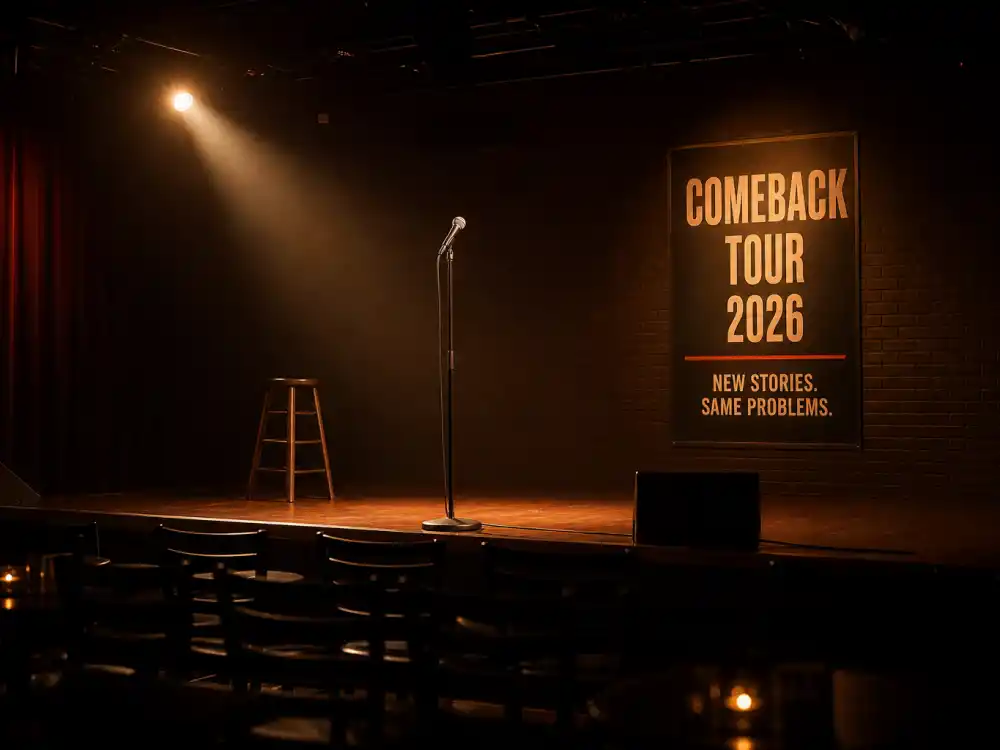
Younger creators cite him when discussing the ethics of prank content. Comedy historians place him between Andy Kaufman and Johnny Knoxville on the discomfort spectrum. Critics who once called him a cultural toxin now occasionally revisit segments as performance art. What supporters want in 2026 is modest: steady touring, archival respect, and acknowledgment that the prank-comedy highway has his tire tracks all over it.
Why “What Happened to Tom Green?” Still Trends
Search interest clusters around five engines: 1990s MTV nostalgia, morbid curiosity about infamous prank clips, Freddy Got Fingered cult reappraisal, cancer-survivor storytelling, and the Drew Barrymore marriage micro-saga. Unlike comics who pivoted entirely to acting or podcast empires, Green remains identifiable first as the guy who terrorized cable — which makes his fall from network center to streaming living room a clean narrative pop culture loves to retell.
The query also intersects with broader questions about consent in comedy, the line between prank and harassment, and how Canadian talent crosses into U.S. fame. Every time a creator goes viral for street stunts, someone asks what happened to Tom Green as the original reference point.
Legacy: Prank Godfather, Punchline, and Cable Pioneer
What happened to Tom Green, ultimately, is a comedy-and-MTV story with three layers. The first is formal: he helped invent a visual language — shaky camera, stranger reaction, host as agent of chaos — that reality TV and online prank culture still use. The second is commercial: he reached household-name status without traditional sitcom training, then watched the industry absorb his innovations without keeping him at the center. The third is personal: cancer survival, a flash marriage to an A-list star, and decades of proving the work continues even when the network logo disappears.
If you still wonder what happened to Tom Green, skip the one-word punchline and read the full arc: Ottawa kid, cable-access mad scientist, MTV antagonist, cult filmmaker, cancer survivor, tabloid bridegroom, digital host, and 2026 road comic still carrying bits that millions never forgot. The ending is quieter than 1999 — but it is not over.
Explore More
- Browse Celebrities for more what-happened-to and where-are-they-now profiles.
- Read what happened to Andy Dick for another MTV-era comic shaped by chaos and controversy.
- See where is Pauly Shore now 2026 for a parallel 1990s comedy-icon reinvention story.
- See what happened to Dane Cook for the arena-comedy boom that followed Green’s cable moment.
For background, see Tom Green’s Wikipedia profile and reporting from Rolling Stone, Variety, MTV, and The Hollywood Reporter on The Tom Green Show, Freddy Got Fingered, and his cancer disclosure.