

In this article9 sections
- Taylor Swift Grammy Wins Full History by the Numbers (As of 2025)
- Four Album of the Year Wins: Fearless, 1989, Folklore, Midnights
- Youngest Album of the Year Winner — Then Billie Eilish
- Notable Wins Beyond Album of the Year
- Snub Debates: Red, Reputation, and the "Champagne Problems" of Success
- Memorable Grammy Speeches (Not VMAs)
- What Is NOT a Grammy Moment
- Quick Reference: Taylor Swift Grammy Wins Timeline
- Explore More Awards Coverage
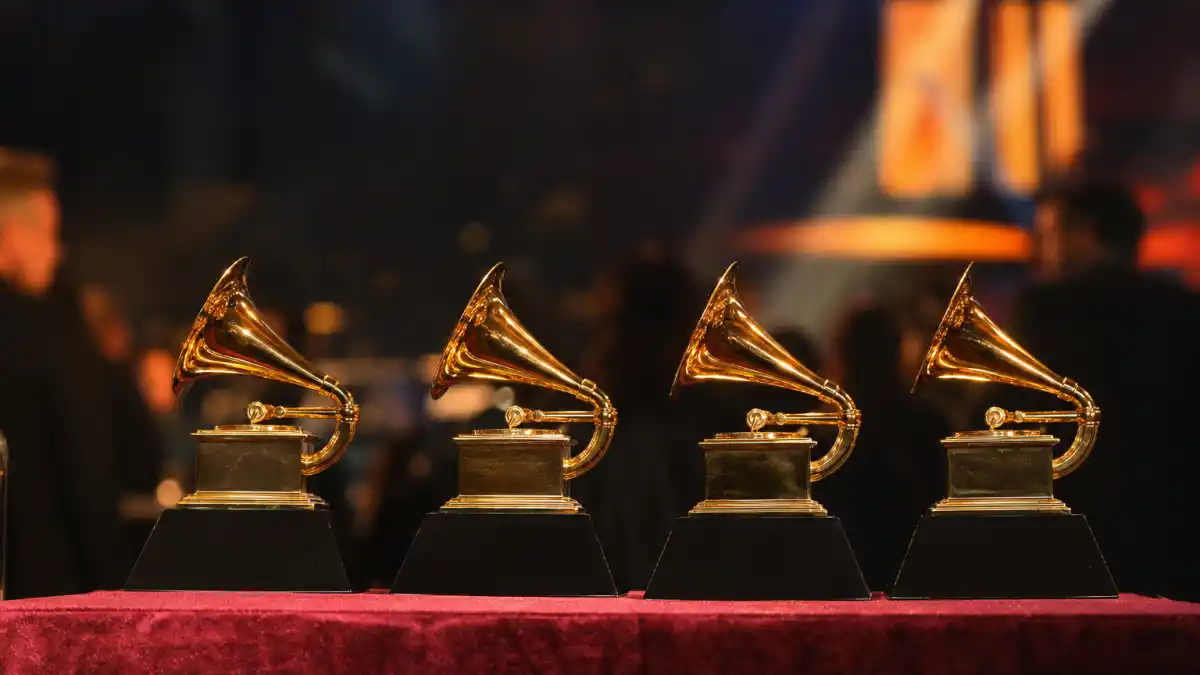
Taylor Swift Grammy wins full history — Taylor Swift Grammy wins tell the story of a songwriter who turned country-teen stardom into the most decorated Album of the Year run in Grammy history — four trophies for Fearless (2010), 1989 (2016), Folklore (2021), and Midnights (2024). That 2024 win broke a three-way tie with Frank Sinatra, Stevie Wonder, and Paul Simon, who each held three Album of the Year awards for decades. As of the 2025 ceremony, Swift stands at 14 Grammy wins from 52 nominations, a total that mixes coronations, snubs, and comeback sweeps voters still argue about online. This guide maps every major win, the nomination counts fans quote, memorable acceptance speeches, and the Red and Reputation eras that felt like Grammy cold shoulders — without confusing MTV Video Music Awards drama (the 2009 Kanye West incident was not a Grammy moment). For ceremony-by-ceremony context, see our Grammy winners complete list 2026 guide.
Recording Academy voters reward narrative as much as metrics. Swift’s Taylor Swift Grammy wins arc spans a 20-year-old country breakthrough, synth-pop pivot, pandemic folk detour, and a nocturnal pop return — each era landing Album of the Year on its own terms. We cite the Recording Academy and official Grammy databases for winners and categories, then explain why certain losses (especially Red in 2014 and Reputation in 2019) still dominate fan discourse. When we reference future ceremony framing, we attribute it to published preview coverage rather than invent results.
Taylor Swift Grammy Wins Full History by the Numbers (As of 2025)
Headline totals for Taylor Swift Grammy wins as of the 68th Annual Grammy Awards in February 2025:
- 14 wins from 52 nominations across performance, song, album, and video categories
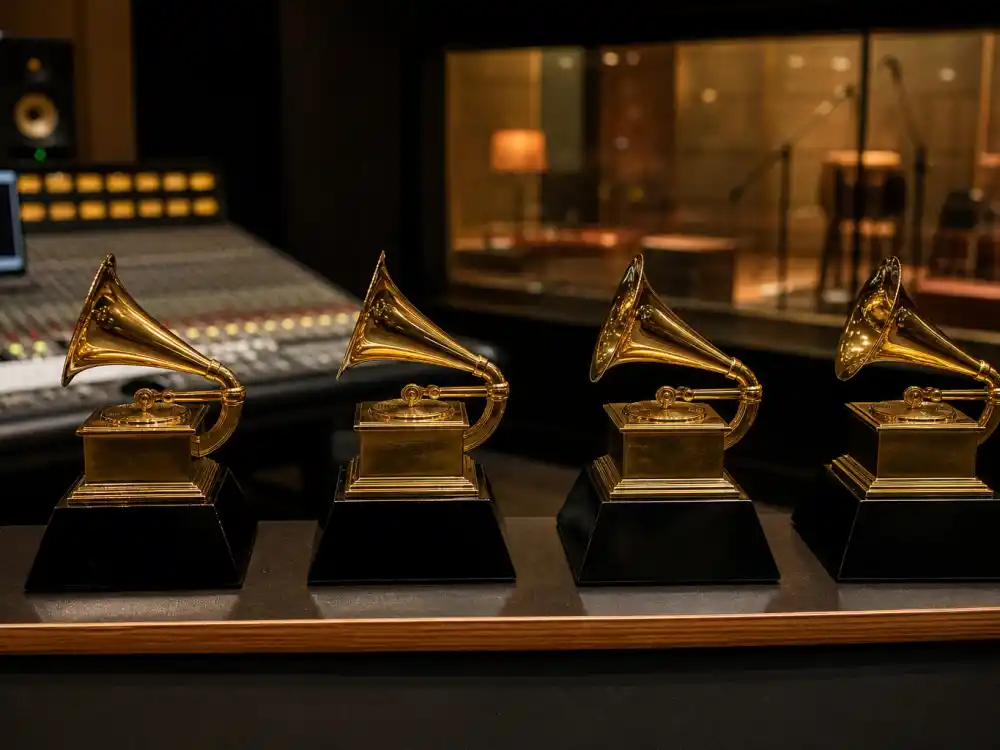
- 4 Album of the Year wins — a solo-artist record
- First Album of the Year win at age 20 for Fearless in 2010, making her the youngest winner in that category at the time
- Billie Eilish later became the youngest Album of the Year winner at 18 for When We All Fall Asleep, Where Do We Go? at the 2020 ceremony
Those numbers shift slowly now — Swift is nominated in blockbuster years rather than unknown- underdog cycles — but the Taylor Swift Grammy wins total still understates her cultural footprint. She wins Album of the Year in different genres (country-pop, synth-pop, indie folk, alt-pop) while losing in years fans deem obvious snubs. Treat 14/52 as the official scoreboard through the 2025 telecast unless the Recording Academy updates its database after future ceremonies.
Four Album of the Year Wins: Fearless, 1989, Folklore, Midnights
Fearless (52nd Grammys, 2010)
Swift’s first Taylor Swift Grammy wins night as Album of the Year champion came at the 52nd Annual Grammy Awards on January 31, 2010. Fearless beat I Am… Sasha Fierce by Beyoncé, The E.N.D. by The Black Eyed Peas, The Fame by Lady Gaga, and Big Whiskey & the GrooGrux King by Dave Matthews Band. She was 20 years old — the youngest Album of the Year winner at that time — and still marketed as a country-pop prodigy even as pop radio had already claimed her singles.
The win validated crossover without fully abandoning Nashville. Swift also took Best Country Album that night. Fans now read Fearless as the template for every later Taylor Swift Grammy wins campaign: personal songwriting, era branding, and a narrative voters could reward as “artist of the moment” without feeling like a industry coronation.
1989 (58th Grammys, 2016)
Six years later, Swift collected her second Album of the Year trophy for 1989 at the 58th Annual Grammy Awards. She beat Sound & Color by Alabama Shakes, To Pimp a Butterfly by Kendrick Lamar, Beauty Behind the Madness by The Weeknd, and Traveler by Chris Stapleton — a stacked field that keeps the Taylor Swift Grammy wins debate alive in hip-hop and indie circles. Her acceptance speech famously addressed young women owning their work, a clip that still circulates whenever Swift re-records catalog titles.
The 1989 win proved voters would reward a hard pivot — full synth-pop, no country checkbox — after skeptics said Fearless was a one-era fluke. It also set up the expectation that every subsequent album would be judged against Album of the Year bar, raising stakes for Reputation and Lover.
Folklore (63rd Grammys, 2021)
After the Reputation nomination drought, Swift’s Taylor Swift Grammy wins comeback arrived at the pandemic-era 63rd Annual Grammy Awards. Folklore won Album of the Year over Future Nostalgia by Dua Lipa, Hollywood’s Bleeding by Post Malone, Women in Music Pt. III by HAIM, and Fetch the Bolt Cutters by Fiona Apple. She recorded the album in isolation; voters rewarded intimacy and craft over stadium spectacle.
Folklore also won Best Pop Vocal Album. The sweep reframed the snub narrative: Swift could disappear from red carpets, drop a surprise album, and still collect the night’s top prize — a pattern she repeated with Evermore nominations later, though Evermore did not duplicate the Album of the Year win.
Midnights (66th Grammys, 2024)
The 66th Annual Grammy Awards on February 4, 2024, produced the defining Taylor Swift Grammy wins headline of the decade. Midnights won Album of the Year over World Music Radio by Jon Batiste, SOS by SZA, the record by boygenius, and Midnights competitor Volcano by Jelly Roll in the same category field per official Grammy listings. Swift became the first artist with four Album of the Year wins, breaking the three-way tie with Sinatra, Wonder, and Simon.
She also won Best Pop Vocal Album for Midnights and Best Music Video for “Anti-Hero.” Her acceptance remarks teased new music — later revealed as The Tortured Poets Department — turning a trophy speech into a global news event. That is the modern Taylor Swift Grammy wins formula: the win, the speech, the next-era tease.
Youngest Album of the Year Winner — Then Billie Eilish
Swift’s 2010 Fearless win at age 20 made her the youngest Album of the Year winner at that time, a record repeated in every Taylor Swift Grammy wins explainer for a decade. Billie Eilish broke it at the 62nd Annual Grammy Awards in 2020, winning Album of the Year at 18 for When We All Fall Asleep, Where Do We Go? Eilish also became the youngest artist to win the big four in one ceremony — a different kind of sweep Swift has never duplicated in a single night.
The youth record is a footnote, not the thesis. Swift’s longevity matters more: she won Album of the Year across her twenties and thirties, while many teen breakthroughs never repeat. Comparing Swift and Eilish youngest-winner stats clarifies how Taylor Swift Grammy wins history spans two generations of pop sovereignty without diminishing either artist.

Notable Wins Beyond Album of the Year
Album of the Year dominates headlines, but Taylor Swift Grammy wins include trophies voters spread across categories:
- Best New Artist (2008) — early validation before Fearless exploded
- Best Country Album for Fearless (2010) and Speak Now (2012)
- Album of the Year — four wins listed above
- Best Pop Vocal Album — multiple wins including Midnights (2024) and 1989 (2016)
- Song of the Year / Best Song Written for Visual Media — including “Safe & Sound” from The Hunger Games (2013) with The Civil Wars and T Bone Burnett
- Best Music Video — “Anti-Hero” (2024) among others
Swift has never won Record of the Year despite multiple nominations — a gap superfans note when ranking Taylor Swift Grammy wins against peers who collect the trifecta in one night. We list the gap neutrally; campaigns for individual singles ebb while her albums remain voter favorites.

Snub Debates: Red, Reputation, and the “Champagne Problems” of Success
No Taylor Swift Grammy wins guide is complete without the losses fans call snubs. Two eras dominate:
Red (56th Grammys, 2014)
Red earned an Album of the Year nomination at the 2014 ceremony but lost to Daft Punk’s Random Access Memories. Swift still won Best Country Song for “Mean” earlier in her career, but Red’s loss stung because the album felt like her boldest pop-country hybrid yet. Fans argue voters favored legacy rock/electronic over a still-maturing pop star. The snub narrative fed directly into the 1989 pivot — Swift went full pop partly to control the Grammy conversation on her terms.
Reputation (61st Grammys, 2019)
Reputation received a single nomination — Best Pop Vocal Album — and won nothing at the 2019 ceremony. It missed Album of the Year entirely despite massive sales and the Reputation Stadium Tour. Critics and fans cite backlash from media narratives, voter fatigue, and the album’s darker tone. The cold shoulder made Folklore’s 2021 sweep feel like vindication — a classic Taylor Swift Grammy wins comeback arc.
Champagne Problems
With 14 wins and 52 nominations as of 2025, Swift’s complaints are luxury problems — a phrase fans echo from her song “champagne problems” when debating whether she is “snubbed” or simply competing in crowded fields. Yet each era still produces Twitter verdicts within minutes of nominations. The Taylor Swift Grammy wins story is half trophy case, half perpetual argument — the cost of being pop’s most-awarded modern album artist.

Memorable Grammy Speeches (Not VMAs)
Swift’s most replayed acceptance speeches belong to Grammy night — not the 2009 MTV Video Music Awards stage invasion by Kanye West, which is a separate awards-show history lesson. Grammy speeches that shape Taylor Swift Grammy wins lore include:
- 2010 Fearless win — youthful gratitude that established her as a gracious winner before backlash cycles
- 2016 1989 win — direct address to young women owning their success, widely clipped in re-recording era
- 2021 Folklore win — thanks to collaborators Aaron Dessner and Jack Antonoff, emphasizing pandemic isolation craft
- 2024 Midnights win — fourth Album of the Year victory plus a tease of new music, crashing social media within seconds
Speeches now carry product-launch weight. Producers tolerate longer remarks because Swift drives ratings — another champagne problem of modern Taylor Swift Grammy wins culture.
What Is NOT a Grammy Moment
Confusion persists online between MTV and Recording Academy history. The 2009 VMA incident when Kanye West interrupted Swift’s Best Female Video acceptance for “You Belong With Me” is not part of Taylor Swift Grammy wins chronology — different organization, different trophy, different voter pool. This article covers Recording Academy honors only.
Quick Reference: Taylor Swift Grammy Wins Timeline
- 2008: Best New Artist — first major Taylor Swift Grammy wins night
- 2010: Album of the Year + Best Country Album — Fearless; youngest AOTY winner at the time (20)
- 2014: Red nominated for Album of the Year — lost; snub debate begins
- 2016: Album of the Year — 1989 (second win)
- 2019: Reputation largely shut out — one nomination, zero wins
- 2021: Album of the Year — Folklore (third win); Billie Eilish already youngest AOTY winner at 18 (2020)
- 2024: Album of the Year — Midnights (fourth win); breaks Sinatra/Wonder/Simon three-way tie
- As of 2025 ceremony: 14 wins, 52 nominations total
Explore More Awards Coverage
- Compare total Grammy records in most Grammy awards won by an artist.
- Beyoncé nomination and win history in Beyoncé Grammy wins record explained.
- Browse our Awards archive for records, history, and ranked guides.
- Visit the official Grammy Awards database for primary-source winner lists.