

In this article10 sections
- Oscars Streaker 1974 Story: What Actually Happened on April 2
- The 46th Academy Awards: Setting and Broadcast Context
- Minute-by-Minute Timeline of the Onstage Disruption
- Was the Oscars Streaker 1974 Staged?
- Who Was Robert Opel?
- How the Oscars Streaker 1974 Changed Live TV
- David Niven's Legacy After the Ad-Lib
- Cultural Memory: Why the Streak Still Matters
- Quick Reference: Key Figures and Facts
- Explore More Awards Coverage
Oscars streaker 1974 story — Oscars streaker 1974 is the awards-show disruption that turned a polished Hollywood telecast into instant global folklore — a bare figure sprinting across the Dorothy Chandler Pavilion stage, flashing a peace sign, while David Niven delivered one of the most quoted ad-libs in Oscar history. At the 46th Academy Awards on April 2, 1974, Niven was introducing Elizabeth Taylor when Robert Opel bolted from the wings, ran behind the presenter, and vanished as security scrambled. Niven reportedly quipped that the only laugh the man would get was for “his shortcomings” and “his predicament,” a line so sharp it still circulates in clip reels and oral histories. This deep dive reconstructs the timeline, the debate over whether producers knew in advance, who Opel was, how he reached the stage, and how the moment reshaped live-television delay practices — using Academy broadcast records, contemporary news coverage, and widely reported backstage accounts.
For broader shock-value context, see our most iconic Oscar moments of all time guide. Upset narratives appear in biggest Oscar upsets in history. Year-by-year winners sit in our Oscar Best Picture winners by year complete list. Everything below stays draft until editorial QC; all facts trace to public record unless marked reportedly.
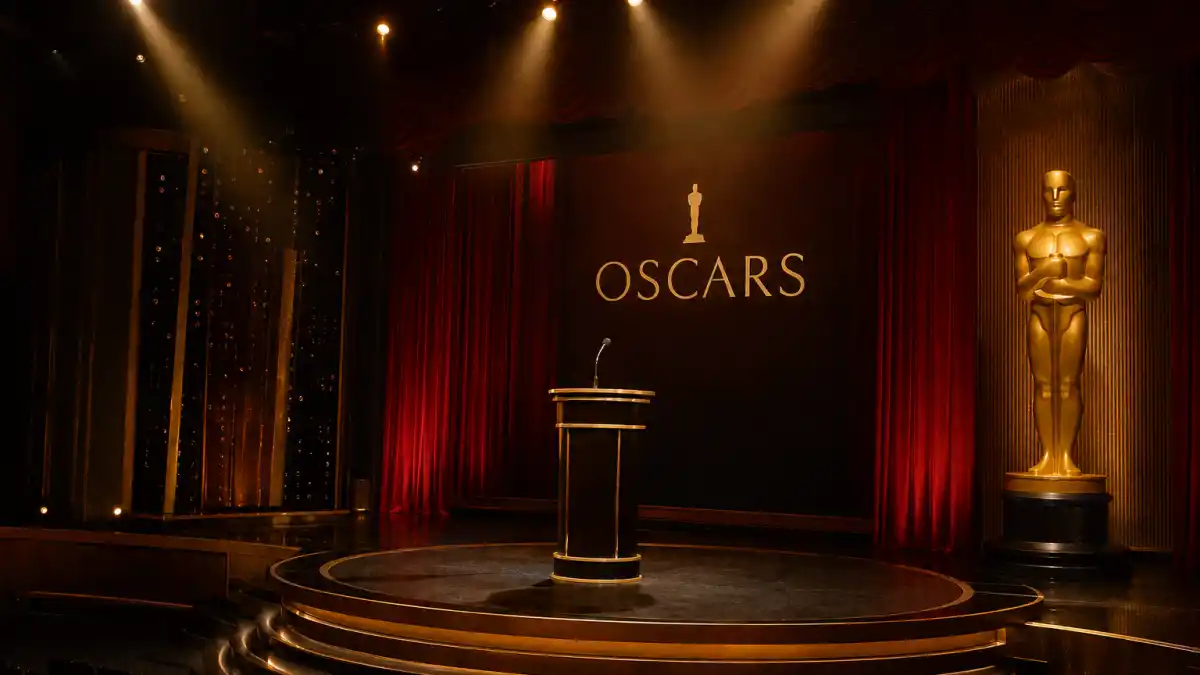
Oscars Streaker 1974 Story: What Actually Happened on April 2
The substantive broadcast record is clear: during the 46th Academy Awards telecast, an uninvited person crossed the stage in full view of cameras while David Niven introduced Elizabeth Taylor. The Oscars streaker 1974 clip — sanitized in many later replays but described in detail by journalists who watched the live feed — shows Opel running from stage right, passing behind Niven, raising a peace sign, and exiting as the audience gasped. Niven paused, then delivered his improvised response before continuing the introduction.
That night, The Sting won Best Picture; The Exorcist and American Graffiti competed in a stacked field. Yet decades later, casual fans often remember the ceremony less for envelopes than for the sprint. The Oscars streaker 1974 sits alongside wrong-win announcements and onstage confrontations in the pantheon of moments that prove the Academy Awards are live events — not a pre-taped variety hour with perfect guardrails.
Understanding the incident requires separating three threads: (1) the on-air chaos and Niven’s wit, (2) the backstage access story of how Opel entered, and (3) the lingering question of staging — whether show producers reportedly anticipated a stunt to juice ratings. All three threads matter for awards historians and broadcast engineers alike.
The 46th Academy Awards: Setting and Broadcast Context
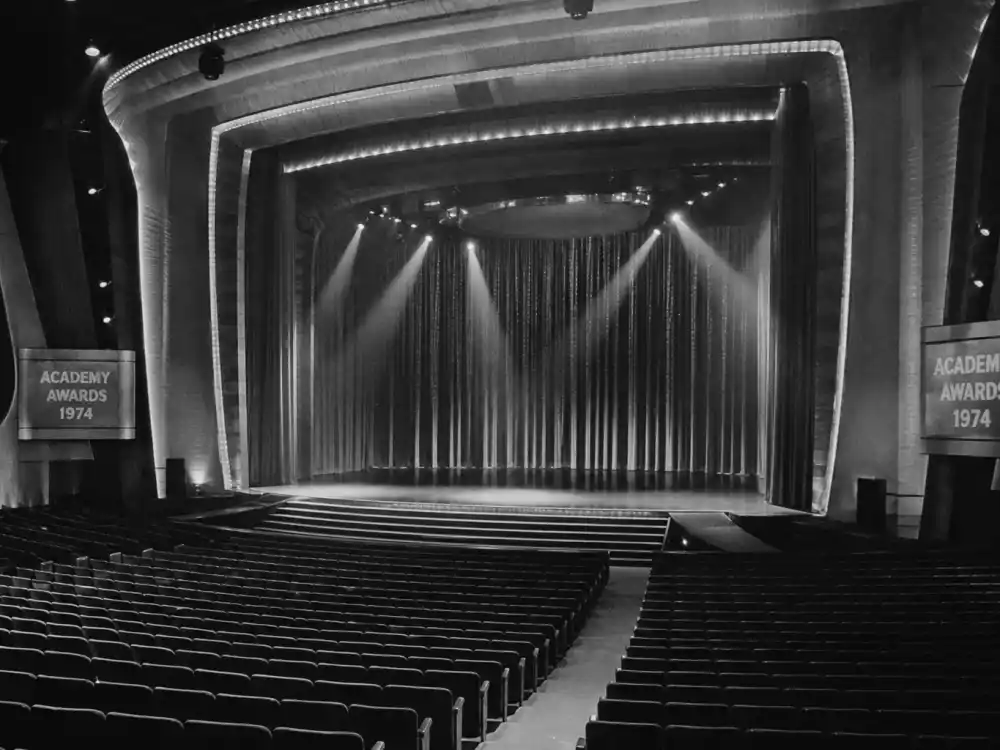
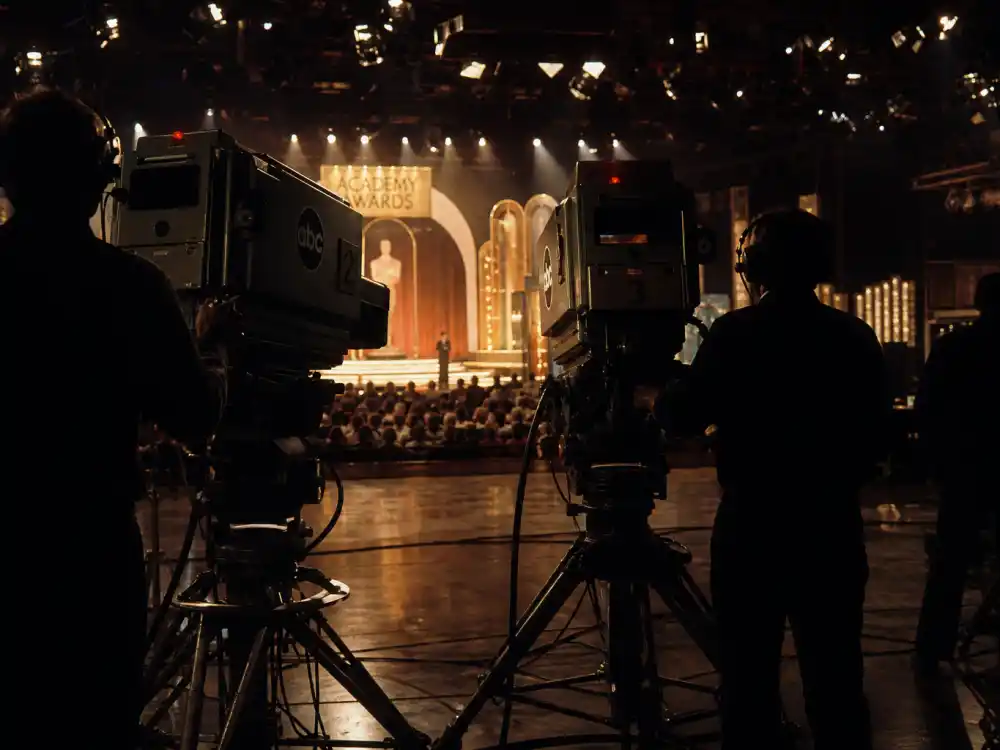
The 46th Academy Awards honored films released in 1973 and aired on ABC from the Dorothy Chandler Pavilion in Los Angeles. Host duties fell to David Niven, John Huston, Burt Reynolds, and Diana Ross in a rotating format typical of the era. Television viewership was enormous — the Oscars already functioned as a national appointment telecast, with households tuning in for both the competition and the spectacle.
Live broadcast technology in 1974 lacked the multi-second delay buffers that became standard after later on-air surprises. Engineers cut to wide shots or commercials when crises erupted, but the Oscars streaker 1974 reached millions before directors could react. Contemporary newspaper accounts described switchboards lighting up at ABC affiliates; the incident headlined entertainment sections for weeks.
Best Picture winner The Sting — directed by George Roy Hill and starring Paul Newman and Robert Redford — deserved its own victory lap. Instead, pop-culture memory often pairs the con-artist caper with a very different kind of con: a man who reportedly posed as press to reach the wings. We chronicle winners in our Oscar Best Picture winners by year complete list; here we focus on how the Oscars streaker 1974 hijacked the night’s secondary narrative.
Minute-by-Minute Timeline of the Onstage Disruption
Approaching the Taylor introduction: Niven, a veteran host known for dry British wit, began introducing Elizabeth Taylor — a guaranteed ratings beat in any era. Cameras framed Niven center stage; the orchestra held a soft underscore. Backstage, ushers and security maintained corridor checkpoints, though 1970s protocols were reportedly looser than modern credentialing.
The run: Opel entered from the wing, crossing behind Niven at speed. Witnesses and transcripts describe him raising a peace sign — a gesture aligned with his activist identity — before exiting. The Oscars streaker 1974 lasted only seconds, but live television magnifies seconds into eternity.
Niven’s ad-lib: Rather than fluster, Niven reportedly thanked the intruder for making the show’s only genuine laugh of the night, then added the famous line about “shortcomings” and “predicament.” The audience roared; Taylor eventually reached the podium. Clip hunters still debate whether the quip was spontaneous or partially prepared — Niven’s delivery sounded effortless either way.
Immediate aftermath: Security searched backstage; producers assessed whether the feed had damaged the show’s dignity or boosted buzz. ABC moved on with the ceremony; winners collected statuettes; after-parties traded gossip. By morning, the Oscars streaker 1974 was national news.
Was the Oscars Streaker 1974 Staged?
The staging debate never fully resolved. Some insiders reportedly claimed producers knew a stunt might occur — that Opel had been spotted or that the show tolerated controlled chaos for ratings. Others insisted the breach was a genuine security failure. Documentaries and retrospective articles cite conflicting memories; no single Academy press release settled the question.
What historians agree on: the Oscars streaker 1974 benefited from instant notoriety. Clip shows, talk programs, and print tabloids recycled the story for years. Whether planned or not, the incident functioned as free marketing for a lengthy telecast competing with sitcoms and watercooler conversation. Modern producers studying risk management treat the night as a case study — not because nudity became common at the Oscars, but because it proved how fast an unscripted event travels when cameras are rolling.
We catalog comparable shocks in most iconic Oscar moments of all time; the streaker ranks among the most discussed pre-internet viral moments — spread by rebroadcast and word of mouth rather than social feeds.
Who Was Robert Opel?
Robert Opel — sometimes reported as Robert Opel II or linked to the surname Oppel in archival clips — was not a random prankster. Contemporary profiles described him as a photographer and activist associated with San Francisco’s counterculture scene. He reportedly ran an art gallery and participated in political demonstrations; the peace sign he flashed onstage aligned with antiwar and free-expression causes of the era.
Opel’s path to the Oscars streaker 1974 reportedly involved posing as a journalist or credential-holder to clear backstage security. Press access at major events has always been a vulnerability: laminates, borrowed jackets, and confident walks can open doors when rosters are thick and ushers are overwhelmed. Security tightened in subsequent years — not solely because of Opel, but his sprint accelerated conversations about wing control.
After 1974, Opel remained a fringe cultural figure — interviewed about the stunt, photographed at protests, discussed in underground press. His life ended tragically in 1979 when he was killed during a robbery at his San Francisco gallery. We mention that outcome briefly and respectfully: the Oscars streaker 1974 is one chapter in a life that extended beyond a ten-second run.
How the Oscars Streaker 1974 Changed Live TV
Three broadcast lessons emerged from April 2, 1974:
- Delay buffers — Networks and award shows gradually adopted short delays so directors could cut to wide shots or commercials before objectionable frames reached home viewers.
- Credentialing — Backstage passes became harder to forge; security rosters cross-checked names against press lists more rigorously.
- Presenter training — Hosts rehearsed crisis composure; Niven’s cool response became the gold standard for “something unexpected just happened — keep the show moving.”
The Oscars streaker 1974 did not invent live-TV risk — earlier decades saw wardrobe malfunctions, political protests, and technical failures — but it arrived when the Academy Awards had become a global brand. A breach on that stage carried symbolic weight. Today, producers still reference the night when explaining why award shows maintain emergency scripts and why security holds the wings during high-profile introductions.
David Niven’s Legacy After the Ad-Lib
Niven, already beloved for Around the World in 80 Days and a shelf of comic roles, cemented awards-show legend status with his response. Clip packages pair his line with the sprint — often blurred or cropped in family-friendly edits. Entertainment journalists rank the quip among the greatest unscripted Oscar moments, alongside unexpected winners and emotional speeches.
Elizabeth Taylor’s introduction continued after the interruption; she presented an award without the streak defining her segment. That resilience — stars completing their duties while producers scramble — remains part of Oscar mythology. For a ranked tour of comparable incidents, see most iconic Oscar moments of all time.
Cultural Memory: Why the Streak Still Matters
Fifty years later, the Oscars streaker 1974 survives in documentaries, trivia lists, and “did you know?” social posts. It represents the collision of Old Hollywood glamour — Niven in white tie, Taylor’s star power — with 1970s counterculture provocation. The peace sign reframes the stunt from pure shock value to political gesture, even if viewers at the time debated sincerity.
Unlike competitive upsets — covered in biggest Oscar upsets in history — the streak did not change vote totals or statuette counts. The Sting still won Best Picture; Glenda Jackson and Jack Lemmon took lead acting prizes. The incident mattered for broadcast history, security policy, and the Academy’s relationship with unpredictability.
Modern ceremonies face different risks: social media amplifies slaps, envelope errors, and political speeches faster than 1974 fax machines could. Yet the core lesson holds: live awards television is a high-wire act. The Oscars streaker 1974 proved the wire could wobble — and that a quick-witted host could steady the audience’s nerves.
Quick Reference: Key Figures and Facts
- Ceremony: 46th Academy Awards — April 2, 1974 — Dorothy Chandler Pavilion, Los Angeles
- Presenter onstage: David Niven, introducing Elizabeth Taylor
- Intruder: Robert Opel — photographer and activist, reportedly posed as press backstage
- Gesture: Peace sign while crossing the stage
- Famous ad-lib: Niven on “shortcomings” and “predicament” — widely quoted in retrospectives
- Best Picture winner that night: The Sting
- Broadcast impact: Accelerated adoption of live delay and tighter backstage credentialing
- Opel’s later life: Remained in activist and art circles; killed in a 1979 gallery robbery in San Francisco
Explore More Awards Coverage
- Rank every shock in our most iconic Oscar moments of all time guide.
- Explore competitive surprises in biggest Oscar upsets in history.
- Chronicle winners in our Oscar Best Picture winners by year complete list.
- Visit our Awards archive for ceremony records and historical deep dives.