

In this article10 sections
- Bjork Swan Dress Oscars History: The Night the Carpet Became a Stage
- Marjan Pejoski and the Couture Construction
- Why Bjork Chose the Swan — Art, Film, and Metaphor
- The Egg Moment and Performance-Art Context
- How the Press Misread It — and Later Apologized
- From Worst-Dressed Lists to Museum Cases
- Fashion Legacy: Avant-Garde Red Carpet Before Camp Was Cool
- Common Myths and Corrections
- Why the Swan Dress Still Matters in 2026
- Explore More
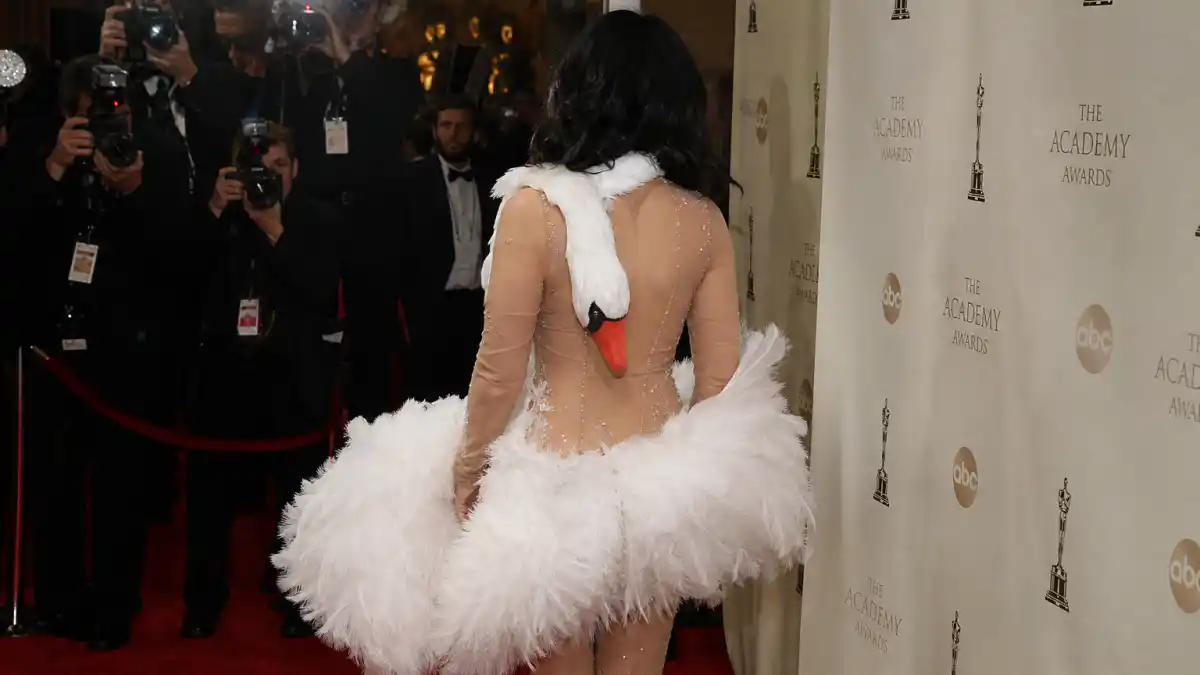
Bjork swan dress Oscars history begins on March 25, 2001, when the Icelandic singer arrived at the Kodak Theatre in a white feathered gown with a plush swan’s neck and head draped over her shoulder — a silhouette so surreal that flash bulbs never stopped firing. She was nominated for Best Original Song for “I’ve Seen It All” from Dancer in the Dark, yet the carpet conversation belonged entirely to Marjan Pejoski’s creation. Commentators called it a joke. Fashion historians now call it prophecy. The dress did not follow Oscar glamour rules; it rewrote them by treating the red carpet as a stage for performance art rather than a showroom for borrowed couture.
This guide maps the full Bjork swan dress Oscars history from Pejoski’s atelier sketch to museum cases, egg-dropping choreography, worst-dressed lists, and the slow reclamation that turned ridicule into canon — who designed the gown, why Bjork chose it, what happened when she laid eggs on the rope line, how the press misread the moment, and why stylists still cite the look when coaching clients through high-risk awards-season statements. Whether you study celebrity fashion for journalism, pop culture, or pure fascination with image-making, you will leave with a complete timeline of the feathered gown that made Oscar night feel like an art installation.
Bjork Swan Dress Oscars History: The Night the Carpet Became a Stage
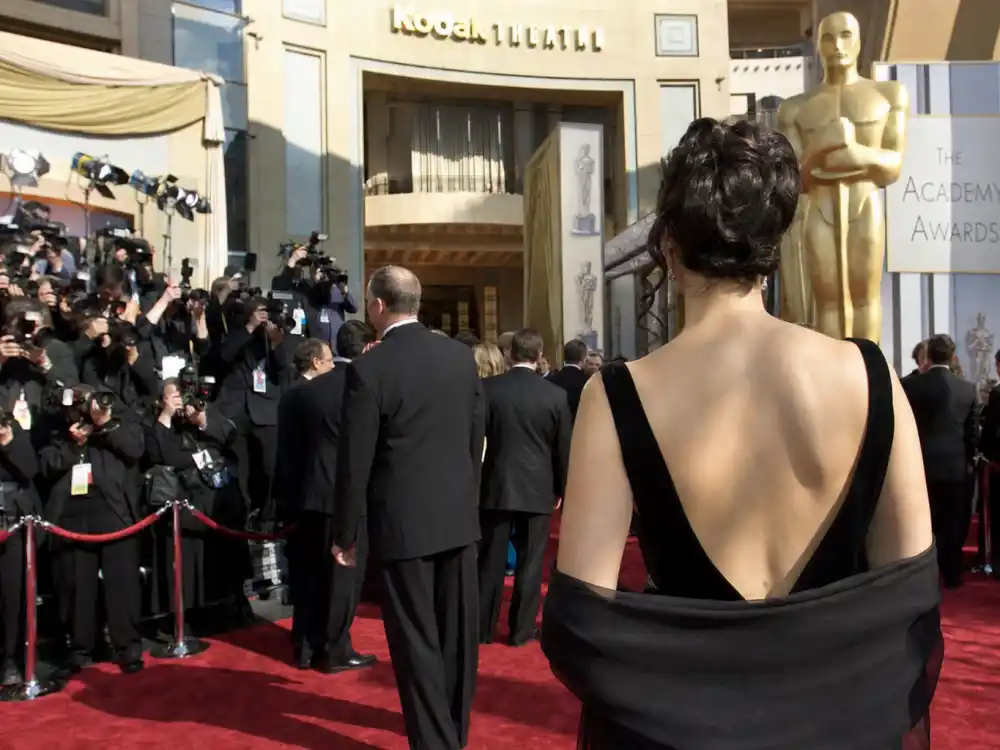
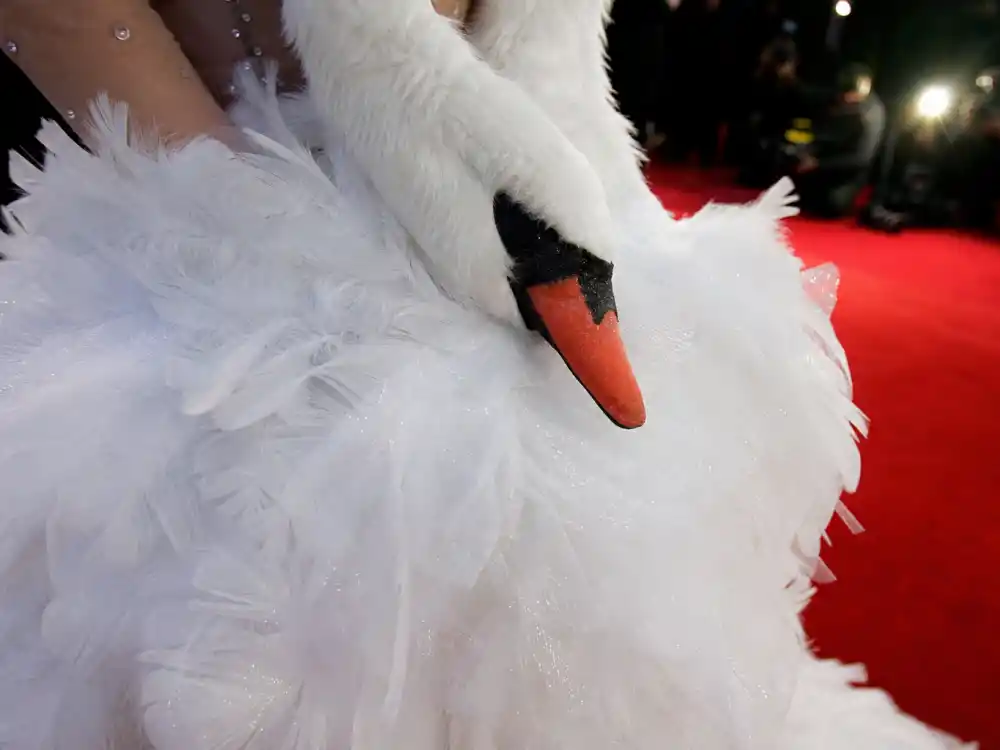
The 73rd Academy Awards marked Hollywood’s return to the Kodak Theatre after years at the Shrine Auditorium. Nominees wore predictable glamour — satin columns, diamond collars, studio-approved elegance. Bjork arrived in something else entirely: a nude mesh bodice scattered with crystals, a tutu-like skirt of white feathers, and a taxidermy-style swan whose orange beak rested against her collarbone. Photographers who expected another sequined sheath instead got a living sculpture walking the velvet rope.
That collision of expectation and invention is the emotional core of any serious reading of Bjork swan dress Oscars history. Bjork did not apologize for the volume or the concept. She posed, turned, and later performed a choreographed bit in which she appeared to lay eggs on the carpet — a surreal extension of the swan metaphor that tabloids treated as madness rather than narrative. By morning, “worst dressed” roundups had a new mascot. By the 2010s, those same roundups were being quoted in museum catalogs as evidence of early-2000s fashion panic.
Marjan Pejoski and the Couture Construction
Macedonian-born designer Marjan Pejoski created the swan dress for his own runway presentation before Bjork adapted it for Oscar night. The garment combined a sheer crystal-studded bodice with layers of white marabou and ostrich feathers engineered to suggest a swan’s body in mid-flight. The swan’s neck and head — the detail everyone remembers — was constructed as a separate sculptural element anchored over the right shoulder, turning the wearer into both mannequin and performer.
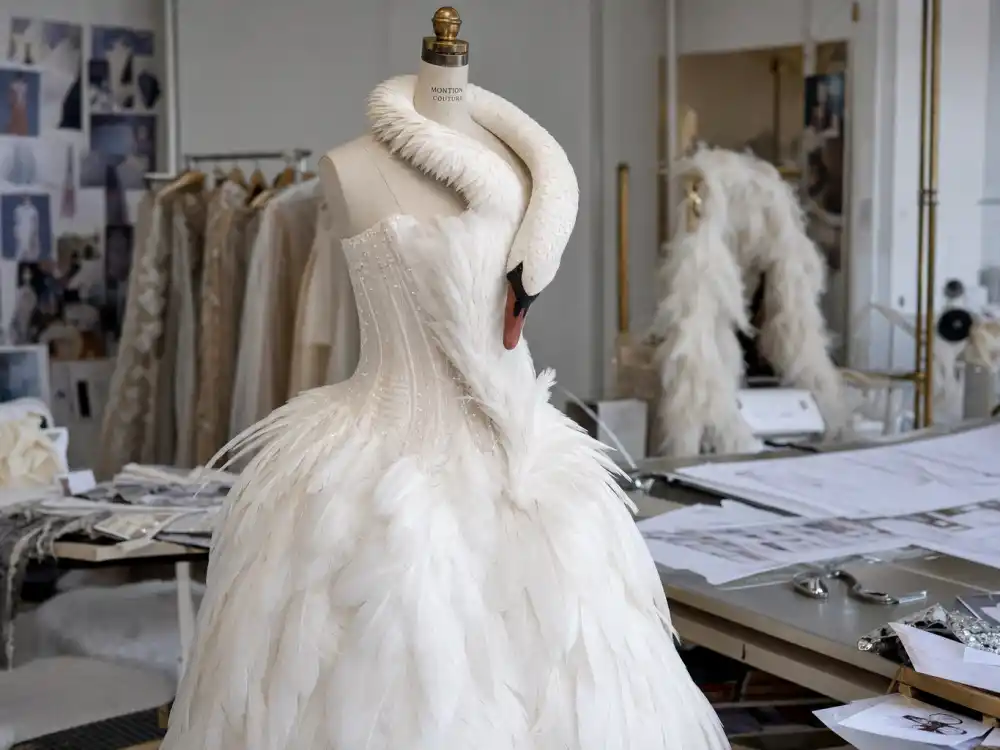
Fashion historians note that Pejoski’s work sat at the intersection of Eastern European club culture and London avant-garde — far from the red-carpet stylists who typically gatekeep Oscar dressing. Bjork’s collaboration with him was deliberate. She had spent the late 1990s treating albums, videos, and public appearances as unified art projects. Choosing a runway piece with a swan head was consistent with that philosophy even if television commentators lacked the vocabulary to describe it. The construction details — hand-applied crystals, feather density calibrated for flash photography, internal structure supporting the swan neck — reveal a garment built for spectacle, not accident.
Why Bjork Chose the Swan — Art, Film, and Metaphor
Bjork arrived at the Oscars as a nominee for Dancer in the Dark, Lars von Trier’s musical tragedy about a factory worker losing her sight while escaping into song-and-dance fantasy. The film’s emotional palette — vulnerability wrapped in theatrical excess — mirrored the dress’s own tension between beauty and absurdity. Bjork later described red-carpet dressing as storytelling. The swan was not random whimsy; it extended the performance persona she had cultivated since the Sugarcubes and refined on albums like Homogenic and Vespertine.
Scholars of Bjork swan dress Oscars history also connect the silhouette to Busby Berkeley’s golden-age Hollywood swimming tableaus — feathered showgirls arranged like petals around a pool. Bjork grew up consuming American pop culture from Iceland and understood Oscar iconography as malleable material. Wearing a swan on a night devoted to cinematic myth-making was her way of inserting folk-tale logic into a broadcast engineered for corporate polish. The dress answered the question “what does an art-pop musician wear when invited into the industry’s cathedral?” with a creature that belongs to ballet, not the boardroom.
The Egg Moment and Performance-Art Context
Hours after the initial carpet photos circulated, Bjork added a second chapter to the narrative by dropping what appeared to be eggs along the red carpet — a stunt that fused Dadaist theater with children’s fable. She had brought a clutch of faux eggs in a basket; photographers captured her bending to place them near her feet while still wearing the gown. Late-night monologues mocked the gesture. Performance-art historians recognized it as consistent with Bjork’s earlier public experiments, including the music videos directed by Michel Gondry and Spike Jonze that treated the body as a prop in surreal narratives.
Understanding the egg sequence matters for accurate Bjork swan dress Oscars history reporting. Critics who stopped at “she laid eggs” missed the through-line: swan mythology, rebirth symbolism, and the artist’s habit of extending a visual idea across an entire evening rather than a single pose. The eggs did not erase the dress’s fashion credentials; they amplified the idea that Oscar night could be interactive installation. Decades later, when celebrities use carpets for political pins, train memos, or meme-ready accessories, they walk a path Bjork cleared with poultry props and feathers.
How the Press Misread It — and Later Apologized
March 2001 media operated on a narrow definition of Oscar elegance. Joan Rivers and Entertainment Tonight segments wanted gowns that photographed cleanly and referenced Old Hollywood. Bjork’s swan violated every checklist: too conceptual, too bulky, too weird for borrowed-jewelry partnerships. “Worst dressed” lists aggregated the dress alongside genuine fashion misfires, treating Pejoski’s construction as a punchline rather than a couture object.
The reappraisal took years. Fashion magazines published retrospectives titled “looks we were wrong about.” Social media rediscovered the carpet photos as memes, then as sincere admiration. By the time Met Gala exhibitions celebrated camp and surrealism, Bjork’s swan was cited as a precursor — proof that the carpet could host ideas, not just inventory. The press arc from mockery to canon is itself a chapter in Bjork swan dress Oscars history: it documents how slowly mainstream fashion media learns to read artists as authors rather than mannequins.
From Worst-Dressed Lists to Museum Cases
The original Pejoski swan dress entered museum culture through acquisitions and high-profile loans. The Museum of Modern Art in New York has exhibited the garment as design object and performance artifact, placing it steps away from chairs, cars, and architectural models — a context that strips away celebrity gossip and asks viewers to evaluate feather engineering on its merits. Fashion institutes use the dress in lectures about 2000s avant-garde and about the economics of scandal-driven press cycles.
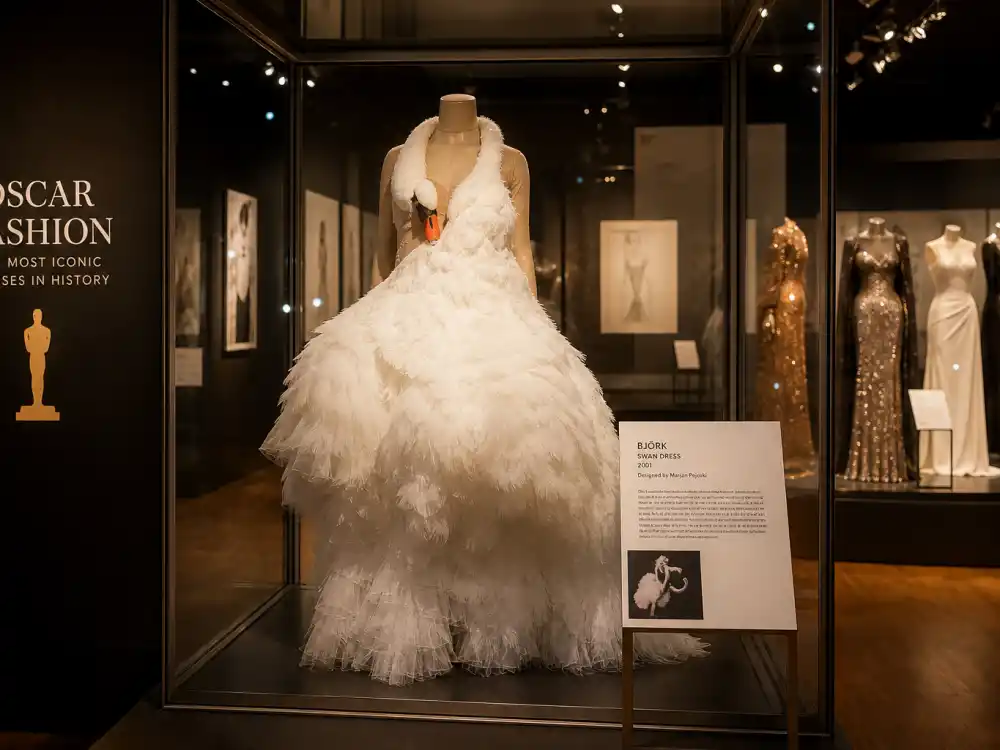
Replicas and photographic archives circulate in documentaries about Oscar fashion disasters that became triumphs. Costume designers studying the early 2000s obsess over how the swan neck attached without collapsing during hours of movement. Each museum label that mentions Bjork reintroduces Bjork swan dress Oscars history to audiences born after the broadcast, keeping search interest alive across generations.
Fashion Legacy: Avant-Garde Red Carpet Before Camp Was Cool
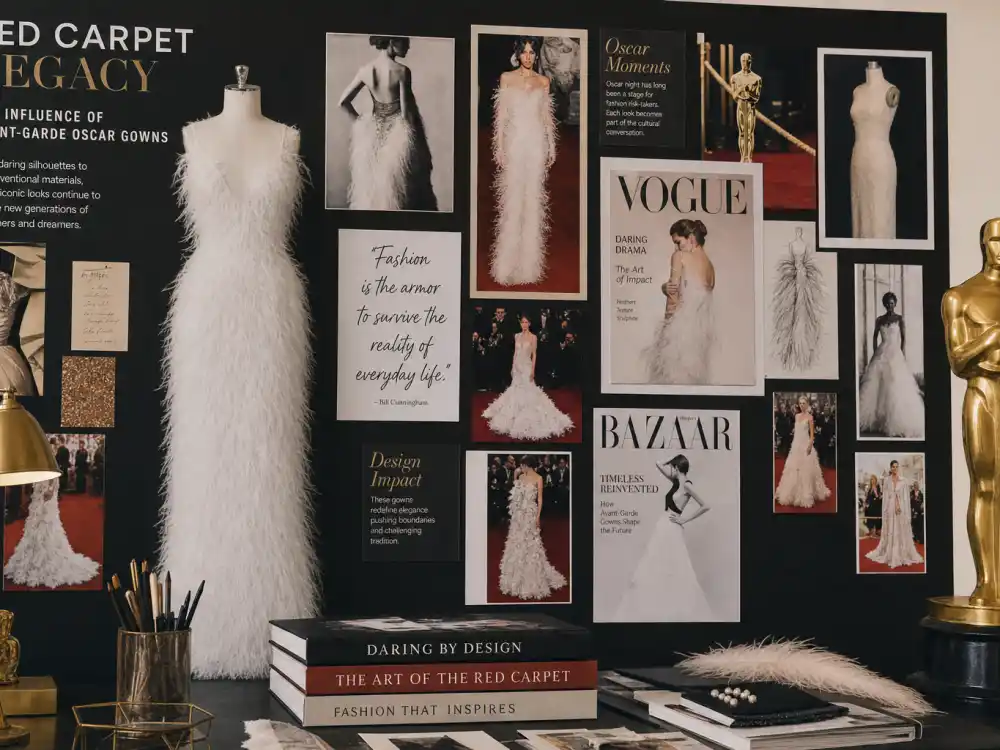
Long before “camp” became a Met Gala theme with a formal definition, Bjork demonstrated how surrealism could hijack a televised rope line. The swan dress influenced designers who treat celebrity dressing as conceptual art — from Iris van Herpen’s sculptural 3D-printed frames to later Oscar appearances that prioritize narrative over neckline symmetry. Stylists now maintain a private category of “Bjork energy” looks: garments risky enough to spawn memes but coherent enough to survive them.
The dress also expanded protest and statement fashion beyond slogan tees. Bjork’s statement was zoological, cinematic, and absurd — a combination that unsettled traditionalists precisely because it refused anger in favor of fairy-tale logic. Contemporary stars navigating awards seasons still borrow that permission when they choose a gown that looks like installation art instead of a safe column. The Bjork swan dress Oscars history timeline is therefore a masterclass in delayed vindication: ridicule first, textbook pages later.
Common Myths and Corrections
Myth one: Bjork wore the dress as a publicity stunt unrelated to her nomination. Reality: she was a legitimate Best Original Song nominee for Dancer in the Dark; the swan extended her film’s emotional vocabulary rather than replacing it. Myth two: the dress was thrown together at the last minute. Reality: Pejoski showed the design on his runway; Bjork selected and adapted a fully constructed couture piece. Myth three: Bjork regretted the look immediately. Reality: interviews across the 2000s and 2010s show her defending the choice and laughing at worst-dressed lists — the regret narrative belongs to commentators, not the artist.
Accurate Bjork swan dress Oscars history reporting holds all three truths: the carpet moment was authored, the construction was serious couture, and public interpretation lagged years behind the artist’s intent.
Why the Swan Dress Still Matters in 2026
Twenty-five years after the Kodak Theatre flash bulbs, feathered surrealism still appears on carpets, music videos, and fashion-week runways whenever designers want to signal fearless authorship. Streaming documentaries about Oscar fashion disasters-with-happy-endings premiere with the swan frame in trailer montages. Costume archivists study the neck attachment when building period wardrobes for the early 2000s. The dress remains a masterclass in treating celebrity image as continuous performance — a skill public figures still need when cameras outnumber microphones.
For USA Celebs readers tracking celebrity fashion as cultural signal, the Bjork swan dress Oscars history is the benchmark case study for avant-garde Oscar dressing: one gown, one egg basket, infinite aftershocks across media, museums, and design education. No replica captures the original electricity, but every surreal carpet moment participates in the legacy.
Explore More
- Browse our Fashion section for celebrity style history and red-carpet breakdowns.
- Read Lady Gaga meat dress explained for another protest-dressing moment that confused then conquered the press.
- See Cher naked dress Bob Mackie history for Oscar-era glamour that broke its own rules.
- Compare Jennifer Lopez green Versace dress history for a carpet look that also started as punchline fodder.
- Check Rihanna yellow Met Gala cape dress for modern red-carpet confidence dressing.
For background, see coverage from Vogue, Harper’s Bazaar, and the Academy of Motion Picture Arts and Sciences on 2001 Oscar fashion, Marjan Pejoski’s design archive, and museum exhibitions featuring the swan dress.