

In this article12 sections
- Rihanna Yellow Met Gala Cape Dress: The 2015 Moment
- Guo Pei: The Designer Behind the Yellow Cape
- Construction: Embroidery, Silk Faille, and Fur Trim
- The Train: Why Size Became the Story
- China: Through the Looking Glass — Theme Fidelity
- Styling, Hair, and the Late Arrival Strategy
- Cultural Impact and Meme Legacy
- How the Yellow Dress Changed Rihanna's Fashion Arc
- Comparisons to Other Iconic Met Gala Gowns
- Where to See Guo Pei and the Dress Today
- Why People Still Search the Yellow Cape Dress in 2026
- Explore More
Rihanna yellow Met Gala cape dress is the single most searched Met Gala gown of the 2010s — a custom golden-yellow silk faille creation by Chinese couturier Guo Pei with a fur-trimmed cape and a cathedral-scale embroidered train that swallowed the Metropolitan Museum steps on May 4, 2015. Theme that night: China: Through the Looking Glass. Rihanna arrived late, as always, and turned the Costume Institute carpet into a global runway laboratory. Paparazzi flashes made the yellow read as liquid gold. Social feeds froze on one image: a pop icon in couture so monumental it required handlers, a staircase adjustment, and two years of hand embroidery to complete. More than a decade later, the Rihanna yellow Met Gala cape dress still defines how fashion fans talk about risk, volume, and cultural homage on the Met steps.
This guide unpacks everything readers still search about the Rihanna yellow Met Gala cape dress in 2026 — who designed it, how long construction took, why the China theme mattered, how Guo Pei became a household name overnight, and why stylists still cite the look when briefing clients for dramatic red-carpet moments. Whether you discovered the gown through memes, fashion-history reels, or a deep dive into Met Gala archives, you will leave with a complete, fact-checked read on the cape, the train, the embroidery, and the legacy behind fashion’s most iconic yellow dress.
Rihanna Yellow Met Gala Cape Dress: The 2015 Moment
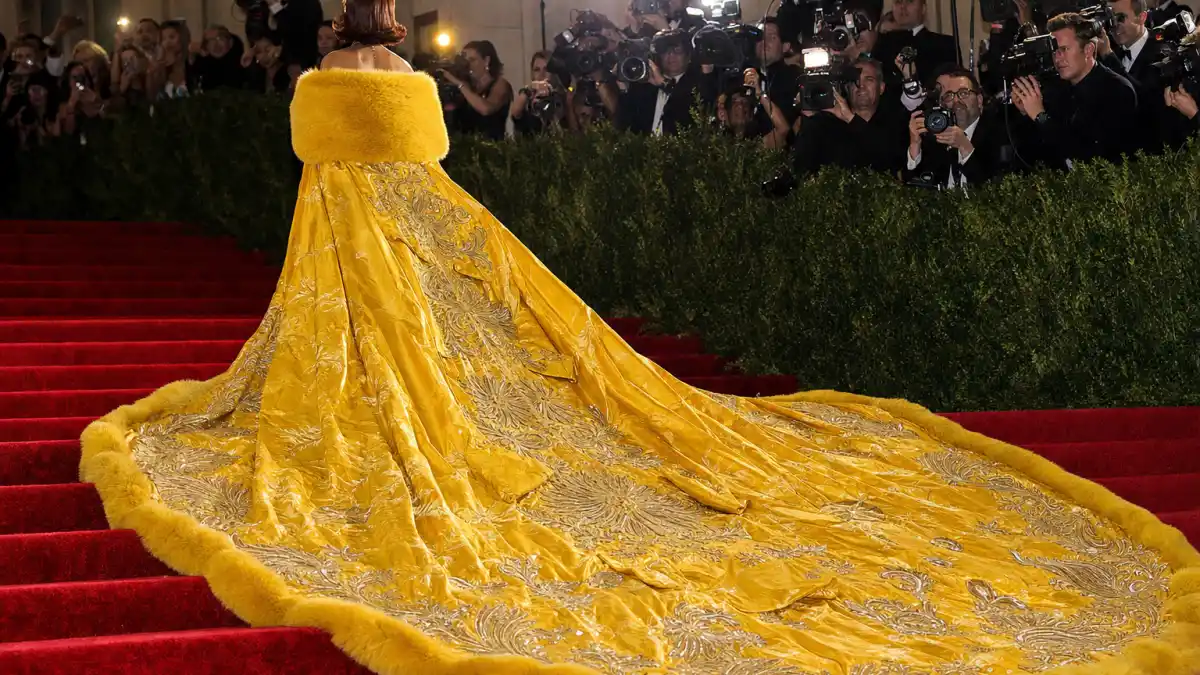
The 2015 Met Gala took place on the first Monday in May under the exhibition China: Through the Looking Glass — a Costume Institute show exploring how Chinese aesthetics shaped Western fashion imagination across centuries. Rihanna wore a custom Guo Pei Haute Couture ensemble: golden-yellow silk faille gown, matching fur-trimmed cape, and an embroidered train so massive photographers shot from the plaza below to fit the full silhouette in frame. She paired the look with a gold headpiece, swept hair, and minimal jewelry so the garment remained the only headline.
Within minutes the Rihanna yellow Met Gala cape dress owned search trends, meme culture, and fashion-editor group chats. Critics debated whether the volume was glorious or excessive; fans called it the night Rihanna became fashion royalty; Guo Pei’s atelier phone lines reportedly rang for weeks. The dress did not just fit the theme — it embodied it through genuine couture craft rather than costume cliché. That distinction is why the Rihanna yellow Met Gala cape dress remains in syllabi, museum retrospectives, and Pinterest boards labeled “Met Gala GOAT.”
Guo Pei: The Designer Behind the Yellow Cape
Any serious study of the Rihanna yellow Met Gala cape dress starts with Guo Pei. The Beijing-based couturier built her house on hand embroidery, imperial color palettes, and garments that treat the body as a canvas for narrative textile art. Before 2015, Guo Pei was revered in China and known to fashion insiders globally; after Rihanna’s arrival, she became a name casual fans could recite alongside Chanel and Versace. The Met look was not a showroom pull — it was a bespoke commission requiring roughly two years of atelier work according to contemporary reporting.
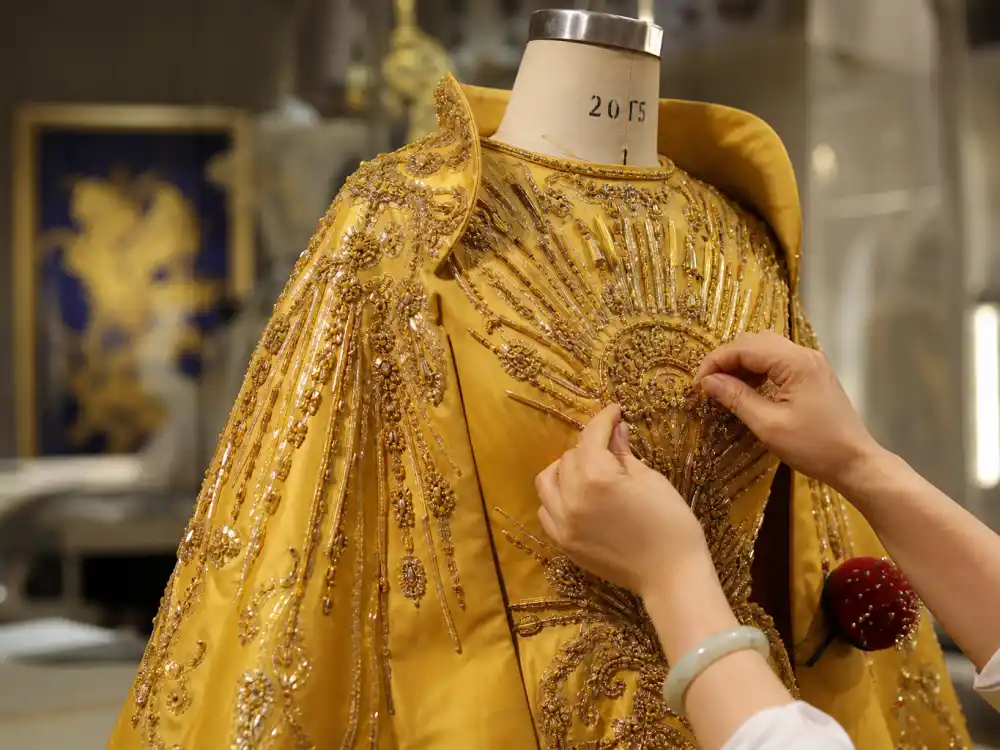
Guo Pei’s design language blends Chinese decorative tradition with European haute couture structure — boning, lining, weight distribution, and the engineering required to move a train across stone stairs without collapse. For the Rihanna yellow Met Gala cape dress, that meant sunburst gold embroidery across yellow faille, fur trim adding regal weight to the cape edge, and internal support so the cape could sit on shoulders for hours. Fashion historians now cite the collaboration as a turning point for non-Western couture visibility on the Met carpet.
Construction: Embroidery, Silk Faille, and Fur Trim
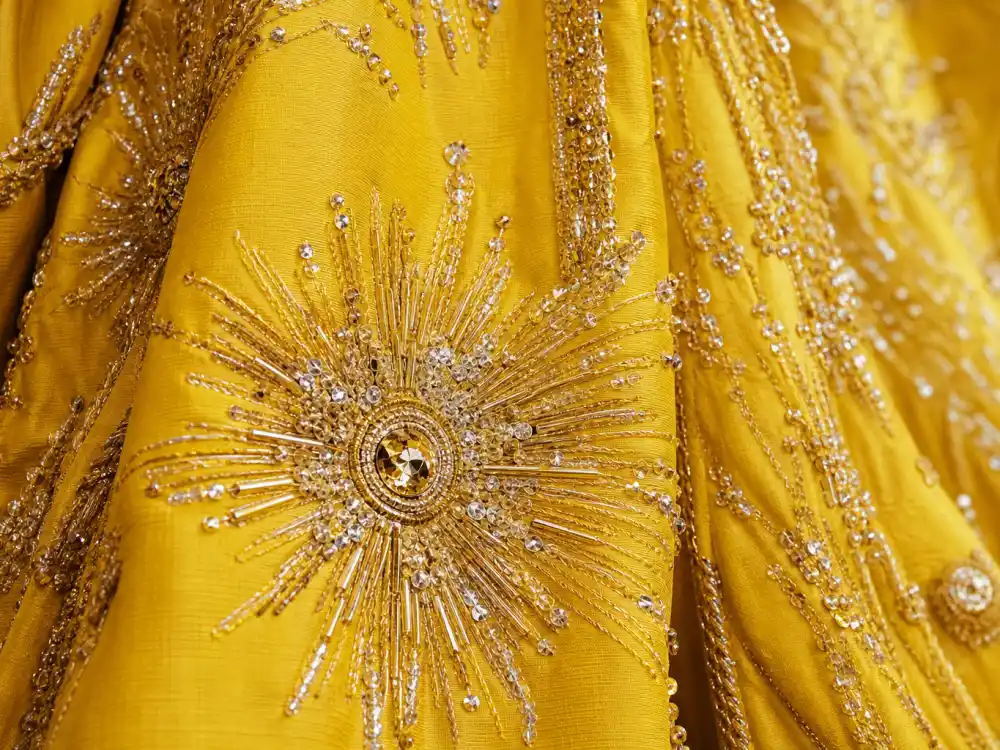
The material story of the Rihanna yellow Met Gala cape dress is half its legend. Silk faille — a ribbed, structured silk with a subtle sheen — gave the yellow body enough stiffness to hold embroidery without sagging. Artisans applied sunburst motifs in gold thread and crystal accents over months of bench work. The fur trim on the cape added literal and visual weight, signaling imperial opulence and cold-weather couture drama even on a mild May evening in Manhattan.
Construction photos from the era show teams of embroiderers working in relay — a scale Western houses reserve for wedding gowns and state occasions, not pop-star red carpets. Yet Rihanna’s team understood the Met as a state occasion for fashion. The Rihanna yellow Met Gala cape dress had to survive car exit, stair ascent, livestream cameras, and hundreds of still photographers before Rihanna reached the museum doors. That durability requirement is why the garment reads as couture artifact rather than disposable red-carpet prop.
The Train: Why Size Became the Story
Trains existed on Met carpets before 2015, but the Rihanna yellow Met Gala cape dress recalibrated what “big” meant. The circular spread of yellow faille and fur on the steps created a halo effect — a sun disk in fabric form. Handlers managed the train’s edge so Rihanna could navigate stairs without tripping. Low-angle paparazzi shots turned the train into the foreground and the museum facade into backdrop, which is why the image works as thumbnail, poster, and meme crop decades later.
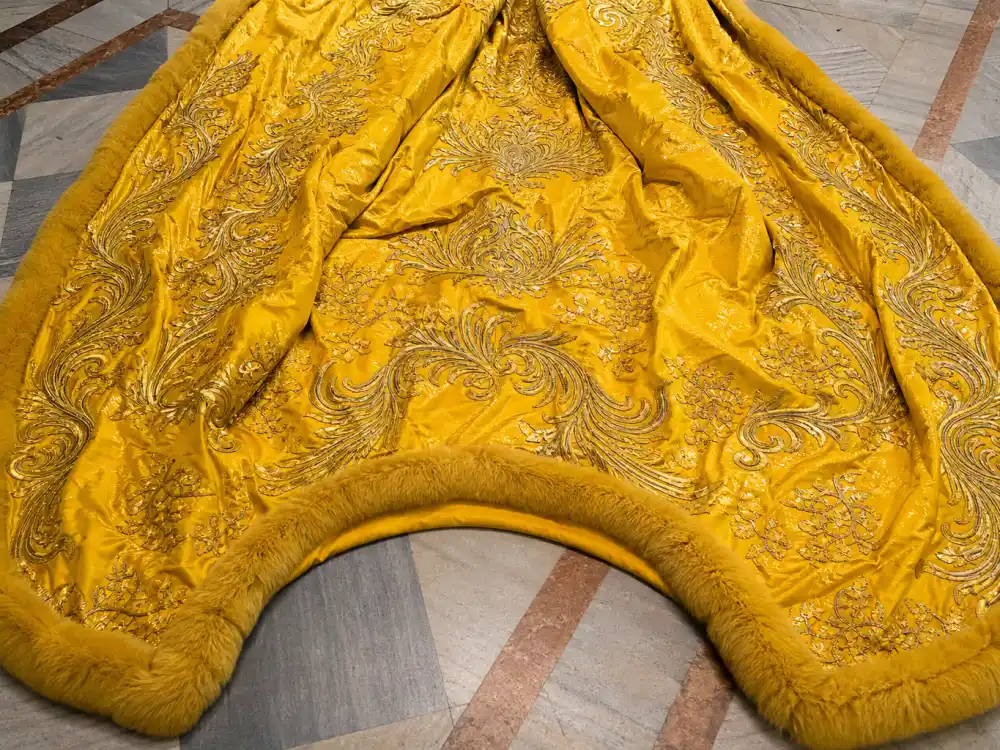
Stylists analyzing the Rihanna yellow Met Gala cape dress today talk about “train strategy” — how volume forces photographers to shoot wide, guaranteeing uniqueness in every gallery. Fast fashion copied the yellow palette and cape silhouette within seasons, but none replicated the engineering. The train is why the Rihanna yellow Met Gala cape dress still appears in “best Met looks ever” lists while safer column gowns from the same night fade from memory.
China: Through the Looking Glass — Theme Fidelity
Theme compliance separates memorable Met looks from random couture loans. China: Through the Looking Glass invited guests to engage with Chinese art, film, export porcelain aesthetics, and the Western fashion industry’s historical fascination with the East. The Rihanna yellow Met Gala cape dress answered through Guo Pei’s authentic craft — imperial yellow associated with Chinese royalty, embroidery techniques rooted in regional atelier tradition, and silhouette references to ceremonial dress without sliding into caricature.
Debate followed, as it should with any cross-cultural fashion moment on a global stage. Some commentators praised Rihanna for platforming a Chinese designer; others scrutinized power dynamics in luxury fashion. What remains undisputed in Rihanna yellow Met Gala cape dress coverage is that the garment sparked conversation about who gets to narrate cultural dress on Western red carpets — a conversation still active every May when the Met announces its theme.
Styling, Hair, and the Late Arrival Strategy
Rihanna’s Met arrivals are events inside the event. She traditionally reaches the carpet after peak livestream hours, ensuring fresh photographers and hungry social feeds. For the Rihanna yellow Met Gala cape dress, lateness amplified impact: coverage shifted from roundup posts to breaking push alerts. Hair stayed sleek with a gold headpiece echoing embroidery. Makeup favored glowing skin and a statement lip that read on camera against yellow faille. Jewelry stayed minimal — the cape was the jewel.
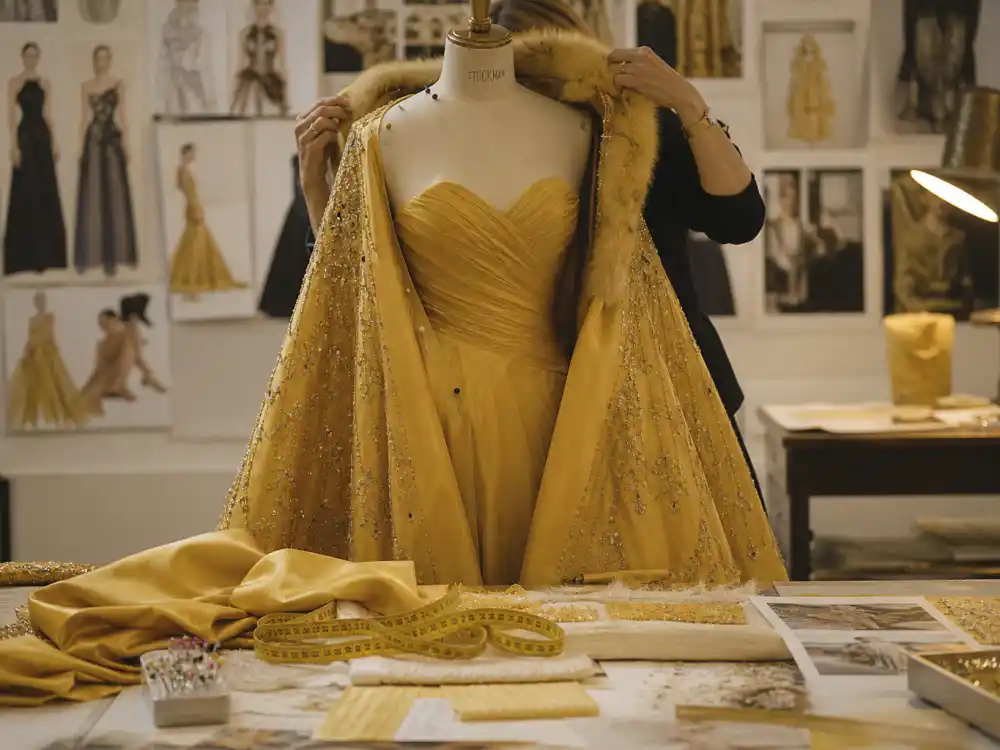
Stylist Mel Ottenberg has shaped many Rihanna Met moments, translating her appetite for risk into garments that survive real-world carpet physics. The Rihanna yellow Met Gala cape dress required choreography — handlers, car timing, stair rehearsal — that fans rarely see but fashion insiders respect. That backstage discipline is part of why the look still educates stylists training for awards season volume.
Cultural Impact and Meme Legacy
The Rihanna yellow Met Gala cape dress became instant internet language. Comparison memes stacked the train against pizza slices, parking spaces, and apartment floor plans. Fashion TikTok generations who never watched the 2015 livestream still recognize the yellow halo on sight. Guo Pei’s business profile rose globally; museum exhibitions later featured her work; fashion students wrote papers connecting the gown to imperial textile history and contemporary celebrity influence.
Retail impact followed predictably. Yellow formal gowns spiked in search the following prom and awards seasons. Cape overlays appeared on ready-to-wear runways. Embroidery houses reported increased inquiries from stylists wanting “Guo Pei energy” without Guo Pei timelines. The Rihanna yellow Met Gala cape dress proved that one carpet image can reshape color trends for years — a metric fashion marketers still chase every Met Monday.
How the Yellow Dress Changed Rihanna’s Fashion Arc
Rihanna arrived at the 2015 Met already a fashion force — Fenty collaborations, Dior campaigns, and a history of red-carpet experimentation. The Rihanna yellow Met Gala cape dress elevated that reputation from “stylish pop star” to “fashion sovereign.” Later Met hits — papal Margiela in 2018, Balenciaga black sculpture in 2021, Valentino maternity white in 2023 — each built on permission the yellow gown granted: go monumental, go late, go controversial if the craft supports it.
For entrepreneurs studying Rihanna’s arc, the Rihanna yellow Met Gala cape dress also foreshadowed Fenty’s design confidence. If you will wear a two-year embroidery commission on the Met steps, you will later launch beauty and lingerie lines demanding the same bold aesthetic POV. Fashion credibility and business credibility intertwined on those stairs — a lesson luxury brands now teach in executive seminars using Rihanna’s Met archive as case study.
Comparisons to Other Iconic Met Gala Gowns
Met history includes Lagerfeld-era Chanel armor, Lady Gaga’s multi-look arrivals, and Zendaya’s narrative transformations — but the Rihanna yellow Met Gala cape dress occupies a unique lane: single-garment maximalism without costume changes. Kim Kardashian’s wet dress, Blake Lively’s Statue of Liberty reveal, and Florence Pugh’s sheer controversies each generated headlines through different mechanisms. Rihanna’s yellow moment won through sheer textile spectacle and theme fidelity rather than shock transparency alone.
When readers ask which Met dress to show someone who knows nothing about fashion, editors still lead with the Rihanna yellow Met Gala cape dress because the image explains itself — yellow, huge, unforgettable. That accessibility keeps search volume alive across generations and platforms, long after trend cycles reset.
Where to See Guo Pei and the Dress Today
Couture of this caliber rarely sits in a celebrity closet like a party dress. The Rihanna yellow Met Gala cape dress belongs to fashion history — documented in photography books, exhibition catalogs, and digital archives at Vogue, Harper’s Bazaar, and the Costume Institute’s media ecosystem. Guo Pei has presented subsequent collections on Paris Haute Couture calendars, carrying forward the visibility Rihanna unlocked. Museum retrospectives on China and fashion periodically display related Guo Pei pieces, allowing audiences to see embroidery craft up close without the carpet chaos.
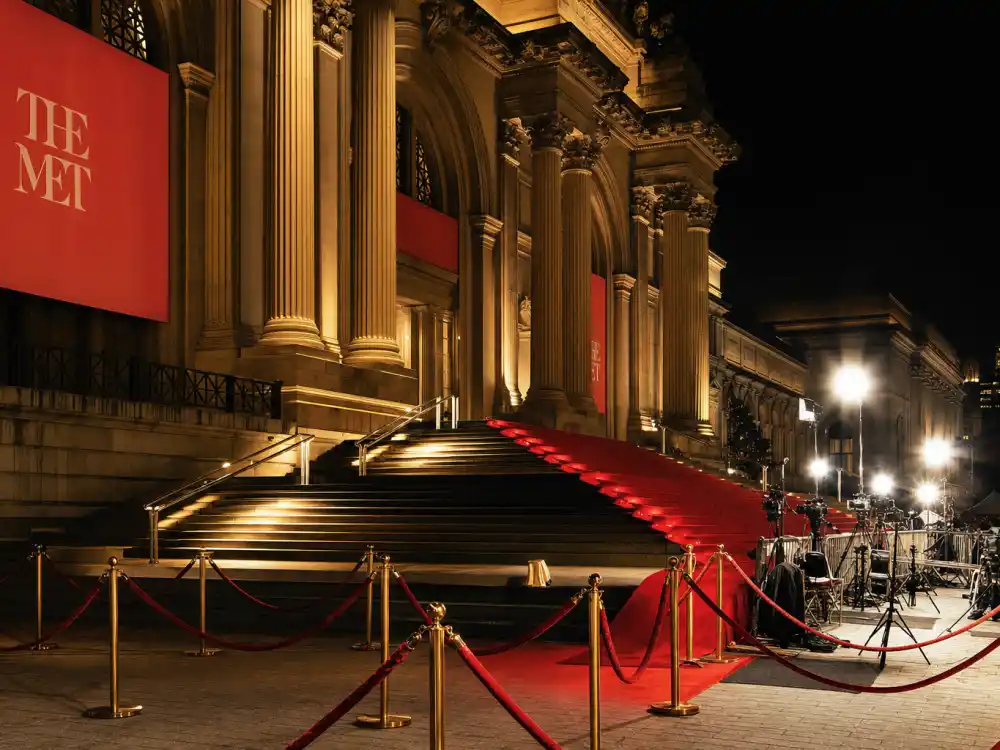
For fans planning Met pilgrimages, the Metropolitan Museum steps themselves remain a tourist photo site partly because of the Rihanna yellow Met Gala cape dress mythos — visitors recreate wide-angle train poses without knowing they are quoting 2015. That spatial memory is rare in fashion: a dress so tied to a physical location it becomes part of the building’s popular identity.
Why People Still Search the Yellow Cape Dress in 2026
Search interest in the Rihanna yellow Met Gala cape dress persists because the look is visually unique and narratively complete — designer discovery story, theme context, construction legend, meme afterlife, and influence on subsequent Met dressing. Every May, fashion media republish “greatest Met looks” galleries; the yellow gown tops most lists. New documentaries and streaming retrospectives reintroduce the image to audiences who were children in 2015.
For USA Celebs readers, the Rihanna yellow Met Gala cape dress is both celebrity moment and fashion literacy test. Understanding the gown means understanding Guo Pei’s atelier, the China exhibition, Rihanna’s late-arrival strategy, and why volume still wins on the Met steps when craft backs the spectacle. That depth is why a dedicated explainer outranks scattered wiki entries — and why the yellow cape dress will still be studied at the next gala, and the one after that.
Explore More
- Browse our Fashion section for Met Gala breakdowns and red-carpet analysis.
- Read what Rihanna wore to Met Gala for her full year-by-year Met archive beyond the 2015 yellow moment.
- See Jennifer Lopez green Versace dress history for another gown that rewrote red-carpet search history.
- Compare Lady Gaga meat dress explained for a different kind of fashion shock on the carpet.
- Check how to dress like Rihanna on a budget for translating icon energy into everyday style.
For background, see coverage from Vogue, Harper’s Bazaar, and the Metropolitan Museum of Art on the 2015 Met Gala, Guo Pei’s couture, and the China: Through the Looking Glass exhibition.