

In this article10 sections
- Grammy Categories Explained Full Guide: The Big Four General Field
- Record of the Year vs. Song of the Year vs. Album of the Year
- Genre Fields: How the Ballot Is Organized
- Specialty Categories: Producers, Engineers, Composers, and More
- How Many Grammy Categories Exist? The ~90+ Count
- Televised vs. Non-Televised Categories
- Category History: From 28 Trophies to the Modern Ballot
- How Categories Connect to Voting (Cross-Link Guide)
- Quick Reference: Grammy Categories Explained
- Explore More Grammy Coverage
Grammy categories explained full guide — Grammy categories explained is the cheat sheet every awards-season viewer needs — because the telecast shows roughly a dozen trophies while the Recording Academy actually distributes awards across more than 90 categories in a single ceremony cycle. The gap between what CBS airs and what voters decide backstage is where confusion lives: fans wonder why a blockbuster album can win Rap Album yet lose Album of the Year, or why a producer they’ve never heard of shares a stage moment with a pop superstar. This full guide maps the Big Four general-field prizes, every major genre field, the critical difference between Record of the Year, Song of the Year, and Album of the Year, specialty categories for engineers and composers, which honors are televised versus not, and how the ballot evolved from 1959 to the 68th Grammy Awards era. Cross-link to our Grammy winners complete list 2026 (#19262), Grammy nominations 2026 full list (#19589), and how are Grammy winners chosen voting (#19706) explainer once you understand the category map — voting rules only make sense when you know what each trophy actually measures.
The Recording Academy reorganizes fields every few years — merging dance and electronic, splitting global music lanes, retiring redundant categories — so Grammy categories explained is not a static list. What follows reflects the current structure through the 2025–2026 eligibility window, with historical notes where category names changed but the underlying craft stayed the same.

Grammy Categories Explained Full Guide: The Big Four General Field
The General Field — often called the Big Four — is the only cluster every eligible voting member may influence in the final round regardless of specialty credentials. These four trophies anchor the telecast and drive most headline coverage:
- Album of the Year (AOTY): Honors the full album — performance, production, and sequencing — credited primarily to the artist and featured performers. Producers and engineers on the winning album also receive trophies.
- Record of the Year (ROTY): Honors a specific recording — the finished track as heard — regardless of whether it appears on an album or standalone single. Performers and production team share credit.
- Song of the Year (SOTY): Honors the composition — melody and lyrics — credited to songwriters, not the performing artist unless they co-wrote the song.
- Best New Artist (BNA): Honors artistic breakthrough during the eligibility period; not a lifetime achievement prize. Eligibility rules exclude artists with prior nomination history in certain performance categories.
When fans search Grammy categories explained, the Big Four confusion usually starts here: an artist can sweep genre awards yet lose all four general-field races if the broader membership splits votes differently than rap- or country-field specialists. Our Grammy winners complete list 2026 shows who actually took each Big Four slot at the latest ceremony.

Record of the Year vs. Song of the Year vs. Album of the Year
No section of Grammy categories explained generates more social-media arguments than the Record/Song/Album trio. Think of three different jobs on one hit:
- Album of the Year judges the entire body of work — tracklist cohesion, sequencing, overall artistic statement. A perfect single cannot win AOTY without a nominated album behind it.
- Record of the Year judges one recording’s performance and production quality — the sonic product. The same song can win Record and Song in the same year when performers and writers overlap, but the categories remain distinct.
- Song of the Year judges songwriting craft — structure, lyrics, melody. A vocalist who did not write the track can win Record while the songwriter takes Song.
Example frame without naming current nominees: imagine a powerhouse vocal on a track written entirely by outside songwriters. Record of the Year credits the singer and producers; Song of the Year credits the writers; Album of the Year requires the parent album to be nominated and win on aggregate merit. That split is why Grammy categories explained matters for fairness debates — fans conflate “best song” with “best record” constantly.

Genre Fields: How the Ballot Is Organized
Beyond the General Field, the Grammys divide most awards into genre fields — silos where voters with demonstrated expertise in that style carry extra weight during nomination rounds. Major fields include:
- Pop — Pop Solo Performance, Pop Duo/Group, Pop Vocal Album, and related slots.
- Rock, Metal & Alternative — Rock Song, Rock Album, Metal Performance, Alternative categories after recent merges.
- R&B, Rap & Spoken Word Poetry — R&B Performance, Rap Album, Melodic Rap Performance, and spoken-word poetry after category expansion.
- Country & American Roots — Country Song, Country Album, Americana, bluegrass, and roots gospel lanes.
- Jazz, Traditional Pop, Musical Theater — Jazz Vocal Album, Large Jazz Ensemble, musical theater cast albums.
- Global Music, Latin, Reggae, New Age, Ambient — Global Music Performance/Album, Latin Pop, Regional Mexican, tropical Latin, reggae, and related international categories.
- Gospel & Contemporary Christian — Gospel Performance, Contemporary Christian Music Album.
- Classical, Composition & Choral — Classical compendium, opera, choral, and contemporary classical composition.
- Music for Visual Media, Composition & Arrangement — Scores for film, TV, video games, plus arranging categories.
- Production, Engineering, Composition & Arrangement — Producer of the Year, engineering awards, immersive audio.
Each field contains multiple specific categories — sometimes overlapping with the General Field when a pop album competes for both Pop Vocal Album and Album of the Year. Field structure shapes outcomes documented in our Grammy nominations 2026 full list: nomination-round specialists advance genre favorites that the full membership may not prioritize in final voting.

Specialty Categories: Producers, Engineers, Composers, and More
Roughly half of Grammy categories explained coverage happens off-camera. Specialty categories honor crafts that rarely get red-carpet questions but define how records sound:
- Producer of the Year, Non-Classical — Portfolio award for A&R/production impact across multiple projects.
- Engineering categories — Best Engineered Album, Non-Classical; Immersive Audio Album; classical engineering parallels.
- Instrumental categories — American Roots Instrumental, jazz instrumental solos, classical instrumental solo with and without orchestra.
- Packaging and liner notes — Album Notes, Recording Package — physical-release craft categories surviving the streaming era.
- Historical and archival — Best Historical Album, remastering and reissue excellence.
- Musical theater and score — Musical Theater Album, scores for visual media split by genre.
Winners in these lanes receive the same gold gramophone as Album of the Year recipients — they simply accept during the afternoon Premiere Ceremony or via pre-recorded segments rather than on the prime-time stage. When you read Grammy categories explained lists online, specialty depth is why totals exceed 90 even though casual viewers can name only ten trophy types.

How Many Grammy Categories Exist? The ~90+ Count
The exact number shifts annually. The Academy adds categories when new formats demand recognition — Latin urban, global fusion, video game scores — and retires or merges others when entry volume drops. Recent cycles land between 91 and 94 awards per ceremony, counting the General Field, genre awards, specialty crafts, and lifetime/non-competitive honors separately.
For Grammy categories explained purposes, think in buckets:
- ~4 General Field (Big Four)
- ~50–55 genre-field performance and album/song categories across pop, rock, country, R&B, rap, Latin, global, jazz, gospel, classical, and musical theater
- ~25–30 production, engineering, composition, arrangement, packaging, historical, and visual-media categories
- ~5–8 special merit / lifetime / trustees awards (non-competitive, not voted like standard categories)
The official Recording Academy category guide PDF updates each cycle — our how are Grammy winners chosen voting piece explains who votes in which of those buckets once you know they exist.
Televised vs. Non-Televised Categories
CBS prime time typically airs 10–12 competitive categories plus performances — a sliver of the full slate. The Premiere Ceremony (formerly held at the Convention Center, now often streamed) hands out dozens of awards before the main telecast begins. Rule of thumb for Grammy categories explained:
- Almost always televised: Album, Record, and Song of the Year; Best New Artist; major genre album/performance highlights (Pop, Rap, Country, R&B) selected for audience appeal.
- Usually Premiere Ceremony only: Classical compendiums, many jazz instrumental awards, packaging, historical albums, niche global subgenres, most engineering prizes.
- Variable: Producer of the Year and some composition awards — sometimes clipped into montages on the main show.
Non-televised does not mean minor. An immersive audio engineer’s Grammy validates career-defining work even if Twitter never trends it. Clips from the Premiere Ceremony increasingly circulate on YouTube and social platforms, partially closing the visibility gap.
Category History: From 28 Trophies to the Modern Ballot
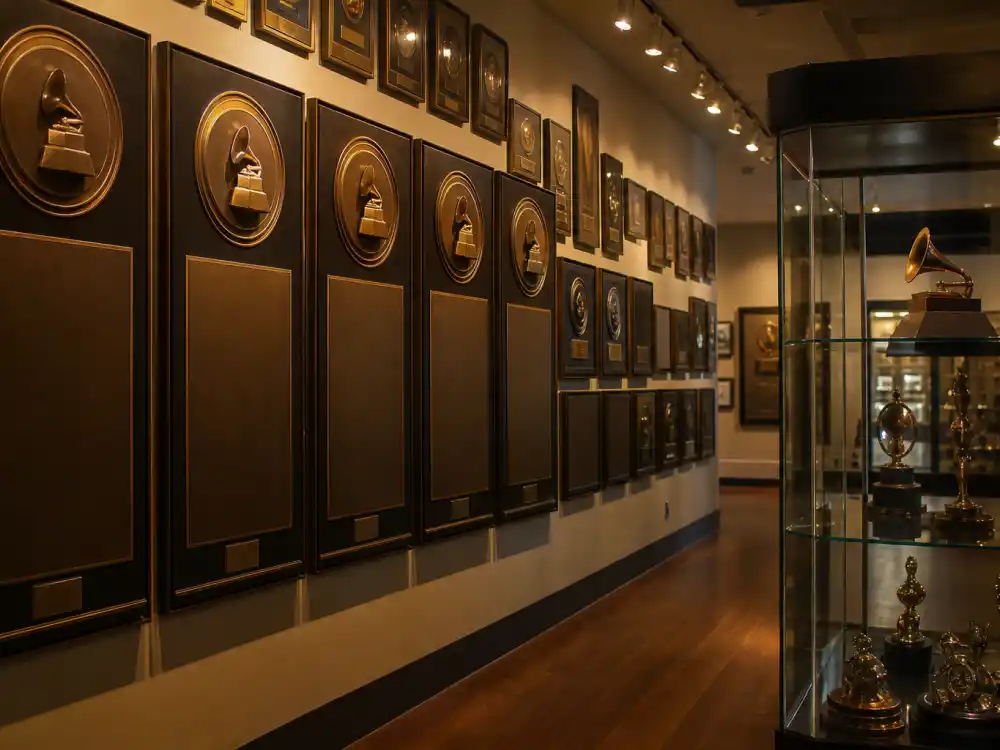
The first Grammy Awards in 1959 presented just 28 categories — mostly pop, jazz, classical, and children’s recordings reflecting postwar record-industry structure. Explosive genre fragmentation across the 1960s–1980s ballooned the count past 70, peaking above 100 before consolidation efforts trimmed redundancy.
Landmark changes relevant to Grammy categories explained:
- 1959: Inaugural ceremony — no Best New Artist (added 1960).
- 1960s–1970s: Country, R&B, and rock fields expand; folk and gospel categories appear.
- 2011–2012: Major consolidation — total categories cut from 109 to 78 amid criticism the ballot was bloated.
- 2010s–2020s: Streaming-era additions — Rap Performance splits, Global Music replaces World Music, Latin urban categories, video game score recognition.
- 2024 reforms: Further nomination-slot expansion in major categories; continued global music lane refinement for the 67th and 68th ceremonies.
Retired categories linger in trivia — Best Polka Album (2009), Best Hawaiian Music Album, Best Traditional World Music Album — even though modern voters never see them. Historical context explains why veteran artists hold win totals impossible under today’s narrower map.
How Categories Connect to Voting (Cross-Link Guide)
Categories are labels; voting mechanics decide winners. Three links complete the picture:
- Nominations: Field-weighted round one produces five (sometimes eight) finalists per category — see the output in our Grammy nominations 2026 full list.
- Final ballots: All eligible members vote General Field categories; genre categories filter by voter credentials — detailed in the voting explainer.
- Results: Winners listed in our Grammy winners complete list 2026 once envelopes open.
Without Grammy categories explained, voting guides feel abstract. With it, you know why a songwriter celebrates Song of the Year while a producer chases Producer of the Year, Non-Classical — different ballots, same ceremony night.
Quick Reference: Grammy Categories Explained
- Big Four: Album of the Year, Record of the Year, Song of the Year, Best New Artist
- Record vs. Song vs. Album: Recording vs. composition vs. full album body of work
- Genre fields: Pop, Rock, R&B/Rap, Country, Jazz, Classical, Latin, Global, Gospel, Musical Theater, Production
- Total competitive categories: ~91–94 per cycle (varies by year)
- Televised: ~10–12 on CBS prime time; majority at Premiere Ceremony
- History: 28 categories (1959) → 100+ peak → consolidated modern slate
Explore More Grammy Coverage
- Every 2026 winner in Grammy winners complete list 2026.
- Nomination shortlists in Grammy nominations 2026 full list.
- Peer voting mechanics in how are Grammy winners chosen voting.
- Visit our Awards archive for ceremonies, records, and history guides.