

In this article9 sections
- Audrey Hepburn Little Black Dress Givenchy: When Cinema Invented the Modern LBD
- Hubert de Givenchy and the Couture Partnership
- Pearls, Gloves, and the Accessory Formula
- From Screen Still to Global Dress Code
- Auction Fever and the Myth of the Single Dress
- Museum Canonization and Fashion Education
- Why the Givenchy LBD Still Matters in 2026
- Common Myths and Corrections
- Explore More
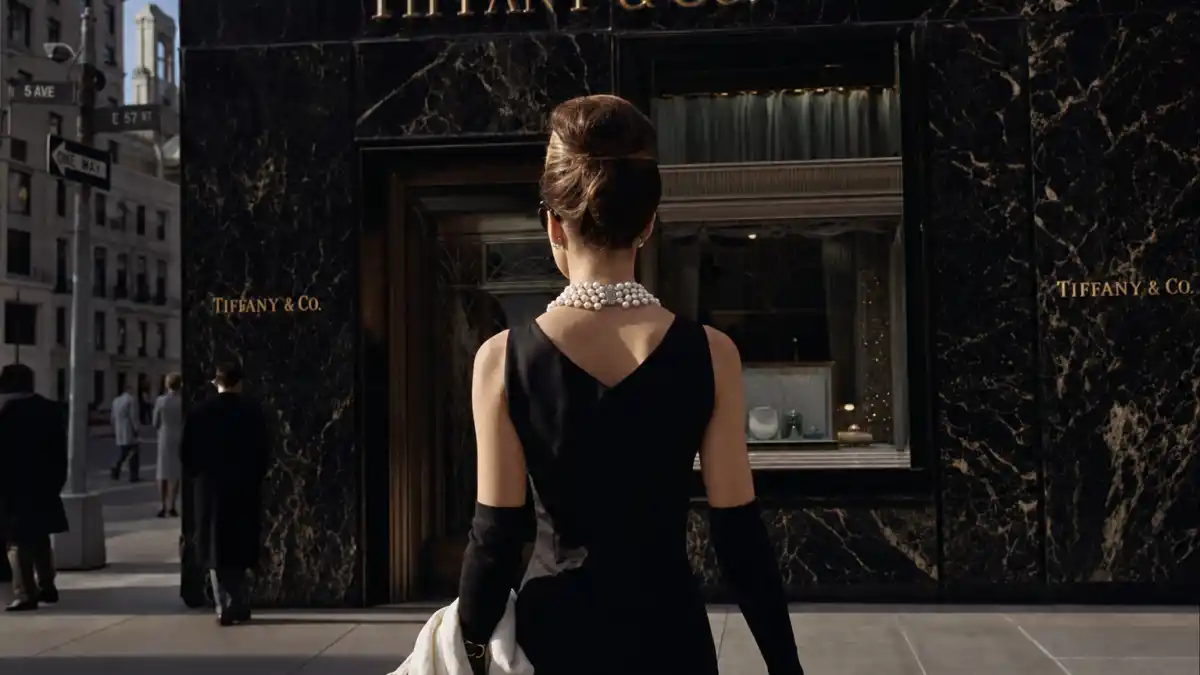
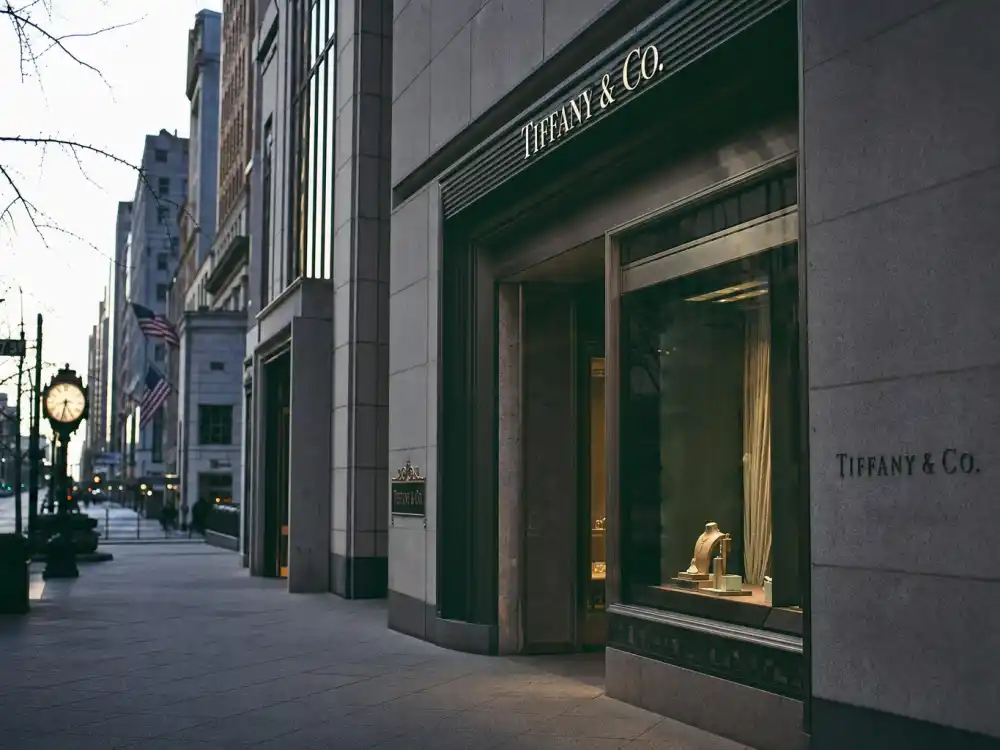
Audrey Hepburn little black dress Givenchy history begins not on a red carpet but on a quiet Fifth Avenue sidewalk before dawn, when Holly Golightly — played by Hepburn in Blake Edwards’s 1961 film Breakfast at Tiffany’s — steps out of a taxi in a sleeveless black sheath, opera gloves, and a multi-strand pearl choker to gaze into the Tiffany & Co. window with a pastry and coffee in hand. The dress was not costume-department improvisation. Hubert de Givenchy, the Paris couturier Hepburn had trusted since Sabrina, adapted his runway vocabulary into a column so lean it read as modern even among the bouffant silhouettes of early-sixties Hollywood. Within a year the image migrated from cinema stills to magazine covers to department-store mannequins, and the phrase “little black dress” stopped meaning generic cocktail attire and started meaning this exact proportion: bateau neckline, fitted bodice, straight skirt to the ankle, nothing competing with pearls for attention.
This guide maps the full Audrey Hepburn little black dress Givenchy timeline from atelier fittings on Avenue George V to auction-house fever, fast-fashion replication, and the slow canonization of a garment that taught generations how to dress with restraint — who cut the silk, why Hepburn insisted on Givenchy rather than studio wardrobe, what the pearls and gloves added to the silhouette, how costume archivists preserve the originals, and why fashion historians still cite the look when teaching minimalist glamour. Whether you study celebrity style for journalism, film costume, or pure fascination with how one morning scene rewrote American dressing codes, you will leave with a complete account of the black Givenchy sheath that made breakfast at a jewelry store feel like haute couture.
Audrey Hepburn Little Black Dress Givenchy: When Cinema Invented the Modern LBD
Released October 5, 1961, Breakfast at Tiffany’s arrived as American audiences were hungry for European sophistication filtered through New York mythmaking. Hepburn’s Holly was not a debutante; she was a freelance girl-about-town whose wardrobe mixed thrift with borrowed glamour. The opening sequence — edited to Henry Mancini’s “Moon River” predecessor textures and empty Manhattan streets — needed a dress that could carry symbolism before dialogue began. Edwards and costume supervisor Edith Head’s team collaborated with Givenchy’s Paris workrooms to deliver a column in black silk or silk-blend crepe (archival accounts vary by production copy versus auction specimen) with a shallow boat neckline and armholes cut high enough to showcase collarbone and pearls without vulgarity.
That collision of European couture discipline and Hollywood narrative economy is the emotional core of any serious reading of Audrey Hepburn little black dress Givenchy coverage. The gown did not shout status through beading or fur; it whispered access — the kind of dress a woman might wear to an upscale party and then, fictionally, to stare at diamonds before the city wakes. By the time the film grossed beyond studio projections, retailers were already labeling any sleeveless black column “Holly style,” and Givenchy’s name became inseparable from Hepburn’s public brand the way Atelier Versace later attached to Jolie’s Oscar carpet.
Hubert de Givenchy and the Couture Partnership
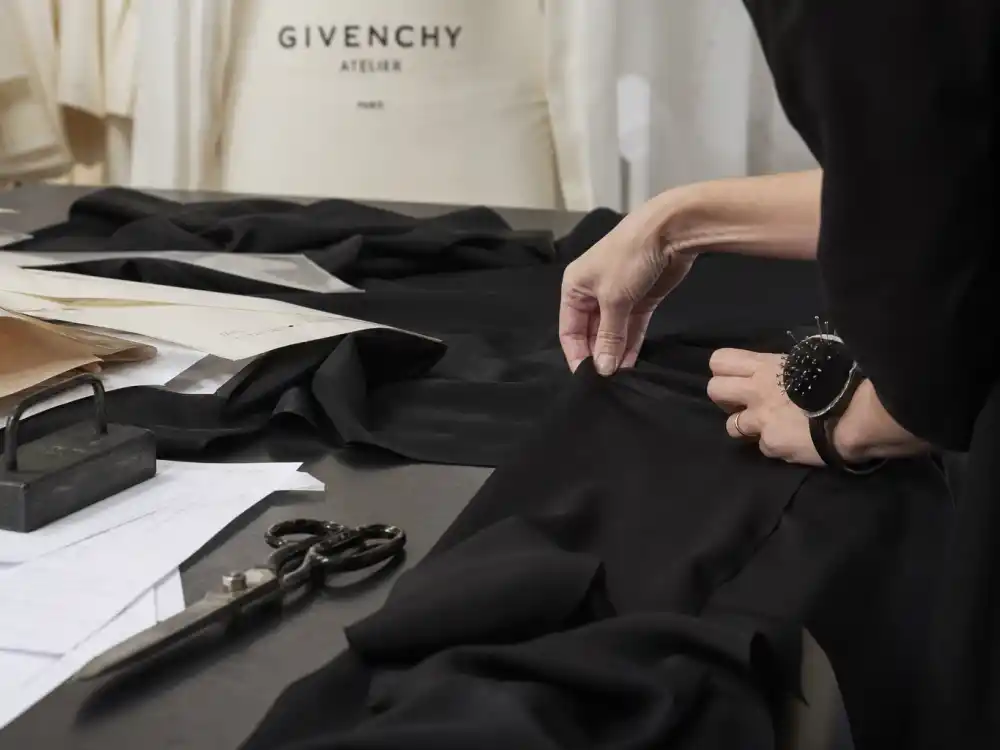
Hepburn met Hubert de Givenchy in 1953 while preparing for Sabrina. She arrived at his Paris salon expecting “Hubert” and found a young couturier only twenty-six years old; the fitting chemistry was immediate. He understood her dancer’s posture — long neck, narrow shoulders, proportional waist — and built lines that followed bone structure instead of padding it. By Breakfast at Tiffany’s, their collaboration was a decade deep: he supplied gowns for publicity tours, charity galas, and key film moments while she became his living mannequin in press photography.
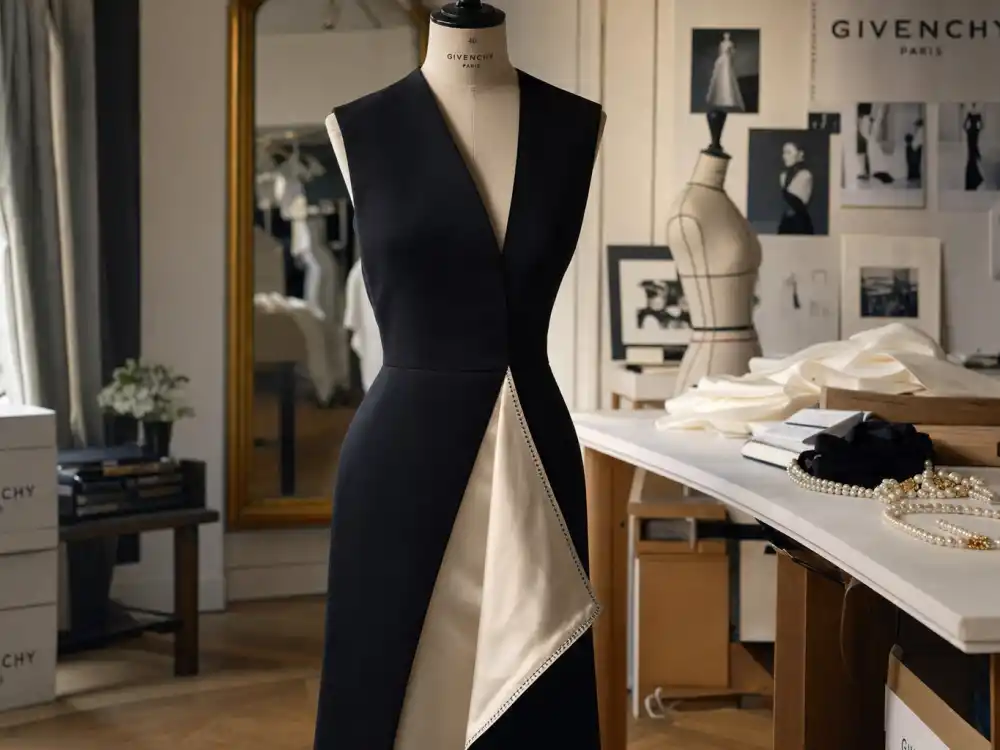
Fashion historians note that Givenchy in the early 1960s was refining a “separates” philosophy — clean skirts, crisp blouses, controlled palettes — that aligned with Hepburn’s off-screen preference for simplicity. The Breakfast at Tiffany’s dress distilled that ethos into one uninterrupted vertical line. Internal structure — hand-finished seams, weighted hem, possibly horsehair or organza support at the waist depending on which surviving specimen you study — kept the skirt from collapsing during repeated takes on the chilly October 1960 location shoot. That engineering mattered once Hepburn held a coffee cup in gloved hands while standing still for multiple camera angles.
Pearls, Gloves, and the Accessory Formula
Costume logic on the Tiffany sidewalk stacked three non-competing textures: matte black silk, glossy pearls, and elongated black gloves. The multi-strand pearl necklace — reportedly costume jewelry rather than Tiffany stones — caught early-morning light and drew the eye upward to Hepburn’s chignon, itself a reference to French ballerina grooming. Opera-length gloves extended the arm line so the dress could remain sleeveless without feeling bare, a compromise between evening formality and the character’s improvised breakfast ritual.
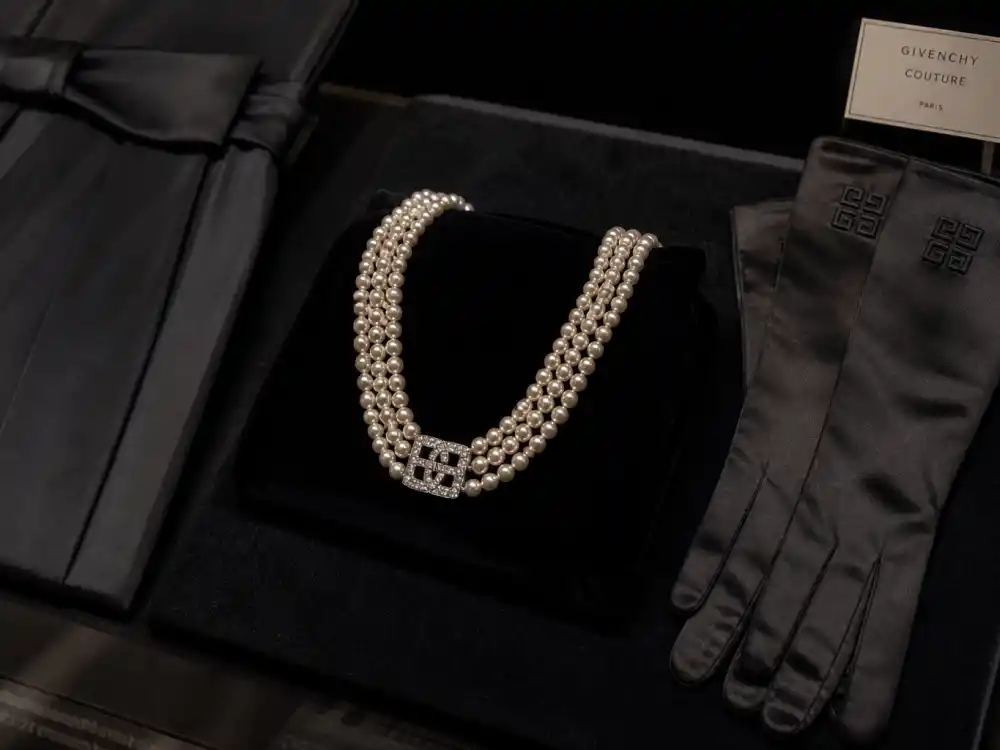
Retail buyers in 1962 reported surging demand for pearl chokers paired with sleeveless black dresses. Stylists writing for Vogue and Harper’s Bazaar framed the trio as “total look” dressing years before Instagram grids made that phrase unavoidable. Understanding the accessory architecture matters for accurate Audrey Hepburn little black dress Givenchy reporting: remove the pearls and the dress reads like a cocktail sheath; add them and the character reads like aspiration with a wink.
From Screen Still to Global Dress Code
Paramount’s marketing leaned on Hepburn’s existing fashion-icon status — Funny Face (1957) and Sabrina (1954) had already positioned her as the antidote to Marilyn Monroe bombshell excess. The Tiffany opening distilled that brand into one frame. Department stores from Chicago to Los Angeles mounted window displays pairing black columns with pastry props and faux Fifth Avenue signage. European editions of fashion magazines ran sepia-toned stills alongside Givenchy runway photography, blurring the line between costume and couture client wardrobe.
Scholars of celebrity image-making connect the look to postwar minimalism — Chanel’s interwar LBD democratized black for day; Givenchy and Hepburn re-exported it as cinematic fantasy for the jet age. The dress answered the question “how does a film teach millions of women to want one specific silhouette?” with restraint instead of spectacle. Contemporary red-carpet minimalism — single-color columns, one statement jewel, hair pulled back — still traces a line to that October morning outside Tiffany’s.
Auction Fever and the Myth of the Single Dress
Multiple black dresses circulate in private collections and museums labeled Breakfast at Tiffany’s lineage. Christie’s and other houses have sold Hepburn-associated Givenchy garments with six-figure results; journalists often collapse them into “the” dress even when construction details differ slightly — neckline depth, lining color, repair history. Costume archivists urge precision: the screen-worn principal gown, backup copies for continuity, and publicity tour replicas each tell different chapters in Audrey Hepburn little black dress Givenchy history.
Understanding auction fever matters because it keeps search interest alive across generations who discover Hepburn through streaming rather than repertory cinema. Each headline reignites debate about whether the LBD belongs in a museum or on a mannequin in a traveling exhibition. Givenchy’s own archives and the Audrey Hepburn Children’s Fund have, at various points, lent pieces for charity displays — proof that the garment functions simultaneously as cultural artifact and fundraising icon.
Museum Canonization and Fashion Education
By the 1990s, costume institutes at major museums began treating the Hepburn-Givenchy collaboration as required curriculum in twentieth-century dress. Exhibitions pairing film stills with physical garments explain how Hollywood costume departments translated Paris measurements to soundstage continuity. Students who cannot access vault pieces still study the Tiffany still as a masterclass in framing — wide shot for city loneliness, medium shot for jewelry reflection on glass, close detail on pearls.
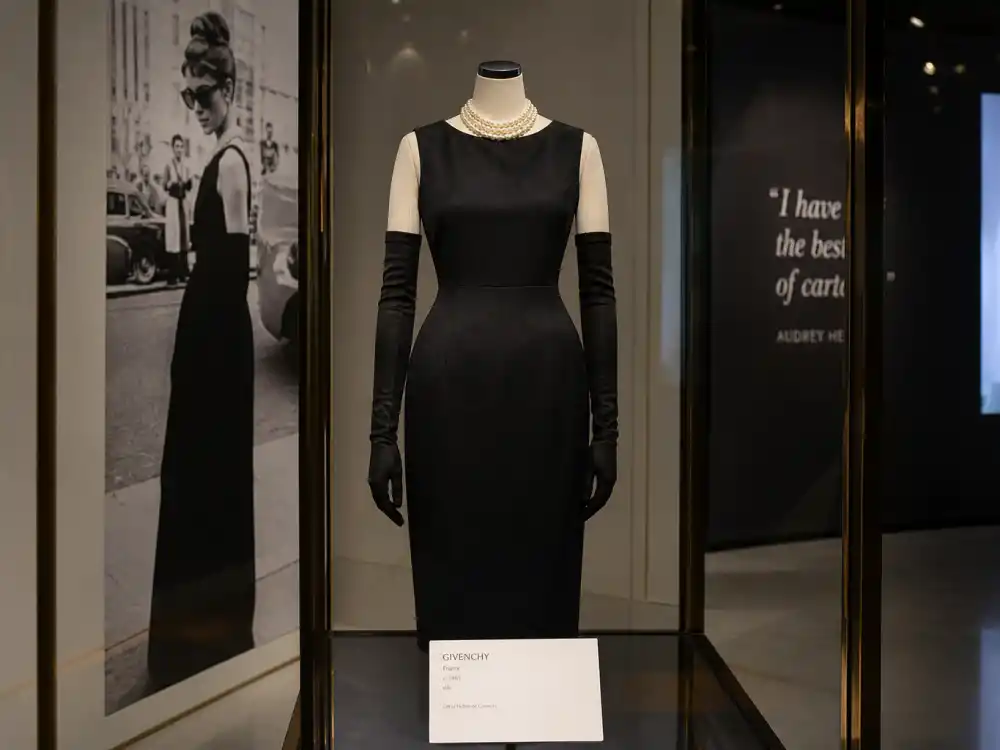
Replicas appear whenever anniversaries roll around — designers cut boat necklines cleaner, retailers stock pearl sets, influencers recreate the sidewalk pose outside flagship jewelry stores worldwide. Each retrospective article that mentions Hepburn reintroduces Audrey Hepburn little black dress Givenchy to audiences born decades after 1961, keeping search interest alive without requiring them to watch the full film immediately.
Why the Givenchy LBD Still Matters in 2026
Sixty-five years after Paramount’s release, sleeveless black sheaths still anchor spring retail lookbooks whenever brands want to signal timeless sophistication. Streaming documentaries about couture history premiere with the Tiffany still in trailer montages. Costume archivists study the boat neckline when building early-1960s period wardrobes for prestige television. The look remains a masterclass in treating celebrity image as narrative costume — a skill public figures still need when a single photograph must communicate entire biography in one frame.
For USA Celebs readers tracking celebrity fashion as cultural signal, the Audrey Hepburn little black dress Givenchy story is the benchmark case study for collaborative authorship between actress and couturier: one black sheath, one jewelry storefront, infinite aftershocks across retail, film studies, and minimalist dressing philosophy. No fast-fashion replica captures the original morning light on Fifth Avenue, but every closet LBD participates in the legacy.
Common Myths and Corrections
Myth one: Hepburn bought the dress off a mannequin at Tiffany. Reality: the scene is fiction; the gown came from Givenchy’s Paris workrooms via Hollywood costume channels. Myth two: every black dress Hepburn wore in 1961 was the same garment. Reality: productions maintain multiples; auction specimens vary in provenance documentation. Myth three: the LBD eclipsed Hepburn’s humanitarian work permanently. Reality: her UNICEF advocacy defined her later decades; the dress simply added a parallel fashion headline that resurfaces every time vintage couture trends on social media.
Accurate Audrey Hepburn little black dress Givenchy reporting holds all three truths: the gown was couture collaboration, the Tiffany moment was staged cinema rather than documentary, and the cultural afterlife amplified rather than replaced her broader artistic identity.
Explore More
- Browse our Fashion section for celebrity style history and iconic dress breakdowns.
- Read Marilyn Monroe white dress history for another film-costume moment that rewrote global dress codes.
- See Jennifer Lopez green Versace dress history for red-carpet and retail synergy across decades.
- Compare Princess Diana revenge dress story for confidence dressing that turned a black silhouette into headline news.
- Check Coco Chanel little black dress history for the interwar origins of the LBD category Hepburn and Givenchy popularized on film.
For background, see coverage from Vogue, Givenchy, and the Metropolitan Museum of Art Costume Institute on Hepburn-Givenchy collaborations, Breakfast at Tiffany’s costume history, and little black dress exhibitions.