

In this article11 sections
- What Happened to Ke Huy Quan? The Short Answer
- Before Hollywood: Refugee Childhood and the American Dream
- Indiana Jones and the Short Round Phenomenon
- The Goonies, Encino Man, and Peak 80s Fame
- What Happened to Ke Huy Quan After the 1990s?
- Behind the Camera: Stunt Work and the Long Hiatus
- Everything Everywhere and the Oscar Comeback
- Loki, American Born Chinese, and Ke Huy Quan Now
- Representation, Legacy, and Why the Story Still Matters
- Ke Huy Quan Now: Where Is He in 2026?
- Explore More
What happened to Ke Huy Quan is one of the most uplifting comeback questions in Hollywood history — and the answer is not a simple “he disappeared.” Ke Huy Quan did not vanish because of scandal or burnout alone. He was one of the most beloved child stars of the 1980s — Short Round in Indiana Jones and the Temple of Doom, Data in The Goonies, a scene-stealer in Encino Man and on Head of the Class — then watched the phone stop ringing as Asian American roles dried up and the industry moved on. For nearly two decades he worked behind the camera as a stunt coordinator and assistant, married, grieved, and waited. Then, at fifty-one, he returned in Everything Everywhere All at Once as Waymond Wang and won the Academy Award for Best Supporting Actor in 2023 — one of the purest second acts American film has ever seen. Today he stars in Marvel’s Loki, leads series like American Born Chinese, and carries the emotional weight of a generation that finally saw itself celebrated on the biggest stage. This is the full story of what happened to Ke Huy Quan, and where he is now in 2026.
If you grew up in the 1980s, you probably know Ke Huy Quan from at least one moment that still plays on loop: Short Round driving Indiana Jones through a mine cart, Data inventing the “pinch” of light in a Goonies cave, or the fish-out-of-water comedy of Encino Man. For a generation of fans, he was funny, brave, and impossible to forget — the kid who could hold the frame beside Harrison Ford without blinking. When he stopped appearing in new movies, the internet filled the gap with myths: that he quit in anger, that Hollywood blacklisted him, or that he simply did not want fame. Understanding what happened to Ke Huy Quan means separating nostalgia from structure: a refugee kid who became a symbol of adventure cinema, a young actor who hit a casting wall, a craftsman who learned stunts while the industry looked away, and an Oscar winner who proved that the best stories sometimes take thirty years to finish.
What Happened to Ke Huy Quan? The Short Answer
Here is what happened to Ke Huy Quan in a nutshell:
- 1971: Born August 20 in Saigon (now Ho Chi Minh City), Vietnam; family flees as refugees and eventually settles in the United States.
- 1984: Cast as Short Round in Indiana Jones and the Temple of Doom at age twelve — global fame overnight.
- 1985: Plays Richard “Data” Wang in The Goonies, cementing 1980s adventure-icon status.
- 1980s–1990s: Appears in Encino Man, Head of the Class, and other film/TV work while navigating teen stardom.
- Early 2000s: Effectively stops booking acting roles; later speaks about limited opportunities for Asian American actors.
- 2000s–2010s: Works behind the scenes in stunt coordination and film craft; private life includes marriage and family.
- 2022: Returns to acting as Waymond Wang in Everything Everywhere All at Once.
- 2023: Wins the Academy Award for Best Supporting Actor; becomes a symbol of Hollywood’s long-overdue recognition of Asian talent.
- 2024–2026: Stars in Loki Season 2, American Born Chinese, and new film projects — one of entertainment’s most celebrated comebacks.
Before Hollywood: Refugee Childhood and the American Dream
Long before anyone asked what happened to Ke Huy Quan on a search engine, he was a refugee child navigating a new country. Born Jonathan Ke Quan in Vietnam, he fled with his family amid the crisis of the late 1970s, spent time in a refugee camp in Hong Kong, and arrived in the United States as part of the Vietnamese diaspora that reshaped California communities. That biography matters: Ke Huy Quan was never a studio-manufactured novelty. He was a kid learning English, adapting to Los Angeles, and carrying the weight of displacement while auditioning for the dream industry sold to immigrants everywhere.
When casting directors needed a child who could run, joke, and sell peril beside Harrison Ford, Ke Huy Quan arrived with energy and precision. The Indiana Jones era gave him global name recognition; The Goonies gave him generational immortality among kids who wore out VHS tapes. Covering what happened to Ke Huy Quan without that refugee-to-Hollywood frame misses why his 2023 Oscar speech resonated so deeply — it was not only about one role, but about who gets to return.
Indiana Jones and the Short Round Phenomenon
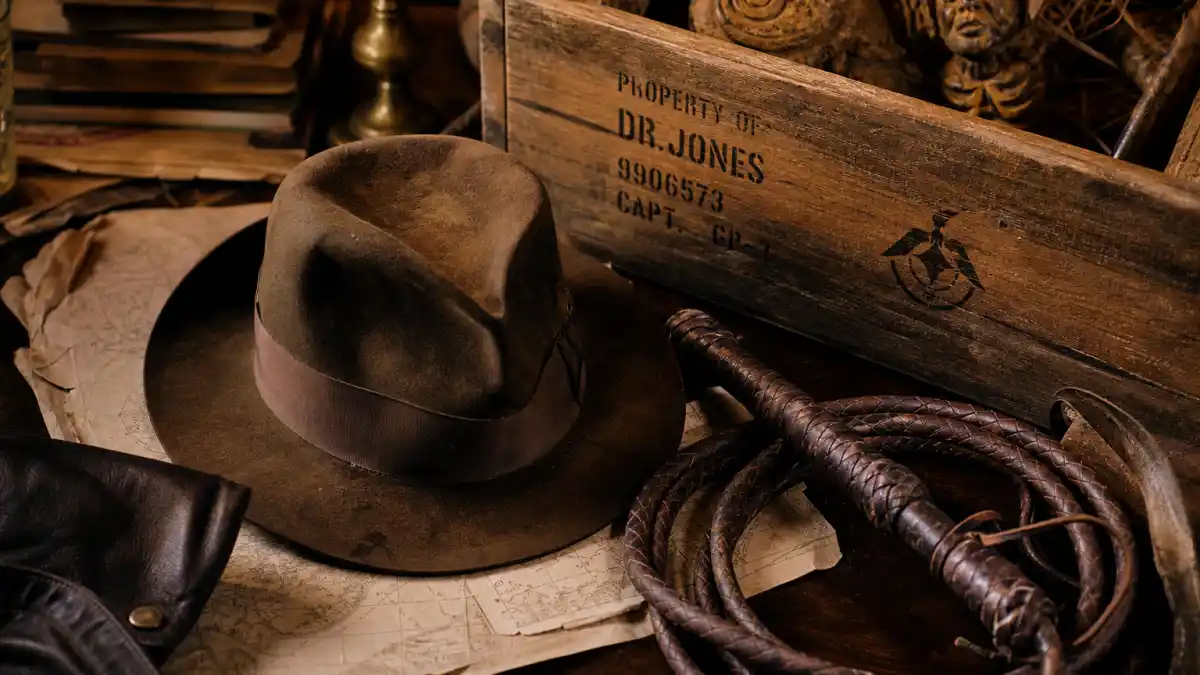
For many people searching what happened to Ke Huy Quan, the answer starts in a dark temple with mine carts and whips. Steven Spielberg and George Lucas cast him as Short Round, the loyal sidekick to Harrison Ford’s Indiana Jones in Indiana Jones and the Temple of Doom (1984). The performance was athletic, comic, and emotionally grounded — a child who could sell danger without becoming a punchline only.
Covering what happened to Ke Huy Quan without Short Round is like covering Sean Astin without The Goonies or Lord of the Rings: it is the first act that taught audiences his name. The film was controversial for its intensity, but Ke Huy Quan’s work was widely praised — and merchandised, quoted, and parodied for decades. He did not vanish after one blockbuster; he immediately booked another.
The Goonies, Encino Man, and Peak 80s Fame
One year later, Richard Donner’s The Goonies (1985) made Ke Huy Quan a household name among kids who did not even watch Indiana Jones. As Data — the gadget-obsessed member of the Astoria crew — he delivered catchphrases, contraptions, and courage. The film became a cultural permanent record: sleepovers, Halloween costumes, and “Goonies never say die” ethos.

He followed with Encino Man (1992) alongside Brendan Fraser and Pauly Shore, leaning into comedy, and appeared on TV including Head of the Class. Fans who discovered him through VHS stacks often learned he had already been famous to adventure audiences. That crossover matters for what happened to Ke Huy Quan culturally: he was never a one-hit wonder. He was a franchise kid — until the industry stopped calling.
What Happened to Ke Huy Quan After the 1990s?
When the last major studio roles thinned in the late 1990s and early 2000s, Ke Huy Quan was in his twenties — legally adult, professionally seasoned, and facing a question many Asian American actors confronted: what counts as a career when casting directors only see you as a type? He has spoken publicly about auditions drying up, stereotyped offers, and the quiet erosion of momentum that child fame does not prepare you for.

What happened to Ke Huy Quan in those years was less a scandal-driven exit than an industry-shaped pause. He did not headline tabloid meltdowns. He adapted — studying film craft, supporting stunt departments, and building a life away from red carpets. Friends and collaborators later described a man who loved movies but stopped believing the phone would ring for leading parts. That honesty is why his return feels earned rather than manufactured.
Behind the Camera: Stunt Work and the Long Hiatus
While fans asked where Ke Huy Quan went, he was often on set — just not in front of the lens. He worked in stunt coordination and related roles, learning choreography, safety, and the grammar of action sequences from the crew side. That experience later informed how he moved in Everything Everywhere All at Once, where Waymond’s fighting style blends martial arts, comedy, and tenderness.
Covering what happened to Ke Huy Quan requires acknowledging the structural story: Hollywood’s historical undercasting of Asian actors left a generation of talented kids without second chapters. Ke Huy Quan was not uniquely unlucky; he was early and visible — which made his disappearance from posters feel personal to audiences who grew up with his face. The hiatus was industry-wide pain reflected in one recognizable name.
Everything Everywhere and the Oscar Comeback
The phone finally rang for Everything Everywhere All at Once (2022), Daniels’ multiverse epic starring Michelle Yeoh. Ke Huy Quan played Waymond Wang — husband, father, googly-eyed optimist, and kung-fu hero across timelines. Critics and audiences wept at his line readings; the film swept awards season.

At the Academy Awards in March 2023, Ke Huy Quan won Best Supporting Actor — decades after his last major studio chapter. His speech thanked fans who remembered Short Round and Data, honored his wife Diana Nguyen, and spoke to dreamers who feel too old or too forgotten. Covering what happened to Ke Huy Quan without that night is impossible: it transformed “where did he go?” into “he came back — and won.”

Loki, American Born Chinese, and Ke Huy Quan Now
Post-Oscar, Ke Huy Quan did not retreat to nostalgia cameos. He joined the Marvel Cinematic Universe as Ouroboros (OB) in Loki Season 2 (2023), bringing warm, quirky energy to the TVA. He led Disney+’s American Born Chinese (2023), aligning his comeback with Asian American storytelling on screen. Film projects including Lovable and The Electric State kept him in theatrical conversation.

So where is Ke Huy Quan now? As of early 2026, he remains one of Hollywood’s most in-demand comeback figures — selective, grateful, and vocal about representation without reducing his career to a single speech. He appears at conventions where Goonies and Indiana Jones fans still cheer; he works with filmmakers who grew up quoting his lines; he embodies the industry shift Asian American artists fought for across decades.
Representation, Legacy, and Why the Story Still Matters
No honest account of what happened to Ke Huy Quan skips the representation debate — even when he personally avoided headline controversies. His Oscar night coincided with Michelle Yeoh’s Best Actress win and a broader awards-season conversation about Asian visibility. Detractors sometimes minimize comeback narratives as “awards bait”; defenders point to twenty years of exclusion. Neither camp erases the other. They explain why his name still spikes in search: he is not missing; he is proof that Hollywood can waste genius — and that audiences still remember.
Ke Huy Quan Now: Where Is He in 2026?
The honest answer to what happened to Ke Huy Quan is this: he survived child superstardom, endured an industry that stopped offering roles, learned film craft behind the camera, waited with dignity, returned in a once-in-a-generation film, won an Oscar, and rebuilt a career on his own timeline. He is not a cautionary tale frozen in 1985. He is Ke Huy Quan — refugee kid, Short Round, Data, Waymond Wang, OB, leading man, symbol — and still very much part of the culture that raised him.
Explore More
- Browse our full Celebrities coverage and updates.
- Dive into Movies nostalgia — from 1980s adventures to modern awards-season comebacks.
- See where other TV and child-star icons landed after their big breaks.
For background, see Ke Huy Quan's Wikipedia profile and reporting from The Hollywood Reporter, Variety, and The New York Times on his Oscar win, Everything Everywhere All at Once, and Loki casting.