

In this article15 sections
- Princess Diana Wedding Dress History: Why This Gown Still Owns Search
- David and Elizabeth Emanuel: The Designers Behind the Gown
- Fabric and Lace: Taffeta, Tulle, and Carrickmacross Heritage
- Silhouette Anatomy: Puff Sleeves, Bodice, and Skirt Volume
- St Paul's Cathedral: July 29, 1981 Ceremony Context
- The 25-Foot Train: Engineering a Moving Monument
- Tiara, Veil, and Accessory Storytelling
- Secrecy, Speculation, and the Press Frenzy
- Cost, Ownership, and Where the Dress Lives Today
- Bridal Industry Impact: The 1980s Volume Revolution
- Lineage: Grace Kelly, Queen Elizabeth, and Kate Middleton
- Common Myths About Diana's Wedding Gown
- What Brides Copy Today in 2026
- Why the Keyword Still Dominates Search
- Explore More
Princess Diana wedding dress history begins on July 29, 1981, when Lady Diana Spencer walked up the aisle of St Paul’s Cathedral in an ivory silk taffeta ball gown so voluminous it rewrote bridal fashion for a generation — and remains the most searched royal wedding dress on earth more than four decades later. Designed by David and Elizabeth Emanuel, the gown combined antique Carrickmacross lace, 10,000 hand-sewn pearls, dramatic puff sleeves, and a 25-foot train that required its own rehearsal schedule. An estimated 750 million people watched the ceremony live. The dress did not merely clothe a bride; it launched a global bridal industry boom, established the Emanuels as fashion royalty, and created a visual template brides still chase in 2026.
This guide covers the full Princess Diana wedding dress history from commission to legacy: why the Emanuels were chosen, how secrecy was maintained, every major construction detail, the carriage-crinkle drama, tiara and veil pairing, cost estimates, ownership today, museum exhibitions, and the measurable influence on 1980s and modern bridal trends. Whether you study fashion history, plan a wedding, or simply want to understand why one gown still dominates Pinterest boards, you will leave with a complete portrait of the dress that made fairy-tale monarchy look tangible — and slightly overwhelming — to the entire planet.
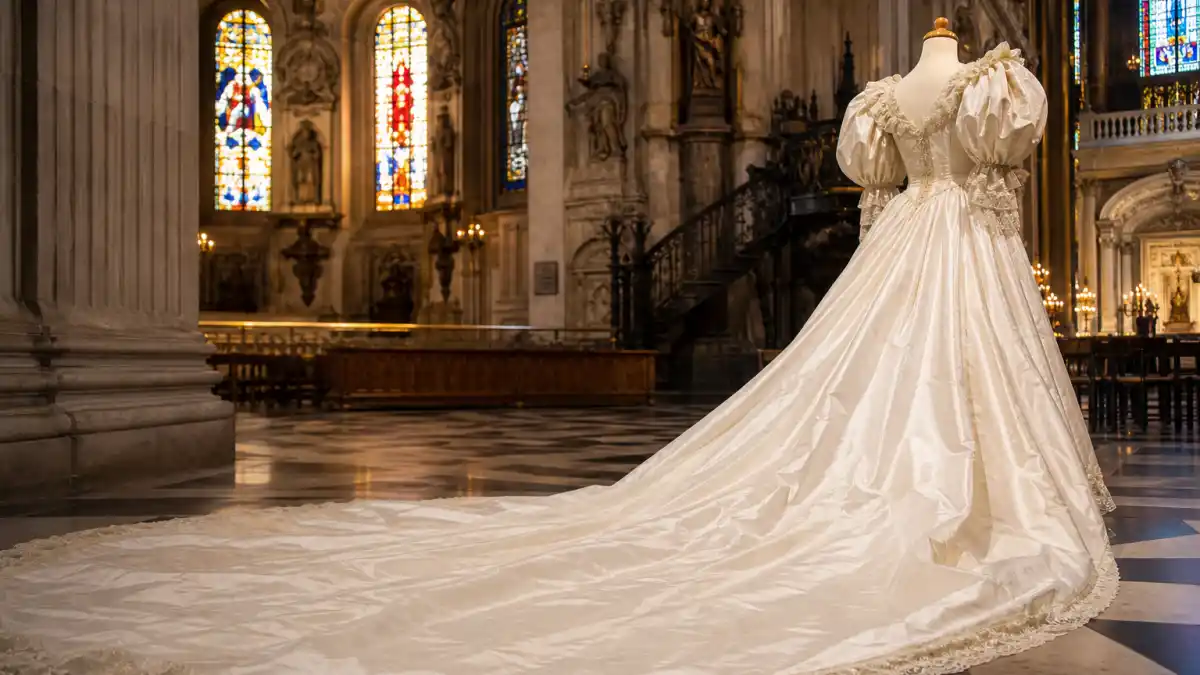
Princess Diana Wedding Dress History: Why This Gown Still Owns Search
Anyone typing Princess Diana wedding dress history wants facts, not nostalgia alone. The gown matters because it sits at a perfect intersection: the last great pre-internet global media event, the peak of 1980s romantic excess, and a royal love story that later fractured in public — adding tragic cultural weight to every archive photo. Fashion historians treat the dress as a primary source document of early-Reagan-era femininity: big, soft, decorated, optimistic. Bridal retailers treat it as a product launch that never ended. The Emanuels’ creation is cited in virtually every timeline of twentieth-century wedding fashion alongside Grace Kelly’s 1956 Helen Rose lace gown and Kate Middleton’s 2011 Sarah Burton McQueen revival.
Accurate reporting on Princess Diana wedding dress history requires naming David and Elizabeth Emanuel, citing St Paul’s Cathedral (not Westminster Abbey — a common error), confirming July 29, 1981, and describing the train at roughly 25 feet. Reducing the story to “big princess dress” erases the couture labor: multiple fittings, decoy gowns, lace sourced from antique dealers, and engineering to survive a glass coach without visible disaster — mostly.
David and Elizabeth Emanuel: The Designers Behind the Gown
David and Elizabeth Emanuel were a husband-and-wife design team running a small but buzzy London salon when Diana selected them in 1981. They had previously dressed her for a Vogue portrait and a public appearance at Goldsmiths’ Hall — early trust that mattered more than house size. Royal wedding commissions typically went to established names like Hardy Amies; choosing young Emanuels signaled Diana’s desire for romantic fashion rather than stiff establishment couture. The designers later described the pressure as exhilarating and terrifying: absolute secrecy, unlimited expectation, and a client who would become the most photographed woman alive.
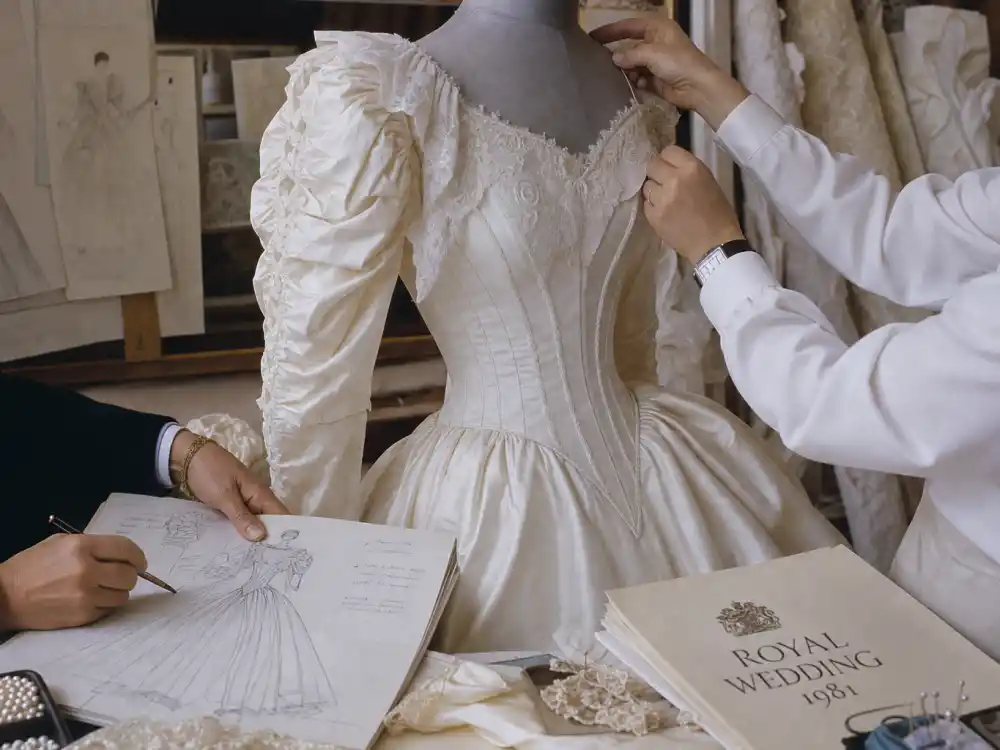
The Emanuels built the gown at their Mayfair studio with a small team of seamstresses. They created multiple versions — including deliberate decoy dresses leaked to throw press off the scent — a standard royal security tactic the Princess Diana wedding dress history archives document in memoirs and documentaries. When Diana emerged at St Paul’s, the designers became instant celebrities; their romantic, theatrical aesthetic defined early-1980s British bridal until broader minimalism returned in the 1990s.
Fabric and Lace: Taffeta, Tulle, and Carrickmacross Heritage
The dress body used ivory silk taffeta — crisp enough to hold the iconic puff silhouette, luminous under television lights. Antique Carrickmacross lace, a Irish needle-lace tradition, was appliquéd to the bodice and sleeves; additional lace panels came from a Victorian piece the Emanuels found through dealers. Hand-embroidered sequins and an estimated 10,000 pearls added weight and sparkle without reading as costume on broadcast cameras. Layers of tulle and netting under the skirt created volume; without that infrastructure, the skirt would collapse under its own lace border.
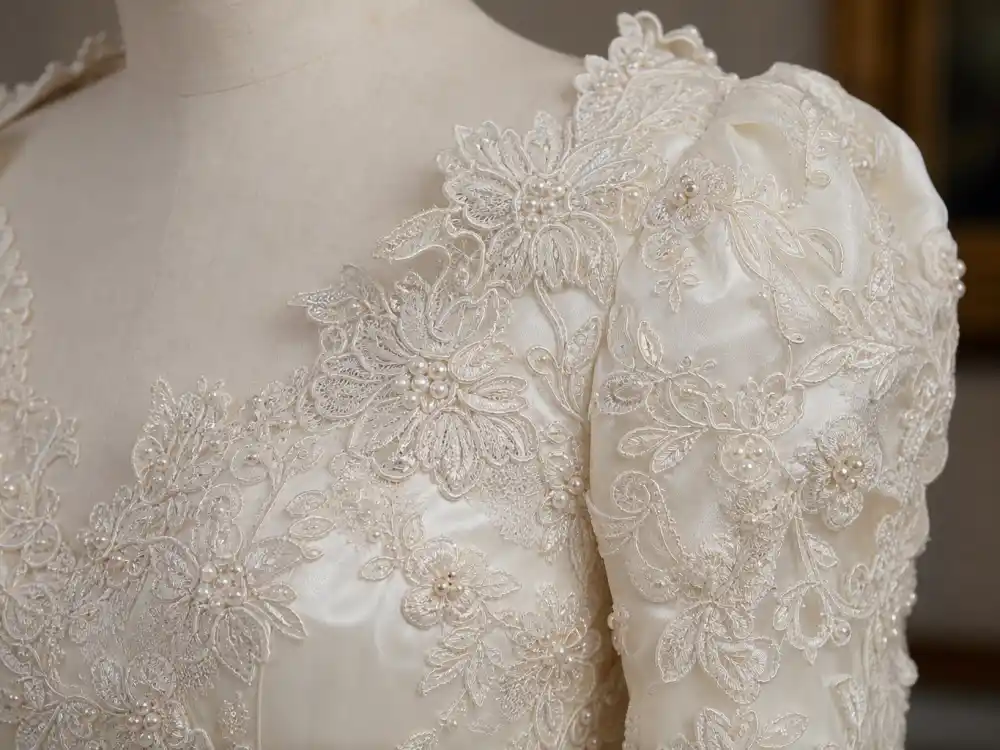
Bridal educators use the gown in textile courses because it combines heritage salvage (Victorian lace fragments) with contemporary construction (synthetic tulle support). The Princess Diana wedding dress history lesson: volume is architecture, not accident. Every puff sleeve required internal support; every yard of train needed distribution across the waist and hips so the bride could walk without toppling.
Silhouette Anatomy: Puff Sleeves, Bodice, and Skirt Volume
Diana’s silhouette was pure early-1980s: enormous leg-of-mutton puff sleeves trimmed with lace frills, fitted bodice with V-shaped back detail, nipped waist, and full skirt ballooning over crinoline-style support. The look referenced Victorian romanticism filtered through New Romantic pop culture — Adam Ant meets Windsor protocol. Unlike Kate Middleton’s 2011 McQueen lace restraint or Meghan Markle’s 2018 Givenchy minimalism, Diana’s gown embraced visible drama. That choice matched the ceremony scale: St Paul’s dome, military processions, global television production values.
Stylists analyzing Princess Diana wedding dress history note the sleeves as the most copied element in the 1980s — bridal magazines reported puff-sleeve orders surging through mid-decade. The silhouette also photographed well in medium shots: sleeves framed the face (critical for a 20-year-old bride under unprecedented scrutiny), while the skirt provided fairy-tale proportion against cathedral architecture.
St Paul’s Cathedral: July 29, 1981 Ceremony Context
St Paul’s Cathedral was an unconventional royal wedding venue — Westminster Abbey held most prior Windsor ceremonies — chosen partly for capacity and partly for symbolic London grandeur. The baroque interior, long aisle, and dome created a stage built for wide shots of train and tiara. Diana traveled from Clarence House in the Glass Coach with her father, Earl Spencer; the confined carriage famously compressed the silk taffeta, producing wrinkles that assistants steamed before the procession. That carriage moment is a staple anecdote in any serious Princess Diana wedding dress history retelling because it humanized couture: even royal gowns fight physics.
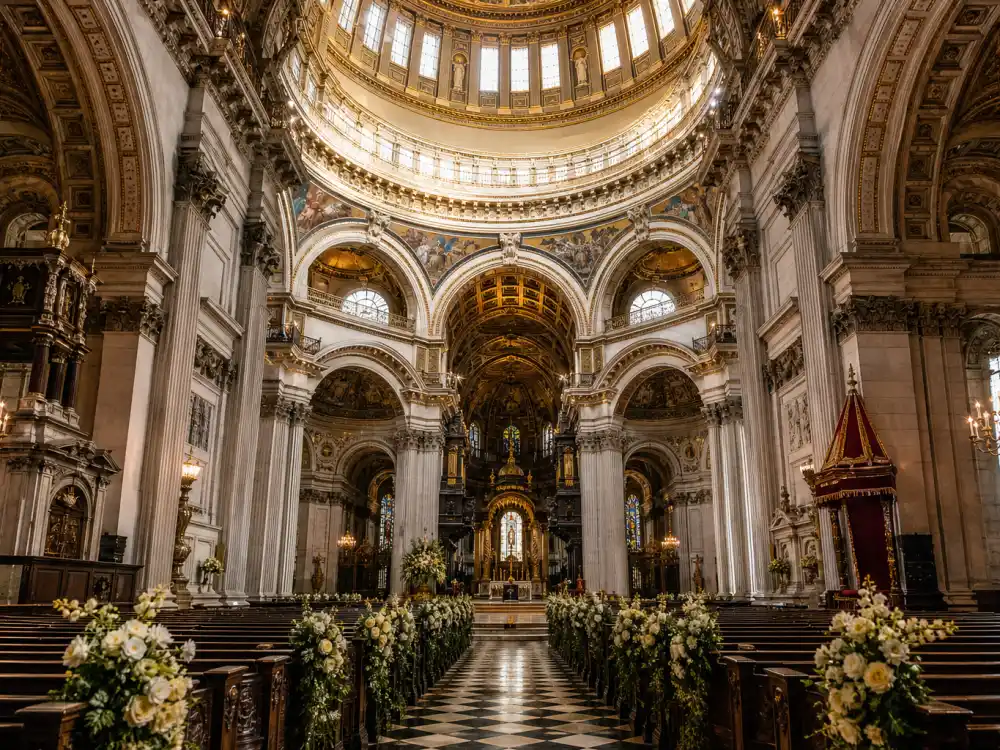
The ceremony drew heads of state, celebrity guests, and a television audience historians estimate between 750 million and one billion viewers — the largest live audience for a wedding at that time. Archbishop of Canterbury Robert Runcie officiated; three choirs performed. When Diana appeared in the gown, fashion editors filed same-day construction analysis; the image became front page on every continent. No subsequent royal wedding matched that monocultural attention saturation until the internet fragmented viewership.
The 25-Foot Train: Engineering a Moving Monument
Diana’s train measured approximately 25 feet — among the longest in British royal wedding history, exceeding Queen Elizabeth II’s 1947 Norman Hartnell train and setting a benchmark Kate Middleton deliberately avoided in 2011 with a nine-foot McQueen train. The train featured a wide lace border matching the bodice motifs, adding visual continuity in procession shots. Bridesmaids included India Hicks and Clementine Hambro; page boys managed veil and train logistics with rehearsal precision — yet Pippa Middleton-style train-adjustment images belong to a later generation; Diana’s team handled logistics largely off-camera.
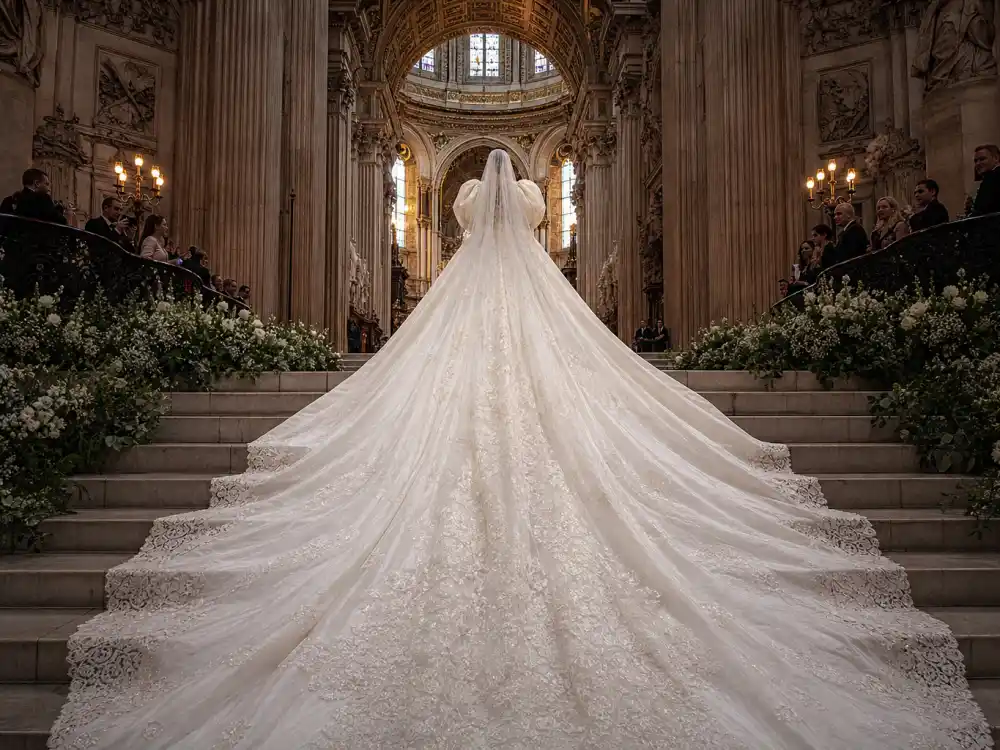
Train weight demanded internal corsetry and hip support; without structure, lace hems snag on stone floors — a risk visible in rehearsal footage discussed in documentaries. Modern stylists cite Diana when advising clients on cathedral trains: 25 feet requires venue scale, staff, and patience no ballroom can supply. The Princess Diana wedding dress history train became shorthand for “go big or go home” bridal ambition throughout the 1980s.
Tiara, Veil, and Accessory Storytelling
Diana wore the Spencer family tiara — an heirloom dating to the eighteenth century — rather than borrowing a tiara from Queen Elizabeth II’s collection, a choice that signaled Spencer pride alongside Windsor entry. The tiara anchored a silk tulle veil extending roughly 153 yards in length per contemporary reports (veil length figures vary by source; the visual effect was cathedral-scale). Earrings were diamond drops on loan; the Emanuels designed matching ivory silk shoes trimmed with lace and pearls, maintaining head-to-hem cohesion.
Accessory accuracy matters for Princess Diana wedding dress history because searchers often conflate tiara or veil with “the dress” when planning inspiration boards. The Spencer tiara’s floral motifs echoed lace florals; that repetition is classic royal styling — harmonize metal, lace, and fabric language so HD cameras read unity. Diana kept her makeup soft and youthful: blue eyeliner, natural blush — a contrast to the gown’s baroque volume.
Secrecy, Speculation, and the Press Frenzy
Pre-wedding press named Bruce Oldfield, Jasper Conran, and the Emanuels interchangeably; bookmakers took bets on silhouette. The palace and designers maintained silence while security vetted every fitting attendee. Decoy dresses — including rumored ruffled alternatives — fed tabloid cycles. When Diana finally appeared, the Emanuels confirmed authorship within hours; their salon phones reportedly rang continuously for months. Secrecy amplified impact: without leaked smartphone photos, the St Paul’s door reveal functioned as a true global premiere.
For media historians, the Princess Diana wedding dress history rollout demonstrates peak broadcast economics: networks synchronized specials, magazines rushed souvenir editions, retailers ordered taffeta before the weekend ended. The dress generated licensing discussions, museum interest, and decades of replica patterns at every price tier — the fastest diffusion from royal couture to mass bridal market since Grace Kelly, accelerated by television reach.
Cost, Ownership, and Where the Dress Lives Today
Contemporary estimates placed the gown’s cost around £9,000 in 1981 (roughly £40,000–£50,000 in today’s currency, depending on inflation index) — modest by haute couture standards but enormous for a young design house commission. After the wedding, the dress became personal property of Diana; following her death in 1997, ownership passed to her sons, Princes William and Harry. The gown and selected accessories have appeared in curated exhibitions at Kensington Palace and touring “Fashion Story” displays, allowing public viewing under climate-controlled conditions.
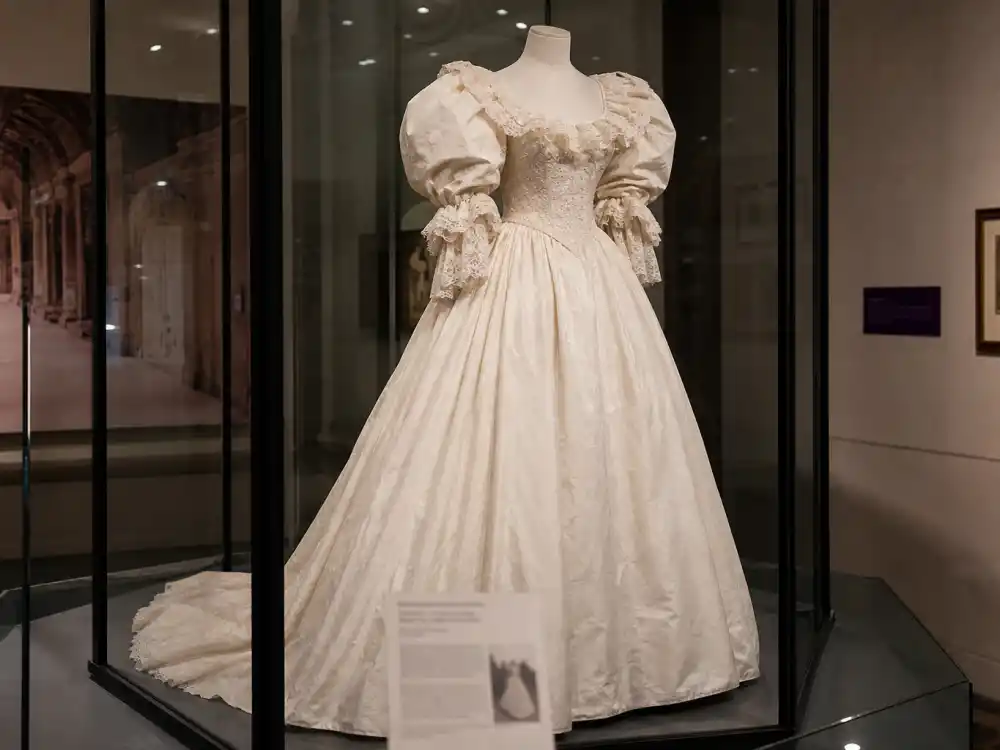
Unlike gowns immediately donated to museums, Diana’s dress remained family-held — adding privacy and selective access narratives to Princess Diana wedding dress history. Each exhibition spike renews search interest; Pinterest and Instagram cycles rediscover puff sleeves whenever royal fashion anniversaries hit July.
Bridal Industry Impact: The 1980s Volume Revolution
Quantifying influence combines trade anecdotes and cultural evidence. Bridal magazines in 1981–1985 documented surging orders for puff sleeves, longer trains, and pearl appliqué. Designers from Vera Wang’s later era cite Diana as the reference point brides brought to appointments — “I want Diana sleeves” persisted into the 2000s. The keyword Princess Diana wedding dress history spikes every royal wedding cycle when commentators draw lineage comparisons.
Why volume mattered commercially: the gown justified premium pricing for lace, pearls, and construction hours. It also expanded the fantasy window — brides who could not afford Emanuel-level craft still bought patterns echoing sleeve shape or train length. Fast-fashion bridal diffusion took months, not days, but the direction was clear: bigger, more romantic, more televised. That trend reversed gradually as 1990s minimalism and 2010s McQueen lace restraint returned.
Lineage: Grace Kelly, Queen Elizabeth, and Kate Middleton
Royal bridal history contextualizes Diana’s choices. Grace Kelly’s 1956 Helen Rose gown established Hollywood-to-monarchy lace romance. Queen Elizabeth II’s 1947 Hartnell gown used post-war rationing creativity with symbolic floral embroidery. Diana amplified scale and media spectacle. Kate Middleton’s 2011 McQueen gown consciously dialed volume down — long sleeves but slimmer skirt, nine-foot train — interpreting Diana’s legacy through restraint. Meghan Markle’s 2018 Givenchy boat-neck minimalism rejected puff volume entirely. Each generation’s dress reflects its media environment and personal narrative.
Understanding lineage enriches Princess Diana wedding dress history studies: Diana did not invent puff sleeves, but she televised them to more people than any prior bride. That broadcast multiplier is the dress’s true innovation — scale plus audience equals immortal trend.
Common Myths About Diana’s Wedding Gown
Myth one: the wedding was at Westminster Abbey. Reality: St Paul’s Cathedral. Myth two: the dress was pure white. Reality: ivory silk taffeta — warmer on lace and pearls. Myth three: any puff-sleeve gown equals Diana. Reality: Emanuel lace placement, pearl density, and train engineering distinguish couture from costume rental. Myth four: the dress emerged wrinkle-free. Reality: carriage compression required steaming — humanizing couture. Myth five: interest faded after the 1980s. Reality: search volume, exhibitions, and replica demand prove enduring icon status for Princess Diana wedding dress history.
What Brides Copy Today in 2026
Contemporary brides rarely commission 25-foot trains or full Diana volume — venue logistics and taste shifted — but they extract high-ROI elements:
- Statement sleeves: Puff, leg-of-mutton, or lace bishop sleeves echo Diana without full skirt crinolines.
- Antique lace storytelling: Salvaged lace panels personalize gowns similarly to Carrickmacross heritage.
- Ivory-over-white palette: Soft warmth flattering mixed lighting and photography.
- Pearl and sequin bodice detail: Sparkle readable on camera and in person.
- Family tiara tradition: Spencer-style heirloom headpieces over generic rental crowns.
- Train proportionality: Modern brides target 6–15 feet — dramatic but manageable.
Bridal consultants mapping Princess Diana wedding dress history inspiration to real budgets advise prioritizing sleeve and lace quality over extreme train length — sleeves and bodice read in every photograph; 25 feet requires St Paul’s scale.
Why the Keyword Still Dominates Search
More than forty years after St Paul’s, interest in Princess Diana wedding dress history persists because the gown anchors searchable intersections: royal biography, 1980s culture, bridal commerce, and tragic nostalgia. Documentaries, Netflix dramas, and anniversary articles reignite discovery. Fashion students write theses on Emanuel construction; Pinterest boards never stop circulating puff-sleeve mood shots. Every new Windsor wedding invites comparison lists — and Diana still tops them.
For USA Celebs readers, the dress is more than fabric — it is a case study in how one garment can move markets, crown designers, and define an era of romantic excess. Princess Diana’s 1981 wedding gown did not just dress a bride; it taught the world what a fairy-tale wedding looked like on the largest screen humanity had yet built.
Explore More
- Browse our Fashion section for royal style history and red-carpet breakdowns.
- Read celebrity wedding dresses most iconic for Diana’s place in the full bridal canon.
- See Kate Middleton wedding dress Alexander McQueen for how 2011 reinterpreted Diana’s volume through McQueen lace.
- Compare Meghan Markle wedding dress designer for the 2018 Givenchy minimal royal contrast.
- Check Princess Diana revenge dress story for another chapter in Diana’s fashion legacy.
For background, see coverage from Vogue, Historic Royal Palaces, the Victoria and Albert Museum, and BBC on royal weddings, 1980s fashion, and Diana’s bridal legacy.