

In this article12 sections
- Mike Tyson Tattoos and Their Meanings: The Big Picture
- Tribal Face Tattoo: Warrior Ink and the Whitmill Design
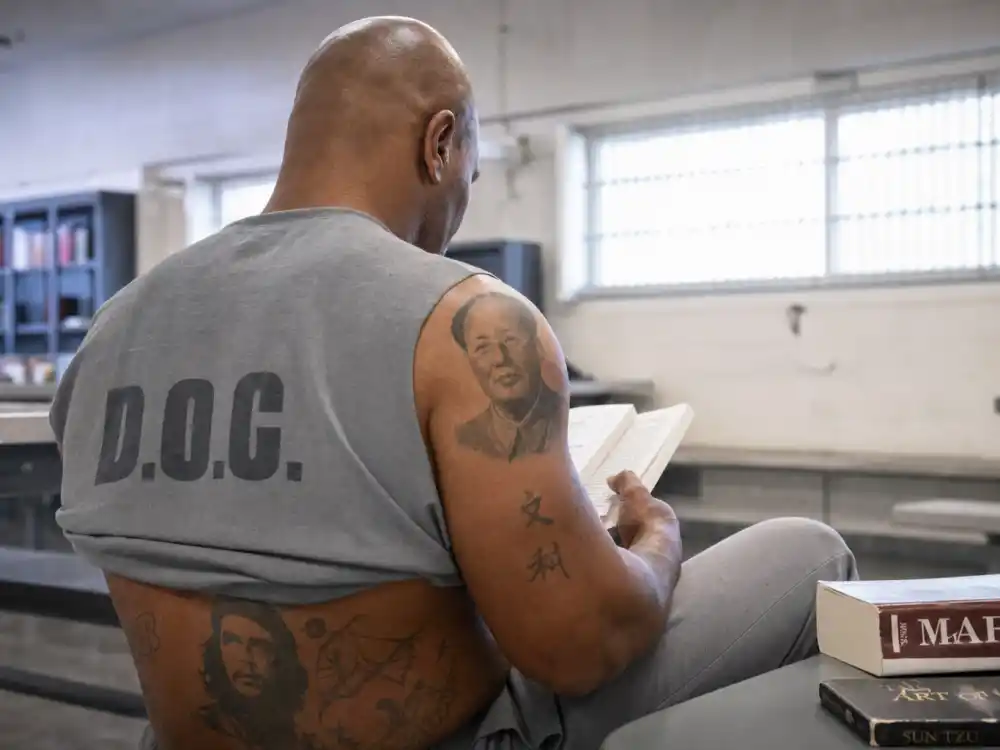
- Che Guevara Abdomen Tattoo: Revolutionary Portrait
- Mao Zedong Arm Tattoo: Prison Reading and Beijing Visit
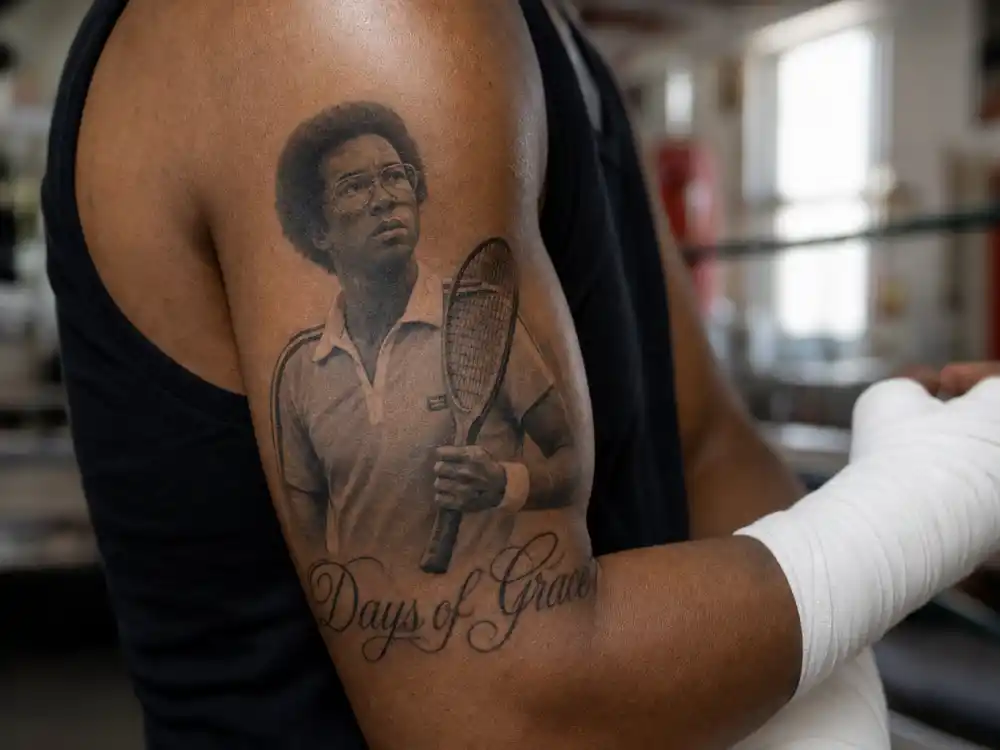
- Arthur Ashe Bicep Tattoo: Days of Grace Contrast
- Prison Era: How Incarceration Shaped the Collection
- Additional Documented Tattoos: Family and Memorial Ink
- What Mike Tyson Has Said About His Tattoos
- How Many Tattoos Does Mike Tyson Have?
- Common Fan Questions and Unconfirmed Details
- Quick Reference: Major Tattoo Themes
- Explore More on USA Celebs
Mike Tyson tattoos and their meanings tell a story far more layered than the tribal ink on his left cheek that now defines his public image. The former undisputed heavyweight champion carries at least seven documented tattoos — three revolutionary and civil-rights portraits inked during his 1992–1995 prison sentence, the 2003 Māori-inspired face tattoo that artist S. Victor Whitmill designed after Tyson abandoned his original “hearts” idea, and additional pieces honoring his ex-wife Monica Turner and late daughter Exodus. Outlets including Wikipedia, Yahoo Sports, Sporting News, and Tyson’s own words in the 2008 documentary Tyson have cataloged the collection.
Editorial note: Tyson has spoken directly about his face tattoo, Mao ink, and Che Guevara portrait in interviews and documentaries. We attribute meaning claims to Tyson’s own words, artist commentary, or credible sports and entertainment outlets. When a symbol’s meaning is reported but not directly quoted from Tyson, we label it as such.
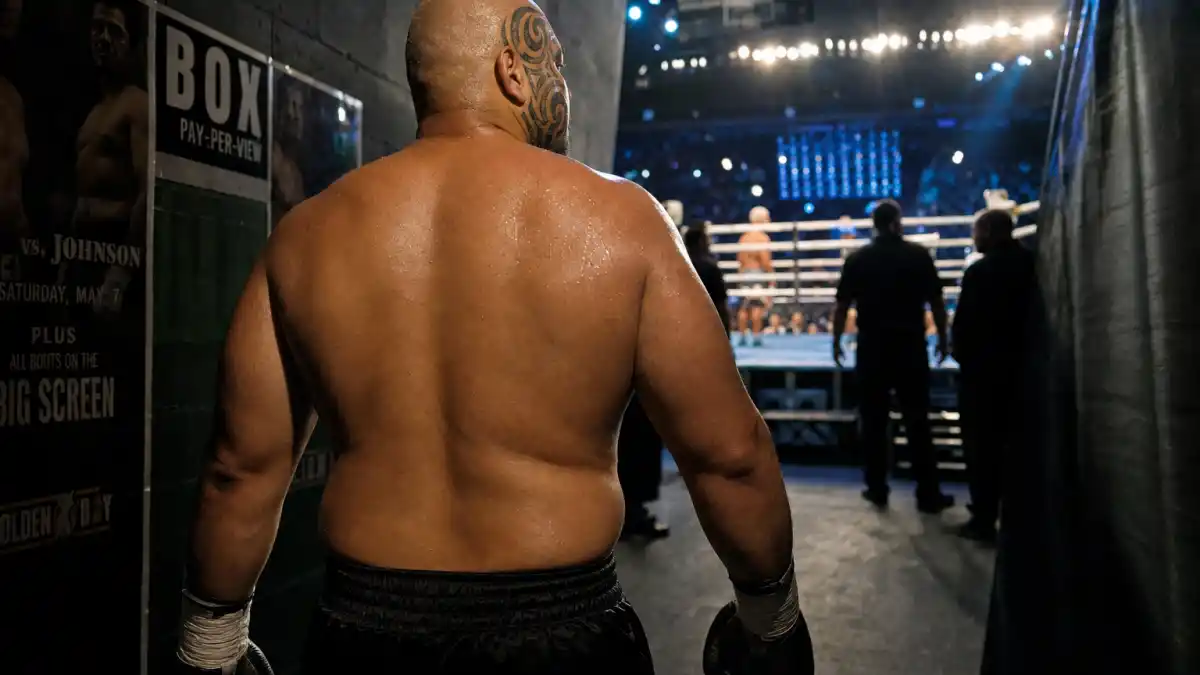
Mike Tyson Tattoos and Their Meanings: The Big Picture
Unlike athletes who accumulate decorative ink across decades, Tyson’s body art clusters around distinct life chapters: rage and reading during incarceration, a bold aesthetic reinvention before his 2003 fight with Clifford Etienne, and intimate family memorials added later. His most visible tattoo — the black tribal design stretching from his left temple across his cheek — dates to February 2003 and was inked by S. Victor Whitmill in Las Vegas, per Yahoo Sports and DAZN reporting. His prison tattoos of Mao Zedong, Che Guevara, and Arthur Ashe arrived years earlier while he served time following his 1992 conviction. What unifies Mike Tyson tattoos and their meanings is Tyson’s framing in the Tyson documentary and subsequent interviews: tattoos document anger, admiration, and personal transformation rather than fashion.
When asked why he put revolutionaries on his body, Tyson told the Tyson documentary crew: “When I was in prison, I was so angry at society. I put a tattoo of Mao on me. I put a tattoo of Che on me, because I just had no faith in our government.” That candid admission — quoted by Yahoo Sports and Wikipedia — separates confirmed Tyson quotes from fan mythology that treats every symbol as a hidden political manifesto.
Tribal Face Tattoo: Warrior Ink and the Whitmill Design
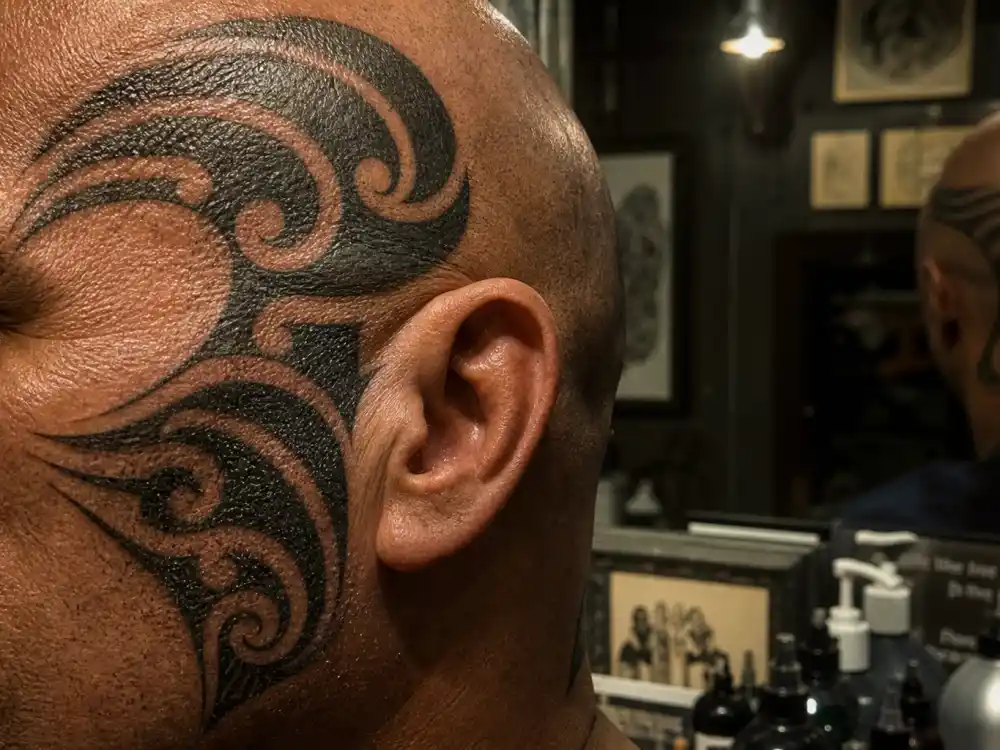
The signature entry in Mike Tyson tattoos and their meanings is the Māori-influenced tribal tattoo on the left side of his face — ink that has become synonymous with Tyson himself and was famously replicated in The Hangover Part II, prompting a lawsuit from Whitmill.
- Origin story — Tyson originally wanted “a bunch of hearts” tattooed on his face and told Howard Stern he wanted to be “the man of hearts,” per Sporting News and talkSPORT quotes. Whitmill refused the hearts design and proposed a tribal pattern inspired by Māori tā moko art instead.
- Tyson’s own words — “I thought it was an awesome tattoo and I wanted it,” Tyson told Howard Stern, per Yahoo Sports. He associated the design with Māori warriors, calling it his “warrior tattoo” in subsequent press coverage.
- Timing — Tyson got the tattoo ahead of his February 2003 bout against Clifford Etienne in Memphis — his 50th and final professional victory. Rumors circulated that the session forced him to miss a week of training camp.
- Cultural context — DAZN and press outlets have noted criticism of cultural appropriation, as Tyson has no genealogical connection to Māori people. Tyson has not extensively addressed that debate in on-record interviews.
Che Guevara Abdomen Tattoo: Revolutionary Portrait
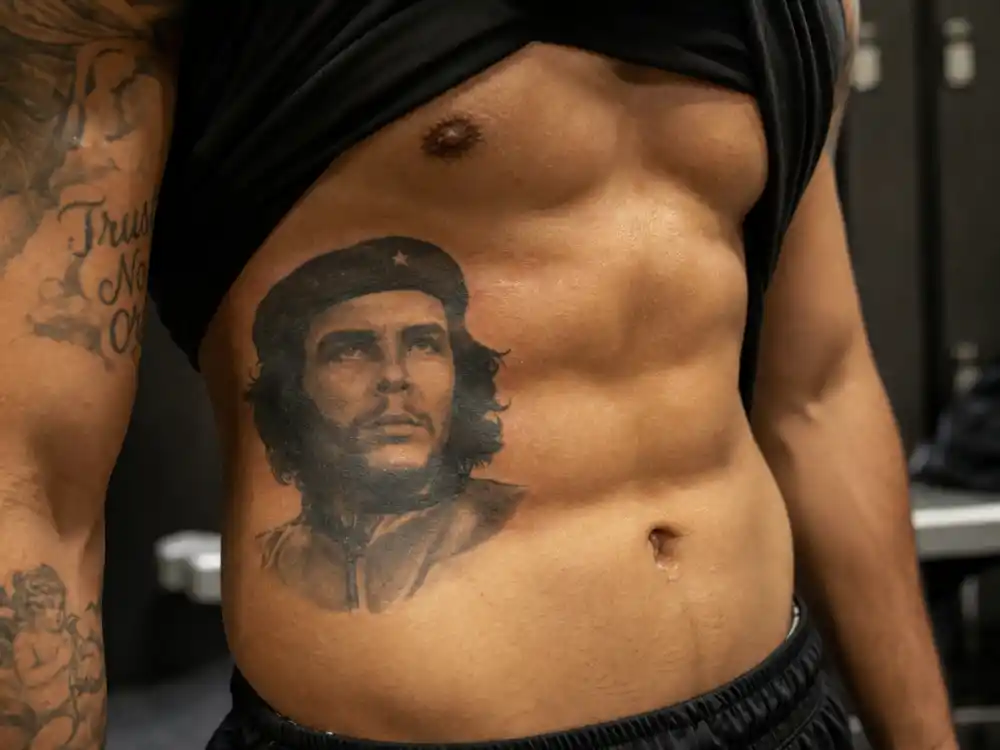
The Che Guevara piece is among the most discussed entries in Mike Tyson tattoos and their meanings because Tyson has spoken about it directly and because the design derives from Alberto Korda’s iconic Guerrillero Heroico photograph.
- Placement — Wikipedia and DAZN document the Guevara portrait on the left side of Tyson’s abdomen.
- Prison-era timing — Tyson received the tattoo while incarcerated between 1992 and 1995, alongside his Mao and Arthur Ashe pieces.
- Tyson’s own words — In 1999 Tyson described Guevara as “someone who had so much but sacrificed it all for the benefit of other people,” per Wikipedia’s citation of his comments. In the Tyson documentary he linked the Che and Mao tattoos to anger at society and loss of faith in government.
- Commodification brag — Tyson claimed in the documentary that his Guevara tattoo predated the widespread commercialization of Che’s image on T-shirts and merchandise — a point Wikipedia and Yahoo Sports have noted.
Mao Zedong Arm Tattoo: Prison Reading and Beijing Visit
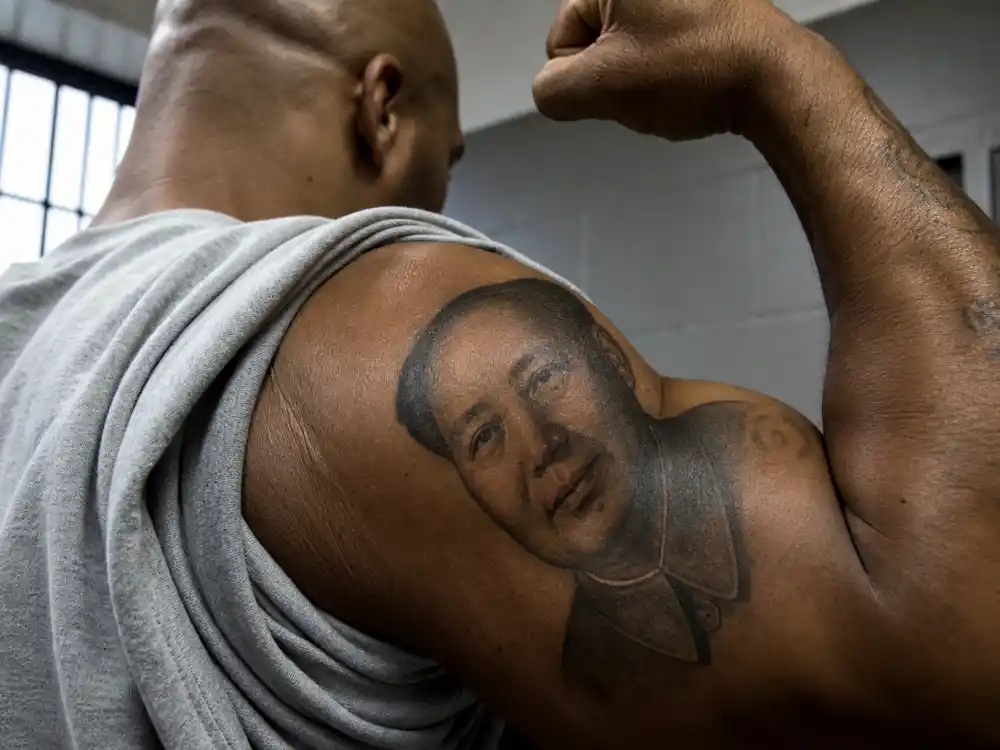
Tyson’s Chairman Mao portrait connects his prison reading habits to a documented pilgrimage years after his release.
- Placement — AS USA and Sporting News place the Mao tattoo on Tyson’s right bicep or upper arm.
- Prison inspiration — Tyson began reading voraciously in prison, and Mao’s writings reportedly had a significant effect on him, per AS USA. He chose the portrait tattoo during the same incarceration period as Che and Ashe.
- 2006 Beijing visit — Tyson visited the Chairman Mao Memorial Hall in Tiananmen Square and said he “felt really insignificant” standing before Mao’s remains, per Wikipedia and AS USA reporting.
- Reported appeal — AS USA suggests Tyson identified with Mao as a rebel who fought the establishment rather than endorsing every political decision — reported analysis, not a direct Tyson quote on specific policies.
Arthur Ashe Bicep Tattoo: Days of Grace Contrast
The Arthur Ashe portrait offers a quieter counterpoint to Tyson’s revolutionary abdomen and arm ink — a tribute to dignity and athletic grace that press outlets contrast with Tyson’s own confrontational public persona.
- Placement and text — Wikipedia documents an Arthur Ashe portrait on Tyson’s left bicep with “Days of Grace” script — referencing Ashe’s memoir title.
- Prison timing — Biographer Richard Hoffer and Wikipedia note the Ashe tattoo was inked in prison, likely around 1994 per Wikipedia’s timeline.
- Meaning — Sporting News highlights the contrast between Ashe’s reserved composure and Tyson’s volatility. Tyson has discussed his admiration for accomplished Black athletes in broader interviews, though specific on-record quotes about the Ashe tattoo’s personal meaning are less extensive than his Che and Mao commentary.
- Unconfirmed details — Treat precise placement variations across career photos and deeper symbolic interpretations as reported analysis unless Tyson discusses them directly.
Prison Era: How Incarceration Shaped the Collection
Three of Tyson’s most analyzed tattoos share a single context: the Indiana Youth Center and subsequent prison years that reshaped his worldview.
- Shared origin — Mao, Che, and Arthur Ashe tattoos all date to Tyson’s 1992–1995 incarceration per Wikipedia, Yahoo Sports, and DAZN.
- Reading and rage — Tyson told the Tyson documentary he was “so angry at society” and had “no faith in our government” — language that frames the revolutionary portraits as emotional responses, not formal political endorsements.
- Documentary sourcing — The 2008 James Toback documentary remains the primary on-record source for Tyson’s prison tattoo motivations alongside Howard Stern and talkSPORT interviews about the later face piece.
Additional Documented Tattoos: Family and Memorial Ink
Wikipedia catalogs additional Tyson tattoos beyond the five most discussed pieces.
- Monica Turner portrait — A tattoo of Tyson’s ex-wife Monica Turner, whom he divorced after she admitted infidelity, per AS USA and Wikipedia. Personal meaning is implicit; Tyson has discussed the relationship in interviews without extensive tattoo-specific commentary.
- Exodus memorial — Wikipedia notes a tattoo honoring his late daughter Exodus, who died in 2009. Memorial intent is documented; detailed on-record Tyson quotes about the design are limited in mainstream press.
- Tiger tattoo — Wikipedia lists a tiger among Tyson’s seven documented tattoos. Specific meaning is unconfirmed in Tyson’s on-record comments — treat detailed symbolism as reported analysis.
- Dr. Dre portrait — Some tattoo databases reference a Dr. Dre portrait; mainstream press documentation is thinner than the revolutionary and face pieces. Label as reported but less extensively sourced unless confirming outlet is cited.
What Mike Tyson Has Said About His Tattoos
Recurring themes from Tyson’s interviews, the Tyson documentary, and Howard Stern appearances:
- He wanted the face tattoo simply because he thought it looked awesome — not as a deep spiritual commitment.
- Prison tattoos of Mao and Che expressed anger at society and lost faith in government.
- He admired Guevara for sacrificing personal wealth for others — a 1999 quote documented by Wikipedia.
- He felt “really insignificant” visiting Mao’s mausoleum in Beijing in 2006.
- He originally wanted hearts on his face — Whitmill talked him into tribal ink instead.
- He has expressed interest in full-body tattooing when seeing heavily inked athletes, per AS USA — suggesting his collection may still evolve.
How Many Tattoos Does Mike Tyson Have?
Wikipedia estimates at least seven tattoos: tribal face, Che Guevara, Mao Zedong, Arthur Ashe, tiger, Monica Turner, and Exodus memorial. Press counts may vary as new pieces emerge or older ink becomes obscured in footage. Rather than fixating on a precise number, this guide focuses on documented major pieces with sourced meanings.
Common Fan Questions and Unconfirmed Details
Search traffic around Mike Tyson tattoos and their meanings includes speculation about political ideology and rumored additional pieces.
- Political endorsement — Tyson’s Mao and Che tattoos reflect prison-era anger and admiration for revolutionary figures in his own words — not necessarily endorsement of every policy those leaders pursued. AS USA frames Mao’s appeal as rebel identity; treat broader ideological claims as analysis.
- Hangover lawsuit — Whitmill sued Warner Bros. over the face tattoo’s replication in The Hangover Part II. The case settled — a pop-culture footnote separate from the tattoo’s personal meaning for Tyson.
- Removal plans — Unlike celebrities who laser-remove ink, Tyson has embraced his face tattoo as a defining visual brand. No credible reporting suggests removal plans.
- Lennox Lewis connection — Tyson suggested he would get a face tattoo if he beat Lennox Lewis in 2002; he lost but still got inked before the Etienne fight in 2003, per DAZN and Sporting News.
Quick Reference: Major Tattoo Themes
- Tribal face (left cheek, 2003): Whitmill Māori-inspired design — Tyson says he wanted it because it looked awesome
- Che Guevara (abdomen): Prison-era revolutionary portrait — Tyson on sacrifice for others
- Mao Zedong (right bicep): Prison reading tribute — Tyson visited Beijing memorial in 2006
- Arthur Ashe (left bicep): Days of Grace portrait — prison-era civil-rights athlete tribute
- Monica Turner portrait: Ex-wife memorial — documented by Wikipedia and AS USA
- Exodus memorial: Late daughter tribute — Wikipedia catalog
- Tiger: Documented by Wikipedia — specific Tyson explanation unconfirmed
Explore More on USA Celebs
- Browse our Celebrities archive for more tattoo and body-art reference pages.