

In this article11 sections
- What the Met Gala actually is
- Who actually runs it
- How the theme and dress code work
- What actually happens on the night
- The economics of a Met Gala ticket
- The themes that defined modern Met Gala
- How to watch the carpet
- Related from USA Celebs
- Frequently asked questions
- How USA Celebs covers the Met Gala
- Frequently Asked Questions
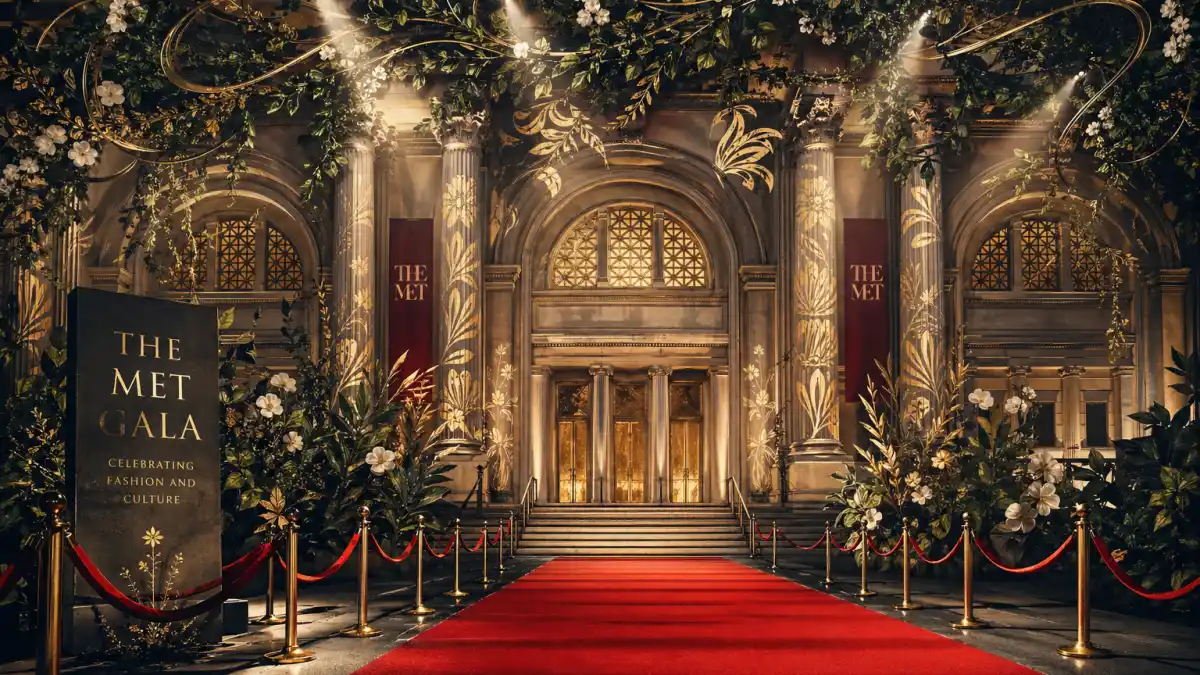
If you switch on the news in early May and see a six-hour live broadcast of celebrities walking up the steps of a New York City museum, you have not stumbled into a costume drama. You have stumbled into the Met Gala — easily the most-watched, most-photographed, and most-meme-able night in the global fashion calendar.
For an event that runs for one night, in one city, with fewer than 500 invitees inside the building, the Met Gala has an outsized cultural footprint. It dictates which designers are hot for the year, sets the tone for awards-season carpets, and produces the single set of red-carpet images that will be re-shared, debated, and parodied for the next twelve months.
This guide explains exactly what the Met Gala is, who actually runs it, how the famous theme and dress code work, what happens once the cameras stop rolling at the top of the steps, and why a $75,000 ticket is still considered a bargain by the people who pay for one.
What the Met Gala actually is
The Met Gala is, on paper, a fundraiser. Officially called the Costume Institute Benefit, it raises money for the Costume Institute, the only curatorial department inside the Metropolitan Museum of Art that has to fund itself. The institute houses more than 33,000 objects, spanning seven centuries of fashion, and the gala is its single biggest revenue event of the year.
Held on the first Monday in May, the gala marks the opening of the Costume Institute’s annual exhibition. So while most viewers tune in for the carpet, the night is also a private preview party: guests step off the steps and walk straight into the museum to be the first audience for a months-long fashion exhibit that will then be open to the public for the rest of spring and summer.
The exhibition is the reason the dress code exists. Each year’s gala has a theme that reflects the upcoming exhibition, and guests are asked — though not strictly required — to dress in conversation with that theme. That single design decision is what turned a black-tie museum benefit into a global pop-culture event.
Who actually runs it
The Met Gala has had several chairs over its history, but for more than two decades the name most associated with the night has been Anna Wintour, the editor-in-chief of Vogue and global chief content officer of Condé Nast. Wintour took over chairing duties in 1995 and effectively re-engineered the gala into the celebrity-and-designer spectacle it is today.
Practically speaking, the gala is a partnership between three groups:
- The Costume Institute chooses the year’s exhibition and curates it. The institute’s curator — at the time of writing, Andrew Bolton — sets the intellectual direction.
- Vogue and Anna Wintour run the production: invitation list, seating chart, table arrangements, the carpet itself, and the secrecy that surrounds nearly every detail until the night.
- The annual co-chairs — usually three or four high-profile celebrities and a sponsoring designer — front the event publicly and help recruit attendees. Co-chairs are announced in the weeks leading up to the gala and are themselves part of the marketing rollout.
Tables are sold to fashion houses and corporate sponsors, who then fill them with their own brand ambassadors. That’s why a single red-carpet evening can deliver so many designers in lockstep with their muses: the table is the unit, the fashion house picks who sits at it, and the editor-in-chief ratifies the final list.
How the theme and dress code work
Each Met Gala has two parts to its sartorial brief, and the difference between the two trips up plenty of celebrities every year.
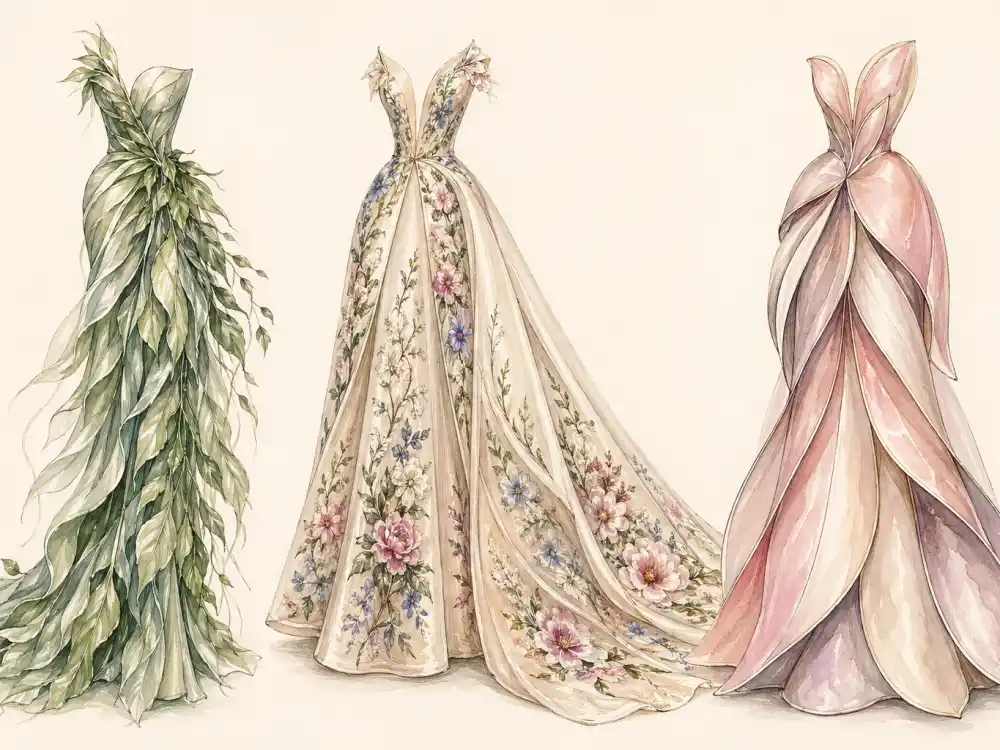
The first is the exhibition theme. The Costume Institute decides the curatorial concept months in advance and announces it in the autumn before the gala. Recent themes have ranged from “Camp: Notes on Fashion” (2019) to “Karl Lagerfeld: A Line of Beauty” (2023) and “Sleeping Beauties: Reawakening Fashion” with the dress code “The Garden of Time” (2024). The theme is what shapes the actual museum exhibit; it is intellectually expansive and not always literal.
The second is the dress code. This is a tighter, more practical instruction sent to invitees and is what guests are expected to interpret on the carpet. The dress code is more visual, often more poetic, and is the line that designers use as a creative brief.
Crucially, the dress code is a request, not a contract. Some attendees go literal, some go conceptual, some ignore it entirely and simply wear an exquisite gown from the house that placed them at a table. That tension — and the question of who has “got the assignment” — is what most carpet coverage is built around.
What actually happens on the night
Everyone outside the museum sees roughly two hours of red carpet. Inside, the night runs much longer. The schedule is closely guarded, but the broad shape goes like this:
- Late afternoon — arrivals. Cars line up along Fifth Avenue and guests ascend the steps in a carefully timed sequence, with co-chairs and the highest-profile names usually held for the second half of the carpet to maximise coverage.
- Cocktails and the exhibit preview. Once inside, guests walk through the new Costume Institute exhibition for the first time. This is the actual fundraising event — they are seeing what their tickets paid for.
- Dinner. A seated dinner follows, designed by the in-house Met Gala food team, at tables shaped by the seating chart that took months to assemble. Phones are technically banned at dinner, although that policy is enforced with varying degrees of strictness.
- Performance. A musical performance — sometimes one of the year’s biggest names, sometimes a more curated set — closes out the dinner.
- After-parties. The official portion ends well before midnight. The unofficial portion, hosted by the night’s biggest stars at venues across Manhattan, runs until dawn.
For all the choreography, the moment most viewers remember is the simplest one — a single guest, in a single look, climbing the white marble steps under hot studio lights, pausing for the photographers, and disappearing through the doors.
The economics of a Met Gala ticket
The gala is famously expensive — and famously hard to get into even if you are willing to pay. Recent reporting has placed the individual ticket price at around $75,000 and a sponsored table at roughly $350,000, although the actual numbers have climbed almost every year.
The ticket is, however, only the surface cost. The bigger expense for most attendees is the look itself — bespoke couture, custom jewellery, the team of stylists, hair, make-up, and dressers required to keep a single garment camera-ready for an entire evening. For talent invited as a designer’s guest, those costs are typically borne by the fashion house, not the celebrity, which is exactly why the brand-and-celebrity pairing is so important.
And even then, the event is not open to anyone who can write a cheque. Every guest, sponsor or not, needs to be approved by Anna Wintour and the gala team. That gatekeeping is the unspoken reason the Met Gala has stayed culturally relevant where countless other charity benefits have not: the editorial bar is set at the door.
The themes that defined modern Met Gala
If you want to understand how the gala became the event it is today, four exhibitions are the ones to know.
- “Alexander McQueen: Savage Beauty” (2011). A retrospective of the late designer’s work. The exhibition broke attendance records for the Costume Institute and confirmed that fashion exhibits could be cultural events on the scale of a blockbuster art show.
- “China: Through the Looking Glass” (2015). A sweeping look at the West’s interpretation of Chinese aesthetics. The carpet here introduced a level of theatrical commitment from celebrities — full Tang-dynasty silhouettes, dragon embroidery, headpieces — that became the new normal.
- “Heavenly Bodies: Fashion and the Catholic Imagination” (2018). Held in partnership with the Vatican’s own collection, this is still the highest-attended Costume Institute show ever. The carpet leaned into iconography unapologetically and produced some of the most reproduced gala images of the past decade.
- “Camp: Notes on Fashion” (2019). The carpet many viewers point to as peak Met Gala — a category-defining exercise in commitment to a brief. It also proved how literal the dress code could get and still be considered correct.
Each of those nights expanded what was acceptable on the carpet, and each is now used as a reference point by the stylists planning future looks.
How to watch the carpet
The carpet itself is open to public viewing through a few official channels. Vogue hosts the primary livestream on its YouTube channel and on Vogue.com, usually beginning around 6 p.m. Eastern, with co-hosts on the steps interviewing arrivals as they ascend. Several broadcast networks run their own simulcasts on social channels, and individual celebrities increasingly publish their own behind-the-scenes content from the dressing rooms in the hours leading up.
For sustained coverage of the looks themselves, fashion publications publish dressed lists in real time, and those lists tend to be more useful than the live broadcast for actually identifying who is wearing what — designers, jewellers, and any custom houses involved are usually credited line by line.
Frequently asked questions
When is the Met Gala?
The first Monday of May, every year. The date can shift if it conflicts with a major holiday, but the first-Monday convention is the default and has held for decades.
Why is it always called “the Costume Institute Benefit” in formal coverage?
Because that’s what it legally is — a fundraiser for a museum department. “Met Gala” is the popular shorthand. The full official name appears on the invitations and in IRS filings.
Can journalists go?
Reporters work the carpet outside the museum but are generally not seated at dinner. The few inside accounts that do exist are typically from Vogue’s own staff or invited columnists who agree, in advance, to a specific publication agreement.
What’s the difference between the Met Gala and the Costume Institute exhibition?
The gala is a one-night invitation-only event. The exhibition is the public-facing result and is open to general museum admission for the rest of spring and summer. Both share the same theme; only one of them ever sells out.
Are politicians, athletes, or non-fashion celebrities invited?
Increasingly, yes. The list has expanded over the last decade to include athletes, tech founders, politicians and authors. The unifying brief is cultural relevance, not industry — the gatekeeping is editorial, not occupational.
How USA Celebs covers the Met Gala
We cover the Met Gala the same way we cover awards season — live updates as the carpet runs, dressed lists with full credits as soon as houses release them, and longer-form pieces on the looks that genuinely advance the conversation. Bookmark our Red Carpet and Fashion sections, and if you spot a credit we got wrong, let us know — we update as designer confirmations come in.
Frequently Asked Questions
What is the Met Gala?
The Met Gala is an annual fundraising event for the Metropolitan Museum of Art’s Costume Institute in New York City, considered the most exclusive and prestigious fashion event in the world.
How do you get invited to the Met Gala?
Invitations to the Met Gala are controlled by Vogue editor Anna Wintour. Tickets cost around $75,000 each or $350,000 per table, with guests carefully curated from fashion, entertainment, and business.
When is the Met Gala 2026?
The Met Gala 2026 is held on the first Monday of May at the Metropolitan Museum of Art in New York City, continuing its longstanding tradition.
2 thoughts on “The Met Gala, Explained: How the World’s Biggest Fashion Night Actually Works”