

In this article14 sections
- Lil Wayne Tattoos and Their Meanings: The Big Picture
- Face Tattoos: Teardrops, Crosses, and "Fear God"
- Neck and Chest Tattoos: Louisiana Pride and Music Homages
- Arm and Sleeve Tattoos: Flash, Script, and Career Milestones
- Hand, Finger, and Knuckle Tattoos
- Leg, Back, and Less-Visible Ink
- Hurricane Katrina and New Orleans Survival Narrative
- Young Money Era and Mainstream Peak: New Chapters in Ink
- Artists and Studios Behind the Ink
- How Wayne's Tattoo Style Has Evolved Over Time
- What Lil Wayne Has Said About Tattoos Publicly
- Common Fan Questions and Unconfirmed Rumors
- Quick Reference: Major Tattoo Themes
- Explore More on USA Celebs
Lil Wayne tattoos and their meanings fascinate fans because Dwayne Michael Carter Jr. turned his face, neck, and torso into one of hip-hop’s most photographed canvases — a collage of faith, New Orleans pride, music-career milestones, and personal mantras inked across decades. Wayne has addressed many pieces in interviews with outlets including People, Billboard, and Complex, while tattoo trade press and red-carpet photography document the rest. This Pillar K reference page maps what is publicly sourced: where major tattoos sit, what Wayne or his artists have said they represent, and which meanings remain reported but unconfirmed by the star himself.
Editorial note: Tattoo meanings evolve in retelling. We attribute claims to Wayne’s own interviews, named tattoo artists, or credible entertainment outlets. When a meaning is fan speculation or unverified tabloid copy, we label it as such.
Lil Wayne Tattoos and Their Meanings: The Big Picture
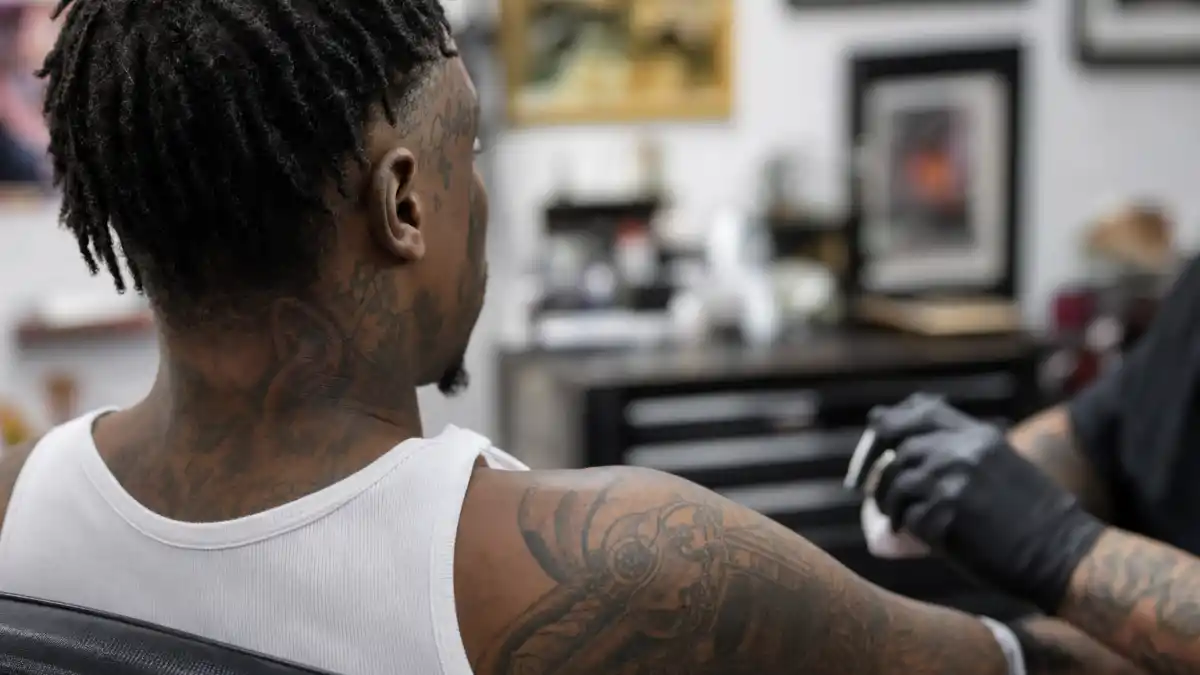
Wayne’s ink story begins in New Orleans as a teenager under Cash Money Records, when small arm pieces were as common as studio sessions in the 17th Ward. Over three decades, those early marks multiplied into one of rap’s most extreme body-art profiles — entertainment coverage often places his count well above 50 individual tattoos, though Wayne himself has joked the total is impossible to track. What matters for readers searching Lil Wayne tattoos and their meanings is not a perfect inventory but the through-line: faith declarations on his eyelids, Louisiana identity, Young Money branding, homages to mentors and family, and the deliberate choice to tattoo his face when most artists still avoided visible facial ink.
In a 2018 Drink Champs appearance and earlier profiles widely cited by hip-hop blogs, Wayne described tattoos as self-expression rather than decoration — a framing he has repeated on social media and in E! News red-carpet sound bites. That philosophy explains why his collection mixes tiny script with bold traditional crosses: different eras, different impulses, same urge to externalize identity on skin that cannot be taken off.
Face Tattoos: Teardrops, Crosses, and “Fear God”
Wayne’s face tattoos are the first thing paparazzi and concert photographers capture — the imagery that made facial ink mainstream in hip-hop.
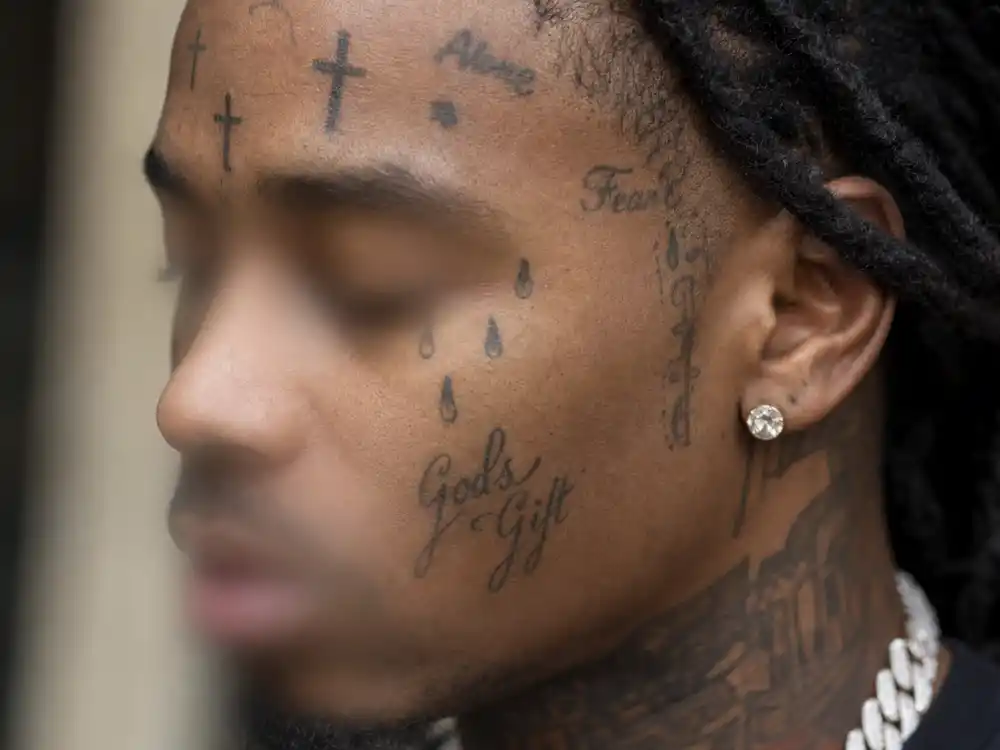
- Teardrop tattoos — Among Wayne’s most debated face pieces; urban legend long claimed teardrops mark people the wearer killed. Wayne has pushed back on that reading in interviews covered by Complex and Billboard, saying his teardrops do not carry that meaning for him. Treat prison-kill-count folklore as unconfirmed unless Wayne states otherwise.
- “Fear God” on eyelids — Wayne’s eyelid script is among his most famous tattoos; he has linked faith language to personal spirituality in general interview contexts, though not every outlet has a single extended quote annotating the exact placement.
- Crosses on forehead and cheeks — Cross imagery appears across Wayne’s face in countless performance photos; faith-linked interpretation is widely reported in entertainment press tied to his public comments about prayer and survival, but individual cross pieces lack line-by-line confirmation.
- “I Am Music” and career script — Forehead and face lettering referencing Wayne’s artist identity appears in documented sessions; meanings align with his self-branding as a generational rap innovator rather than hidden symbolism.
- “Misunderstood” and affirmation script — Face lettering pieces appear in red-carpet close-ups; Wayne has used “misunderstood” language in lyrics and interviews, though not every script piece has an on-record explanation tied to a specific date.
When a face tattoo lacks a direct Wayne quote, treat fan forums as speculation only. Credible meaning claims here trace to Wayne interviews, named artists, or major entertainment outlets — not anonymous Pinterest captions.
Neck and Chest Tattoos: Louisiana Pride and Music Homages
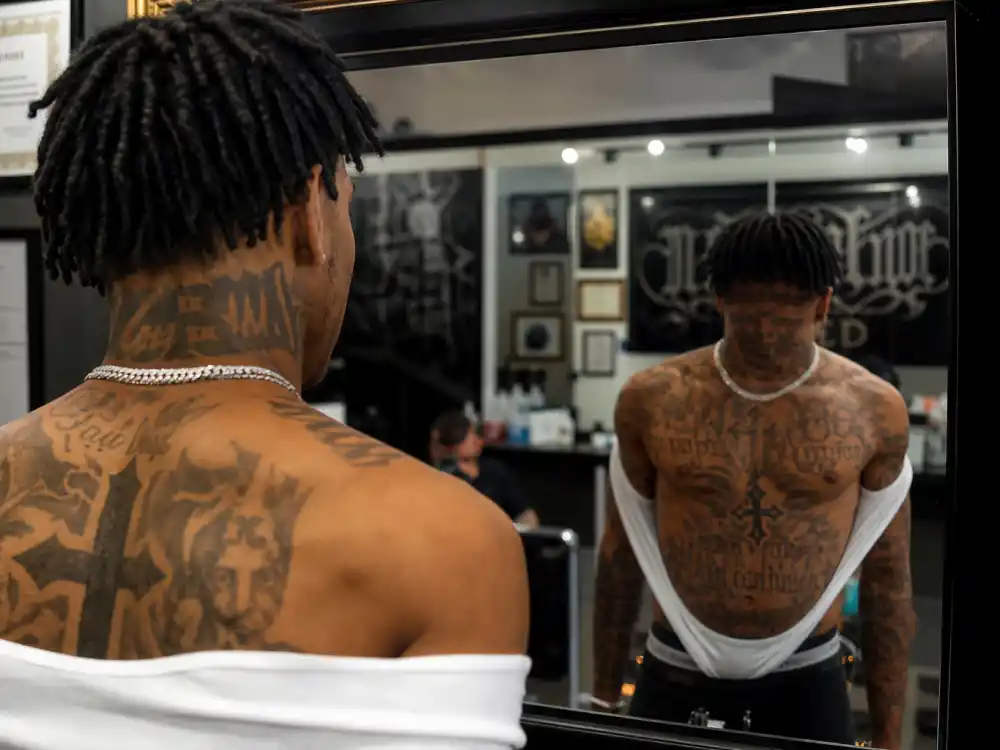
Wayne’s neck and chest host statement pieces visible whenever he performs shirtless or in tank tops.
- Louisiana and New Orleans references — Fleur-de-lis and regional imagery connect Wayne to his hometown; post-Hurricane Katrina commentary in interviews with People and Billboard contextualizes how New Orleans identity shapes his public narrative and body art.
- Young Money and Cash Money iconography — Label branding and mentor-era references appear across his torso in photos from the 2000s and 2010s; meanings are often literal career markers rather than abstract symbolism.
- BB King and music-legend portraits — Wayne has documented guitar-king and blues-legend homage tattoos in social posts and interview segments; portrait work honors artists who influenced his musical worldview.
- Family and Carter references — Script and numeric tattoos including “17” appear in fan breakdowns and photo galleries; some link to the 17th Ward or family naming, but Wayne has not publicly annotated every numeric piece — label reported context where direct quotes are absent.
Arm and Sleeve Tattoos: Flash, Script, and Career Milestones
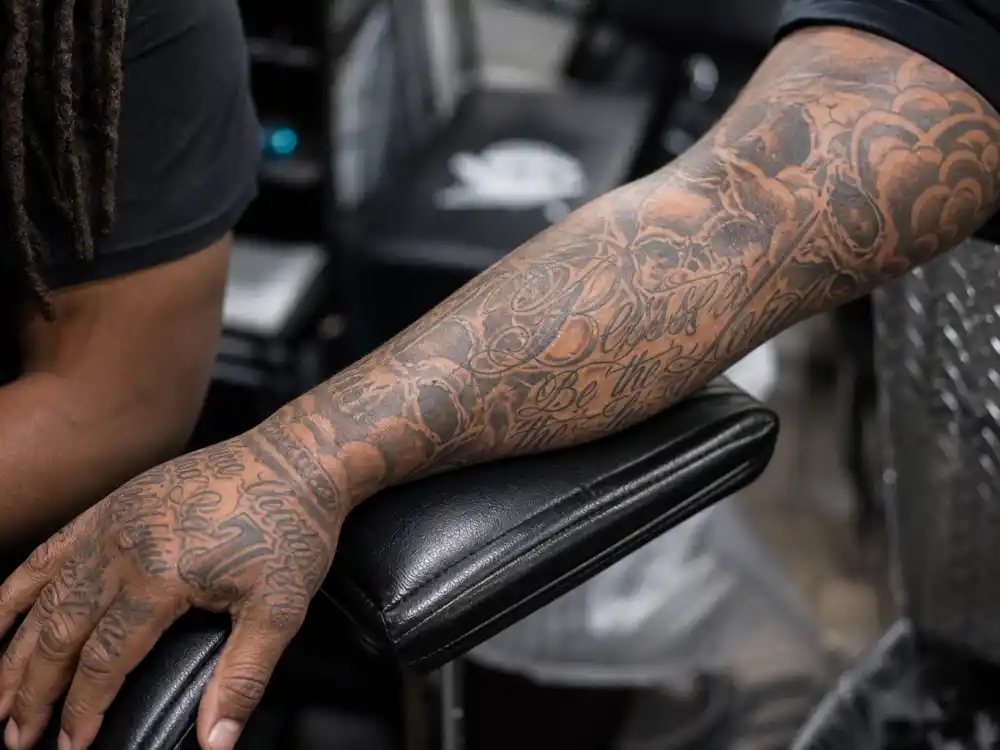
Wayne’s arms tell the longest continuous story because sleeves accumulated across years of touring and studio marathons.
- Early Cash Money era pieces — Small traditional flash and script from Wayne’s teens appear in archival photos; Billboard and hip-hop history outlets note these as among his first professional-era marks.
- Tha Carter series references — Imagery and script tied to his landmark album franchise surface in documented sessions; meanings connect to career chapters rather than single hidden messages.
- Skulls, flames, and street-shop traditional — Bold black-and-grey and color traditional motifs reflect Wayne’s alliance with New Orleans street culture rather than a unified symbolic system.
- Collaborator and mentor homages — Pieces referencing Birdman, label family, and rap collaborators appear in reported sessions; meanings vary from loyalty tributes to inside references depending on the piece.
Full sleeve coverage means some inner-arm tattoos surface only in studio B-roll or fan photos. This guide focuses on widely visible work with reported context.
Hand, Finger, and Knuckle Tattoos
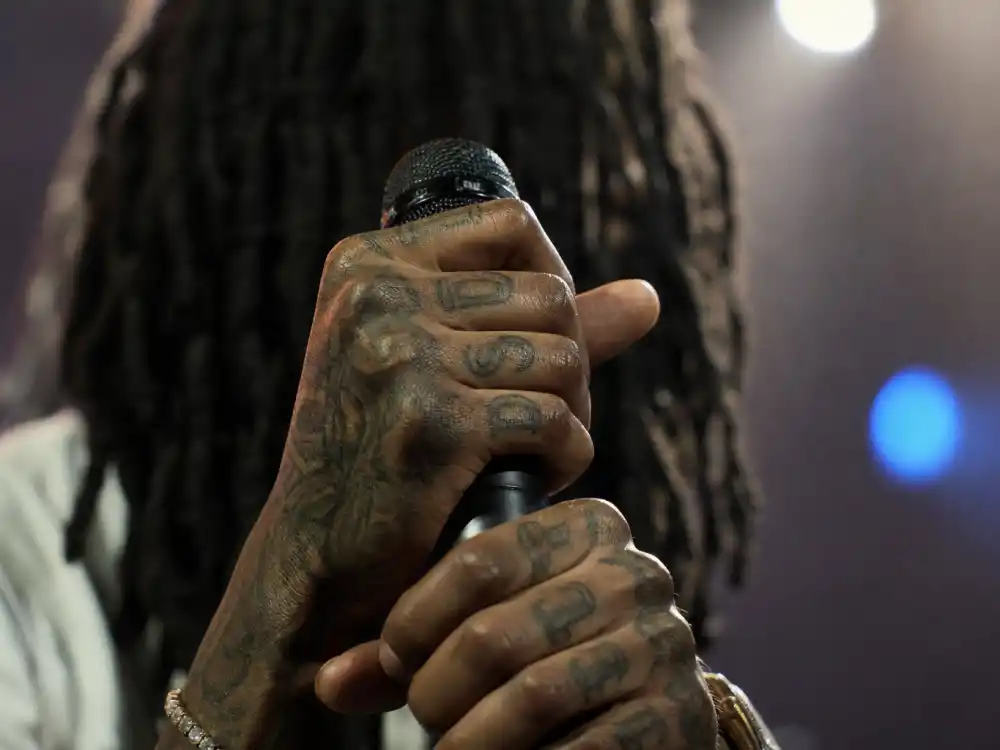
Wayne’s hand tattoos are impossible to miss — letter work on knuckles, symbols between fingers, and small icons that read even when he grips a microphone.
- Knuckle lettering — Short words and initials appear across knuckles in concert footage; some spell phrases Wayne has confirmed in social posts, while others remain deciphered only through close-up photography.
- Functional visibility — Hand tattoos are among the most painful and fade-prone placements; Wayne’s willingness to ink fingers signals how central visible storytelling is to his identity as an artist who rejected conventional image management.
- Performance permanence — Unlike wardrobe or jewelry, finger ink stays visible during every live show — a reason hand work dominates fan searches around Lil Wayne tattoos and their meanings.
Finger tattoos often carry the shortest literal meanings — names, dates, or single words — but Wayne has not publicly annotated every digit. Document what outlets photograph; avoid inventing translations.
Leg, Back, and Less-Visible Ink
Leg and back tattoos round out Wayne’s collection in ways casual red-carpet photos rarely capture.
- Back pieces and large-scale work — Tour and studio photos show extensive back work continuing the black-and-grey vocabulary of his arms; large pieces often require multi-session sittings documented by tattoo artists on social media.
- Leg tattoos — Wayne has shown leg ink in performance and social content; meanings range from aesthetic filler to unconfirmed fan breakdowns without Wayne quotes.
- Coverage philosophy — In tattoo press and interviews, Wayne has described wanting cohesive body coverage rather than isolated patches — explaining why even lower-body skin eventually filled in across his twenties and thirties.
Hurricane Katrina and New Orleans Survival Narrative
Any serious discussion of Lil Wayne tattoos and their meanings must address August 2005, when Hurricane Katrina devastated New Orleans and displaced Wayne’s community. People, Billboard, and Wayne’s own interview cycles describe the storm’s impact on his family, hometown, and artistic outlook in the years that followed.
Tattoos Wayne added or emphasized in the post-Katrina era — Louisiana imagery, survival-themed script, regional pride markers — are widely interpreted by outlets as hometown resilience and memorial context. Wayne has spoken about New Orleans loyalty in recovery interviews without annotating every corresponding tattoo. Attribute regional meaning to pieces when Wayne or a major outlet makes the link; otherwise note the connection as reported context, not confirmed caption.
Young Money Era and Mainstream Peak: New Chapters in Ink
Wayne’s 2008–2012 mainstream peak accelerated fresh ink documented across People, E! News, and hip-hop press:
- Label and brand tattoos — Young Money and career-branding pieces appeared as Wayne became one of rap’s bestselling artists; meanings are often literal professional identity markers.
- Face tattoo acceleration — Wayne’s decision to add increasingly visible facial work during this era influenced a generation of rappers; Complex and tattoo blogs cite him as a primary driver of face-tattoo normalization in hip-hop.
- Skate and rock crossover aesthetic — Wayne’s rock-influenced era brought new visual influences to his tattoo choices — a stylistic shift visible when comparing early 2000s photos to 2010s award-show close-ups.
Artists and Studios Behind the Ink
Wayne rotates among high-profile artists depending on tour schedules and hometown visits. Tattoo trade press and Instagram tags credit New Orleans and Los Angeles practitioners for much of his traditional and script work, while celebrity-favorite artists handle larger portrait and realism sessions.
Knowing the artist helps date a tattoo — fine-line script suggests specific 2010s sessions; older traditional flash may trace to Wayne’s Cash Money teens. When artist captions omit meaning, rely on Wayne’s own words first.
How Wayne’s Tattoo Style Has Evolved Over Time
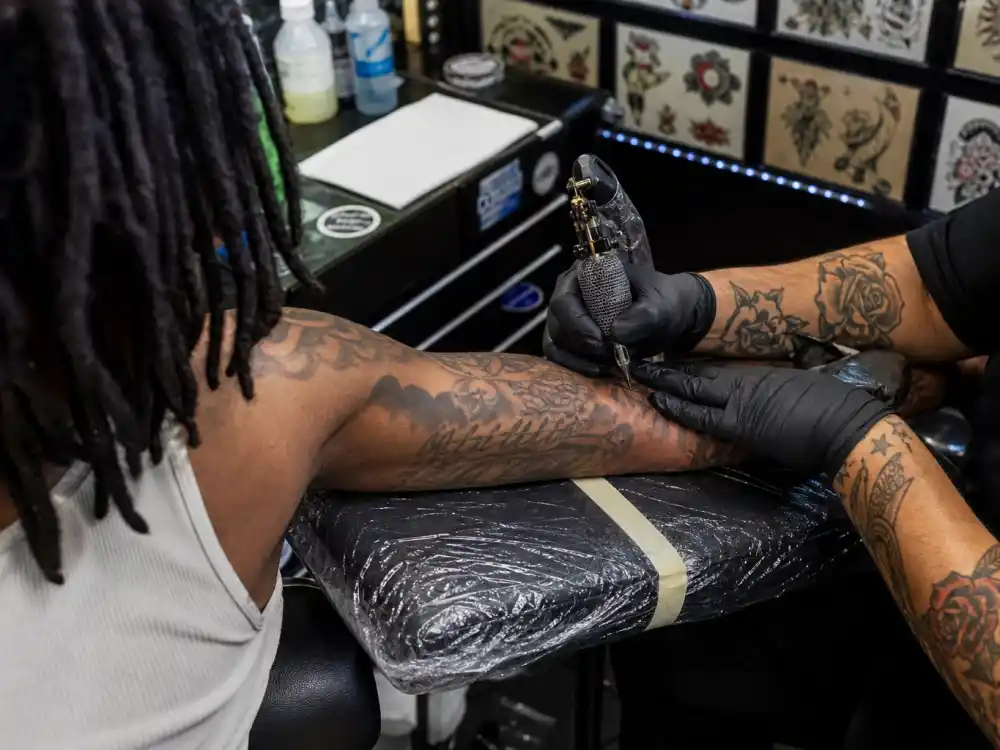
Early Wayne ink followed street-shop flash: bold outlines, small script, and label-era iconography collected fast in his teens. Middle-era work added dense black-and-grey fill and increasingly visible neck pieces. Recent years emphasize full face coverage, faith script, and career-branding lettering — a shift visible when comparing 1990s performance photos to 2020s festival close-ups.
That evolution mirrors broader tattoo culture in hip-hop: from hidden arm pieces to face-first identity statements. Wayne’s body is a timeline you can read stylistically even when a specific piece lacks a published meaning.
What Lil Wayne Has Said About Tattoos Publicly
Recurring themes from Wayne interviews and tattoo-focused profiles:
- Tattoos function as self-expression and permanent autobiography — language he has used on podcasts and with hip-hop press.
- He has corrected fan myths about teardrop meanings — a point Complex and Billboard have highlighted when debunking prison folklore.
- Faith language including “Fear God” reflects genuine spirituality in his public framing, though he has not itemized every religious piece.
- Not every tattoo requires a deep meaning; some are aesthetic or spontaneous — Wayne has acknowledged impulsive shop visits alongside carefully planned script.
Common Fan Questions and Unconfirmed Rumors
Search traffic around Lil Wayne tattoos and their meanings includes persistent rumors — teardrop kill counts, removal stories, and piece counts exceeding 100. As of credible reporting:
- Teardrop kill-count myth — Wayne has disputed the prison folklore in interviews; do not state teardrops mark killings unless citing unverified urban legend with a clear disclaimer.
- Removal — No major outlet has documented a Wayne laser-removal arc comparable to celebrity regret stories; do not invent removal narratives for this page.
- Exact count — Wayne and journalists agree the total is very high but imprecise; quote ranges as estimates, not facts.
Quick Reference: Major Tattoo Themes
- Faith and spirituality: “Fear God” eyelids, crosses, prayer-linked script — tied to Wayne’s public faith comments via Complex/Billboard
- New Orleans identity: Louisiana imagery, post-Katrina resilience markers — documented by People and regional press
- Music career: Young Money branding, Tha Carter references, legend portraits — hip-hop press and tattoo blogs
- Self-branding: “I Am Music,” “Misunderstood,” career script — visible in performance photography
- Street aesthetic: Skulls, flames, traditional flash — stylistic layer without single meanings
Explore More on USA Celebs
- Browse our Celebrities archive for more tattoo and body-art reference pages.
- See related Pillar K guides for celebrity ink collections, face tattoo trends, and tattoo artist profiles.
- Bio stats and height pages for Wayne live in separate Pillar I coverage — not duplicated here.