

In this article7 sections
- How Eminem makes money without mixing a paycheck and a fortune
- Catalog royalties as the quiet-year majority
- Touring as the live burst, not the whole business
- Shady Records as participation, not a hardware sale
- 8 Mile and Lose Yourself as residuals, not a film career
- What he does not collect: masters still at Universal
- A pretax year is not the fortune
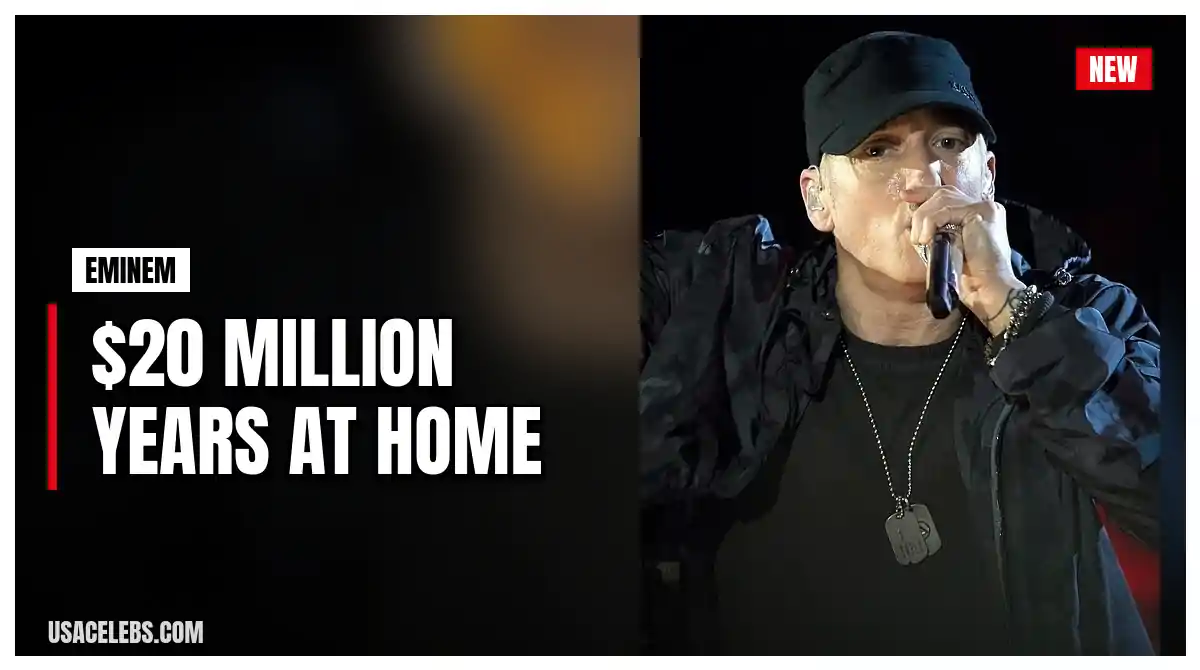
How Eminem makes money in a mature catalog year is mostly royalties, then a touring spike when he actually goes on the road. Celebrity Net Worth says about $20 million in a non-touring year and as much as about $50 million in a touring year, a mix Forbes independently checked when it estimated $50 million pretax for 2019. That mix is cash flow. It is not Celebrity Net Worth’s estimated $300 million fortune. This page is the revenue-stream view: where cash enters, not what the fortune is worth today.
The mix is lumpy. A year with a road cycle does not look like a year without one. Streaming, radio, and publishing keep working in the quiet years. Shady Records and an estimated $3 million 8 Mile acting check, according to Celebrity Net Worth, are supporting lines that headlines overstate because they photograph well. For the fortune those streams have built, see Eminem net worth 2026. For the year-by-year table, see Eminem net worth over the years.
How Eminem makes money without mixing a paycheck and a fortune
Forbes’ musician lists are pretax and do not deduct managers, agents, or lawyers. Celebrity Net Worth tries to describe a personal fortune and, separately, a typical year. The business question is the keep, not a lifetime Boxscore someone never published for him at Springsteen scale, and not the estimated $513.7 million career-earnings tally treated as a checking account. Readers who add that tally to the estimated $300 million leftover will overstate every chapter.
Aftermath and Interscope, under Universal, have long held the major-label masters. The income implication is participation. A hired-hand arena act pays promoters and middlemen. A catalog Celebrity Net Worth marks at more than an estimated $200 million is an annuity doing its job after the trucks go home. Recording income is royalties, publishing interests, and related IP, not a Swift-style narrative in which he owns the recordings outright.
That is why a touring year and a personal fortune are different numbers. Celebrity Net Worth’s about $50 million touring-year template is one attempt at an artist-side year. Forbes’ estimated $50 million pretax for 2019 is another. Road income is the keep after production, opening-act deals, and tax, not a fantasy stadium occupation he does not currently run every cycle.
Catalog royalties as the quiet-year majority
The 2022 through 2025 prints are the tell that the catalog still throws off cash without a bus. Celebrity Net Worth scores each of those years at about $20 million. The same outlet values catalog and IP rights at more than an estimated $200 million and says he has sold about 220 million albums worldwide, enough to rank him among the 10 best-selling artists, with the first two major albums alone near 50 million copies. The Marshall Mathers LP, which Celebrity Net Worth says sold over 1.76 million copies in its first week and eventually more than 21 million, and The Eminem Show, which the same outlet puts at about 27 million copies, are still streaming principal.
Recording income in 2026 is more streaming, radio, and sync than CD, but the physical-era catalog feeds the same pipeline. He has not been reported as selling that catalog in a cash-out of the sort Forbes tied to Bruce Springsteen’s reported $500 million Sony deal. The annuity is still his. Rumors that a fund will let fans invest in the catalog are not the same as a disclosed sale of the whole copyright.
A held catalog keeps throwing off royalties after the trucks go home. A sold catalog can create a spike. In a year with no new solo cycle, how Eminem makes money is mostly that annuity plus whatever live work is on the books. The estimated $20 million quiet-year print, according to Celebrity Net Worth, is a catalog year. It is not a template for the next calendar if he actually tours.

Touring as the live burst, not the whole business
The live chapter is the lumpy valve, not the identity of the business. Celebrity Net Worth says a road cycle tied to an album can easily approach about $50 million. Forbes estimated $50 million pretax for 2019, matching that template. When he tours, the cash arrives as a concentrated burst. When he does not, Celebrity Net Worth’s estimated $20 million floor is the catalog year. Collapsing those into one “annual salary” is how a catalog artist gets misread as a stadium occupation.
He no longer tours every cycle. That is why the 2022-2025 estimated $20 million years sit next to the 2019 estimated $50 million year without contradiction. Super Bowl LVI in 2022 was a brand event on a shared bill with Dr. Dre, Snoop Dogg, Mary J. Blige, and Kendrick Lamar. The NFL does not publish an Eminem fee that meets a sourcing standard here. Read it as catalog infrastructure, not as a disclosed eight-figure live check.
Gross is not net even in a touring year. Production, commissions, tax, and the fact that some of those years were pretax estimates all sit between a headline and the keep. Road income now includes years that look like a catalog-support calendar rather than a hip-hop box-office record. Scarcity can still price a date. Volume is what compounds a fortune. Another estimated $50 million touring year would thicken cash without minting a billionaire line, just as 2019 did not.
Shady Records as participation, not a hardware sale
In 1999, Eminem and manager Paul Rosenberg founded Shady Records as an imprint under Aftermath. Celebrity Net Worth says D12 was the first act signed, and that in 2002, while filming 8 Mile, Eminem signed 50 Cent as the first solo artist. The 8 Mile soundtrack, released through Shady, would go on to sell more than 11 million copies worldwide, according to that outlet. Get Rich or Die Tryin’ sold 14 million albums worldwide on the same telling. Those are label economics from the 2000s. They padded the imprint.
Shady income in 2026 is profit participation and creative control that a hired-hand rapper does not have. It does not, on the public record, look like Beats Electronics. There is no named, dated sale of Shady Records at a nine-figure price in the outlets cited on this page. Secondary posts that invent an estimated $200 million Shady sale are usually confusing Celebrity Net Worth’s catalog-and-IP mark with a label exit that was not disclosed.
50 Cent’s later path — Vitaminwater, Chapter 11, television — sits on 50’s personal ledger. Mentioning the signing here is only to keep the imprint history honest. Income from other people’s records is a 2000s participation story, not a 2026 drink-equity story. The rematch of the two fortunes lives on a different page.
8 Mile and Lose Yourself as residuals, not a film career
Celebrity Net Worth lists an estimated $3 million payday for 8 Mile. That is a 2002 acting check, not a Pitt-style quote business. Film income is a residual, not a living. The film mattered because the soundtrack sold more than 11 million copies worldwide, according to the same outlet, and because Lose Yourself won the Academy Award for Best Original Song, a first for a rapper. Sync, radio, and streaming on that title are part of the catalog annuity.
Later acting and producing credits have not, on named sources, replaced music as the engine. Treating 8 Mile as a Hollywood living misreads the file. Treating the Oscar song as worthless because the movie is 24 years old is the opposite mistake. Standards that keep getting licensed are why a quiet 2025, which Celebrity Net Worth still scores at about $20 million of earnings, does not look like insolvency.
Endorsements are not the mill on the public file used for this page. Brand income is not a Fenty-scale joint venture and not a disclosed perennial spokesperson contract. Leaving unsourced campaign fees blank is safer than inventing them. The honest mix stays on recordings, touring when he tours, and the imprint.

What he does not collect: masters still at Universal
Master recordings for the major-label albums have long sat with Aftermath, Interscope, and ultimately Universal, the companies that funded and distributed the albums. That does not zero out the more-than-estimated-$200 million catalog-and-IP mark. It means Celebrity Net Worth is valuing his royalty stream, publishing, Shady participation, and related rights, not handing him the physical masters as a personal asset. Income from those albums is a contracted percentage, not the wholesale of the copyrights.
A page that says he owns the masters outright is writing a Swift-style narrative onto a 1998 Aftermath deal. A page that says the catalog is worthless because UMG holds the recordings is ignoring the royalty statements that still fund the estimated $20 million quiet years. Income in 2026 lives in that middle. Administration and distribution are not a sale. They are also not a personal vault.
Compare the structure with artists who did convert catalogs into cash. Bruce Springsteen sold a catalog to Sony for a reported $500 million lump sum. Eminem’s recordings remain at the company that already exploits them. Income from Universal is closer to a continuing royalty-and-rights relationship than to a Springsteen closing statement.
A pretax year is not the fortune
Forbes’ estimated $50 million pretax for 2019 is the flow to remember, a touring-year clock that matches Celebrity Net Worth’s about $50 million print. The estimated $20 million quiet-year print is the catalog floor. The estimated $513.7 million career-earnings tally from 1999 through 2025 is the lifetime flow. None of those figures is net worth. Eminem’s leftover is what remains after tax, production, commissions, and reinvestment come out of those pretax clocks.
In a quiet year the mix leans on streaming, radio, publishing, and whatever Shady still clears, which has not been disclosed as a separate personal profit line. That is why a year without an Eminem tour is not a bankruptcy signal, and why a Forbes 2019 pretax touring clock is not, by itself, a new Celebrity Net Worth reprint. Celebrity Net Worth’s snapshot of about $300 million already has to be compatible with those headlines. A peak year can look like a Forbes pay list without minting a new billion by itself.
Until a catalog sale or a disclosed brand exit arrives, that ranking of streams should hold: recordings first, touring as the lumpy valve, Shady as participation, 8 Mile as a residual, masters at Universal as the constraint. For the peer ranking that the estimated $300 million leftover implies, see how much Eminem is worth next to Drake and Jay-Z. Michigan houses, including the Clinton Township purchase of about $1.483 million and the Oakland County sale at about $1.9 million, are uses of money. They are not how Eminem makes money in the sense this page means.