


In this article8 sections
How Ariana Grande makes money is no longer a question about one television paycheck or a single radio cycle. The useful line runs between what her projects gross in public and what can actually reach her as royalties, fees, or equity. Billboard Boxscore puts her career reported ticket sales at roughly $243.5 million through the end of 2019; Celebrity Net Worth puts fragrance retail sales above $1 billion. Neither headline is her salary — but both feed the streams that are.
The fortune those streams support is an estimated $250 million, according to Celebrity Net Worth’s August 2026 update. How that total is stacked is a separate page — our Ariana Grande net worth 2026 report — while this one is the plumbing: live shows, recorded music, fragrance licensing, r.e.m. beauty equity, endorsements, and film. For the order in which those pipes switched on, see Ariana Grande net worth over the years.
How Ariana Grande makes money in a non-touring year
Pop income is lumpy. Touring years look like windfalls; off years look quiet even while the catalog, the perfume counter, and a film residual keep working. Grande has leaned into that rhythm more than most peers — two big arena tours in the 2010s, then several years on albums, television, a beauty company, and Wicked before returning to the road in 2026, according to Celebrity Net Worth. A breakdown that lists only “concerts” misses most of a non-touring year; one that lists only “brand deals” misses the year Forbes estimated $72 million in pretax earnings off the back of Sweetener.
The second distinction is gross versus keep. Promoters report ticket sales; studios report box office; retailers report fragrance receipts; managers take a percentage; labels recoup; the tax authorities take more. Forbes’ Celebrity 100 figures are pretax and pre-commission, Billboard’s tour numbers are gross, and Celebrity Net Worth’s fragrance figure is retail. Keeping those labels straight is the whole craft of explaining how Ariana Grande makes money.
Live shows and festival fees
Live remains the largest documented cash engine. Billboard Boxscore put the 2017 Dangerous Woman Tour at approximately $71.1 million from 75 reported shows, and the 2019 Sweetener World Tour — behind Sweetener and Thank U, Next — at approximately $146.4 million and 1.3 million tickets over 97 reported dates, with roughly $106.9 million from North America and roughly $39.5 million from Europe. The same 2019 wrap put her career reported boxscore at roughly $243.5 million from 229 shows and 2.7 million tickets.
What she keeps from a ticket dollar is a negotiated residue. Arena tours pay for trucks, crews, dancers, band, production, insurance, support acts, and promoter splits before commissions, so Forbes’ estimated $72 million for the June 2019–June 2020 Celebrity 100 window is the closest public proxy for how much of that cycle became pretax personal income — and even that estimate bundles music, touring, and other work together.
Festivals are a separate live line. Variety, citing sources, said Grande earned about $8 million to headline Coachella in 2019 after Kanye West pulled out, and later reporting held that Beyonce’s 2018 Coachella deal was built the same way, at a reported $4 million per weekend. Those contracts were never made public, so Coachella works as a reported one-off, not a recurring line. Celebrity Net Worth places a 2026 Eternal Sunshine Tour on the calendar; until Boxscore publishes a wrap, it is a live pipeline without a settled gross.
Recorded music, publishing, and the 7 Rings catch
Studio albums are both product and catalog seed. Yours Truly through Eternal Sunshine, with Petal in 2026, built a body of work that keeps collecting on streaming services, radio, and sync licensing. Positions, Thank U, Next, 7 Rings, Yes, And?, and We Can’t Be Friends (Wait for Your Love) are the kind of standards that generate mechanical and performance income long past release week. Forbes does not publish her per-stream rate, and inventing one would be fiction.
Publishing is uneven across the catalog. Some tracks are mainly artist vehicles with outside writers; 7 Rings is a documented special case, where Celebrity Net Worth notes that Rodgers and Hammerstein take a 90 percent songwriting share because the song interpolates My Favorite Things. That does not make the record a weak master, but it does make Grande’s writer share on that particular smash thinner than a fully original composition would be.
There has been no catalog sale on the scale Forbes attached to Bruce Springsteen, whose 2021 Sony deal was reported at $500 million. Absent such a transaction, her recorded-music income is a royalty stream — mechanicals, performance, neighboring rights, and featured-artist payments — that adds complexity without a public spreadsheet. The practical point is that the catalog is a background engine every year and a foreground engine in the years without a tour.
The fragrance license
If touring is lumpy, fragrance is the stabilizer. Celebrity Net Worth reports that Grande’s partnership with Luxe Brands — Ari in 2015, then Cloud, Thank U Next, God Is a Woman, and later flankers — has generated more than $1 billion in retail sales. That is a counter figure, not her check: celebrity scent deals are typically licenses paying a royalty on wholesale or retail, sometimes with advances and advertising commitments, so she never sees the full retail total, and no serious outlet has claimed she does.
Even a low-single-digit royalty on a billion-dollar retail line can add up to tens of millions across a decade, which is why the stream belongs in any income map. Cloud’s awards-circuit success, which Forbes noted when it scored her in 2020, is a commercial fact rather than a Grammy, and the scents market the music while the music markets the scents — a loop that keeps her well paid in a year spent on a film set.
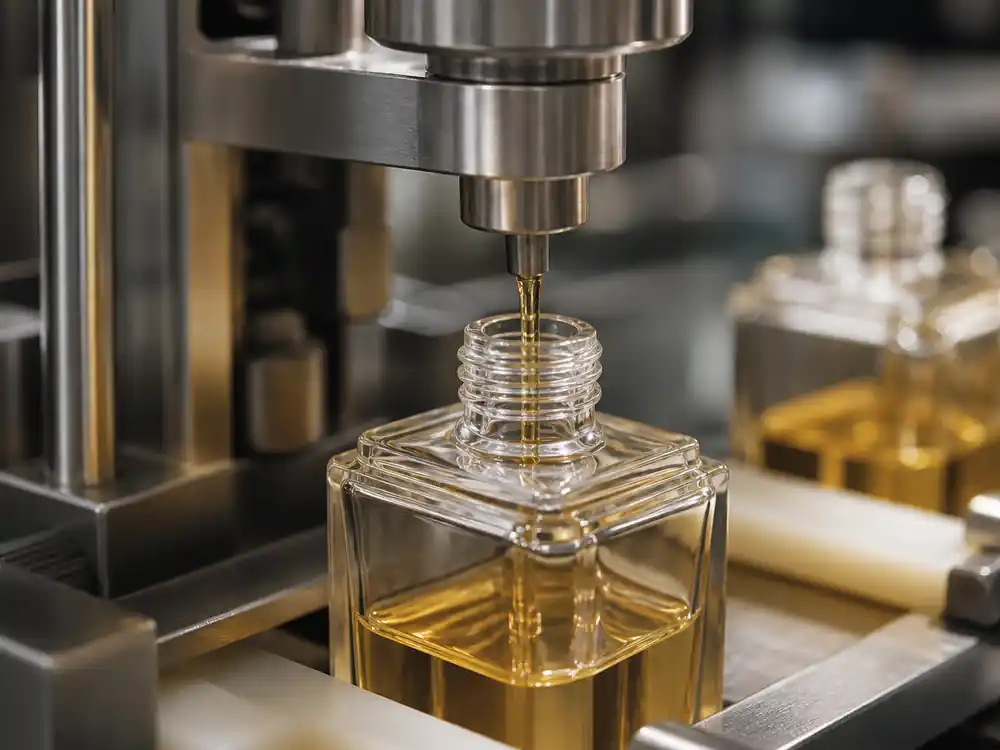
Licensing income is not equity income. If the Luxe Brands contract is a license, the upside is the royalty, not the sale of a fragrance company — a feature when the partner performs, and a ceiling next to a peer like Rihanna, whose Fenty stake Forbes has treated as the core of an estimated $1 billion fortune.
Owning r.e.m. beauty after 2023
r.e.m. beauty began in 2021 as a celebrity line inside Forma Brands, the incubator behind Morphe — her name and creative, their operations and capital. That structure broke when Forma filed for Chapter 11 in January 2023. Bloomberg reported that Grande then agreed to buy the brand’s physical assets, existing inventory included, for roughly $15 million, and Forbes described the same purchase as an estimated $15 million deal that still needed Delaware bankruptcy-court approval.
After that closing, the way she earns from makeup changed category. A license pays a percentage; an owned brand can pay — or lose — the residual profit after cost of goods, retail margins, marketing, and payroll, and it can be recapitalized or sold. None of those later events has surfaced with a reliable valuation, and third-party sites that assign r.e.m. beauty a nine-figure number from employee-count models are not a stand-in for a funding round. The figure that belongs in a sourced breakdown is the reported $15 million asset purchase.
Ownership is still the strategic point: Grande now holds a consumer company that can throw off operating profit in a good year without a new album, and consume cash in a bad one. Models that treat the brand as if it had already sold at a Fenty-like mark are running ahead of the evidence. For how beauty ownership plays out against her closest pop peer, see Ariana Grande vs Selena Gomez net worth.
Endorsements and campaign work
Grande has fronted campaigns for Coach, MAC Cosmetics, Reebok, Starbucks, Givenchy, Macy’s, T-Mobile, Apple, and Swarovski, among others, according to Celebrity Net Worth. Campaign fees are almost never filed, and they are front-loaded — a Givenchy season or a Reebok ambassadorship pays while the contract runs and then stops — so they matter more in the 2016–2019 climb, when she was minting hits and covering magazines, than as a theory of 2026 wealth.
Some deals were hybrids. Her 2016 MAC work included product benefiting the MAC AIDS Fund, and the 2019 Starbucks and Givenchy tie-ins sat next to the Sweetener touring year, when her commercial heat peaked. Forbes’ estimated $48 million and $72 million Celebrity 100 windows would have folded in whatever slice of those campaigns fell inside the scoring dates, mixed with music and touring, and there is no public way to unbundle them.

The endorsement market also overlaps with lines she already owns or licenses. A makeup campaign that is really r.e.m. beauty marketing is not a third-party check, and a fragrance display in a department-store window is the Luxe Brands license at work — counting either as extra endorsement income would tally the same dollar twice.
Film and television fees
Screen work is the newest large category and the least documented in dollars. Nickelodeon was the origin, not the fortune, and The Voice in 2021 was a high-visibility coaching job whose salary NBC did not confirm — a gap Celebrity Net Worth flags. Wicked is the commercial event: Forbes, citing The Numbers, reported the first film at approximately $735 million worldwide, and Box Office Mojo lists Wicked: For Good near $541 million, so the two films together reached roughly $1.28 billion at the global box office — a studio-and-exhibitor number.
Her personal film income is a fee plus any residual or back end that was negotiated and never leaked. Universal’s only official word was that she and Cynthia Erivo received equal compensation, a rebuttal to reports that Grande had been paid dramatically more, so anyone circulating a specific Wicked salary is repeating an unsourced rumor. What can be said without guessing is that two global hits raise her quote, generate residuals, and pull listeners back to the catalog — recorded-music income arriving by another route.
Awards do not pay like tours, but they price like credentials. An Oscar nomination for Best Supporting Actress on Wicked, which Celebrity Net Worth records, is a booking asset for the next film — the mechanism by which acting turns into a repeating stream rather than a one-off detour from pop.
Taxes, commissions, and the gap between gross and keep
Every stream above shrinks before it becomes spendable. State and federal taxes take a large bite of entertainment income; managers, agents, lawyers, and business managers commonly stack into the low double digits of commission on the relevant slices; tours carry their own cost base; beauty has cost of goods; fragrance royalties are already a fraction of retail. Forbes was explicit in 2019 that its estimated $48 million Celebrity 100 figure came before taxes and management fees, and that caution applies to every other number here.
That is also why Billboard’s approximately $146.4 million Sweetener gross and Celebrity Net Worth’s estimated $250 million fortune can both be accurate — one is a 2019 ticket total split many ways, the other a 2026 tally of what remains. The path between them runs through the $72 million pretax year Forbes estimated, years of catalog and license cash, a roughly $15 million beauty purchase per Bloomberg in 2023, and film fees that stay private. The year-by-year earnings prints behind that path are collected in how much does Ariana Grande make.
So how Ariana Grande makes money is best read as a portfolio: live work when she chooses to tour, recorded music whether she tours or not, a fragrance royalty on a line Celebrity Net Worth ties to more than $1 billion at retail, an owned cosmetics operation bought for roughly $15 million per Bloomberg, periodic endorsements, and film work whose box office is public while its pay is private. That mix is why a non-billionaire pop star can still sit on an estimated $250 million — and why copying any single gross into the salary column is the fastest way to get the story wrong.