
In this article8 sections
- Celebrity Kids Social Media Privacy Laws: How USA Celebs Verifies the 2026 Explainer
- California SB 767: What the Child-Influencer Framework Requires
- Coogan Accounts: Trust-Fund Context for Celebrity Kid Earnings
- Parent Consent Forms and Privacy Tiers Stars Publicly Describe
- How Social Cluster Pages Map Platform Rules to Statute
- What We Know vs. What Is Still Unconfirmed
- Why Celebrity Kids Social Media Privacy Laws Still Matter in 2026
- Explore More Celebrity Family Coverage
Celebrity kids social media privacy laws is the 2026 regulatory explainer USA Celebs built inside our social cluster — beside North West fashion and social media, celebrity kids on TikTok rules parents set, celebrity kids Instagram accounts monitored, celebrity kids YouTube channels family vlogs, celebrity parents banning phones for kids, and Penelope Disick TikTok and social media — an educational map of how California SB 767, Coogan-style trust accounts, and consent frameworks intersect with star-parent digital boundaries, not anonymous insider grids or unverified birth-hub entries. This celebrity kids social media privacy laws guide explains what SB 767 requires for monetized minor content, how Coogan accounts protect earnings, why parent consent forms matter before any family vlog upload, and how Kim Kardashian, Kourtney Kardashian, and Gwyneth Paltrow-style privacy tiers still operate inside — or above — statutory minimums.
Enter through North West fashion when readers need SKIMS-and-social context first, TikTok rules for short-form contracts, Instagram monitored for private-account tiers, YouTube vlogs for long-form ethics, phone-ban for pre-platform shields, and Penelope Disick for co-parent TikTok gates before drilling into statutory privacy law here. This page is keyword #120 — the explainer fans Google after California child-influencer headlines refresh search, ethics documentaries spike curiosity, or a nepo debut collides with compensation-trust questions. No names are added to 2025/2026 birth trackers from this privacy-law coverage.
Celebrity Kids Social Media Privacy Laws: How USA Celebs Verifies the 2026 Explainer
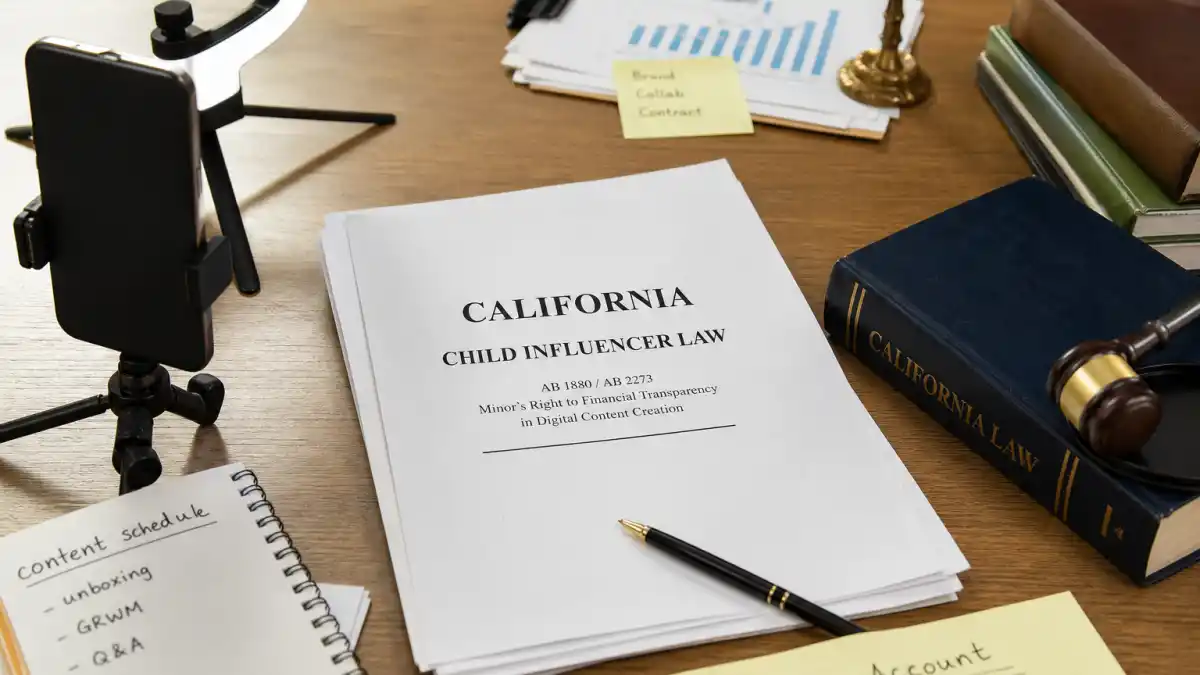
The celebrity kids social media privacy laws keyword fails when writers recycle tabloid surveillance tips or treat any famous child’s feed as legally compliant without citing statute, agency guidance, or parent-confirmed boundaries. USA Celebs applies a four-part gate before any legal claim lands on this 2026 explainer:
- Statute-first clarity: California SB 767 and related child-digital-creator frameworks are summarized at the educational level — not substituted for legal advice — with Coogan account context for earnings protection.
- Platform separation: TikTok contracts, Instagram monitoring tiers, and YouTube vlog ethics each carry distinct parent-quote lanes this page connects to law without conflating app rules with statutory minimums.
- Consent and compensation literacy: Parent consent forms, trust deposits, and filming-hour concepts are mapped separately from celebrity phone bans and co-parent TikTok gates.
- Minor privacy rules: Child-level paparazzi face shots, leaked DM speculation, and unverified birth-hub rows stay off this page; parent quotes and distant red-carpet framing qualify per social-cluster standards on .
Beats that fail the gate — anonymous “lawyers say stars are breaking SB 767” tips without statute citation — stay off this explainer. Tone is educational, not scandal-first.
California SB 767: What the Child-Influencer Framework Requires
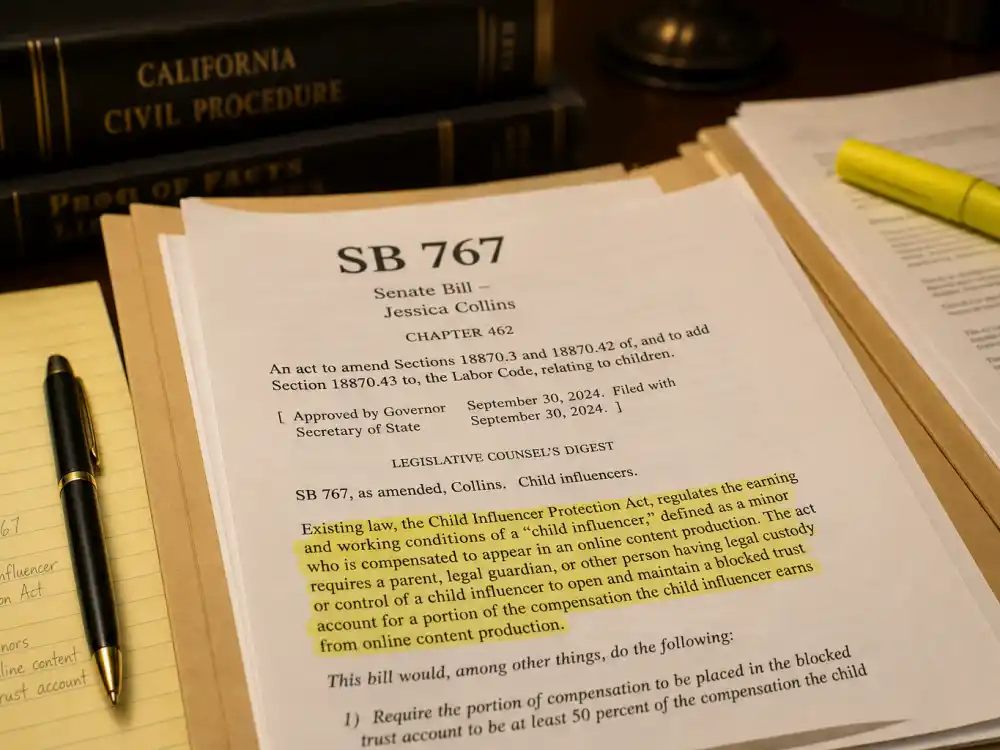
California SB 767 anchors high-intent celebrity kids social media privacy laws traffic because it extends child-performer protection concepts into monetized digital content featuring minors — the same regulatory lane family-vlog ethics on summarize before any channel earns roundup inclusion:
- Compensation transparency: SB 767 requires that a portion of earnings from content featuring a minor be set aside in a trust — language that mirrors Coogan Law heritage for traditional child performers and now applies when a celebrity kid’s likeness generates ad revenue, brand deals, or platform payouts.
- Parent or guardian accountability: The statute places fiduciary duties on adults who profit from minor-featured content — a reason this explainer pairs statutory language with parent consent forms stars describe in interviews on TikTok rules and Instagram monitored .
- Filming and labor boundaries: SB 767 sits beside broader child-labor frameworks — readers comparing daily family vlogs should consult YouTube vlogs for ethics gates before assuming identical statutory triggers on every platform.
- Enforcement context: Regulatory action typically follows documented monetization and minor participation — not every private Instagram debut on automatically triggers SB 767, which is why tier literacy matters in this explainer.
USA Celebs treats SB 767 as the California baseline inside celebrity kids social media privacy laws coverage — national bills and Illinois-style precedents may differ, but the social cluster’s California-heavy celebrity footprint makes this statute the primary educational spine.

Coogan Accounts: Trust-Fund Context for Celebrity Kid Earnings
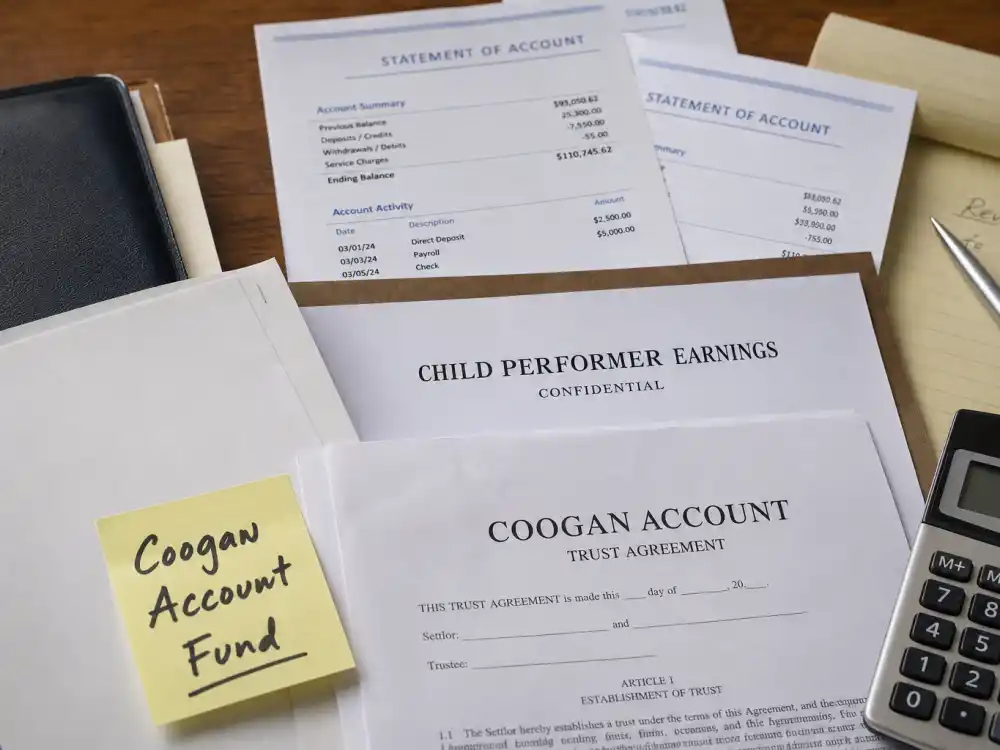
Before SB 767 refreshed headlines, Coogan accounts already supplied the trust-fund vocabulary inside celebrity kids social media privacy laws explainers because Hollywood child performers have long been required to deposit a percentage of earnings into blocked accounts minors access at adulthood:
- Historical Coogan Law: Named after Jackie Coogan’s estate battle, California’s original Coogan Law protects traditional child actors — the conceptual ancestor SB 767 extends toward digital creators whose faces appear in monetized Reels, Shorts, and sponsored posts.
- Trust deposit mechanics: Coogan accounts block parental spending of protected percentages — a reason ethics coverage on cites trust language when family vlogs generate measurable ad revenue featuring minors.
- Celebrity family application: Star parents who discuss North West creative lanes or Penelope Disick TikTok gates rarely cite Coogan accounts on red carpets — yet statutory literacy helps audiences distinguish parent-managed creative debuts from unprotected influencer exploitation framing.
- Cross-state literacy: Coogan-style protections vary by jurisdiction — this page centers California SB 767 plus Coogan heritage because the social cluster’s highest-traffic families operate from Los Angeles media markets.
Parent Consent Forms and Privacy Tiers Stars Publicly Describe
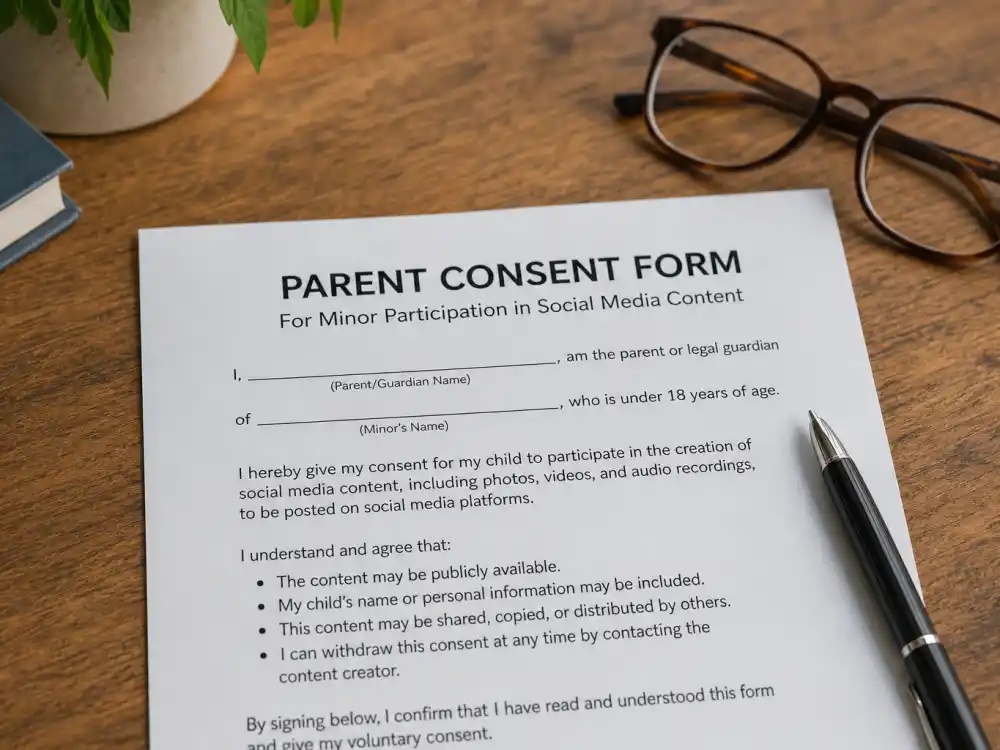
Statutory minimums do not replace the privacy tiers celebrity parents confirm in interviews — any serious celebrity kids social media privacy laws explainer maps both layers:
- Written consent before filming: SB 767 literacy pairs with household media contracts Pink, Kelly Clarkson, and Kristen Bell cite on phone-ban coverage — consent forms are the documentary spine regulators and responsible parents share.
- Private debut vs. monetized grid: Gwyneth Paltrow’s Apple Martin private Instagram lane on may sit below SB 767 monetization triggers while a revenue-heavy family vlog on sits squarely inside trust-deposit conversations.
- Co-parent TikTok gates: Penelope Disick coverage on shows how Kourtney Kardashian and Scott Disick’s public boundary language adds a co-parent consent layer statutory summaries alone cannot capture.
- Creative lane with caps: Kim Kardashian’s North West discussions on describe follower boundaries and co-managed posting — privacy tiers that exceed minimum consent paperwork when stars treat digital access as health infrastructure.
How Social Cluster Pages Map Platform Rules to Statute
Readers researching celebrity kids social media privacy laws often land from platform-specific guides — USA Celebs routes them without duplicating every parent quote:
- North West fashion and social media: SKIMS lane and parent-gated posts — creative-tier context before statutory monetization questions.
- TikTok rules: Short-form contracts, comment caps, and device handoffs — app-level gates that sit beside SB 767 when TikTok payouts feature minors.
- Instagram monitored: Private debuts, follower approvals, co-managed drafts — tiers that may stay non-monetized while still needing consent literacy.
- YouTube family vlogs: Long-form ethics, filming-hour curiosity, child-labor headlines — the cluster page most likely to intersect SB 767 trust deposits.
- Phone bans: Pre-platform shields delaying smartphone access until parent-approved ages — access denial before any consent form conversation begins.
- Penelope Disick TikTok: Co-parent boundary language — statutory floors plus Kardashian-Disick public privacy framing.
What We Know vs. What Is Still Unconfirmed
Confirmed via statute summaries and major reporting: California SB 767 extends child-performer-style compensation protection into monetized digital content featuring minors; Coogan accounts remain the trust-fund reference point for blocked minor earnings in California; parent consent and trust-deposit concepts appear across child-influencer legislation coverage aggregated by People, Variety, and ethics documentaries cited on . Social-cluster parent quotes on , , , , and supply platform-tier context this page connects to law.
Not confirmed for this explainer: Which specific celebrity families have opened SB 767 trust accounts without public filing; alleged SB 767 violations attributed to star parents without agency action or court records; any 2025–2026 monetized minor debut attributed to a famous child without parent statement or major entertainment reporting; unverified additions to 2025/2026 birth hubs. Rumor posts claiming secret trust-fund setups in 2026 should be ignored until the family or regulator confirms on the record.
Why Celebrity Kids Social Media Privacy Laws Still Matter in 2026
Years after Illinois passed the first high-profile child-influencer bill and California followed with SB 767, celebrity kids social media privacy laws remains a high-intent phrase because nepo forums, parenting podcasts, and entertainment SEO clusters all refresh the same question whenever a Gen Z star kid ages into monetized platforms. The narrative is no longer raw breaking news for the benchmark statutes — it is an ongoing reference point inside North West fashion , TikTok rules , Instagram monitored , YouTube vlogs , phone-ban , Penelope Disick , and ethics essays that shape how audiences understand consent versus exploitation framing.
For celebrity family journalism, the 2026 bargain is educational clarity: summarize SB 767 and Coogan context at the statute level, map platform tiers from verified parent quotes, apply privacy rules to minors, then link outward without inventing unverified birth-hub rows. Famous children did not choose viral fame — this explainer documents regulatory frameworks and verified parent boundaries without turning privacy law into tabloid surveillance grids.
Explore More Celebrity Family Coverage
- Read North West fashion and social media for SKIMS lane and parent-gated post context inside the social cluster.
- Read Celebrity kids on TikTok rules parents set for short-form contract parity when statutes meet app-level gates.
- Read Celebrity kids Instagram accounts monitored for private-account tiers beside SB 767 monetization triggers.
- Read Celebrity kids YouTube channels family vlogs for long-form ethics lanes most likely to intersect trust-deposit law.
- Read Celebrity parents banning phones for kids for pre-platform shields before consent-form conversations begin.
- Read Penelope Disick TikTok and social media for co-parent boundary language inside the social cluster.