

In this article7 sections
- What Is the Palme d'Or and Why It Matters: Trophy Design
- History Since 1955: From Grand Prix to Global Icon
- How the Cannes Jury Votes for the Palme d'Or
- Cannes Context: Competition, Croisette, and the Marché
- Palme d'Or Prestige vs. the Oscar: Different Thrones
- Why Winning the Palme d'Or Still Launches Careers
- Key Takeaways
What is the Palme d’Or and why it matters is the question every Cannes newcomer asks when May headlines explode with palm-trophy photos from the Palais des Festivals — and the answer sits at the intersection of design history, jury politics, global cinema prestige, and careers that pivot overnight after eleven days on the Croisette. The Palme d’Or (Golden Palm) is the highest prize at the Festival de Cannes, awarded to the best film in the official Competition section by an international jury led by a president. Since replacing the Grand Prix format in 1955, the trophy has crowned auteurs from Delbert Mann and Akira Kurosawa to Bong Joon-ho and Justine Triet, reshaping distribution deals, Oscar-season math, and how critics rank cinematic achievement. This explainer covers trophy design, jury voting mechanics, Cannes context, Palme-versus-Oscar prestige, and why winning still launches directors into a decade of opportunity — without duplicating red-carpet outfit breakdowns reserved for our Pillar F fashion coverage.
USA Celebs built this hub for readers crossing from our Cannes cluster — browse the Palme d’Or winners list by year for year-by-year chronology, check the Cannes Film Festival 2026 winners list for the latest jury verdict, and explore sibling guides on Cannes most controversial moments history and Cannes red carpet rules and dress code. For the autumn European circuit, see our Venice Film Festival explained Golden Lion primer. The Awards archive keeps festival literacy in one place so you never parse the Croisette alone.
What Is the Palme d’Or and Why It Matters: Trophy Design
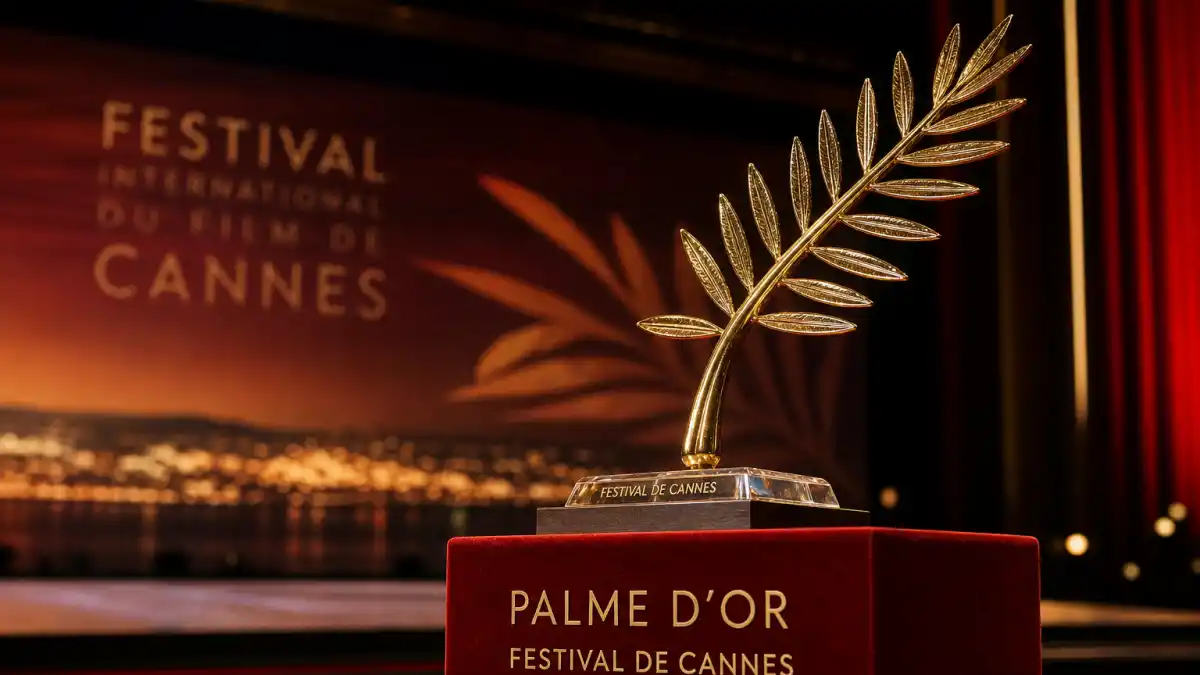
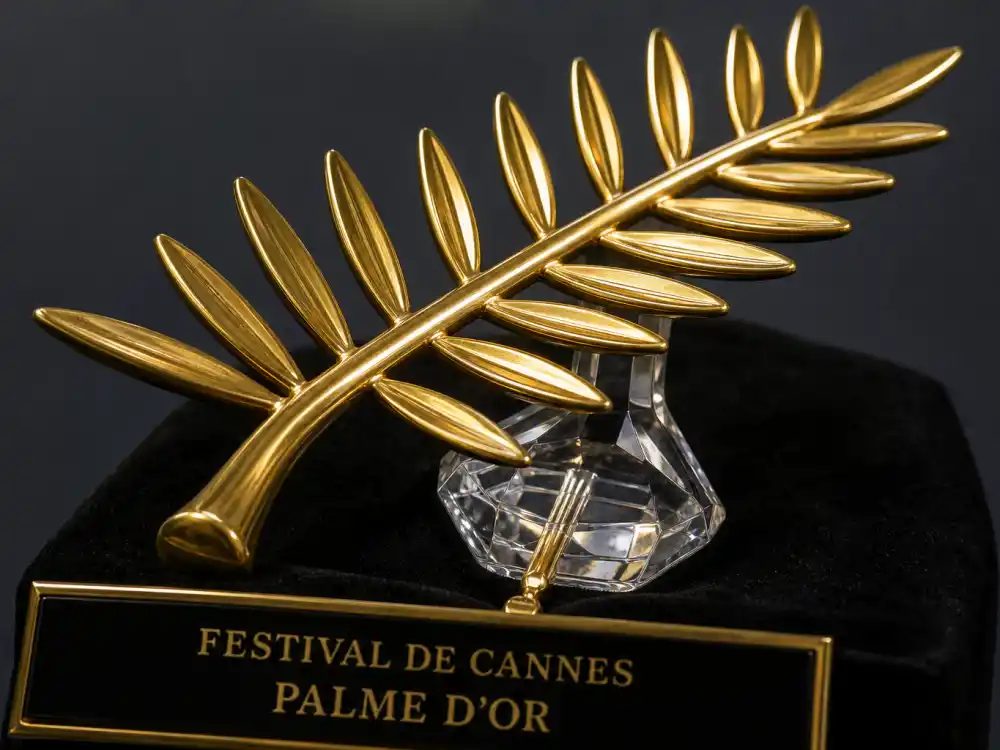
The physical trophy defines the brand. Each Palme d’Or is handcrafted from eighteen-karat gold shaped into a stylized palm branch — Cannes’ botanical symbol — mounted on a heart of rock crystal. The design replaced earlier Grand Prix plaques when festival leadership modernized prizes in 1955; the design drew on Cannes’ coat-of-arms palm motif, and the Chopard workshop has handcrafted each trophy since 1998. Unlike the Oscar statuette’s fixed mold, every Palme is individually cast, making each trophy a unique artifact the winning director keeps permanently. That craftsmanship signals intent: Cannes treats cinema as art object first, marketplace second.
Understanding what is the Palme d’Or and why it matters begins with that visual identity. The golden palm reads instantly on red carpets, press-room backdrops, and social feeds — a shorthand for auteur validation that no other festival prize matches. Secondary Cannes honors (Grand Prix, Jury Prize, best director, acting awards) matter, but only the Palme crowns the competition’s supreme champion. When marketing teams stamp “Palme d’Or winner” on posters, they invoke seven decades of Croisette mythology compressed into one palm-frond silhouette.
History Since 1955: From Grand Prix to Global Icon
Cannes launched its first official competition in 1946, but the Palme d’Or name arrived in 1955 when Marty directed by Delbert Mann became the inaugural winner under the new trophy format. The festival skipped awarding a top prize in 1968 when May protests halted the event mid-run — a rupture we document in our Cannes most controversial moments history hub. Through the decades, Palme champions mapped cinema’s evolution: New Wave ruptures, political auteurs, genre reinventions, and global voices including Korean, Iranian, and French-African directors who might never have reached American arthouses without Croisette validation.
Track every winner in our Palme d’Or winners list by year archive — the essential companion to this what is the Palme d’Or and why it matters primer. Landmark titles including Pulp Fiction, The Tree of Life, Parasite, and Anatomy of a Fall each demonstrate how a May verdict can rewrite a film’s commercial fate before autumn festival season even begins. Cannes positions itself as the world’s most prestigious cinema gathering; the Palme is the receipt proving a jury of international peers agreed.

How the Cannes Jury Votes for the Palme d’Or
Each year the festival appoints a jury president — often a major director or actor — plus eight to nine additional jurors spanning nationalities and disciplines. They watch every film in the official Competition section (typically eighteen to twenty-two titles) across eleven festival days, then deliberate in private until consensus or majority produces a verdict. The president holds no veto, but tradition grants moral weight to their preferences during deadlocked votes. Jury surprises — when critics’ favorites lose to underdog auteurs — generate as many headlines as the winners themselves.
Voting mechanics stay opaque by design; Cannes publishes results, not ballots. Yet patterns emerge: juries led by auteur-directors often reward experimentation, while actor-presidents sometimes elevate performance-driven chamber pieces. Understanding what is the Palme d’Or and why it matters requires accepting jury subjectivity as feature, not bug — the trophy reflects a specific year’s taste snapshot, not an eternal quality metric. Compare recent outcomes on the Cannes Film Festival 2026 winners list to see how each jury’s personality telegraphs through the Palme recipient.

Cannes Context: Competition, Croisette, and the Marché
The Palme d’Or applies only to films in the official Competition section — not Un Certain Regard, Directors’ Fortnight, or out-of-competition galas. That filter matters: a studio tentpole may premiere on the Croisette without Palme eligibility, while a micro-budget auteur piece competes for the top trophy. Cannes also hosts the Marché du Film, the industry’s largest rights marketplace, where Palme-winning titles command premium bids from distributors hunting Oscar-season candidates.
The festival runs roughly eleven days each May along the Croisette boulevard in Cannes, France. Premieres unfold in the Grand Théâtre Lumière and adjacent venues; press screenings start hours earlier, generating verdicts that boos or applause can amplify in real time. For red-carpet protocol — separate from trophy mechanics — see our Cannes red carpet rules and dress code guide. USA Celebs keeps fashion analysis in Pillar F; this what is the Palme d’Or and why it matters article stays focused on prizes, jury logic, and career impact.

Palme d’Or Prestige vs. the Oscar: Different Thrones
Readers often ask whether the Palme d’Or or the Oscar matters more. The honest answer: different rooms, different currencies. The Academy Award for Best Picture reflects Hollywood guild politics, commercial reach, and a predominantly American voting body. The Palme d’Or reflects an international jury watching competition films in a single week, prioritizing auteur vision over box-office safety. Cannes celebrates cinema as art and industry simultaneously; the Oscars crown the year’s consensus mainstream champion.
Overlap is real but not guaranteed. Parasite won the Palme in 2019 and Best Picture in 2020 — the dream pipeline. The Tree of Life won the Palme but lost Oscar Best Picture; CODA won the Oscar without a Cannes competition crown. For filmmakers, the Palme validates auteur credibility with critics, festivals, and art-house distributors worldwide; the Oscar unlocks North American mass-market recognition and streaming platform bidding wars. What is the Palme d’Or and why it matters most for directors building international careers rather than chasing a single domestic trophy case.

Why Winning the Palme d’Or Still Launches Careers
Distribution is the first domino. Palme winners routinely secure North American releases, streaming deals, and fall festival replay slots that non-winners struggle to match. Critics’ groups and precursor awards cite Cannes validation; marketing teams lean on “Palme d’Or-winning film” taglines through Oscar season. For debut directors, the trophy can mean a decade of greenlit projects; for veterans, it cements legacy status when commercial hits alone would not.
Career arcs prove the pattern. Winning unlocked global platforms for directors including Jane Campion, Abdellatif Kechiche, and Ruben Östlund at pivotal moments. Actors attached to Palme-winning ensembles gain casting heat even when individual acting prizes go elsewhere. The trophy also protects controversial or slow-burn titles from being buried — a Palme stamp tells exhibitors and audiences the film earned peer judgment, not just festival hype. Cross-read our Palme d’Or winners list by year to see which champions sustained momentum into Oscar nominations and which became cult classics regardless of Academy outcomes.
Key Takeaways
- The Palme d’Or is Cannes’ highest prize for the official Competition section, awarded since 1955 as a handcrafted golden palm on crystal.
- An international jury led by a president watches all competition films and deliberates privately — subjectivity is built into what is the Palme d’Or and why it matters.
- Palme prestige targets auteur validation and global distribution; Oscars target Hollywood consensus — both matter, differently.
- Winning launches careers through Marché du Film deals, critic momentum, and awards-season marketing hooks.
- Cross-read our Palme d’Or winners list by year, Cannes Film Festival 2026 winners list, and Cannes sibling hubs for full festival literacy.