

In this article11 sections
- Difference Between Primetime and Daytime Emmys: Two Academies, Two Ballots
- Eligibility Windows: When Does Content Qualify?
- Voting Bodies: Who Picks the Winners?
- Ceremony Timing: Sunday Night vs. Daytime Calendar
- Categories: Soap Operas, Talk Shows, and Game Shows vs. Scripted Primetime
- Statuette Differences: Same Wing, Separate Ceremonies
- Prestige Perception: Why Primetime Dominates Headlines
- Can One Show Win Both Primetime and Daytime Emmys?
- How Primetime and Daytime Results Connect to Our Emmy Hub
- Quick Reference: Difference Between Primetime and Daytime Emmys
- Explore More Emmy Coverage
The difference between Primetime and Daytime Emmys is one of television’s most misunderstood awards splits — because both ceremonies hand out gold winged statuettes, both claim “Emmy” branding, and both honor excellence on the small screen. Yet they are governed by different academies, adjudicate different formats, follow different eligibility calendars, and air on different ceremony schedules. The Television Academy (ATAS) runs the Primetime Emmy Awards, recognizing scripted series, limited runs, reality competition, and prime-access entertainment that typically airs in evening or streaming prime-time slots. The National Academy of Television Arts and Sciences (NATAS) administers the Daytime Emmy Awards, honoring soap operas, daytime talk shows, game shows, children’s programming, and news magazine formats that broadcast during daytime hours. Confusing the two leads to headline errors — a soap star’s Daytime win is not a Primetime trophy, and a streaming drama’s Primetime sweep says nothing about daytime talk categories. This explainer maps eligibility windows, voting bodies, ceremony timing, category silos, statuette design, and prestige perception so you can read every Emmy headline correctly. Cross-link to our Emmy categories explained guide (#20012), Emmy nominations predictions 2026 (#19897), Emmy winners 2026 full list (#19920), who is hosting the Emmys 2026 (#20128), Emmy best drama winners by year (#20081), Emmy best comedy winners by year (#20104), most Emmys won by a TV show (#19943), most Emmys won by an actor (#19966), youngest Emmy winners ever (#19989), biggest Emmy snubs in history (#20035), and great TV shows that never won an Emmy (#20058) once you understand which ceremony each trophy belongs to.
Both academies share historical DNA — the first Emmy Awards in 1949 were a single ceremony before daytime programming exploded and NATAS spun off dedicated daytime recognition in the 1970s. Today the difference between Primetime and Daytime Emmys is structural, not cosmetic: separate rulebooks, separate membership rolls, separate ballots, and separate telecasts (when a network or streamer carries them at all). Official Primetime rules live at televisionacademy.com; Daytime procedures are published through theemmys.tv/daytime. We cite both authorities throughout.
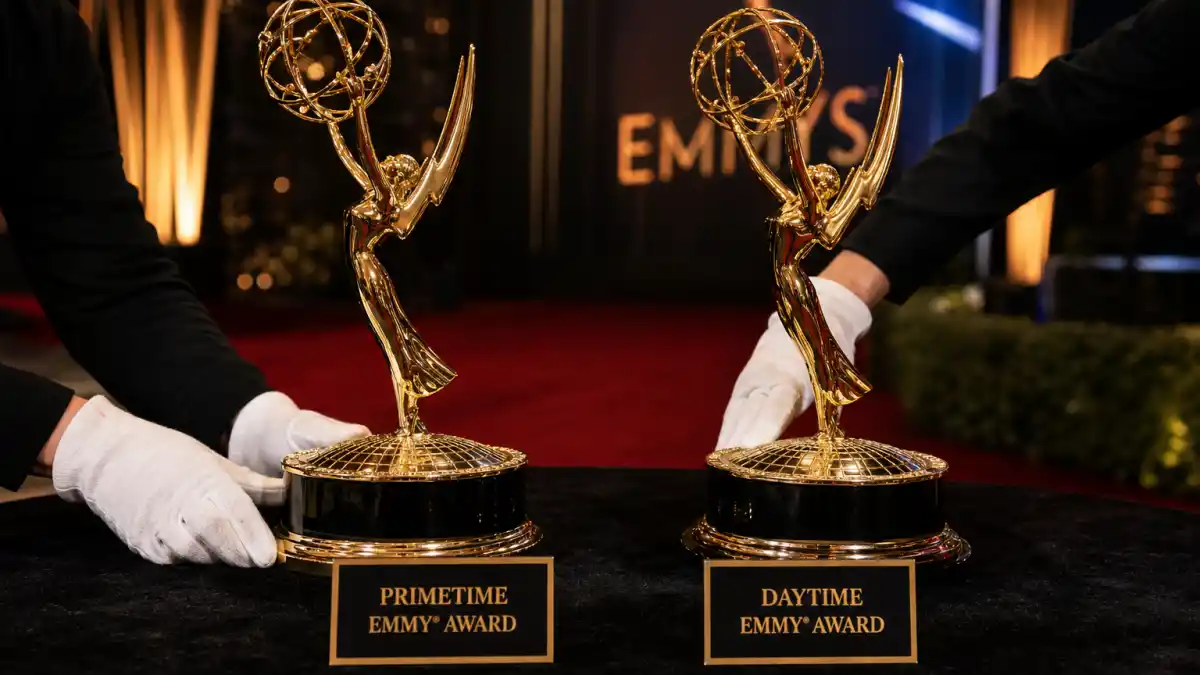
Difference Between Primetime and Daytime Emmys: Two Academies, Two Ballots
At the foundation of the difference between Primetime and Daytime Emmys sit two separate nonprofit academies with overlapping history but independent governance:
- Television Academy (ATAS): Based in North Hollywood, California, ATAS organizes the Primetime Emmy Awards plus related Primetime Creative Arts ceremonies. Membership is organized into peer groups — performers, directors, writers, cinematographers, and dozens of craft specialties — who vote on Primetime categories under rules published annually by the Academy.
- National Academy of Television Arts and Sciences (NATAS): A broader federation with regional chapters across the United States, NATAS administers the Daytime Emmy Awards, Sports Emmys, News & Documentary Emmys, and Technology & Engineering Emmys. Daytime ballots are shaped by NATAS membership and daytime-specific peer panels.
A creator can theoretically hold trophies from both ceremonies — a talk-show host might win Daytime Emmys for a morning program and later earn Primetime recognition for a prime-time special. The statuettes look nearly identical, but the ballots never cross. That separation is the single most important fact in any difference between Primetime and Daytime Emmys explainer: Primetime voters do not decide Daytime winners, and vice versa.
Our Emmy categories explained guide (#20012) maps the Primetime side in depth — Drama, Comedy, Limited, Reality, Variety, acting lanes, and Creative Arts splits. This piece completes the picture by explaining what NATAS covers on the daytime side and why the two maps never merge.
Eligibility Windows: When Does Content Qualify?
Eligibility calendars are a core difference between Primetime and Daytime Emmys. Both use rolling windows tied to broadcast and streaming seasons, but the dates and episode thresholds differ by format:
- Primetime eligibility: The Television Academy typically defines a June 1 through May 31 eligibility year for most Primetime categories. Series must deliver the required episode count within that window — usually six or more original episodes for ongoing drama and comedy series, with different thresholds for limited/anthology, reality, and variety formats. Streaming releases follow analogous calendar rules documented in the official Primetime rulebook.
- Daytime eligibility: NATAS sets its own eligibility period for daytime formats — historically aligned with the broadcast calendar but with format-specific rules for daily serials (soap operas airing 200+ episodes per year), weekly talk institutions, and daily game shows. A soap opera’s eligibility is measured differently from a weekly prime-time drama because production volume and airtime differ by orders of magnitude.
- Prime-access vs. daytime hours: Classification depends on when a program predominantly airs. Late-night talk shows that feel “daytime” in tone often compete in Primetime variety categories because they air in prime-access or late-night slots. Morning talk shows airing before noon typically route to Daytime talk categories regardless of celebrity wattage.
Headline writers frequently botch this layer — reporting a “Daytime Emmy” for a late-night host who actually competed in Primetime variety, or calling a streaming drama a “daytime” show because viewers watch it during the day on their phones. Time-of-air and Academy classification rules resolve the split, not viewer habit. When Emmy nominations predictions 2026 (#19897) forecast Primetime shortlists, those predictions apply only to ATAS ballots — never to NATAS daytime races.
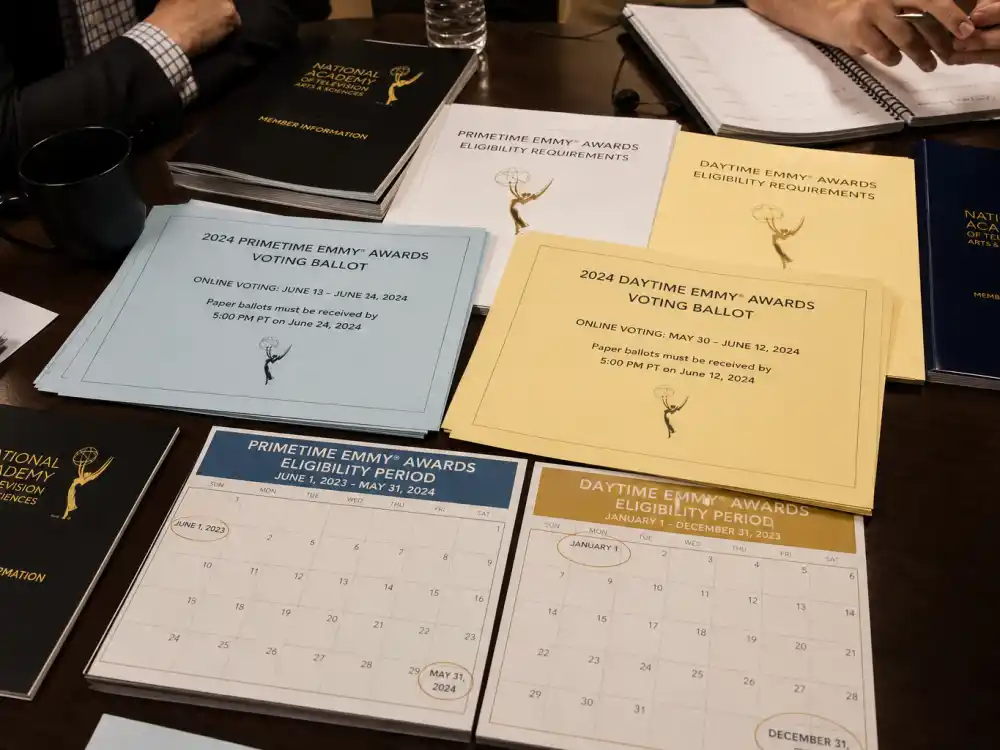
Voting Bodies: Who Picks the Winners?
Another essential difference between Primetime and Daytime Emmys is who votes:
- Primetime voting: Television Academy members in relevant peer groups vote during nomination rounds. Active Academy members across peer groups vote on most final-round Primetime categories. Program categories like Outstanding Drama Series require full membership participation in the final round — which is why buzzy limited series can upset long-running incumbents when the broader electorate splits.
- Daytime voting: NATAS members and daytime peer panels vote on Daytime categories. Soap opera performers, talk-show producers, game-show directors, and children’s programming specialists form voting blocs that Primetime voters never join. Regional NATAS chapters also administer regional Emmy awards — a third layer sometimes confused with both national ceremonies.
- No crossover: A Primetime cinematographer’s Academy membership does not automatically confer Daytime voting rights, and a NATAS daytime specialist does not vote on Primetime Outstanding Drama Series unless they hold separate Television Academy membership.
Understanding voting bodies explains prestige gaps and snub narratives. A soap opera legend with six Daytime Emmys earned those trophies from NATAS peer groups — a fundamentally different electorate than the one that votes on Primetime lead acting categories documented in most Emmys won by an actor (#19966). Record lists only parse correctly once you know which ceremony each win belongs to.
Ceremony Timing: Sunday Night vs. Daytime Calendar
Ceremony scheduling is the most visible difference between Primetime and Daytime Emmys for casual viewers:
- Primetime telecast: The main Primetime Emmy Awards traditionally air on a Sunday night in September — a prime-time network or streaming telecast preceded by Creative Arts Emmy weekends. The ceremony is a major entertainment-industry event with red-carpet coverage, opening monologues, and live audience energy comparable to Oscar night for television.
- Daytime ceremony: The Daytime Emmy Awards typically occur on a separate calendar — often spring or early summer — and have aired on various networks and streaming platforms over the decades. Daytime ceremonies celebrate formats that themselves air during morning and afternoon hours, so the telecast timing reflects a different audience and advertising profile.
- Creative Arts splits: Primetime Creative Arts Emmys spread across two nights the weekend before the main telecast. Daytime craft categories may be awarded during the main Daytime ceremony or at separate presentation events depending on the cycle — check NATAS announcements for the current year.
For the 2026 cycle, host and telecast details live in our who is hosting the Emmys 2026 (#20128) explainer — that piece covers the Primetime telecast specifically. Daytime ceremony timing is announced separately through NATAS and may not receive the same network promotional push.
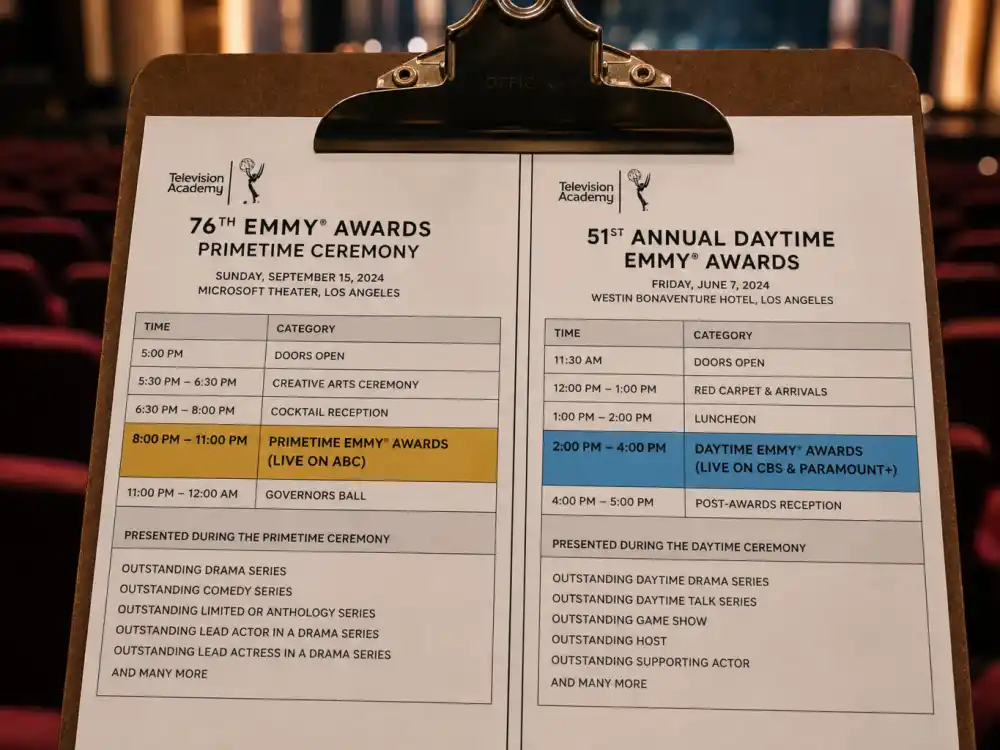
Categories: Soap Operas, Talk Shows, and Game Shows vs. Scripted Primetime
Category maps are where the difference between Primetime and Daytime Emmys becomes concrete. The two ceremonies honor overlapping craft disciplines — directing, writing, costumes, hairstyling — but program categories diverge sharply:
Primetime Program Categories (ATAS)
- Outstanding Drama Series, Comedy Series, Limited/Anthology Series — the scripted pillars dominating entertainment headlines.
- Outstanding Reality Competition Program — structured elimination formats.
- Outstanding Variety Talk Series and Variety Sketch Series — late-night desks, sketch institutions, and prime-access variety.
- Outstanding Television Movie — standalone narrative features meeting Primetime classification.
Daytime Program Categories (NATAS)
- Outstanding Daytime Drama Series — the soap opera lane (formerly “Outstanding Drama Series” in daytime classification).
- Outstanding Talk Series and Outstanding Entertainment Talk Series — morning and daytime interview institutions.
- Outstanding Game Show — daily and weekly quiz and competition formats.
- Outstanding Children’s Series and Preschool categories — youth programming rarely represented at Primetime.
- Outstanding Culinary, Travel, and Lifestyle programs — daytime-format reality and informational series.
A scripted HBO drama competes for Primetime Outstanding Drama Series. A CBS soap opera competes for Daytime Outstanding Drama Series. The word “Drama” appears in both category names, but the ballots, voters, and ceremonies are entirely separate — one of the most common sources of fan confusion when reading difference between Primetime and Daytime Emmys explainers online.
Deep Primetime category maps live in Emmy categories explained guide (#20012). Drama and comedy winner histories are in Emmy best drama winners by year (#20081) and Emmy best comedy winners by year (#20104) — both Primetime-only lists.

Statuette Differences: Same Wing, Separate Ceremonies
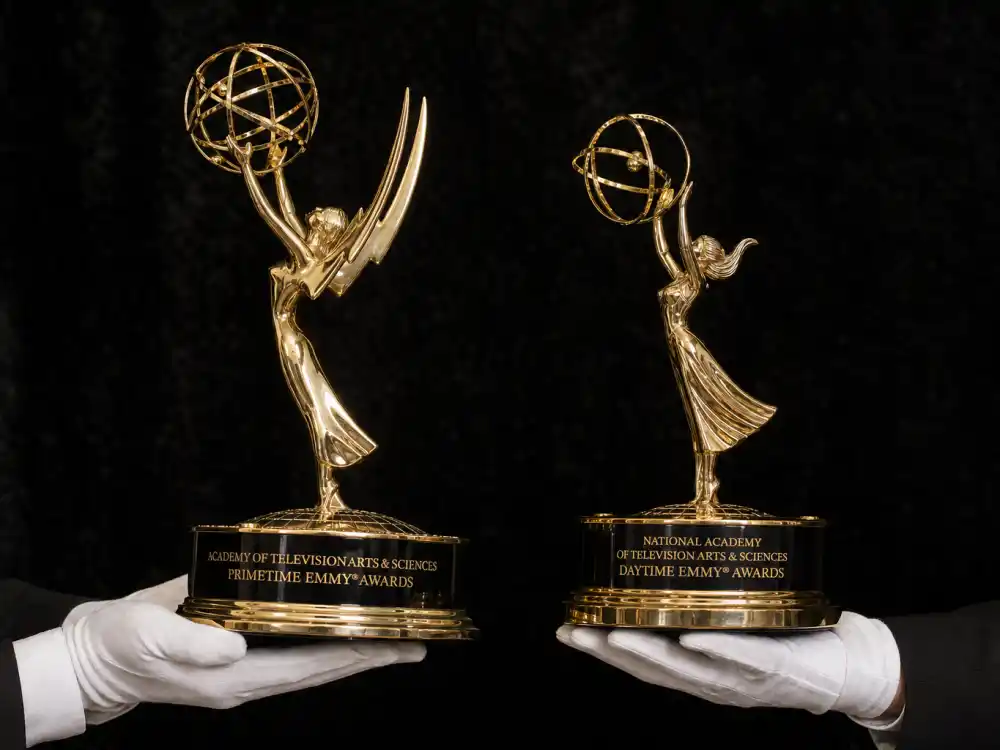
Visually, the difference between Primetime and Daytime Emmys statuettes is subtle — both feature the iconic winged woman holding an atom, designed by television engineer Louis McManus in 1948. Key distinctions:
- Design lineage: Both Primetime and Daytime Emmys use the same fundamental statuette sculpture. There is no separate “daytime-shaped” trophy — the differentiation is ceremonial and organizational, not aesthetic.
- Base engraving: Bases are engraved with the ceremony name — “Primetime Emmy” or “Daytime Emmy” — plus category and year. Collectors and auction houses treat them as distinct honors despite identical sculptural design.
- Regional Emmys: NATAS regional chapters award regional Emmy statuettes with a similar design for local television excellence — a third tier sometimes confused with both national ceremonies.
- Sports and News Emmys: NATAS also administers Sports Emmys and News & Documentary Emmys with the same core statuette design but separate ballots and ceremonies — expanding the Emmy ecosystem beyond the Primetime/Daytime split.
Because the trophies look alike on a shelf, social-media posts frequently mislabel Daytime wins as “Emmys” without specifying which ceremony — fueling the perception that all gold winged statuettes are equivalent prestige markers. They are not; the ballot that elected the winner defines the honor.
Prestige Perception: Why Primetime Dominates Headlines
The difference between Primetime and Daytime Emmys extends beyond rules into cultural prestige — an uneven reality worth acknowledging honestly:
- Media coverage gap: Primetime telecasts draw major entertainment-media coverage, red-carpet photo galleries, and post-show analysis across broadcast and streaming platforms. Daytime ceremonies receive fractionally less mainstream press despite honoring formats that generate enormous daily viewership and advertising revenue.
- Industry signaling: Streaming platforms and premium cable networks campaign aggressively for Primetime program and acting categories — those wins signal prestige in the scripted-content arms race. Daytime wins signal excellence within daytime formats but rarely drive the same streaming-subscriber narrative.
- EGOT and career framing: Career retrospectives and EGOT tracking (see our EGOT winners complete list) weight Primetime wins heavily in “television achievement” summaries. Daytime Emmys count toward the “T” in EGOT, but pop-culture discourse centers on Primetime acting categories when debating all-time greatness.
- Undeserved dismissal: Prestige gaps reflect media economics and scripted-series bias — not objective quality. Soap opera acting, talk-show producing, and game-show writing demand craft levels that daytime peer groups recognize even when entertainment Twitter does not.
Fair coverage treats both ceremonies as legitimate excellence markers within their formats. Our biggest Emmy snubs in history (#20035) and great TV shows that never won an Emmy (#20058) pieces focus primarily on Primetime — because that is where most headline snub narratives concentrate — but daytime snubs exist within NATAS ballots too.

Can One Show Win Both Primetime and Daytime Emmys?
Generally, no — and that constraint reinforces the difference between Primetime and Daytime Emmys. A program is classified by predominant airtime and format:
- A morning talk show airing five days per week before noon competes in Daytime talk categories — not Primetime variety, even if the host is a global celebrity.
- A late-night desk airing after 11:30 p.m. competes in Primetime variety categories — not Daytime, even if the format feels conversational and interview-driven like daytime talk.
- Special episodes and crossover events follow submission rules — producers declare classification, and protest panels resolve disputes.
Edge cases — syndicated talk, streaming talk simulcasts, holiday specials — are adjudicated under the current NATAS and ATAS rulebooks. When in doubt, check which academy accepted the submission rather than assuming based on content tone alone.
How Primetime and Daytime Results Connect to Our Emmy Hub
Once you understand the difference between Primetime and Daytime Emmys, sibling pieces parse correctly:
- 2026 Primetime forecasts: Emmy nominations predictions 2026 (#19897) — ATAS ballots only.
- 2026 Primetime winners: Emmy winners 2026 full list (#19920) — main telecast and key Primetime craft.
- Category literacy: Emmy categories explained guide (#20012) — full Primetime map.
- Host and telecast: who is hosting the Emmys 2026 (#20128) — Primetime ceremony.
- Winner histories: Emmy best drama winners by year (#20081) and Emmy best comedy winners by year (#20104).
- Records and snubs: most Emmys won by a TV show (#19943), most Emmys won by an actor (#19966), youngest Emmy winners ever (#19989), biggest Emmy snubs in history (#20035), great TV shows that never won an Emmy (#20058).
Quick Reference: Difference Between Primetime and Daytime Emmys
- Governing bodies: Television Academy (Primetime) vs. NATAS (Daytime)
- Eligibility: Separate calendars and episode thresholds by format and airtime
- Voting: Separate membership rolls and peer groups — no crossover ballots
- Ceremony timing: Primetime telecast traditionally September Sunday night; Daytime on separate calendar
- Program categories: Primetime scripted/reality/variety vs. Daytime soaps/talk/game/children’s
- Statuettes: Same winged design; bases engraved with ceremony name
- Prestige: Primetime dominates headlines; Daytime honors equal craft in different formats
- Official sources: televisionacademy.com and theemmys.tv/daytime
Explore More Emmy Coverage
- Map Primetime categories in Emmy categories explained guide.
- Forecast 2026 shortlists in Emmy nominations predictions 2026.
- Every major Primetime winner in Emmy winners 2026 full list.
- Ceremony details in who is hosting the Emmys 2026.
- Drama and comedy histories in Emmy best drama winners by year and Emmy best comedy winners by year.
- All-time records in most Emmys won by a TV show, most Emmys won by an actor, and youngest Emmy winners ever.
- Snubs and misses in biggest Emmy snubs in history and great TV shows that never won an Emmy.
- Visit our Awards archive for ceremonies, records, and history guides.