
In this article7 sections
- Shortest and Longest Oscar Speeches Ever: How We Measure Them
- The Shortest Oscar Speeches Ever
- The Longest Oscar Speeches Ever
- The 45-Second Rule and Play-Off Music
- Memorable Speeches That Were Not Record Extremes
- Quick Reference: Shortest and Longest Oscar Speeches Ever
- Explore More Awards Coverage
Shortest and longest Oscar speeches ever bracket the extremes of Academy Awards acceptance etiquette — from two-word thank-yous to marathon remarks that reportedly stretched past five minutes while orchestra conductors raised their batons. Oscar night is live global television, yet winners still treat the podium like a diary, a protest platform, or a speed-run exit. This records list collects verified word counts where transcripts exist, marks folklore as reportedly, and explains how the modern 45-second guideline and play-off music reshaped what winners can say. We cross-link ceremony runtime context in our how long is the Oscars ceremony guide and iconic beats beyond length in most iconic Oscar moments of all time. Year-by-year Best Actor chronology lives in our Best Actor Oscar winners list by year. We do not duplicate red-carpet outfit breakdowns — Pillar F owns style analysis.
Measuring the shortest and longest Oscar speeches ever is harder than it sounds. Early broadcasts lacked reliable transcripts; some winners improvised after the envelope opened; producers sometimes cut away mid-sentence. We cite the Academy Awards Database for winners and categories, then triangulate against broadcast footage, newspaper transcripts, and reputable film-history archives. When word counts vary by source — common with Greer Garson’s 1943 remarks — we note reportedly and give a range rather than false precision.
Shortest and Longest Oscar Speeches Ever: How We Measure Them
A speech qualifies for the shortest and longest Oscar speeches ever list only if the winner reached the podium and spoke into a microphone — or visibly addressed the audience — during an official Academy Awards telecast or ceremony recording. Declined awards (Marlon Brando’s 1973 proxy protest) and presenter banter do not count. We measure spoken words in English where transcripts exist; non-English winners may speak longer in translation without equivalent clip circulation in U.S. media.
Duration and word count diverge. Joe Pesci delivered roughly half a dozen words in a few seconds; Greer Garson reportedly spoke for more than five minutes but at a measured pace that inflated runtime without matching modern rambling density. Orchestra play-off music — the “get off the stage” cue — began shaping longest-speech lore decades before producers published a 45-second target. Any honest guide to the shortest and longest Oscar speeches ever must treat play-off history as part of the record, not a footnote.
The Shortest Oscar Speeches Ever
Patty Duke — “Thank you.” (1963)
At the 35th Academy Awards, Patty Duke won Best Supporting Actress for The Miracle Worker and reportedly said only “Thank you.” — two words — before leaving the stage. Duke was sixteen, the youngest competitive winner at that time, and her brevity contrasts sharply with the emotional speeches that would dominate later decades. Transcripts and clip compilations consistently cite the two-word version, making Duke the benchmark entry on any shortest Oscar speeches ever roundup.
Joe Pesci — “It’s my privilege.” (1991)
Joe Pesci won Best Supporting Actor for GoodFellas at the 63rd Academy Awards and delivered one of the shortest Oscar speeches ever recorded on widely circulated broadcast footage. He said, in effect, “It’s my privilege. Thank you.” — five to six words depending on whether you count the second sentence separately. Pesci’s deadpan delivery and immediate exit became a template for winners who treat the podium as a formality rather than a manifesto. The moment still surfaces whenever presenters joke about speech length.
Alfred Hitchcock — Bow and Brief Thanks (1968)
Alfred Hitchcock accepted the Irving G. Thalberg Memorial Award at the 40th Academy Awards and reportedly offered little more than a bow and a curt “Thank you.” before exiting. Some accounts describe a wordless bow only; others include the single-word thanks. Either version places Hitchcock among the shortest Oscar speeches ever by intent — the master of suspense treating the industry’s lifetime-achievement honor like a cameo. Hitchcock’s restraint reads as personality, not shyness: he knew the clip would circulate precisely because he refused to perform gratitude at length.
Other Notably Brief Remarks
Several winners flirt with the shortest Oscar speeches ever list without matching Duke’s two-word extreme. Louise Fletcher signed part of her 1976 Best Actress speech to her deaf parents — short in spoken English, longer in visual meaning. John Houseman kept his 1974 Supporting Actor remarks tight. William Holden and mid-century winners often thanked the Academy in under thirty seconds when broadcasts ran shorter and teleprompters were rare. We list them as honorable mentions rather than definitive word-count champions because transcripts are incomplete.
The Longest Oscar Speeches Ever
Greer Garson — Mrs. Miniver (1943)
Greer Garson’s Best Actress acceptance for Mrs. Miniver at the 15th Academy Awards is widely cited as the longest Oscar speech ever — reportedly exceeding five minutes, with some film historians claiming closer to five and a half minutes and popular accounts stretching toward seven. Garson thanked the Academy, the British war effort, her colleagues, and the global audience in an era when winners faced fewer hard cutaways. Exact word counts are disputed because full uninterrupted footage is scarce and contemporary radio coverage edited heavily.
Garson’s marathon anchors the longest Oscar speeches ever category even if modern winners talk faster. Measured pace plus wartime gravitas inflated runtime without the rambling name lists that define some 1990s and 2000s remarks. When producers later tightened guidelines, Garson’s name became shorthand for “do not do this again.”
Julia Roberts — Erin Brockovich (2001)
Julia Roberts won Best Actress at the 73rd Academy Awards and delivered a speech long enough that presenters and orchestra staff visibly managed the clock. Roberts thanked a lengthy list of collaborators, friends, and family while the audience laughed at her own awareness of running long. Transcripts place her among the longest Oscar speeches ever of the modern teleprompter era — not necessarily longer than Garson in raw minutes, but memorable because Roberts leaned into the filibuster as comedy.
Cuba Gooding Jr. — Jerry Maguire (1997)
Cuba Gooding Jr. won Best Supporting Actor for Jerry Maguire at the 69th Academy Awards and refused to leave the stage when play-off music started. He kept shouting thank-yous over the orchestra, bouncing and pointing at colleagues in the audience — energy that reads as length even when word count stays moderate. Gooding’s defiance belongs on longest Oscar speeches ever lists for duration and spectacle, not transcript page count. Clips still circulate as the moment winners fought the conductor and won.
Halle Berry — Monster’s Ball (2002)
Halle Berry’s Best Actress speech at the 74th Academy Awards — the first win for a Black woman in that category — ran long on emotion and names. She invoked Dorothy Dandridge, Lena Horne, and Diahann Carroll while nearly overcome with tears. The speech intersects with broader milestones covered in our most iconic Oscar moments of all time guide. Berry’s remarks qualify among the longest Oscar speeches ever that audiences forgive because historical weight outweighed runtime complaints.
Adrien Brody — The Pianist (2003)
Adrien Brody won Best Actor at the 75th Academy Awards and delivered an extended speech that included an impulsive kiss on presenter Halle Berry — a beat documented in our iconic-moments coverage. Brody thanked allies, referenced the Iraq War’s timing, and held the microphone long enough for play-off music to threaten. The combination of length and surprise physicality keeps Brody on both longest-speech and memorable-moment lists without duplicating full outfit or red-carpet analysis.
Other Lengthy Modern Remarks
Roberto Benigni spoke at length in Italian after Life Is Beautiful wins in 1999 — joyfully, not filibustering. Matthew McConaughey and Lupita Nyong’o delivered extended thank-yous in 2014 that tested producer patience. Jack Palance in 1992 added push-ups after talking — speech plus stunt. These entries illustrate that the longest Oscar speeches ever are not always boring; sometimes physical comedy or multilingual gratitude extends airtime legitimately.
The 45-Second Rule and Play-Off Music
The Academy publicly moved toward a 45-second speech guideline for televised ceremonies in the early 2010s as producers battled runtimes that pushed the show past midnight Eastern. The rule is guidance, not a hard cutoff — winners still exceed it when emotion or chaos intervenes — but it formalized what orchestra play-off music had implied for decades: your gratitude has a budget.
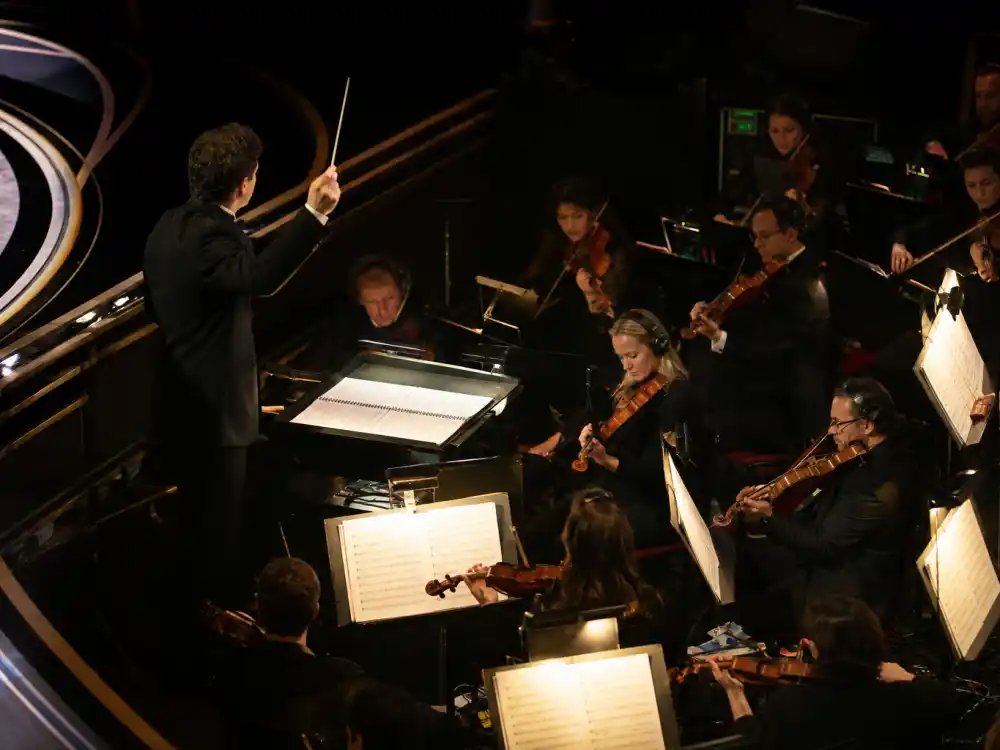
Play-off themes began as polite nudges in the 1950s and 1960s, then became a running joke by the 1990s when conductors visibly swelled volume while winners listed agents. Cuba Gooding Jr.’s 1997 resistance is the populist peak of that battle. Today, social-media clip culture sometimes rewards brevity (Pesci memes) and sometimes rewards overflow (Berry, Roberts). The shortest and longest Oscar speeches ever therefore coexist with a production system designed to shrink the middle.
For how acceptance segments fit into total show length, see our how long is the Oscars ceremony draft. For envelope chaos and protests unrelated to word count, browse most iconic Oscar moments of all time.
Memorable Speeches That Were Not Record Extremes
Not every unforgettable Oscar speech qualifies among the shortest and longest Oscar speeches ever. Sally Field’s 1985 “you like me” remarks were moderate in length but infinite in clip circulation. Marlon Brando’s absence and Sacheen Littlefeather’s proxy statement were short yet politically monumental — a different category. Heath Ledger’s posthumous win (2009) produced a tearful family acceptance of medium length that dominated headlines without breaking duration records.
These beats matter for cultural memory even when word counts sit in the middle. Our list focuses on extremes; our most iconic Oscar moments of all time companion covers the speeches everyone quotes regardless of stopwatch time.
Quick Reference: Shortest and Longest Oscar Speeches Ever
- Shortest (verified): Patty Duke — “Thank you.” (1963, two words); Joe Pesci — “It’s my privilege. Thank you.” (1991, ~5–6 words); Alfred Hitchcock — bow plus brief thanks (1968 Thalberg award)
- Longest (reported): Greer Garson — Mrs. Miniver (1943, reportedly 5+ minutes); Julia Roberts — Erin Brockovich (2001); Cuba Gooding Jr. — play-off defiance (1997); Halle Berry (2002); Adrien Brody (2003)
- Modern constraint: 45-second televised guideline (2010s onward) plus orchestra play-off tradition
- Not extremes but essential: Sally Field (1985), Brando/Littlefeather (1973), Benigni joy (1999) — see iconic moments guide
Explore More Awards Coverage
- Ceremony runtime in how long is the Oscars ceremony.
- Shocks and stunts in most iconic Oscar moments of all time.
- Best Actor chronology in Best Actor Oscar winners list by year.
- Visit our Awards archive for records, history, and ranked guides.