

In this article12 sections
- Lupita Nyongo Blue Oscars Gown: The 2014 Academy Awards Night
- Prada and Miuccia Prada: The Designer Behind the Pleats
- How the Powder Blue Pleated Gown Was Constructed
- The Fred Leighton Headband and Beauty Choices
- Press Reaction and the Birth of "Lupita Blue"
- The Oscar Win and Why the Dress Doubled in Meaning
- Styling Team: Micaela Erlanger and Red-Carpet Strategy
- Fashion Legacy: Powder Blue on Every Awards Carpet Since
- Museum Culture, Auctions, and Costume Preservation
- Common Myths and Corrections
- Why the Blue Prada Gown Still Matters in 2026
- Explore More
Lupita Nyongo blue Oscars gown entered fashion history on March 2, 2014, when the actress walked the Academy Awards red carpet in a powder sky-blue pleated Prada silk dress moments before winning Best Supporting Actress for 12 Years a Slave. The gown was not a safe debutante column or a borrowed vintage archive piece — it was architectural pleating in a color so precise that editors immediately named it “Lupita blue” and paint companies still reference the shade. Miuccia Prada and her atelier engineered hundreds of accordion pleats that moved like water under Dolby Theatre flash bulbs while a Fred Leighton diamond headband framed Nyong’o’s natural short hair. Stylists who coach first-time nominees still screen that arrival clip because it proved a newcomer could own the carpet through craft and color confidence rather than headline provocation.
This guide unpacks the full story behind the Lupita Nyongo blue Oscars gown — who designed it, how Prada built the pleats, why the headband mattered, what critics wrote in real time, how the dress intersected with Nyong’o’s historic win, and why the silhouette still influences awards-season dressing more than a decade later. Whether you study celebrity fashion for journalism, red-carpet strategy, or pure love of 2010s glamour, you will leave with a complete timeline of the gown that turned powder blue into a power color on Hollywood’s biggest night.
Lupita Nyongo Blue Oscars Gown: The 2014 Academy Awards Night
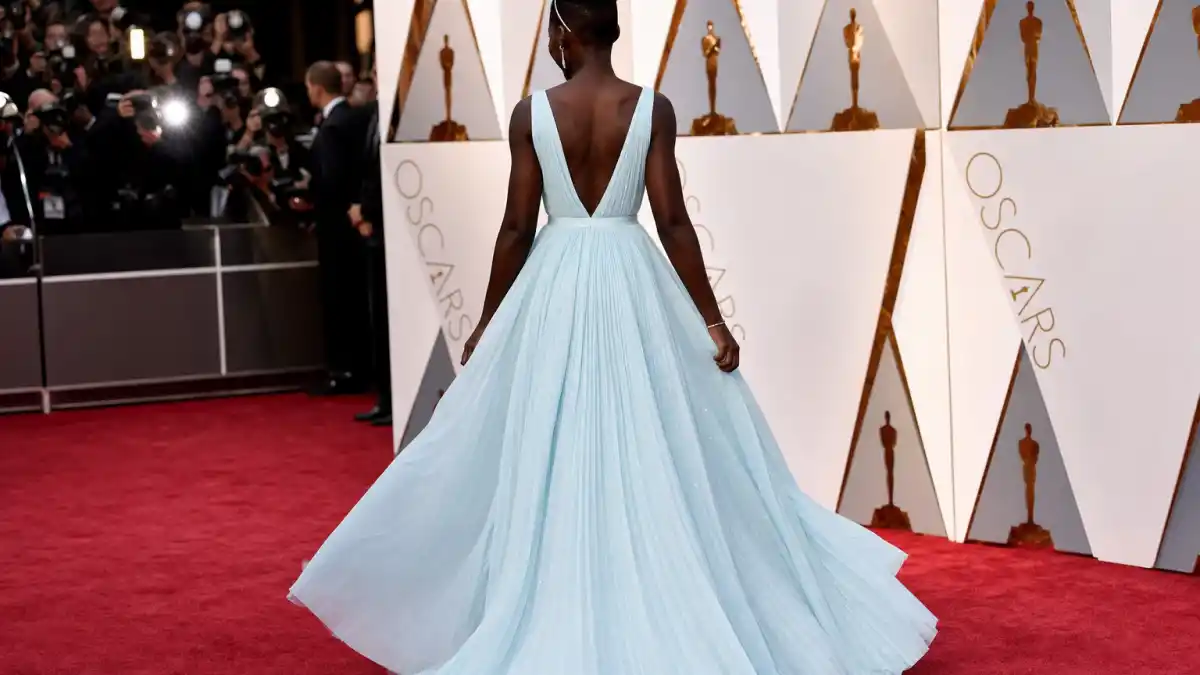
The 86th Academy Awards convened at the Dolby Theatre in Hollywood — a broadcast beamed worldwide where film careers crystallize in three hours of tuxedos, tears, and rope-line flash photography. Lupita Nyong’o arrived as the breakout star of Steve McQueen’s 12 Years a Slave, favored to win Supporting Actress and already photographed on every magazine’s “ones to watch” grid. She wore Prada: a powder blue gown with a deep V-neckline, cap sleeves, and a skirt exploding into horizontal accordion pleats that caught light like rippling surf. The Lupita Nyongo blue Oscars gown was soft in color but loud in construction — the opposite of the minimalist nude columns that dominated early-2010s carpets.
Photographers trained lenses on the pleats immediately. Fashion Twitter — still young but already influential — declared the look instant best-dressed before Nyong’o reached her seat. When she accepted the Oscar later that evening in the same dress, the image doubled in cultural weight: a Kenyan-Mexican actress in Prada blue holding Hollywood’s highest acting prize. The gown was no longer just fabric; it was the visual punctuation mark on a historic speech about dreams and dignity. That pairing of win plus dress is why the Lupita Nyongo blue Oscars gown outranks many flashier looks in retrospective polls.
Prada and Miuccia Prada: The Designer Behind the Pleats
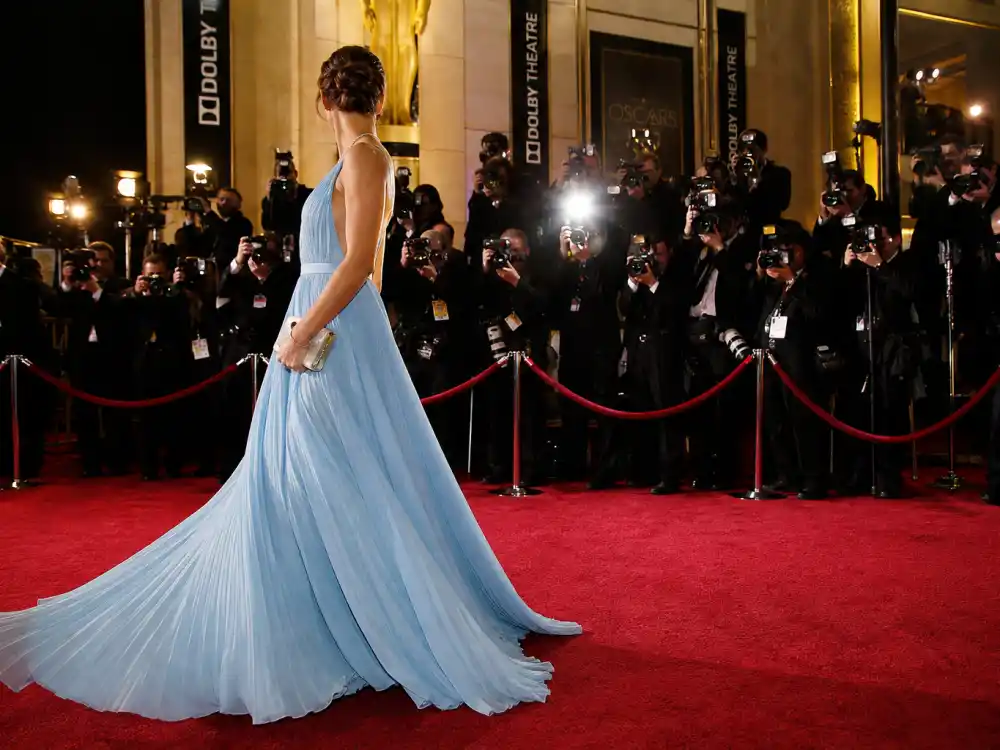
Miuccia Prada built her reputation on intellectual femininity — clothes that look pretty until you notice the subversive proportion, the odd hem, the color clash that should not work but does. By 2014 her house had dressed decades of actresses, yet the Lupita Nyongo blue Oscars gown became one of Prada’s most searched red-carpet moments because the pleating was both classic and futuristic. Prada’s workrooms in Milan treat pleated silk as engineering: each fold must survive hours of sitting, climbing stairs, and clutching a statuette without collapsing into limp chiffon.
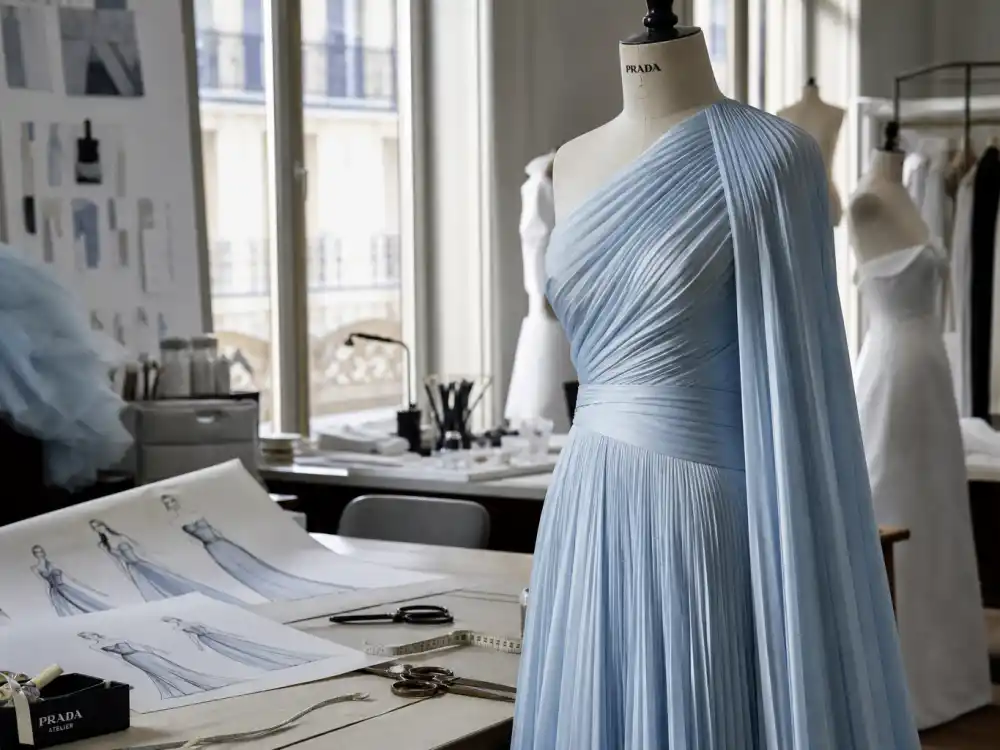
Nyong’o’s team — stylist Micaela Erlanger working with Prada — reportedly chose blue because it photographed luminous against both the red carpet and the broadcast’s cool stage lighting. Prada archives from the early 2010s show repeated pleated experiments in pastels; the Oscars gown refined those prototypes into a silhouette that felt custom rather than pulled from a rack. Fashion historians note that Prada red-carpet wins often hinge on textile behavior under flash, not neckline shock. The Lupita Nyongo blue Oscars gown is the textbook case: movement plus color fidelity.
How the Powder Blue Pleated Gown Was Constructed
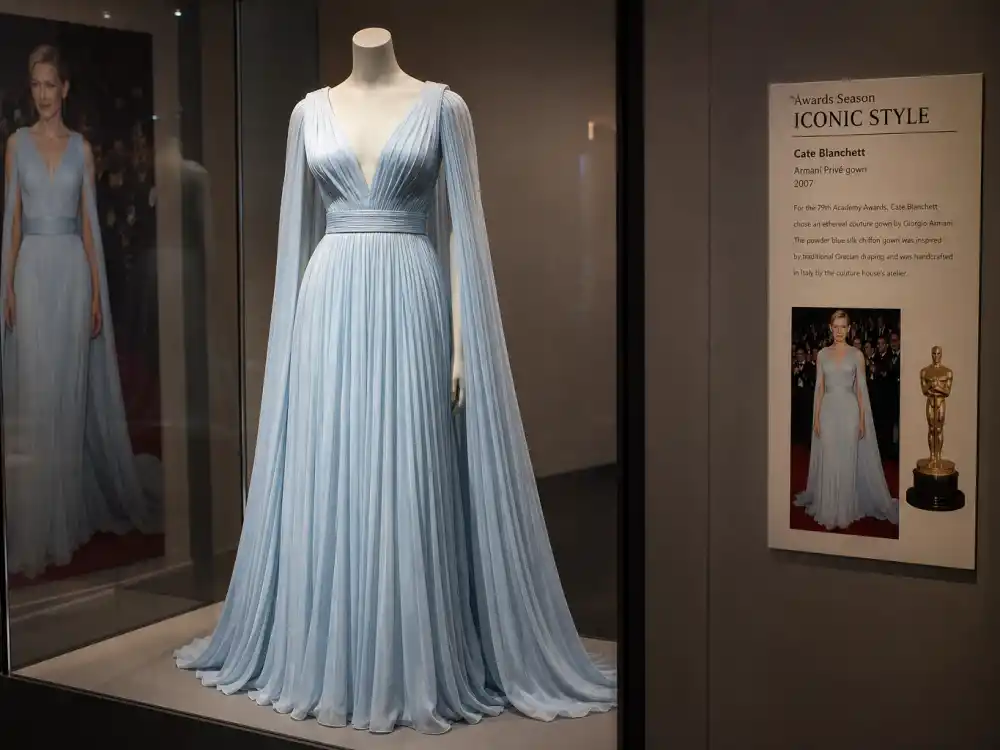
The bodice anchored the drama. Structured cap sleeves and a plunging front balanced the skirt’s volume so Nyong’o could move without the pleats twisting. Prada’s team used silk or silk-blend chiffon pleated into uniform horizontal ridges — a technique that requires heat-setting and meticulous pressing so folds reopen after every step. Internal structure at the waist prevented the skirt from collapsing when she climbed the stage to accept her award. The back view — widely photographed because Nyong’o paused for cameras — revealed a deep V that echoed the neckline and exposed shoulder blades above the pleat cloud.
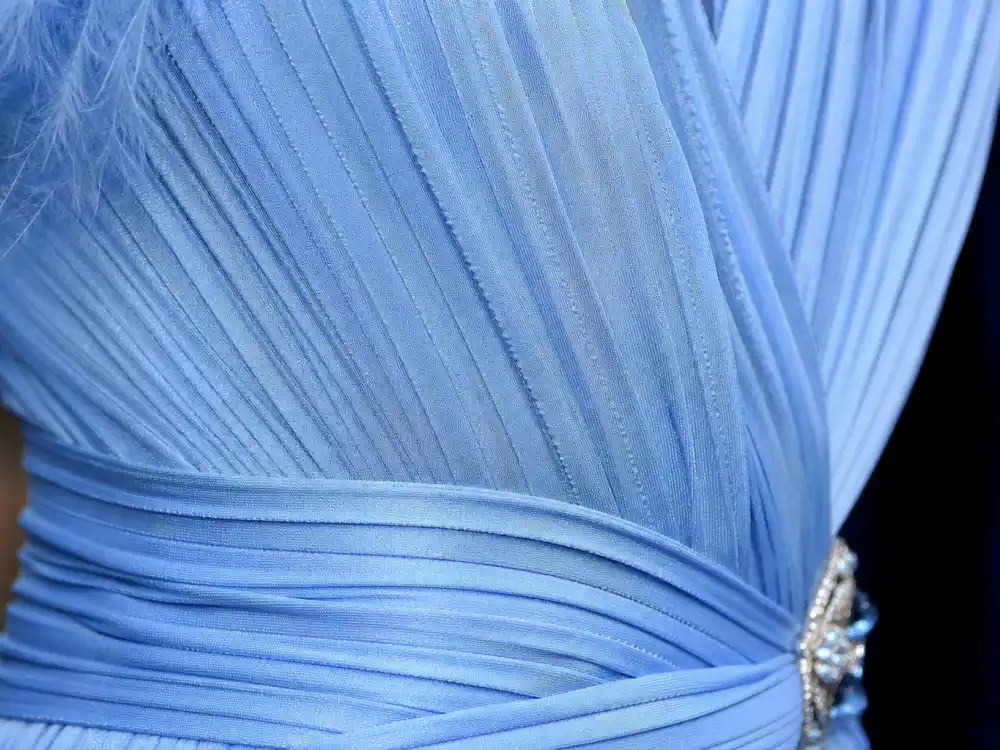
Costume archivists comparing the 2014 gown to later Prada pleated columns on other actresses note a consistent principle: pleat density must increase toward the hem so the skirt reads as intentional sculpture, not accidental volume. Copycat gowns that use cheap machine pleating on polyester often fail on carpets because folds look crisp only in stillness. The Lupita Nyongo blue Oscars gown lesson for designers is movement testing — Prada reportedly fitted the skirt while Nyong’o walked, sat, and practiced her acceptance speech.
The Fred Leighton Headband and Beauty Choices
Accessories completed the story. Nyong’o wore a delicate diamond and sapphire headband from Fred Leighton rather than a statement necklace that would compete with the plunging neckline. The choice kept eyes moving vertically from face to pleats without cluttering the decolletage. Her makeup was luminous and classic — glowing skin, defined brows, berry lip — and her natural short hair became part of the look’s identity at a moment when Hollywood still pressured actresses toward extensions and updos on awards night.
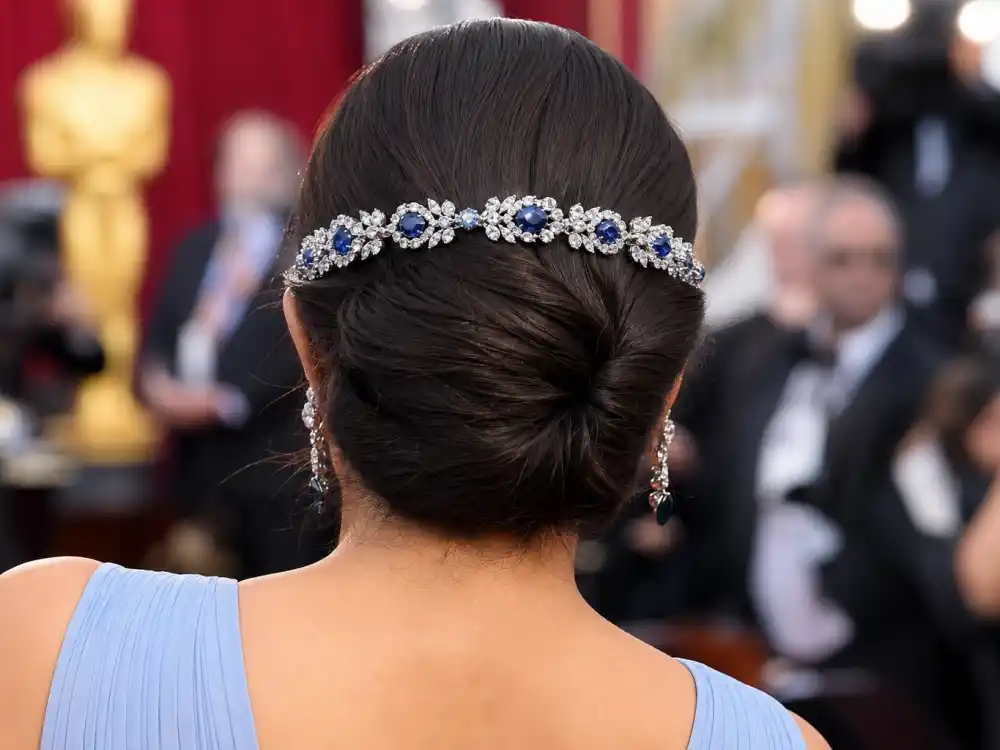
Beauty editors wrote that the headband referenced Old Hollywood without vintage cosplay. It aligned with Prada’s intellectual glamour rather than fighting it. For stylists building a lesson plan around the Lupita Nyongo blue Oscars gown, the accessory math is clear: when the dress owns volume and color, jewelry should whisper. Nyong’o’s earrings were similarly understated — just enough sparkle for 4K broadcast cameras.
Press Reaction and the Birth of “Lupita Blue”
Morning-after best-dressed lists were unanimous in a way rare for Oscars fashion. Women’s Wear Daily, Vogue, Harper’s Bazaar, and entertainment trades all highlighted the pleats and shade. Social platforms amplified the look before the show ended; by the time Nyong’o spoke at the podium, fashion search traffic already spiked for “powder blue gown” and “Prada Oscars dress.” Color marketing teams later noted increased interest in sky-blue formal wear for prom and wedding seasons — a commercial ripple tied directly to the Lupita Nyongo blue Oscars gown.
Critics who preferred minimalist columns still acknowledged craftsmanship. There was no “worst dressed” backlash of the kind that greets sheer stunt gowns — the dress was elegant first, viral second. That distinction matters when comparing 2014 to later awards seasons where Instagram shock value sometimes outranks construction. Nyong’o’s look succeeded because Prada’s pleats could survive scrutiny in gallery exhibitions and HD freeze-frames alike.
The Oscar Win and Why the Dress Doubled in Meaning
Nyong’o’s acceptance speech — thanking McQueen, her family, and “the joy of her life” — became one of the ceremony’s most quoted moments. She held the statuette in the same Prada blue that had greeted her on the carpet, creating a continuous visual narrative from arrival to victory. Film historians treat the win as a landmark for African cinema and diaspora representation; fashion historians treat the gown as the era’s defining powder-blue formal look. Together they form a case study in how costume and achievement fuse in public memory.
After the ceremony, Nyong’o appeared at the Vanity Fair after-party still in the gown, proving its comfort across hours of events. Party photographers captured pleats still crisp near midnight — a technical detail stylists mention when pitching couture over rental alternatives to clients. The Lupita Nyongo blue Oscars gown therefore documents both a performance peak and garment endurance.
Styling Team: Micaela Erlanger and Red-Carpet Strategy
Stylist Micaela Erlanger, who would later dress Nyong’o for multiple high-profile appearances, built the 2014 Oscars look around narrative coherence: a first-time nominee who should look like Hollywood’s future, not its past. Erlanger’s portfolio already balanced classic and contemporary; pairing Prada pleats with Fred Leighton diamonds signaled respect for tradition without mimicry. Industry profiles of Erlanger often cite the 2014 Oscars as the appointment that accelerated her client roster.
For young actresses studying red-carpet debuts, the strategy is replicable in outline if not in budget: choose a house that understands your body, test movement, keep jewelry quiet when the dress speaks, and align color with broadcast lighting tests. The Lupita Nyongo blue Oscars gown succeeded because every collaborator — actress, stylist, Prada, Leighton — agreed on one story.
Fashion Legacy: Powder Blue on Every Awards Carpet Since
Runway and red-carpet archives document the lineage. Powder and periwinkle blue gowns appeared at the Oscars, Emmys, and Cannes within seasons of 2014 — some Prada, some homage labels, all participating in a color conversation Nyong’o started. Designers cite “Lupita blue” in internal color cards; retailers still stock sky-blue formal dresses with pleated skirts marketed toward awards-season viewers. Pinterest and TikTok recirculate side-by-side comparisons of 2014 pleats versus modern iterations, keeping search interest alive.
Social media accelerated the trend — a single blue pleated gown can trend worldwide before the star reaches her seat — but the stakes Prada navigated were arguably higher. There was less room for a second take; network television and newsprint still framed the primary audience. Surviving that attention economy with craftsmanship rather than controversy is why the Lupita Nyongo blue Oscars gown remains the reference case in fashion schools. Professors screen pleat-density comparisons to teach how color plus motion creates icon status.
Museum Culture, Auctions, and Costume Preservation
Original red-carpet gowns from recent Oscars cycles periodically enter exhibitions and charity auctions, though the exact 2014 Prada piece’s public display history follows Nyong’o’s own archive choices. Costume collections studying Hollywood dress use pleated silk replicas to teach heat-set pleating labor — a single skirt can require workroom weeks. When pieces appear in retrospectives titled “Oscars Fashion” or “Prada on the Red Carpet,” the powder blue photograph leads marketing materials even when the physical garment travels under strict climate control.
Preservation challenges are unique: chiffon pleats relax over time, blue dyes shift under light, and mannequin display must respect ethical questions about loaning gowns tied to personal milestones. Curators solve this with climate cases, short exhibition windows, and contextual panels explaining Prada’s construction. Documentary coverage of Nyong’o’s career inevitably includes the carpet arrival clip in opening montages, reintroducing the Lupita Nyongo blue Oscars gown to viewers born after the broadcast. Each revival keeps search interest alive and trains new stylists in the vocabulary of debut dressing done right.
Common Myths and Corrections
Myth one: Nyong’o changed into a different dress for the acceptance speech. Reality: she accepted the Oscar in the same Prada blue gown she wore on the carpet. Myth two: the dress was an off-the-rack Prada runway piece with no alterations. Reality: the gown was a custom red-carpet collaboration fitted to Nyong’o. Myth three: the headband was an afterthought. Reality: Fred Leighton jewelry was integrated into the beauty and styling plan early. Myth four: powder blue immediately disappeared from fashion after 2014. Reality: the shade remains a staple on awards carpets and bridal runways, often explicitly linked to the Lupita Nyongo blue Oscars gown in press coverage.
Accurate reporting holds all four truths: one continuous gown from carpet to podium, custom Prada construction, intentional jewelry, and a lasting color legacy rather than a one-night trend.
Why the Blue Prada Gown Still Matters in 2026
Twelve years after Dolby Theatre flash bulbs, pleated powder-blue gowns still headline awards-season recaps. Designers from Milan to Los Angeles pitch “accordion pleating” in collection notes; celebrity stylists maintain running lists of workrooms that can press silk on deadline. Nyong’o herself continues to work with Erlanger and major houses on looks that quote 2014’s confidence — proof that a debut gown can define a career-long collaboration rather than a single headline.
For USA Celebs readers tracking celebrity fashion as cultural signal, the Lupita Nyongo blue Oscars gown is the benchmark case study for designer-star-stylist symbiosis: one color, one pleating technique, one historic win, infinite aftershocks across film, beauty, and design education. No replica captures the original electricity of live 2014 television, but every powder-blue pleated dress that stops a scroll participates in the legacy Prada pressed fold by fold.
Explore More
- Browse our Fashion section for celebrity style history and red-carpet breakdowns.
- Read Jennifer Lopez green Versace dress history for another gown that rewrote awards-show search traffic.
- See Cher naked dress Bob Mackie history for 1970s red-carpet provocation with a different design language.
- Compare Rihanna yellow Met Gala cape dress for color-as-headline dressing on a different carpet.
- Check what did Emma Stone wear to Oscars for contemporary awards-show style evolution.
For background, see coverage from Vogue, Harper’s Bazaar, and the Academy of Motion Picture Arts and Sciences on 2014 red-carpet fashion, Prada’s couture archive, and Lupita Nyong’o’s awards-show style evolution.