

In this article12 sections
- Princess Diana Revenge Dress Story: The Night Everything Aligned
- Christina Stambolian and the Couture Construction
- Why the Dress Waited Three Years in the Closet
- The Panorama Interview and the Broadcast Collision
- How the Press Named It the Revenge Dress
- Styling Details: Pearls, Heels, and the Smile
- Kensington, Paparazzi, and the Royal Image Economy
- Fashion Legacy: Protest Dressing Before Hashtags
- Museum Culture and Auction Afterlife
- Common Myths and Corrections
- Why the Revenge Dress Still Matters in 2026
- Explore More
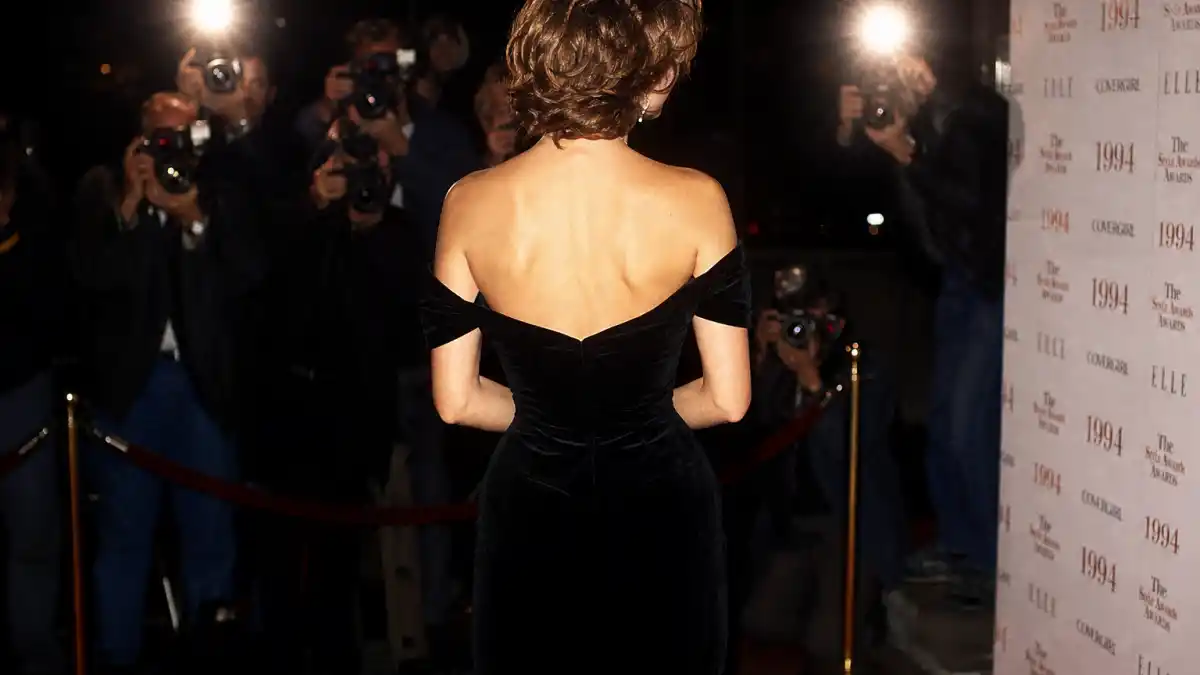
Princess Diana revenge dress story crystallizes on June 29, 1994, when Diana, Princess of Wales, stepped onto the Serpentine Gallery red carpet in a fitted black off-the-shoulder velvet mini dress while millions of Britons watched Prince Charles admit on television that his marriage had broken down. The timing was not a publicity stunt in the modern sense — the Panorama interview had been scheduled independently — yet the visual collision of confession and couture created one of fashion history’s most analyzed evenings. Photographers captured a silhouette that was confident, bare-shouldered, and unapologetically glamorous. By morning the tabloids had a name for the gown: the revenge dress. Thirty years later the phrase still defines protest dressing done with a smile.
This guide traces the full Princess Diana revenge dress story from Christina Stambolian’s atelier sketch to museum cases and red-carpet homages — who designed the dress, why Diana almost never wore it, what happened on the night of Charles’s broadcast, how the press read the neckline as narrative warfare, and why stylists still cite the look when coaching clients through public breakups. Whether you study royal fashion for journalism, cultural history, or pure fascination with image-making, you will leave with a complete timeline of the little black dress that answered a prime-time confession without a single spoken rebuttal.
Princess Diana Revenge Dress Story: The Night Everything Aligned
The Serpentine Gallery summer party in Kensington Gardens is an annual fixture on London’s charity calendar — black tie, corporate sponsors, and a carpet thick with photographers hunting the year’s most publishable frame. On June 29, 1994, Diana arrived without Prince Charles. She wore a dress she had owned for roughly three years and previously deemed too bold for royal duty. The garment was black silk velvet, knee-length, body-skimming, with a dramatic off-the-shoulder neckline and a low back that caught every flash burst on the rope line.
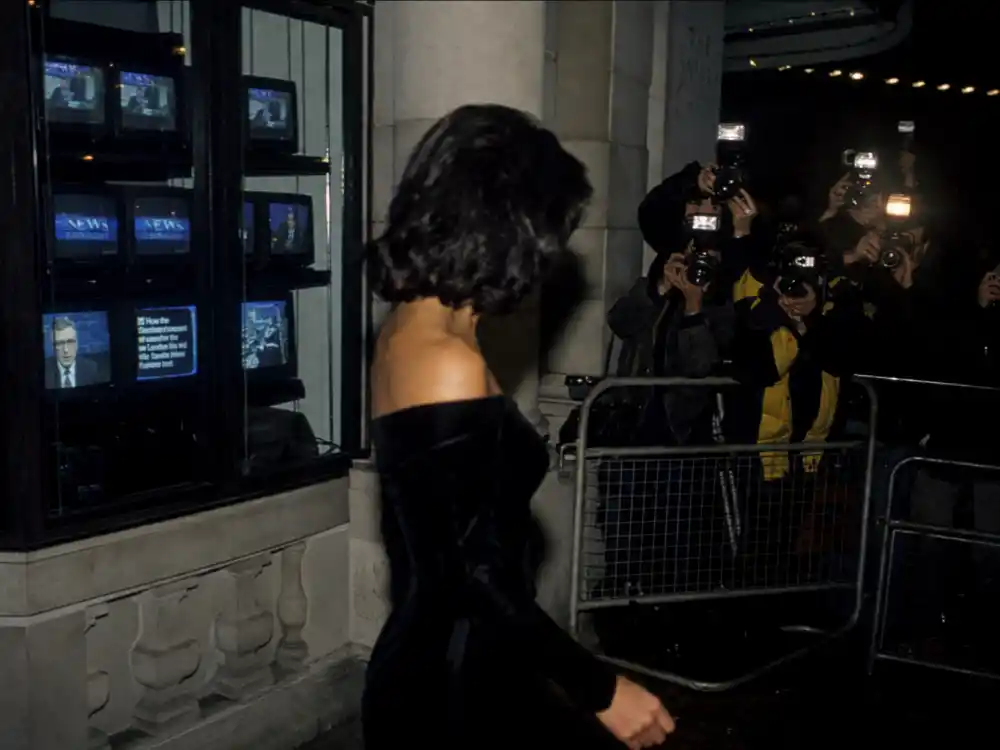
Across town, BBC One aired Jonathan Dimbleby’s documentary on the Prince of Wales, followed by the famous Panorama interview in which Charles acknowledged infidelity and spoke the line that would haunt tabloid headlines for decades: that there were three people in his marriage. Diana did not comment on camera that night. She let the dress speak. That restraint is central to any serious reading of the Princess Diana revenge dress story — the power move was visual, not verbal.
Christina Stambolian and the Couture Construction
Bulgarian-born, London-based designer Christina Stambolian created the dress as a custom piece emphasizing Diana’s shoulders and waist — a departure from the demure necklines and calf-length hemlines associated with her early royal wardrobe. Stambolian used black silk velvet for depth under flash photography and engineered the off-the-shoulder bodice with internal structure so the neckline held its shape through hours of movement. The hem hit above the knee, a length Diana’s advisers had often discouraged for official appearances.
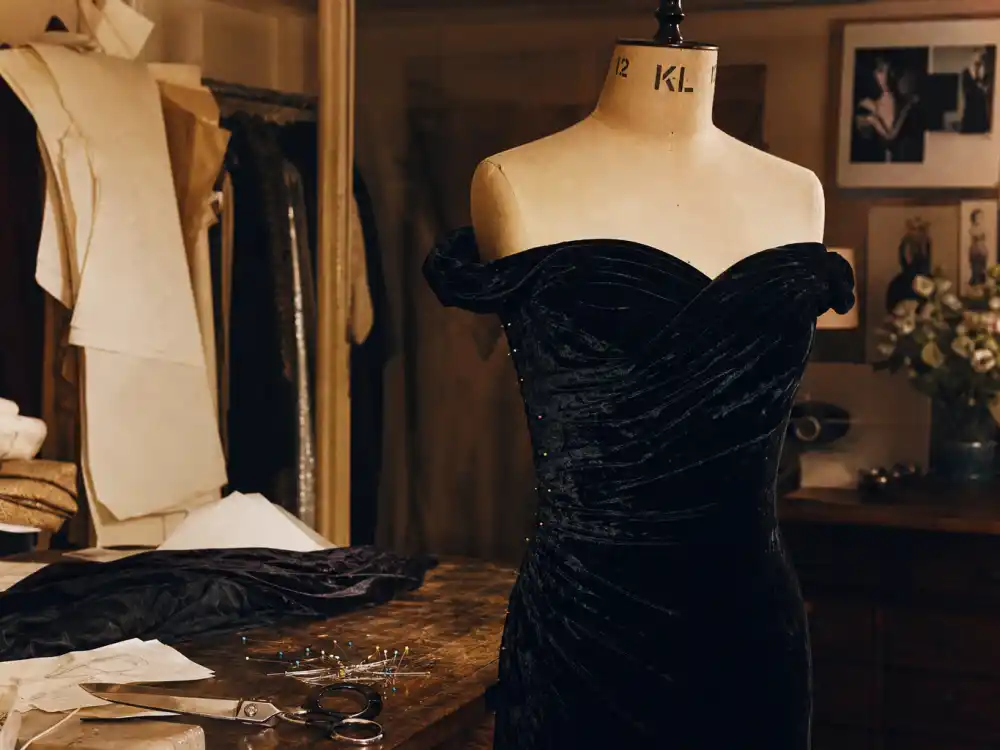
Fashion historians note that Diana had tried the dress in fittings years earlier and set it aside. Royal dressing involved compromise between personal taste and palace protocol; velvet bodycon read Hollywood rather than Windsor. Keeping the piece in her closet until 1994 suggests she understood its voltage even before the Panorama timing. When she finally deployed it, the construction details Stambolian built — clean princess seams, sculpted neckline, minimal embellishment — let the silhouette carry the entire message.
Why the Dress Waited Three Years in the Closet
A lesser-told chapter of the Princess Diana revenge dress story involves hesitation. Diana was not a passive mannequin for stylists; she collaborated on image strategy throughout the 1980s and early 1990s. Interviews with designers and aides describe her cataloguing outfits by emotional context — which looks felt safe for school visits, which felt powerful for galas, which she saved for undefined future moments. The Stambolian velvet piece belonged to the last category.
Some accounts suggest Diana considered wearing the dress to earlier events and pulled back, worried about neckline commentary overwhelming charity messaging. Others emphasize practical royal politics: a separated princess still faced institutional scrutiny. Saving the dress until the marriage’s public collapse was complete turned restraint into release. The garment did not change — the context did.
The Panorama Interview and the Broadcast Collision
Charles’s June 1994 television appearances were engineered to stabilize his public standing after years of leaked tapes and tabloid warfare. Dimbleby’s authorized biography and the subsequent Panorama sit-down were meant to present controlled honesty. Instead, the admission that he had been unfaithful after the marriage “irretrievably broke down” supplied the emotional backdrop against which Diana’s gala appearance would be read.
Viewers who watched Charles on the sofa and then saw Diana on the carpet — or who encountered both stories in the next morning’s papers — experienced a narrative edit only fashion could provide. She looked vital, amused, and physically present. The contrast fueled the revenge interpretation even though Diana never used that word publicly. Accuracy matters: she attended a longstanding charity commitment; the broadcast schedule created coincidence, not conspiracy. Yet coincidence became mythology because the dress was ready.
How the Press Named It the Revenge Dress
British tabloids and fashion editors needed shorthand. “Revenge dress” captured the story in two words — betrayal answered by glamour. Headlines paired the velvet frame with Charles’s quotes, sometimes on the same front page. International outlets followed: People, Vanity Fair, and European fashion magazines ran the photograph for months, analyzing neckline psychology the way political reporters analyze polling.
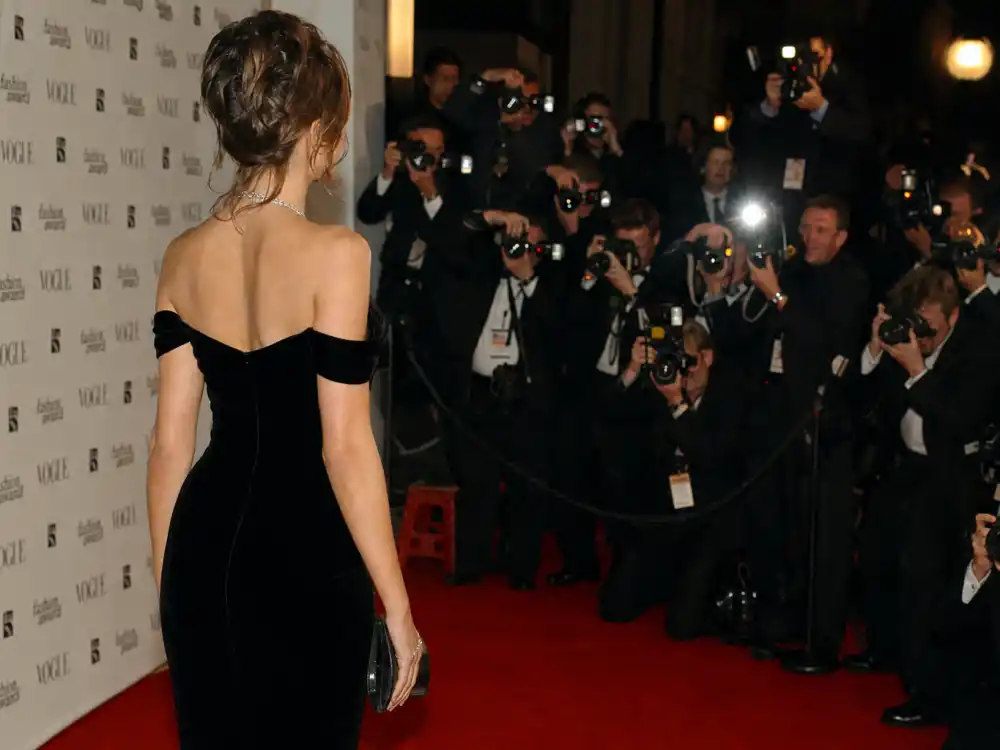
The label stuck because it described audience fantasy as much as Diana’s intent. Readers wanted a heroine who fought back; fashion supplied the iconography. Scholars of media now cite the night when teaching how still images outlast broadcast transcripts in collective memory. Ask a casual fan what Charles said on Panorama and answers vary; ask about the black dress and everyone remembers the shoulders.
Styling Details: Pearls, Heels, and the Smile
Diana paired the Stambolian velvet with sheer black tights, classic pumps, a pearl choker, and sapphire-and-diamond earrings — jewelry that nodded to royal tradition while the dress broke protocol. Her hair was short, blown out with volume, framing the bare neckline without competing. Makeup stayed polished and camera-ready: defined eyes, natural lip, the expression photographers described as confident rather than wounded.
That balance is why imitations often fail. Copying the velvet without the posture reads costume. Diana’s styling team understood that the revenge narrative required joy on the face — not anger. The smile told paparazzi she was not hiding at Kensington; she was working the rope line. Modern stylists coaching clients through high-profile separations still reference the formula: one hero garment, minimal jewelry competition, expression that refuses victim framing.
Kensington, Paparazzi, and the Royal Image Economy
By 1994 Diana lived at Kensington Palace and moved through a city where long-lens photographers documented grocery runs and gym exits. The Princess Diana revenge dress story did not happen in a vacuum; it followed years of surveillance that turned private pain into public serial. The Serpentine carpet was a rare controlled environment where Diana could stage an image on her terms — flashes invited, composition predictable, dress chosen deliberately.
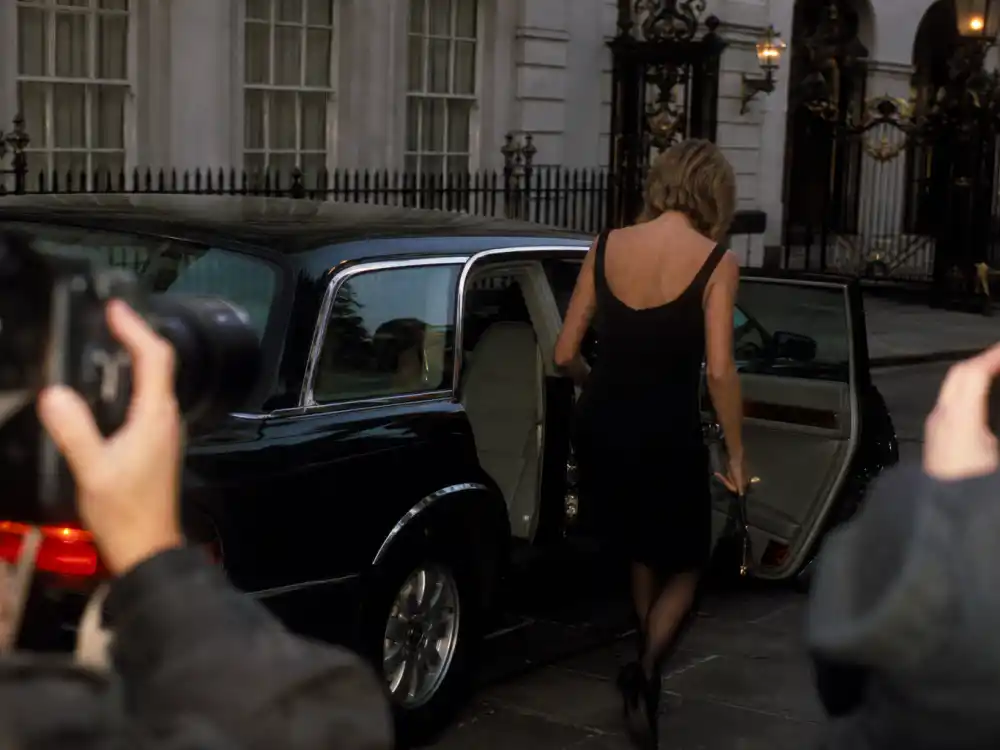
The revenge dress therefore belongs to a larger lesson about celebrity image economies. When every errand is documented, the red carpet becomes a courtroom without testimony. Diana’s legal separation from Charles had been announced in 1992; the 1994 appearance signaled emotional independence rendered in velvet. Fashion journalists treat the night as the bridge between royal wife and global icon — the same year she would later sell auction dresses for charity and redefine what a princess could monetize.
Fashion Legacy: Protest Dressing Before Hashtags
Long before social media codified “revenge outfits” as a TikTok genre, Diana demonstrated how a single garment could reframe a news cycle. The Stambolian dress influenced decades of off-the-shoulder black minis on carpets and premieres — not as uniform, but as shorthand for confidence after scandal. Designers from Versace to Victoria Beckham have cited 1990s Diana silhouettes when discussing body-conscious glamour with royal discipline.
The dress also expanded the vocabulary of protest fashion. Unlike slogan tees or symbolic colors, Diana’s protest was cut and exposure: shoulders out, hem up, waist visible. It was feminine-coded defiance that unsettled palace traditionalists precisely because it looked celebratory. Contemporary stars navigating breakups on public stages — from award shows to court steps — still borrow that energy when they choose a “look at me now” gown instead of a statement press release.
Museum Culture and Auction Afterlife
While the exact Stambolian piece Diana wore has not toured as consistently as some royal gowns, the revenge dress exists in exhibition culture through replicas, photographic archives, and documentary segments. Fashion museums use the image to teach neckline engineering, velvet behavior under flash, and the ethics of reading clothes as autobiography. Diana’s 1997 Christie’s auction of other dresses further separated the woman from the wardrobe as cultural artifact — yet the 1994 photograph remains the most requested slide in royal style lectures.
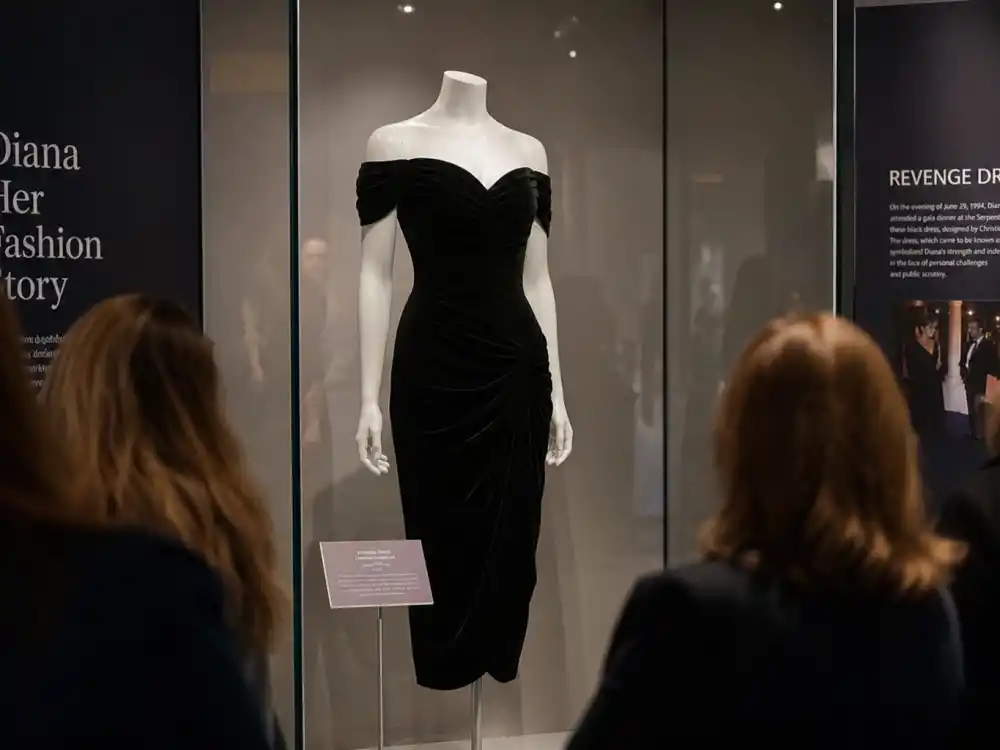
Streaming biopics and prestige dramas recreate the Serpentine night with costume departments obsessing over velvet grain and choker placement. Each recreation reintroduces the Princess Diana revenge dress story to audiences born after the 1990s, keeping search interest alive across generations.
Common Myths and Corrections
Myth one: Diana scheduled the appearance to coincide with Charles’s interview. Reality: the Serpentine party was an annual charity fixture; broadcast timing overlapped but was not secretly coordinated according to documented schedules. Myth two: she bought the dress that week. Reality: Stambolian fittings date years earlier; Diana archived the piece until she felt ready. Myth three: Diana called it a revenge dress. Reality: the press coined the phrase; Diana described the look as “a grown-up dress” in later comments without using revenge language.
Accurate Princess Diana revenge dress story reporting holds all three truths: coincidence fueled symbolism, the dress was premeditated wardrobe waiting for its moment, and public interpretation exceeded any single designer’s brief.
Why the Revenge Dress Still Matters in 2026
Thirty-two years after the Serpentine flash bulbs, off-the-shoulder black velvet still appears on premieres, divorce-announcement paparazzi walks, and fashion retrospectives titled “women who dressed their feelings.” Documentaries on Diana’s life premiere with the revenge frame in trailer montages. Costume designers study the neckline when building period wardrobes for the 1990s. The dress remains a masterclass in saying everything while saying nothing — a skill public figures still need when cameras outnumber microphones.
For USA Celebs readers tracking celebrity fashion as cultural signal, the Princess Diana revenge dress story is the benchmark case study for timed image-making: one gown, one broadcast, infinite aftershocks across media, monarchy, and design education. No replica captures the original electricity, but every bare-shouldered black mini on a rope line participates in the legacy.
Explore More
- Browse our Fashion section for celebrity style history and red-carpet breakdowns.
- Read Jennifer Lopez green Versace dress history for another 1990s gown that rewrote red-carpet rules.
- See Lady Gaga meat dress explained for protest dressing with a different kind of public symbolism.
- Compare celebrity street style for how stars dress when the cameras are not on a velvet rope.
- Check Rihanna yellow Met Gala cape dress for modern red-carpet confidence dressing.
For background, see coverage from Vogue, Harper’s Bazaar, and the BBC on 1990s royal fashion, the Panorama interview of 1994, and Christina Stambolian’s design archive.