


In this article8 sections
- How Adele makes money without a new album
- Recorded music: the four-album engine
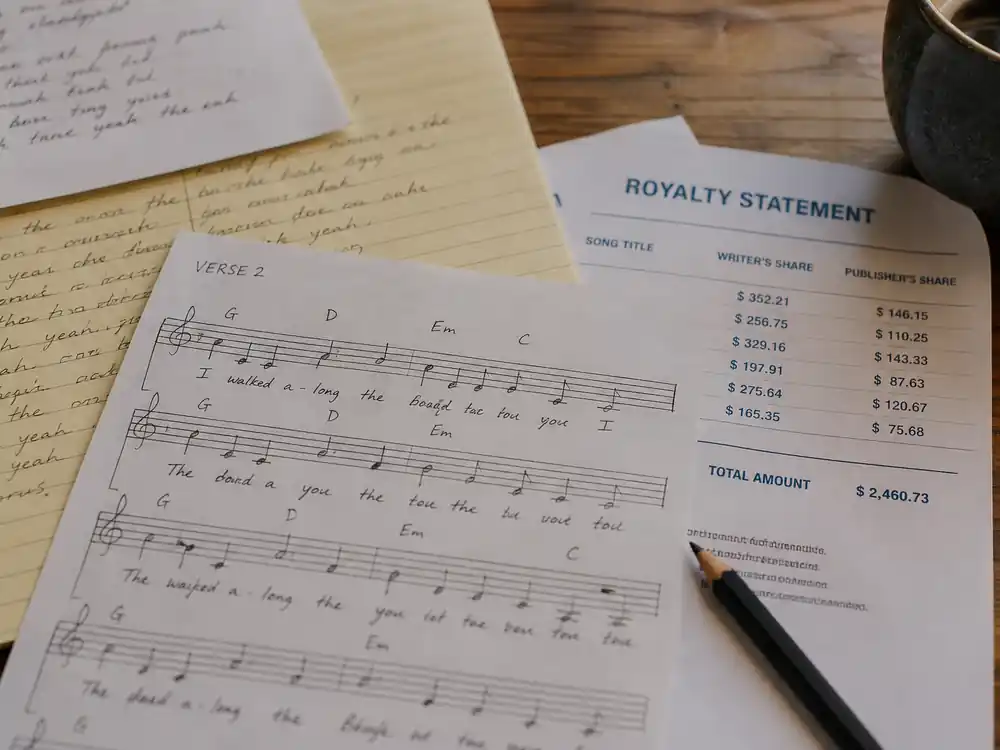
- Publishing and the writer's share
- Touring versus the residency paycheck
- Streaming as a daily annuity
- The endorsement money she skipped
- Property, companies and parked cash
- Why the mix looks nothing like a typical pop empire
What sets how Adele makes money apart from most pop fortunes is how little of it needs a new release, a fragrance or a fashion label to keep flowing. The cash comes from a short, heavy catalog, from the publisher’s share of songs she wrote, from a small number of very expensive live runs, and from streaming that keeps paying when she does not. The brand-extension layer that funds so many peers is mostly, and deliberately, absent.
That mix is why a quiet year can still look solvent and a loud year can post a Forbes number without turning into a billionaire’s balance sheet. This is the revenue-stream view, not the stock-of-wealth view: where the money enters, not what the accumulated fortune is worth today.
How Adele makes money without a new album
In 2026 there is still no fifth Adele studio album, and the income stack does not require one in any given year. Celebrity Net Worth has estimated about $60,000 a day from streaming royalties alone, which would annualize to roughly $22 million if it held. That is not a royalty statement; it is the outlet’s attempt to sketch a floor. Even if the real figure runs lower, the mechanism is not in doubt, since 21, 25, 19, 30 and a handful of singles keep playing.
Live work is the other non-album tap, and it is lumpy. Adele Live 2016 to 2017, Weekends with Adele in 2022 to 2024, and Adele in Munich in 2024 are the three big valves; between them, recorded-music royalties and publishing do the daily work. Reading the income right starts with respecting that lumpiness, since a residency year is no template for the next year without one.
British companies make the structure a little more legible than a purely private American setup. The Sunday Times has said music sales and touring proceeds run through Melted Stone Ltd and related entities. Wales Online, citing 2023 Companies House accounts, reported about £7.7 million in combined earnings across Melted Stone Publishing Ltd, Melted Stone Ltd and A. Adkins Touring Ltd, with roughly £1.55 million in corporation tax. Those filings are not the whole global picture, but they are a documented slice of how the money is boxed.
Recorded music: the four-album engine
Recorded music is still the identity of the business. The inventory is 21’s 31-million-plus pure copies worldwide and Diamond US certification, 25’s Nielsen-reported 3.38 million US opening week and IFPI-leading 17.4 million copies in 2015, 19’s multi-platinum first chapter, and 30’s 839,000 US equivalent units in week one, per Billboard and MRC Data. XL in Britain and Columbia in the United States are the historical label partners, and she has not, in public, sold the catalog to a fund.
The commercial shape of each album still shows up in 2026 cash. 21 and 25 were physical-era giants that keep converting to streams; 30 was born into streaming and did not need a delayed-service window to post its number; 19 is the deep catalog, smaller in headline sales, still on playlists. A recorded-music payment today is more often a stream or a sync than a CD, but those physical spikes built the audience that now streams.
Forbes clocked the mix in 2016, ranking her third among musicians at an estimated $80.5 million pretax and noting she was one of the few acts still earning more from records than from the road. That observation has dated, since the Vegas years tilted the live share upward, but it still tells you something about how Adele makes money over a full career: the records were never a loss leader for touring.
Publishing and the writer’s share
Adele writes or co-writes her material, and that is a separate check from the artist royalty on the master. Publishing income lands when songs are streamed, sold, played on radio, covered, or licensed to film and advertising. Melted Stone Publishing Ltd, holding £13.5 million in cash, per the 2023 filings reported by Wales Online, is the vehicle most often tied to that stream in British coverage.
Skyfall is the clearest sync-adjacent example: a Bond theme that Celebrity Net Worth says has sold more than five million copies and that carried an Oscar, a Golden Globe and a Grammy. That is a songwriting event, not a cosmetics deal. Hello, which Billboard documented as the first track to sell one million digital copies in a single US week, is a recorded-music event that keeps feeding publishing every time it is used.
She is not a writer-for-hire in the Sheeran mold. The publishing stack is her own songs working, not a portfolio of other people’s hits, which limits the upside and the concentration risk in opposite directions: fewer outside copyrights, more dependence on Adele songs staying in rotation. In practice, this part of how Adele makes money is nearly identical to how present her catalog stays.

Touring versus the residency paycheck
Touring is where the mix looks least like a typical pop empire. Adele Live 2016 was a full world tour: Pollstar reported a $167.7 million gross for 2016 and about $59 million for 2017, and Billboard’s mid-run snapshot had roughly $67.6 million from 15 North American buildings. Production on a tour that size eats a large share of gross, but she still took home a career-defining live payday, which is why Forbes’s 2017 window still showed $69 million pretax.
The residency reshaped the cost curve. Playing the Colosseum at Caesars Palace 100 times meant one production, one city, a weekend schedule. Boxscore figures on the first 24 shows put the gross at a reported $52.8 million, about $2.2 million a night; the Las Vegas Review-Journal later cited an estimated $220 million gross for the full run. The Sun reported her personal take topped $100 million, while the BBC cited £500,000 a show. Those take-home estimates disagree; the business design does not: fewer trucks, more nights in one room, high ticket prices.
Munich applied residency logic at stadium scale: ten nights, more than 730,000 tickets by Live Nation’s count, a custom venue, and a fee Neue Zürcher Zeitung estimated near $50 million, with German reports citing Bild putting ticket revenue near €160 million. Merchandise, VIP and a later concert film are adjacent streams, not independently audited in public, but they belong in any account of how she earns from live work after deciding she did not want to live on a tour bus.
Streaming as a daily annuity
Streaming is the annuity layer. The Celebrity Net Worth figure of about $60,000 a day is the one that gets repeated, and it should always wear that label, an outlet estimate. If it is close, it funds a life and a staff with no new album; if it is high by half, it is still a serious passive line. Either way, it is why the ‘she vanished, so she must be broke’ take never survives contact with the catalog.
The annuity is uneven across titles. ‘Rolling in the Deep’, ‘Someone Like You’, Hello, ‘Easy On Me’ and Skyfall carry more of the daily load than album cuts, normal for a small discography and also a risk, since a catalog this short cannot hide a cold title as easily as a twelve-album shelf. So far the cold titles have not come; ChartMasters-style equivalent-unit counts that put 21 above 50 million equivalent albums are one way of saying the principal is still large.
Streaming also changed 30’s economics relative to 25. 25 held music back from services and forced a purchase; 30 lived on services from day one. Billboard’s split of 839,000 first-week units, 692,000 sales, 141,000 streaming-equivalent units and 6,000 track-equivalent units, is a snapshot of that hybrid. In 2026 the earnings model looks closer to 30 than to 25, even when the song playing is from 21.
The endorsement money she skipped
The missing stream is the loudest one. There is no Fenty, no Rare Beauty, no named spirits brand, no perennial fashion tie-up showing up as equity. Coverage of her career keeps circling the same point: she does not sell other people’s products as a side job. That choice caps the ceiling, and keeps the mix simple enough to explain on one page.
The contrast is Rihanna, or on a smaller scale almost any current pop act with a fragrance; those deals can out-earn the music itself in a quiet year. Adele’s quiet years are still music years. That is a commercial personality, not an oversight, and readers hunting for a hidden cosmetics fortune will not find a named one in the public record.
Film and television are just as thin as an income line. Skyfall is a song, not the start of an acting career subsidizing the music. Documentary and concert-film projects around the residencies do exist, and the Sunday Times counted them as part of a £5 million lift in identifiable wealth into 2024, extras, not the engine.
Property, companies and parked cash
Property is a use of money more than a source of it, but the purchase prices belong here because they show where the surplus went. Celebrity Net Worth reported about $9.5 million for a 2016 Beverly Hills house, $10.65 million in 2019, $10 million for the Nicole Richie house in 2021, and $58 million for Beverly Park that December. Those homes can appreciate and can also swallow cash; they are not operating businesses.
Company cash is closer to working capital. Wales Online’s Companies House summary for 2023, £13.5 million at Melted Stone Publishing Ltd, £6 million at Melted Stone Ltd and a small balance at A. Adkins Touring Ltd, is money already earned, sitting in vehicles, not a new product line. The Sunday Times treats those companies as the British window on music and touring proceeds: accurate as far as UK filings go, incomplete as a global cash map.
None of this is venture-style equity; there is no public Adele-backed startup waiting to re-price the fortune. At the asset level, the pattern is plain, get paid for songs and shows, pay tax, buy houses, leave cash in companies. For what that adds up to as a total, see her 2026 net worth in full; for a year-by-year pay view, see what she takes home in a single year.
Why the mix looks nothing like a typical pop empire
A typical modern pop empire is tour-heavy, brand-heavy and release-heavy. Hers is catalog-heavy, live-lumpy and brand-light. Forbes could still put her in the high tens of millions of pretax pay in 2016 because the records were that strong; the Las Vegas Review-Journal could still cite an estimated $220 million residency gross because scarcity priced the tickets. Neither fact needed a perfume.
The mix is efficient and concentrated. Efficiency is why she can disappear; concentration is why a catalog sale or a fifth album would matter more to her than to someone with twenty income lines. So how Adele makes money in 2026 is at once conservative and exposed, conservative because the songs already exist, exposed because so few other engines would catch her if the songs ever cooled.
They have not cooled. Until they do, the truest description of the mix is the one the public numbers already back: recordings, publishing, the occasional enormous live run, streaming as the daily drip, property as the savings account, and almost nothing resembling a second career.