

In this article11 sections
- Why Aditi Rao Hydari Cannes 2026 Went Viral
- What Made the JADE Saree Stand Out
- The Structured Gold Blouse Changed the Mood
- The Caption Became Its Own Fashion Statement
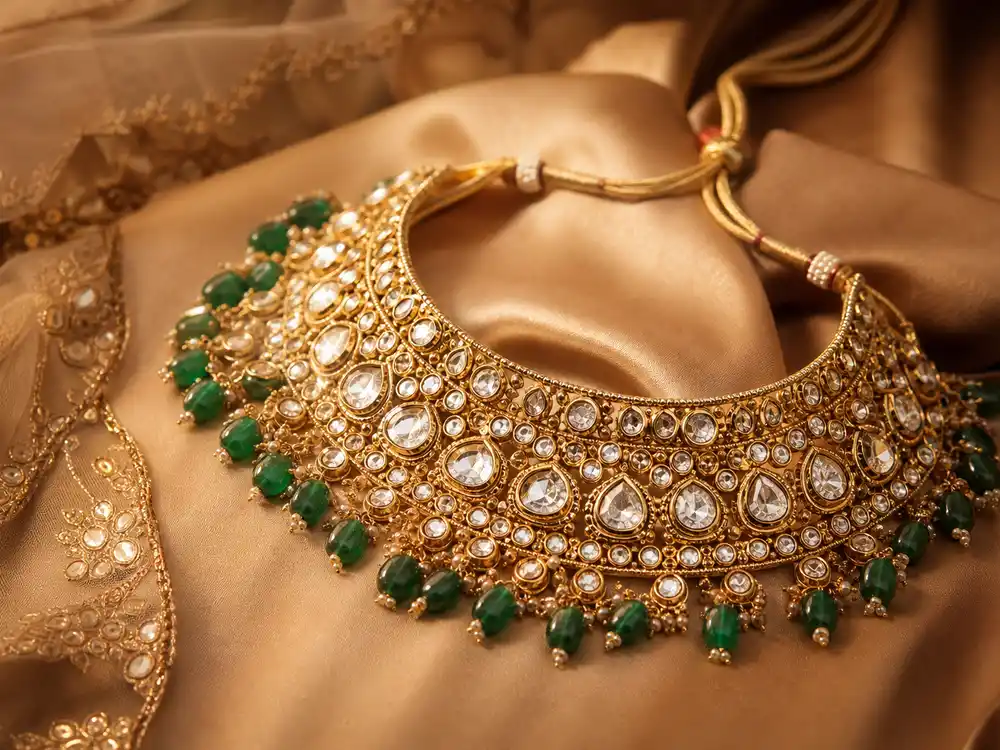
- How the Jewelry Completed the Look
- Why a Traditional Saree Drape Still Feels Global
- Cannes 2026 and the Rise of Saree Commentary
- The Red Carpet Lesson in Aditi's Look
- Why the Moment Has Staying Power
- FAQs About Aditi Rao Hydari Cannes 2026
- Related from USA Celebs
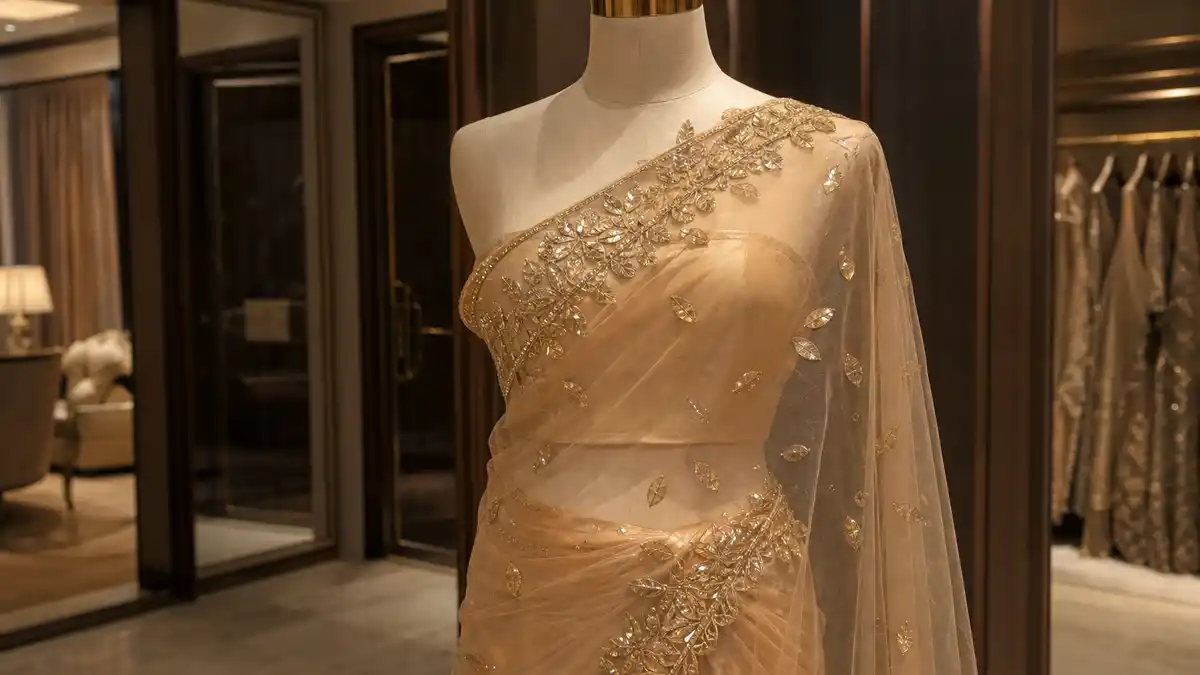
Aditi Rao Hydari Cannes 2026 became one of the most talked-about red carpet fashion moments of the May 17-18 Cannes cycle after the actor stepped out in a champagne-gold sheer organza saree by JADE and paired the look with a caption that did half the internet’s commentary work for them: “Wearing a saree… the traditional way. Revolutionary, I know.”
The line was short, funny, and pointed without feeling harsh. In a season when Cannes fashion conversations often reward volume, shock value, and elaborate reinventions of familiar silhouettes, Hydari’s post read like a graceful wink. The saree itself was not plain. It was a polished couture piece with gold leaf, sequin, and sitara embellishments, a structured metallic gold sleeveless blouse, and an antique gold choker with emerald drops. But the styling respected the form of the saree rather than turning it into a costume experiment, and that is exactly why the moment traveled so quickly.
Indian outlets including Times of India, Bollywood Hungama, and Indian Express highlighted the look as part of Cannes 2026’s fashion chatter, with fans latching on not only to the craftsmanship but also to Hydari’s dry sense of humor. For a global red carpet that increasingly functions as both fashion show and social-media debate stage, the look offered something valuable: a luxurious outfit, a clear point of view, and a caption that turned a classic drape into a cultural conversation.
Why Aditi Rao Hydari Cannes 2026 Went Viral
The viral lift around the look came from the collision of two things that rarely arrive together on a red carpet: high craft and low-effort wit. Hydari’s JADE saree gave fashion pages plenty to discuss visually, while the caption gave Instagram users a line they could quote, share, and interpret. That combination matters. A red carpet outfit can be admired for beauty, but a caption can give it a social life.
The phrase “the traditional way” landed because it sounded simple while carrying a layered fashion subtext. Over the past few years, sarees on global carpets have been reimagined through trains, sculptural bustiers, pre-draped gowns, cape-like pallus, and hybrid couture forms. Some of those experiments are compelling. Others spark debate about whether the saree is being celebrated or overworked. Hydari did not need to name any example. Her caption let the audience connect the dots.
That is why the joke felt gentle rather than mean. It did not read like an attack on experimentation. It read like a reminder that the traditional drape still has power, especially when the fabric, blouse, jewelry, and posture are doing the talking. In a Cannes environment where many looks compete for instant shock, a composed saree with a clever caption can feel surprisingly fresh.
What Made the JADE Saree Stand Out
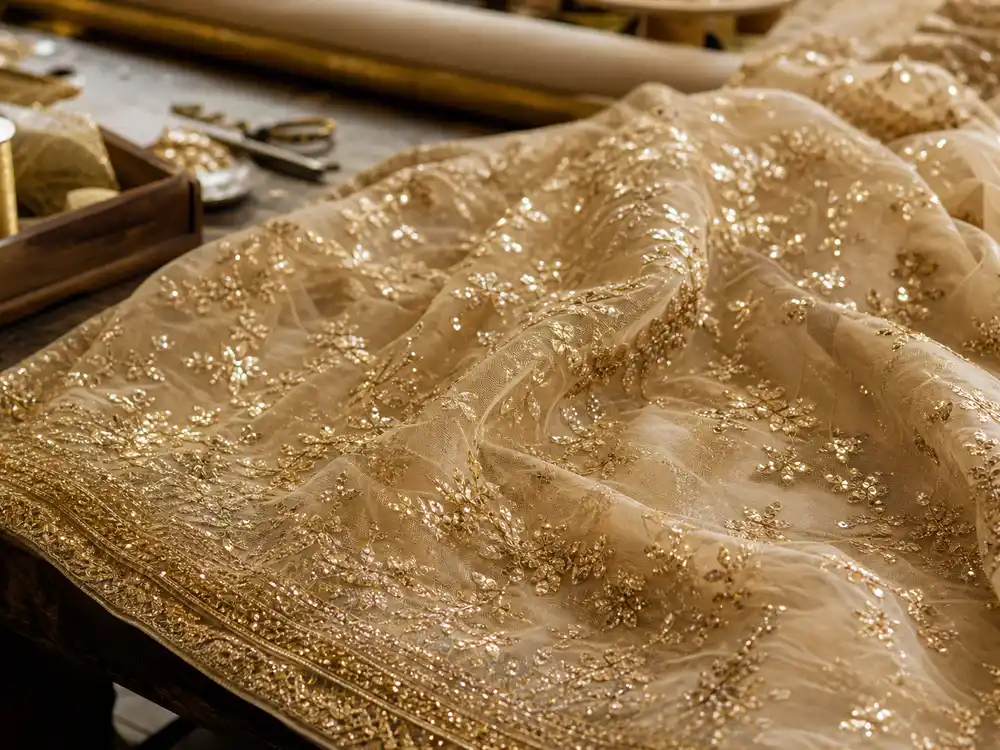
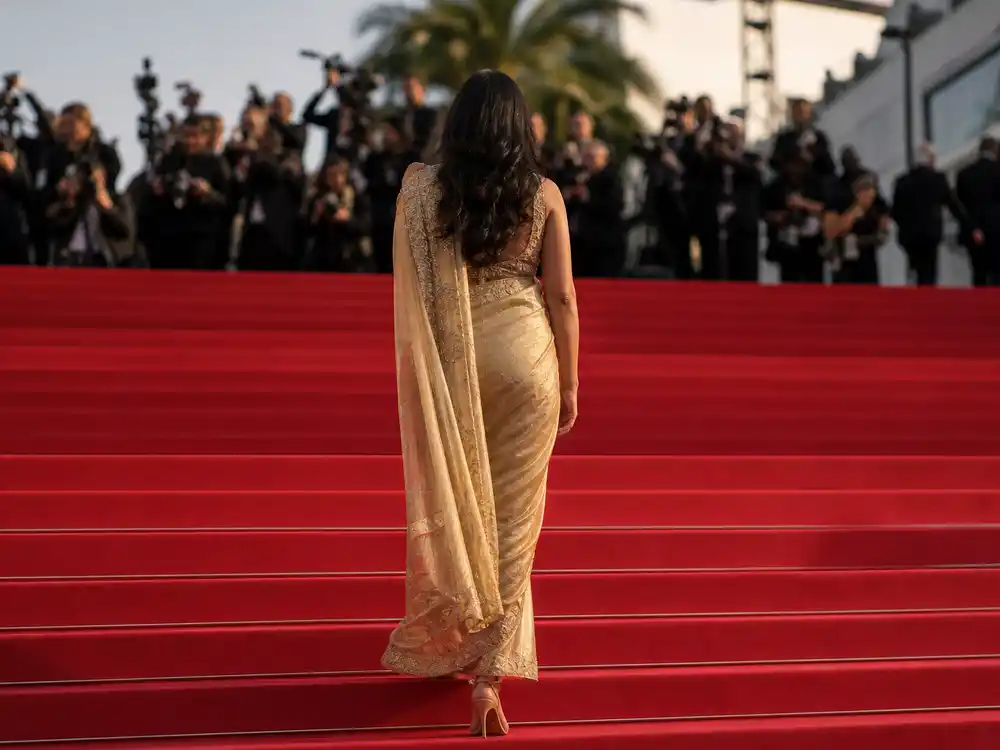
The saree’s champagne-gold tone was a strong Cannes choice because it photographed as luxury without feeling loud. Champagne sits between ivory, beige, and gold, giving cameras enough warmth to catch the light while avoiding the heaviness of deeper metallics. On a sheer organza base, that color can look especially delicate, almost floating around the body when it moves.
The embellishment was the key detail. Gold leaf motifs brought an organic, almost botanical finish. Sequins added the expected red carpet flash. Sitara-style sparkle gave the surface a finer, more traditional shimmer. Together, the effect was ornate but not cluttered. The saree could read as Indian couture from a distance and still reward close-up coverage, which is exactly what a Cannes fashion image needs.
The Structured Gold Blouse Changed the Mood
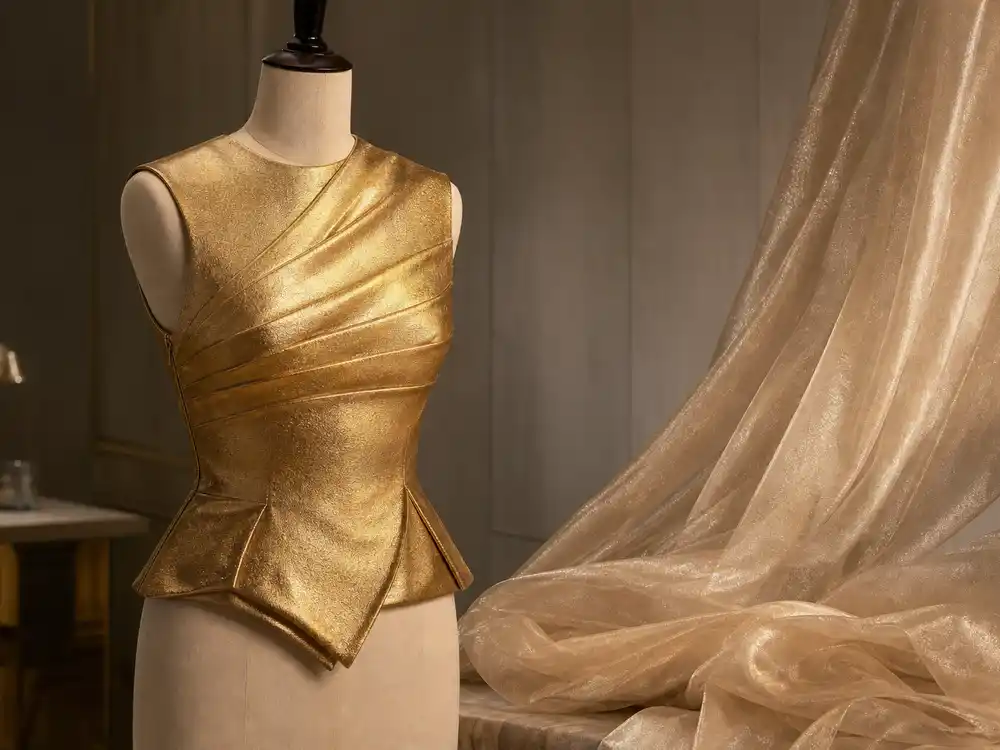
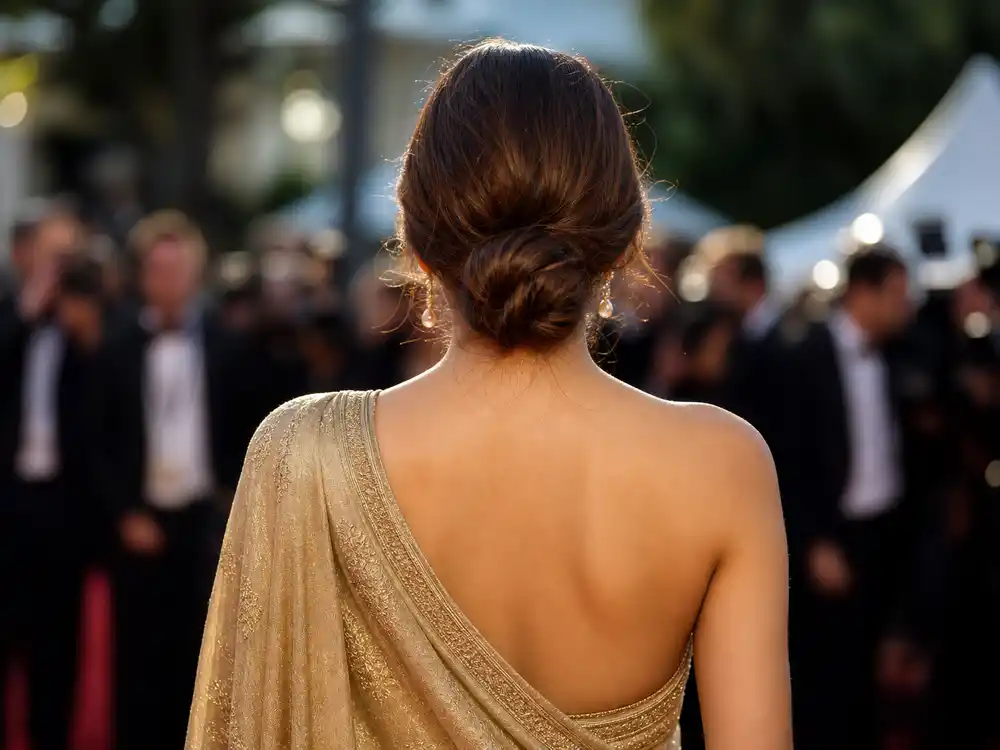
Hydari’s metallic gold sleeveless blouse sharpened the look. A delicate saree can sometimes lean purely romantic, but a structured blouse gives it architecture. The sleeveless cut kept the silhouette clean, while the metallic finish tied back to the gold embroidery without turning the entire outfit into a single flat surface.
This is where the styling felt especially current. Many international readers understand a saree first through its drape and fabric. The blouse, however, often decides whether the final image feels bridal, editorial, traditional, modern, or cinematic. In this case, the blouse made the outfit feel like red carpet couture rather than ceremonial wear, while still leaving the saree recognizably intact.
The balance is subtle but important. Had the blouse been too ornate, it might have competed with the organza. Had it been too minimal, the look could have lost its Cannes scale. The metallic structure gave the outfit a polished center, letting the saree’s translucent texture and embellishment carry the softer drama.
The Caption Became Its Own Fashion Statement
“Wearing a saree… the traditional way. Revolutionary, I know.” The caption worked because it sounded like an aside a stylish friend might make, not a press release. It had the rhythm of a joke, but the joke was attached to a larger debate about how Indian fashion is presented on global platforms.
Cannes has become a major stage for South Asian style, and every saree appearance now carries added meaning. Some viewers want innovation. Some want fidelity to the garment’s history. Many want both. Hydari’s line found a neat middle ground: she wore an elaborate designer saree, but she framed the drape itself as the statement.
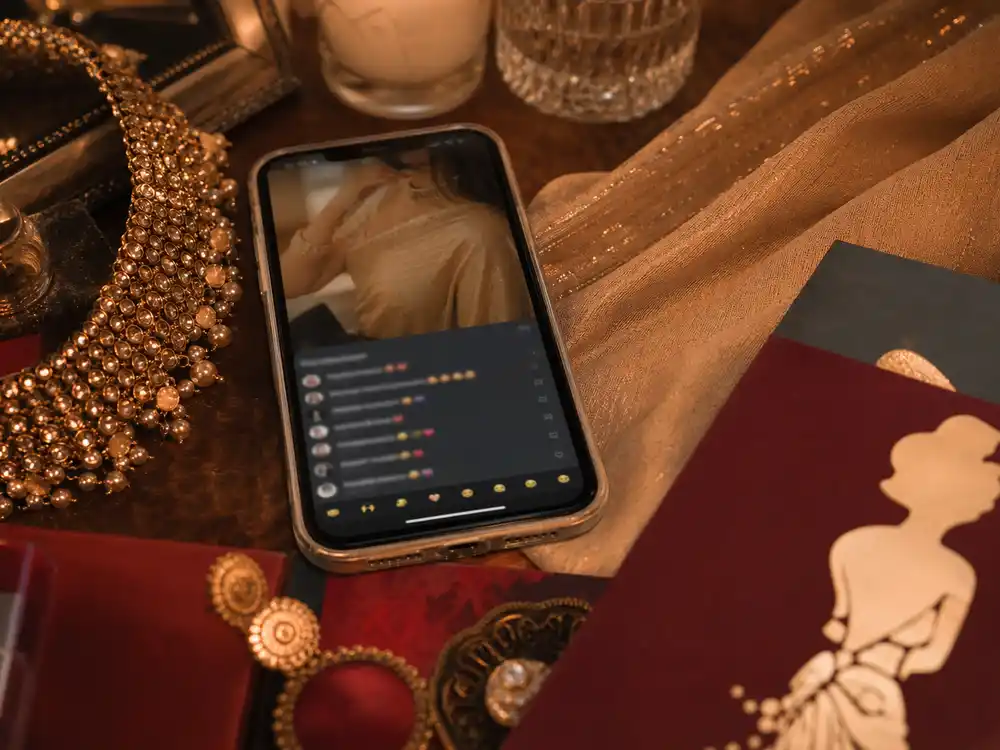
That is why the caption spread beyond ordinary outfit praise. It gave fans a way to talk about fashion fatigue, red carpet spectacle, and the quiet confidence of not over-explaining a look. The sarcasm was soft, but it was clear enough to be memorable.
How the Jewelry Completed the Look
The antique gold choker with emerald drops added contrast at the neckline. Gold on gold can sometimes disappear in photographs, but emerald brings a small hit of color that makes the jewelry visible without disrupting the palette. The green also gave the look a more regal Indian finish, grounding the champagne tones in a classic jewelry language.
Chokers are useful on red carpets because they hold attention near the face and collarbone, especially when the outfit itself has a sweeping drape. In Hydari’s case, the choker also echoed the antique quality of the saree’s gold work. The effect was not trend-chasing. It felt composed, almost archival, as if the look had been built around permanence rather than novelty.
Why a Traditional Saree Drape Still Feels Global
The global appeal of this moment is that it did not require viewers to understand every technical detail of a saree to understand the impact. The image communicated elegance immediately: sheer gold fabric, precise drape, luminous jewelry, and a poised red carpet mood. The cultural specificity made it richer, not narrower.
That is often the strongest path for international celebrity fashion. A look does not need to flatten its identity to travel. In fact, the more confidently rooted it is, the more memorable it can become. Hydari’s Cannes appearance showed that the saree does not need to be translated into a gown to belong on a global carpet. It can arrive as itself, with couture-level finishing, and still feel entirely at home.
This is also why the phrase “traditional way” resonated. Tradition here did not mean old-fashioned. It meant legible, intentional, and secure in its own grammar. In a red carpet climate built around constant reinvention, that confidence can read as modern.
Cannes 2026 and the Rise of Saree Commentary
The reaction to Hydari’s look is part of a wider shift in how audiences discuss festival fashion. Cannes outfits are no longer judged only by glamour. They are judged by references, politics of representation, designer choices, styling decisions, and the social-media language used to frame them. A caption can now become as important as a clutch or necklace.
For South Asian stars, the scrutiny is even sharper because the saree is both a garment and a symbol. When it appears at Cannes, viewers ask what version of Indian elegance is being presented to the world. Is it experimental? Is it classic? Is it respectful? Is it too safe? Hydari’s answer was witty because it refused to sound anxious. She simply wore the saree beautifully and made a joke about the obviousness of that choice.
The Red Carpet Lesson in Aditi’s Look
The strongest lesson from the Aditi Rao Hydari Cannes 2026 moment is that restraint can still dominate a crowded fashion news cycle. The saree was embellished, but the concept was not overcomplicated. The jewelry was rich, but the palette stayed disciplined. The caption was sarcastic, but not cruel. Every element worked because it knew its role.
That makes the look especially useful as a reference point for modern celebrity styling. The best red carpet outfits are not always the ones with the most visible labor. They are often the ones that understand proportion, timing, and audience mood. Hydari’s appearance arrived when viewers were primed to debate couture drama, and she offered a polished alternative with a wink.
What Fans Are Really Responding To
Fans are responding to the beauty of the saree, but they are also responding to the confidence behind it. Hydari’s look did not chase a viral moment through shock. It became viral because it felt self-aware. The caption acknowledged the noise around red carpet styling without stepping outside the elegance of the outfit.
Why the Moment Has Staying Power
Some Cannes looks disappear after the first scroll because they depend on novelty alone. Hydari’s JADE saree has a better chance of lasting in fashion memory because it connects to multiple conversations at once: Indian couture on global carpets, the continued relevance of the traditional saree drape, celebrity wit, and the internet’s appetite for subtle fashion roasts.
The outfit also photographs in a way that can age well. Champagne organza, gold embellishment, emerald jewelry, and a clean drape are not tied to a single microtrend. They belong to a broader language of red carpet elegance. The caption gives the look a timestamp, but the styling itself has a more classic quality.
For USA Celebs readers following the global celebrity circuit, that is the headline beyond the viral quote. Aditi Rao Hydari did not simply wear a beautiful saree at Cannes 2026. She turned a classic styling choice into a fashion conversation, and she did it with one of the week’s most repeatable captions.
FAQs About Aditi Rao Hydari Cannes 2026
What did Aditi Rao Hydari wear at Cannes 2026?
Aditi Rao Hydari wore a champagne-gold sheer organza saree by JADE at Cannes 2026, styled with a structured metallic gold sleeveless blouse and antique gold jewelry.
Why did Aditi Rao Hydari Cannes 2026 look go viral?
The look went viral because the saree was glamorous but restrained, and her caption about wearing a saree the traditional way added a witty fashion-commentary twist.
What was Aditi Rao Hydari Cannes 2026 caption?
Her caption read, "Wearing a saree… the traditional way. Revolutionary, I know." Fans interpreted it as a gentle, sarcastic nod to dramatic couture and unconventional saree styling.
Who designed Aditi Rao Hydari Cannes 2026 saree?
The champagne-gold sheer organza saree was by JADE, known for modern Indian couture pieces with intricate hand embellishment and occasionwear polish.
How was the Aditi Rao Hydari Cannes 2026 saree accessorized?
The look was completed with a structured gold blouse, an antique gold choker with emerald drops, and classic red carpet beauty styling that kept the focus on the saree.