

In this article10 sections
- Who Decides Who Attends the Met Gala? The Short Answer
- Anna Wintour's Role in the Met Gala Guest List
- The Metropolitan Museum and Costume Institute
- Brand Tables and Corporate Sponsors
- Designer Invites and Plus-One Politics
- The Met Gala Host Committee
- The Invitation Pipeline: From Nomination to Red Carpet
- Who Gets Left Off the Met Gala Guest List?
- 2026 Spotlight: Costume Art and a Locked Guest List
- Related Met Gala Guides
Who decides who attends the Met Gala is one of fashion’s most searched questions every spring — and the honest answer involves a small circle of power brokers, not a public ballot or online signup. Anna Wintour, Vogue editor-in-chief and the gala’s chair since 1995, holds the most visible authority over the guest list, but she does not act alone. The Metropolitan Museum of Art development office manages donor tables, the Costume Institute sets exhibition context, luxury brands purchase seats and nominate talent, and a rotating host committee shapes the night’s cultural tone. Understanding who decides who attends the Met Gala explains why roughly 400 to 500 people walk the museum steps each first Monday in May while thousands of A-listers never receive an invitation. This explainer maps the invitation pipeline — not outfit breakdowns. For look galleries, see Pillar F guides; for who actually arrived in 2026, read our Met Gala 2026 guest list, Met Gala themes by year complete list, and how much does a Met Gala ticket cost.
The Met Gala is the Costume Institute’s annual charity benefit — a black-tie dinner inside the museum that launches the spring fashion exhibition. Vogue produces the global livestream and co-manages invitations with the Met. Wintour’s editorial team balances Hollywood star power, fashion-industry loyalty, corporate sponsor obligations, and museum philanthropy. The result is a guest list that feels curated like a magazine cover spread: intentional, exclusive, and endlessly debated on social media. Below, we break down every gatekeeper — from Wintour’s desk to brand table allocations — so you know exactly who decides who attends the Met Gala and why your favorite celebrity might be watching from home.
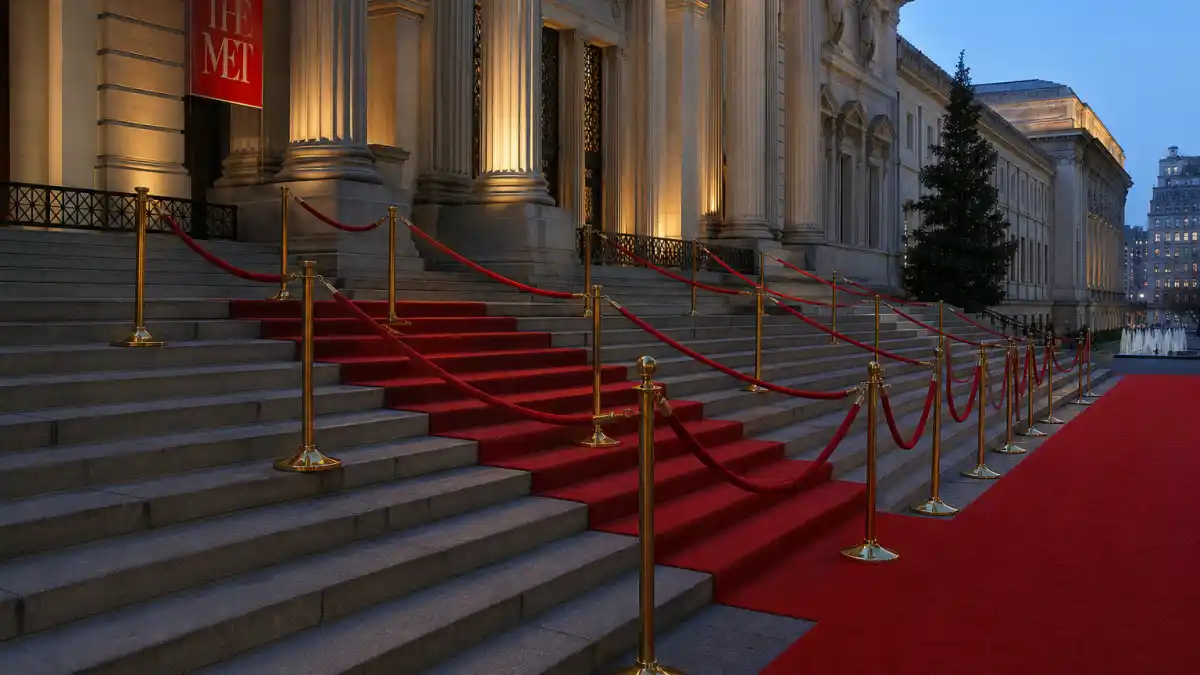
Who Decides Who Attends the Met Gala? The Short Answer
The short answer to who decides who attends the Met Gala: Anna Wintour and Vogue, in partnership with the Metropolitan Museum’s development and Costume Institute teams, approve the final guest list. No single person unilaterally picks every name — but Wintour’s veto power is real and widely acknowledged across the fashion and entertainment industries.
The pipeline works in layers:
- Table buyers — wealthy donors, luxury conglomerates, and fashion houses purchase sponsor tables ($250,000 to $350,000+ in recent cycles, per Vogue’s 2026 coverage)
- Seat nominations — brands and designers propose celebrities, models, and creatives to fill their allocated chairs
- Vogue editorial review — Wintour’s team evaluates star power, theme relevance, sponsor relationships, and past Met Gala behavior
- Met Museum sign-off — development staff confirm donor commitments and charitable compliance
- Final list lock — invitations mail roughly two to four weeks before the first Monday in May
Celebrities rarely “apply” for Met Gala access. They are invited through a brand relationship, a personal Wintour connection, or a museum donor pathway. That is why who decides who attends the Met Gala matters more than ticket price — see how much does a Met Gala ticket cost for the economics behind those tables.
Anna Wintour’s Role in the Met Gala Guest List
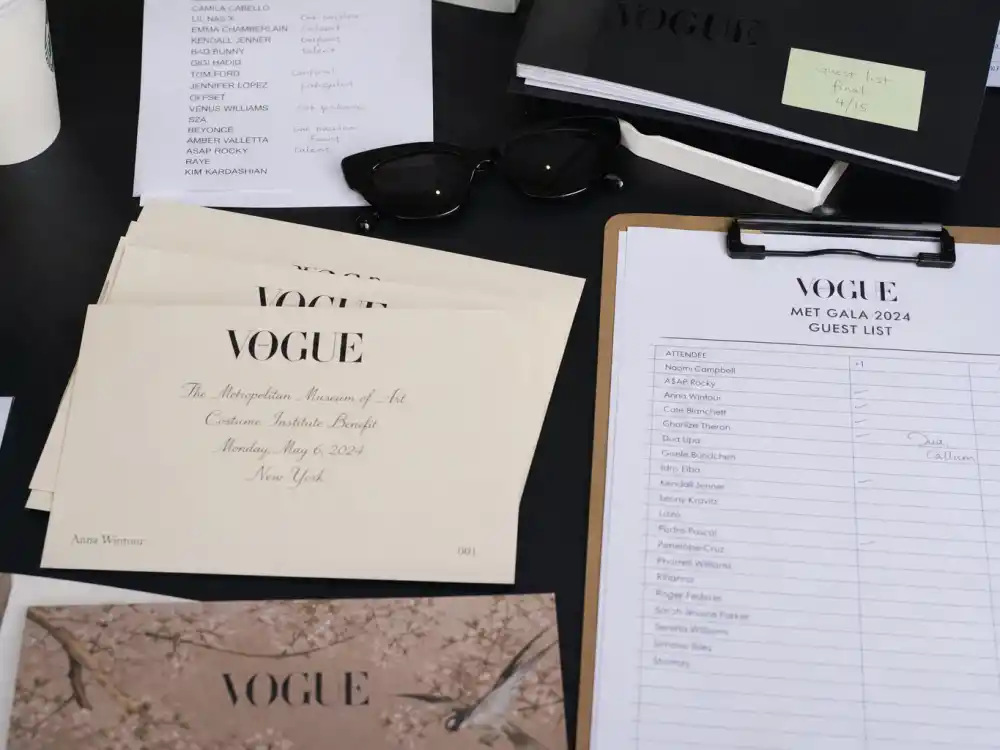
No conversation about who decides who attends the Met Gala starts without Anna Wintour. She has chaired or co-chaired the benefit since 1995, transforming it from a society fundraiser into a global media event. Wintour’s influence extends beyond approving names — she selects co-chairs, sets the dress code narrative, and decides which designers get prime carpet positioning in Vogue’s livestream coverage.
Industry reporting consistently describes Wintour as the final gatekeeper. Designers who fall out of favor may lose table allocations; celebrities who ignore dress-code themes or cause after-party chaos risk multi-year exclusion — topics we cover in celebrities banned from the Met Gala and Met Gala rules celebrities must follow. Wintour’s Vogue team maintains a running spreadsheet of approved guests, waitlisted names, and sponsor obligations that gets revised until days before the event.
Important nuance: Wintour delegates day-to-day list management to Vogue event staff and senior editors. She does not personally phone every celebrity — but she reportedly reviews contentious additions and removals. When Beyoncé returned as a 2026 co-chair after a decade away, that decision reflected Wintour’s strategic guest-list curation as much as any single invitation envelope. Read Anna Wintour Met Gala role explained for a deeper profile of her 30-year chairmanship.
The Metropolitan Museum and Costume Institute
The Met Museum is not a passive venue. When asking who decides who attends the Met Gala, the museum’s Costume Institute and development office share real authority — especially over donor seats and charitable compliance.
The Costume Institute is the only curatorial department at the Met that must self-fund through benefits and gifts. Gala revenue supports spring exhibitions — 2026’s Costume Art show, documented on the Met Museum website, opened May 10 in the new Condé M. Nast Galleries. Curator Andrew Bolton shapes exhibition themes that co-chairs and guests are expected to interpret on the carpet — though we cover themes historically in Met Gala themes by year complete list, not outfit-by-outfit here.
The Met development team manages table sales to philanthropists and corporate partners. Donors who purchase tables receive seat allocations; they propose guests, but Vogue still approves names before invitations send. Museum trustees and major benefactors often hold permanent or recurring seats — a philanthropic lane separate from designer plus-ones. For where ticket money flows, see what charity does the Met Gala support.
Brand Tables and Corporate Sponsors
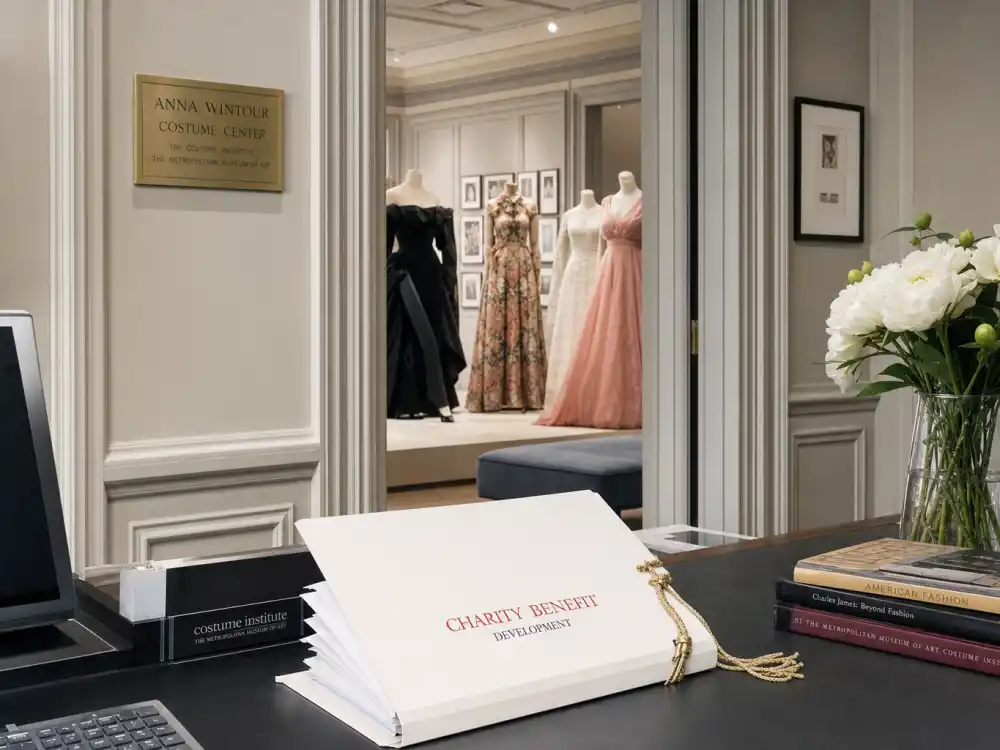
Luxury brands are the engine behind most celebrity Met Gala appearances — and a major answer to who decides who attends the Met Gala at the celebrity level. Fashion houses (Chanel, Louis Vuitton, Balenciaga, Gucci, and dozens more) and corporate sponsors (beauty, tech, automotive) purchase tables and treat red-carpet visibility as marketing spend worth multiples of the table price.
The brand-table workflow:
- Purchase — a brand buys one or more tables through the Met development office, often $250,000 to $350,000+ per table
- Allocate seats — the brand’s PR and marketing teams build a proposed guest list: creative directors, ambassadors, contracted celebrities, and strategic plus-ones
- Submit to Vogue — proposed names go to Wintour’s team for approval, rejection, or swap suggestions
- Dress the guest — approved celebrities wear the brand’s design on the carpet, fulfilling the implicit marketing contract
This is why most actors on the Met Gala red carpet never pay the published $100,000 individual ticket price — their seat was comped by a brand that already bought the table. Who decides who attends the Met Gala for those celebrities? The brand’s CMO and Vogue’s editors, in tandem. When a label wants to debut a new ambassador, the Met Gala guest list is the launch pad — subject to Wintour’s approval.
Designer Invites and Plus-One Politics
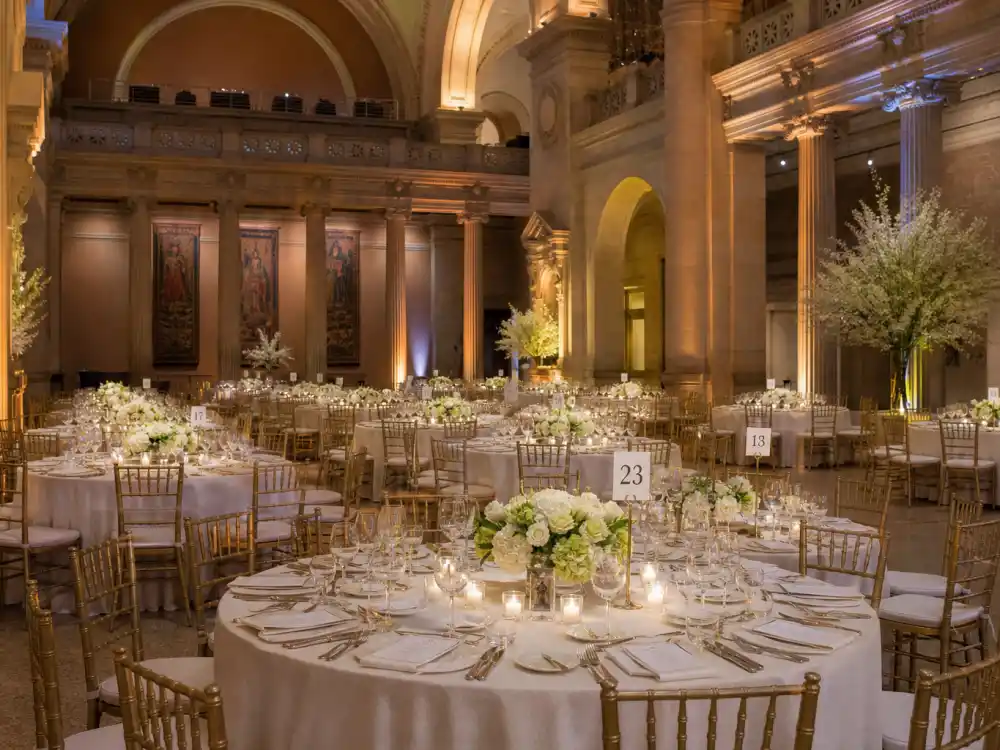
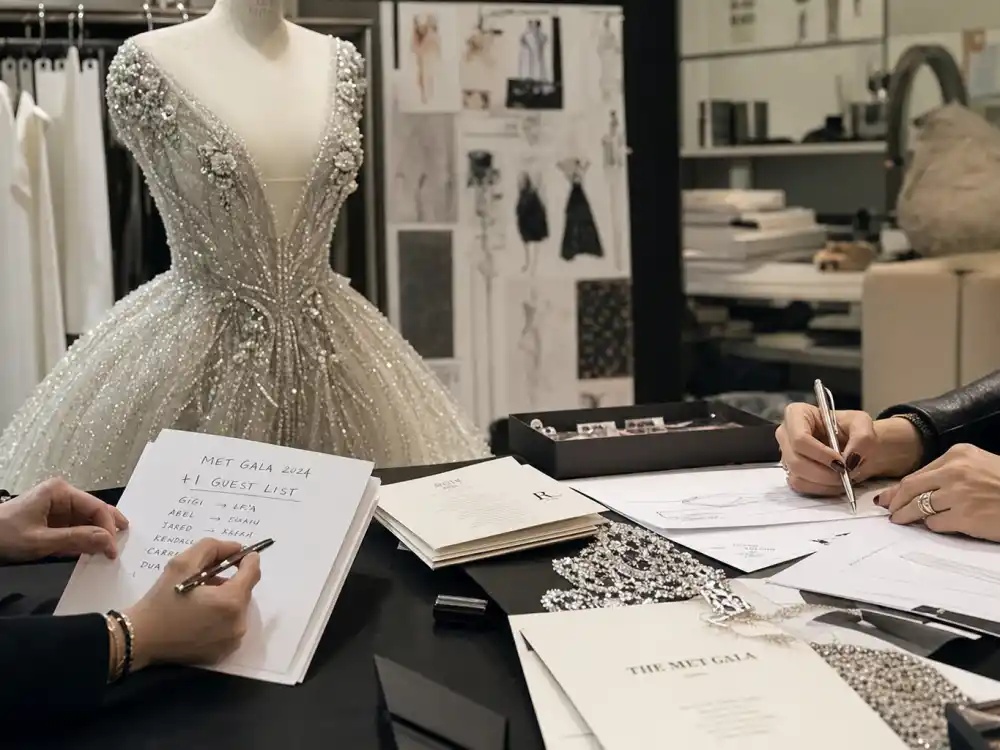
Fashion designers occupy a unique lane in who decides who attends the Met Gala. Houses with strong Met relationships — historically including Versace, Marc Jacobs, Tom Ford-era Gucci, and Schiaparelli under Daniel Roseberry — receive table allocations or co-chair slots tied to exhibition themes. Designers nominate muses, models, and celebrity clients to fill their chairs.
Plus-one politics are fierce. A designer may want six seats but receive approval for four. Vogue may swap a proposed guest for someone with stronger carpet draw or better theme alignment. Social-media reach increasingly factors in — a celebrity with 200 million followers offers more earned media than a critically acclaimed actor with a smaller platform, whether fans like it or not.
Designers also attend personally — often walking the carpet in their own creations. The creative director’s presence signals house commitment to the theme and to Wintour’s editorial vision. For what happens after the carpet, read what happens inside the Met Gala dinner and inside the Met Gala after parties — separate guest lists with their own gatekeepers.
The Met Gala Host Committee
Each year, Wintour announces a host committee — a group of celebrities, designers, and cultural figures who lend star power to the benefit and help shape the guest mix. Co-chairs sit at the top of that hierarchy; committee members promote the event and often receive guaranteed invitations.
The 2026 host committee, per Vogue and the Met Gala 2026 guest list, centered on co-chairs Beyoncé, Nicole Kidman, Venus Williams, and Wintour herself — supporting the Costume Art exhibition with dress code “Fashion Is Art.” Co-chairs typically invite their own guests within table allocations, expanding the network of who decides who attends the Met Gala for that cycle.
Committee membership signals Wintour’s editorial priorities for the year: which industries matter (music, sports, film), which demographics the livestream should highlight, and which sponsor relationships need reinforcement. Committee members rarely decline — an invitation is both honor and obligation to promote the Met’s charitable mission.

The Invitation Pipeline: From Nomination to Red Carpet
Mapping who decides who attends the Met Gala requires following the full pipeline — a process that begins months before the first Monday in May and locks roughly two weeks out.
- Fall/winter — theme announcement: The Met and Vogue reveal the exhibition title and dress code. Brands begin planning table purchases and guest strategies.
- Winter — table sales: The Met development office sells sponsor tables to brands, corporations, and wealthy donors. Seat counts are allocated per table (typically eight to twelve).
- Early spring — nominations: Table holders submit proposed guest names to Vogue. Personal Wintour connections bypass some nomination steps for select cultural figures.
- Mid-spring — Vogue review: Wintour’s team evaluates nominations against star power, theme fit, sponsor balance, and behavioral history. Swaps and rejections happen quietly.
- Late spring — invitations mail: Physical or digital invitations send to approved guests. RSVPs confirm the final headcount (typically 400–500 inside the museum).
- Gala night — check-in: Security and Vogue staff verify guests against the locked list at the museum entrance. Unapproved names do not walk the carpet — regardless of fame.
There is no public waitlist, lottery, or online application. Secondary-market ticket scams target fans who misunderstand who decides who attends the Met Gala — the Met and Vogue do not sell invitations to the general public.
Who Gets Left Off the Met Gala Guest List?
Understanding who decides who attends the Met Gala also means understanding exclusion. Names disappear from the carpet for several documented reasons:
- No brand relationship — celebrities without an active fashion-house partnership or donor connection rarely receive invitations
- Wintour disapproval — past dress-code violations, after-party incidents, or public criticism of the event can trigger multi-year bans
- Theme mismatch — guests who ignore the dress code or treat the carpet as a publicity stunt risk losing future invites
- Sponsor competition — two celebrities vying for the same brand’s single remaining seat creates a Vogue-mediated winner
- Scheduling conflicts — some A-listers decline or skip; see coverage of celebrities skipping 2026 in our news archives
The guest list is not a meritocracy of talent alone — it is a curated mix of philanthropy, marketing, and editorial judgment. That frustrates fans who believe their favorite star “deserves” an invitation, but it explains the Met Gala’s enduring exclusivity. For ranked carpet verdicts (not invitation mechanics), see Met Gala 2026 best and worst dressed.
2026 Spotlight: Costume Art and a Locked Guest List
The 2026 Met Gala — supporting Andrew Bolton’s Costume Art exhibition — illustrated who decides who attends the Met Gala at scale. Co-chairs Beyoncé, Nicole Kidman, Venus Williams, and Wintour anchored a guest mix blending music, film, sports, and fashion. Amazon founder Jeff Bezos and Lauren Sánchez’s reported sponsorship added corporate mega-donor influence to the table-buyer layer.
Our Met Gala 2026 guest list documents who walked the May 4 carpet; this guide explains the machinery behind their invitations. The $100,000 published individual ticket price — detailed in how much does a Met Gala ticket cost — applies to paying donors, not most carpet celebrities.
For exhibition history, cross-reference Met Gala themes by year complete list. To watch from home without an invitation, see how to watch the Met Gala red carpet live. For the gala’s calendar placement, read why is the Met Gala always the first Monday in May.
Related Met Gala Guides
Build context around who decides who attends the Met Gala with our Met Gala cluster:
- Met Gala 2026 guest list — who attended the May 4, 2026 gala
- Met Gala themes by year complete list — exhibition titles from 1973 through 2026
- How much does a Met Gala ticket cost — $100,000 seats and table pricing
- Anna Wintour Met Gala role explained — chair since 1995
- What charity does the Met Gala support — Costume Institute funding
- Met Gala rules celebrities must follow
- What happens inside the Met Gala dinner
- Inside the Met Gala after parties
- Why is the Met Gala always the first Monday in May
- Met Gala most controversial moments ever
- Celebrities banned from the Met Gala
- Met Gala 2026 best and worst dressed
- Met Gala celebrity fashion 2026 — Pillar F outfit analysis
- Visit our Awards and Red Carpet archives.