

In this article7 sections
Bad Bunny at the Met Gala has never looked like this. On May 4, 2026, the Puerto Rican superstar arrived at the Metropolitan Museum of Art’s annual fashion extravaganza transformed into an 85-year-old version of himself — complete with deep-set wrinkles, sagging jowls, grey hair, liver spots, and a polished walking cane. It was, without question, the most talked-about entrance of the night, and it wasn’t even close.
The bad bunny met gala moment wasn’t just spectacle for spectacle’s sake. It was a meticulously planned artistic statement that took six weeks of preparation, a three-hour application process, and the genius hands of legendary prosthetics artist Mike Marino to pull off. Here’s everything we know about the transformation that stopped the red carpet cold.
Bad Bunny Met Gala 2026: Prosthetics Transformation Explained
This year’s Met Gala theme aligned with the Costume Institute’s new exhibition exploring “the aging body” — a subject traditionally overlooked by the youth-obsessed fashion industry. While most attendees interpreted the theme through fabric, silhouette, or color, Bad Bunny took the brief literally and turned himself into a living embodiment of the concept.
The goal, according to Marino, was to make Bad Bunny look “distinguished, not weary or decrepit.” This wasn’t about making aging look like a punchline or something to fear. It was about honoring it — presenting an older version of the artist that radiated dignity, experience, and quiet power.
To achieve that authenticity, Marino studied photographs and video of octogenarian Puerto Ricans, paying close attention to how Caribbean sun exposure, bone structure, and genetics shape the aging process. He also consulted directly with Bad Bunny about how aging might naturally affect his own features — the way his cheekbones might hollow, how his brow might drop, where his skin would crease deepest.
Inside the 3-Hour Transformation Process
The transformation began roughly three hours before Bad Bunny stepped onto the Met Gala carpet. Every minute was accounted for.
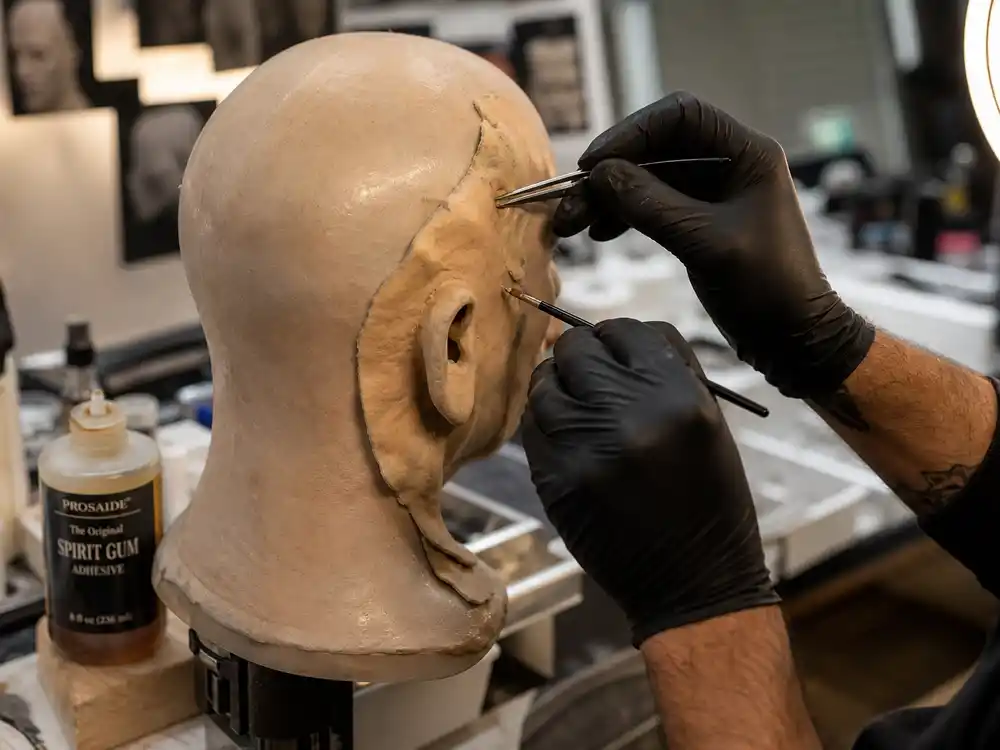
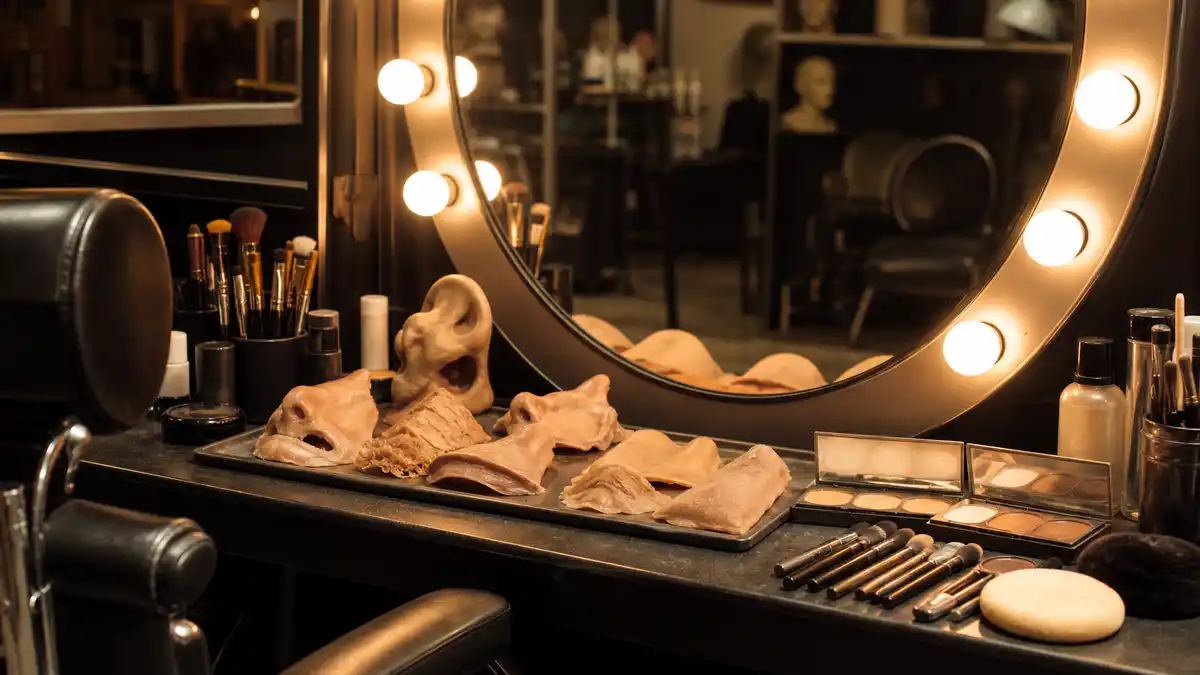
Marino and his team applied multiple prosthetic pieces covering the face, neck, cheeks, eye bags, forehead, eyelids, earlobes, and hands. Each piece had been custom-sculpted to fit Bad Bunny’s exact facial topology, which was captured through detailed 3D scanning during the six-week preparation period.
The process started with skin preparation and adhesive application, followed by the layering of silicone prosthetic pieces one by one. Each piece had to blend seamlessly into the next — and into Bad Bunny’s real skin at the edges — to create a continuous, believable surface. After the prosthetics were set, the team spent over an hour on paint work: adding capillaries, sunspots, discoloration, and the subtle translucency of aged skin.
Removal, by contrast, took just 30 minutes — a testament to Marino’s use of medical-grade adhesives designed for easy, skin-safe release.
Mike Marino’s Artistry: Six Weeks in the Making
Mike Marino is no stranger to extreme transformations. The prosthetics maestro has worked on films like The Irishman and transformed Colin Farrell into the Penguin for HBO’s DC universe. But the Bad Bunny Met Gala project presented a unique challenge: creating age-progression prosthetics for a globally recognizable face that would be photographed under harsh red-carpet lighting from every conceivable angle.
The six-week timeline broke down into four phases: scanning, designing, sculpting, and sewing multiple prosthetic pieces. Marino hand-sculpted every wrinkle, sag, and sun spot with painstaking precision. No digital shortcuts — just clay, reference photos, and decades of experience.
“You can’t just slap generic ‘old age’ prosthetics on someone,” Marino has said of his approach. Each piece was designed to tell a story — this particular crease came from decades of smiling, that sag from years of gravity pulling on specific muscle groups. The result was an older Bad Bunny who looked like he had actually lived, not like he was wearing a Halloween mask.
The Outfit: Custom All-Black Tuxedo With Zara
The prosthetics were only half the picture. Bad Bunny’s outfit was a custom all-black tuxedo designed in collaboration with Zara — a partnership that itself made a statement about accessibility and democratized fashion at an event synonymous with exclusivity.
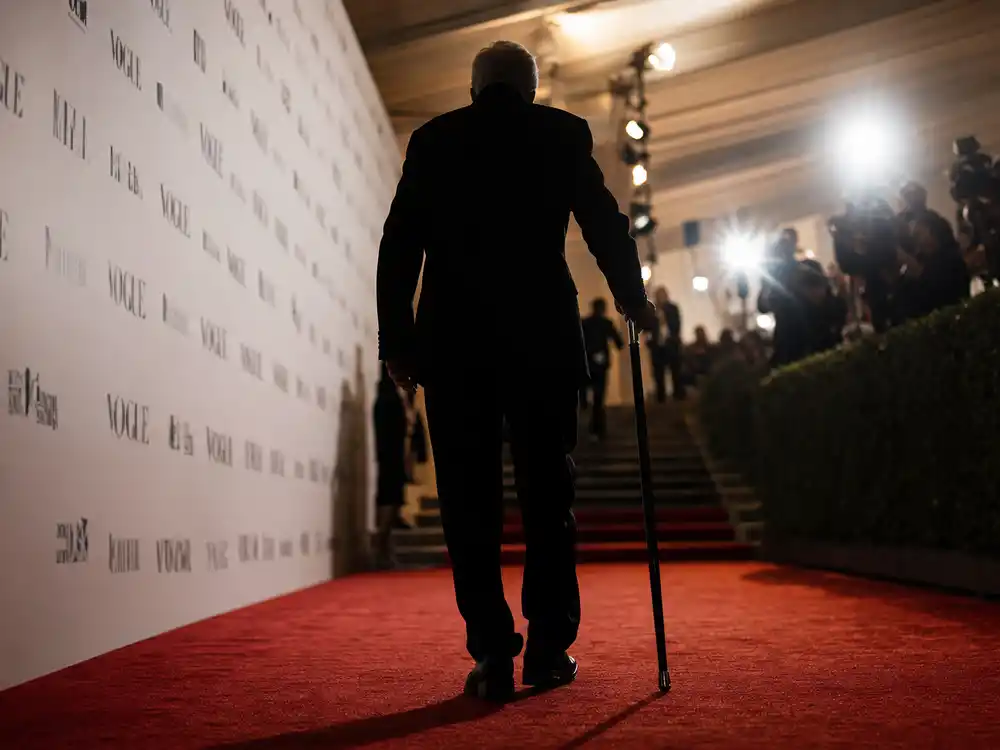
The tuxedo featured an oversized pussy bow that referenced Charles James’s iconic 1947 “Bustle” gown, bridging menswear and the historical femininity of the Costume Institute’s archives. The proportions were deliberately dramatic, with wide shoulders and a nipped waist that gave the silhouette a sculptural quality.
Accessories completed the narrative: a walking cane — which Bad Bunny used with committed character work, shuffling slowly up the stairs — and a 1995 Cartier watch, a subtle nod to time, legacy, and the theme of aging itself.
Bad Bunny’s Incredible 2026 Run
The Met Gala transformation caps an extraordinary stretch for Bad Bunny in 2026. Earlier this year, he won Album of the Year at the Grammy Awards, cementing his crossover from Latin music powerhouse to global mainstream dominance. He also headlined the Super Bowl LX halftime show, delivering a performance that drew over 130 million viewers.
By March 2026, Bad Bunny had become the second most searched person globally, a reflection of his cultural footprint that extends far beyond music into fashion, activism, and now performance art.
The Met Gala look felt like a culmination of all of that momentum — an artist at the peak of his powers choosing not to coast on conventional glamour but to challenge, provoke, and make people think.
Cultural Impact and Reactions to the Look
Reactions to Bad Bunny’s Met Gala transformation were immediate and overwhelming. Social media exploded within seconds of his arrival, with the look dominating Twitter’s trending topics, TikTok’s For You page, and Instagram’s Explore tab simultaneously.
Fashion critics praised the commitment to concept. Vogue called it “the most conceptually rigorous Met Gala look in years.” Fellow attendees were visibly stunned — several celebrities were photographed doing double-takes as the aged Bad Bunny shuffled past them on the carpet.
But beyond the spectacle, the look sparked a broader conversation about ageism in fashion and pop culture. In an industry that relentlessly fetishizes youth, Bad Bunny — a 32-year-old at the height of his fame — chose to confront what every human body eventually becomes. It was vulnerable, brave, and deeply resonant.
The collaboration between Bad Bunny and Mike Marino may well be remembered as one of the defining Met Gala moments of the decade — a night when prosthetics, fashion, and cultural commentary fused into something genuinely unforgettable.
Read also: the new Rolling Stones Foreign Tongues album — release date, tracklist and guests.
How long did Bad Bunny’s Met Gala prosthetics take to apply?
The prosthetic transformation took approximately 3 hours to apply and only 30 minutes to remove. The process involved layering multiple custom-sculpted silicone pieces over Bad Bunny’s face, neck, hands, and ears.
Who created Bad Bunny’s Met Gala 2026 prosthetics?
Legendary prosthetics artist Mike Marino created the look. Marino is known for his work on The Irishman and for transforming Colin Farrell into the Penguin. He spent six weeks scanning, designing, sculpting, and sewing the custom prosthetic pieces.
What was the theme of the 2026 Met Gala?
The 2026 Met Gala theme aligned with the Costume Institute’s exhibition exploring “the aging body,” a subject traditionally overlooked by the youth-oriented fashion industry. Bad Bunny interpreted the theme by aging himself 50 years with prosthetics.
What was Bad Bunny wearing at the 2026 Met Gala?
Bad Bunny wore a custom all-black tuxedo designed in collaboration with Zara, featuring an oversized pussy bow referencing Charles James’s 1947 “Bustle” gown. He accessorized with a walking cane and a 1995 Cartier watch.
What body parts did the prosthetics cover?
The prosthetics covered Bad Bunny’s face, neck, cheeks, eye bags, forehead, eyelids, earlobes, and hands. Mike Marino hand-sculpted every wrinkle, sag, and sun spot, studying elderly Puerto Ricans to ensure the look was realistic and culturally authentic.