

In this article14 sections
- Jennifer Lopez Green Versace Dress History: The Grammy Night
- Donatella Versace and the Couture Construction
- The Tropical Print: Why Green Became Iconic
- Who Wore the Dress Before Jennifer Lopez?
- Red Carpet Shock and the Body-Confidence Era
- Google Images and the Search-Engine Origin Story
- Media Frenzy: Magazines, Memes, and the Pre-Instagram Cycle
- 2019 Milan Reunion: Versace Spring 2020 Finale
- Museum Legacy and Fashion Exhibition Culture
- Styling Lessons Designers Still Cite
- Cultural Impact Beyond Fashion
- Common Myths and Corrections
- Why the Dress Still Matters in 2026
- Explore More
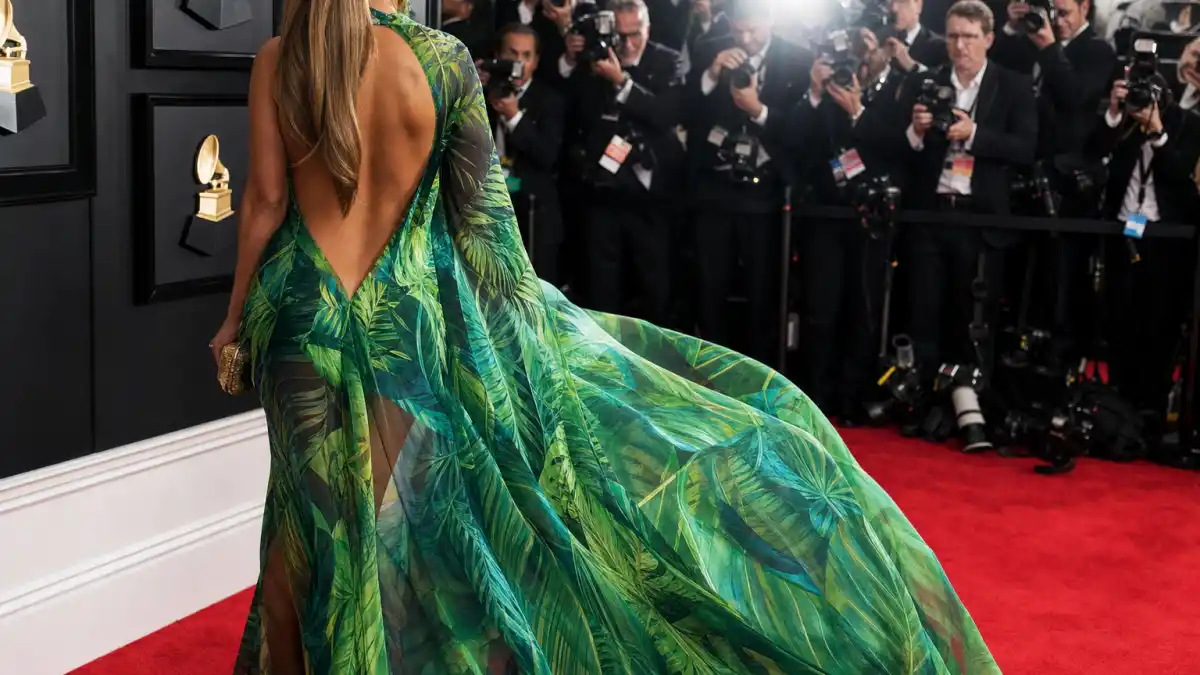
Jennifer Lopez green Versace dress history begins on February 23, 2000, when the singer and actress walked the 42nd Grammy Awards red carpet in a custom emerald tropical-print silk chiffon gown that rewrote the rules of celebrity dressing overnight. Designed under Donatella Versace’s creative direction, the dress featured a neckline plunging past the sternum, an open back, sheer layered skirt, and a train that photographers could not ignore — and neither could the world. Within hours the image dominated magazine covers, morning shows, and early internet forums. Within months it became the most searched red-carpet photograph of the pre-social era. Within years it entered Silicon Valley lore as the spark behind Google Images. No single garment in modern fashion history carries that triple legacy: couture shock, pop-culture immortality, and tech-industry origin story.
This guide traces the full Jennifer Lopez green Versace dress history from atelier sketch to museum case — who designed it, who wore it first, why the Grammy night mattered, how the dress helped launch image search, and why Versace and Lopez reunited on a Milan runway in 2019. Whether you study red-carpet archives for journalism, fashion history, or pure nostalgia, you will leave with a complete timeline of the jungle-print moment that still defines daring glamour twenty-six years later.
Jennifer Lopez Green Versace Dress History: The Grammy Night
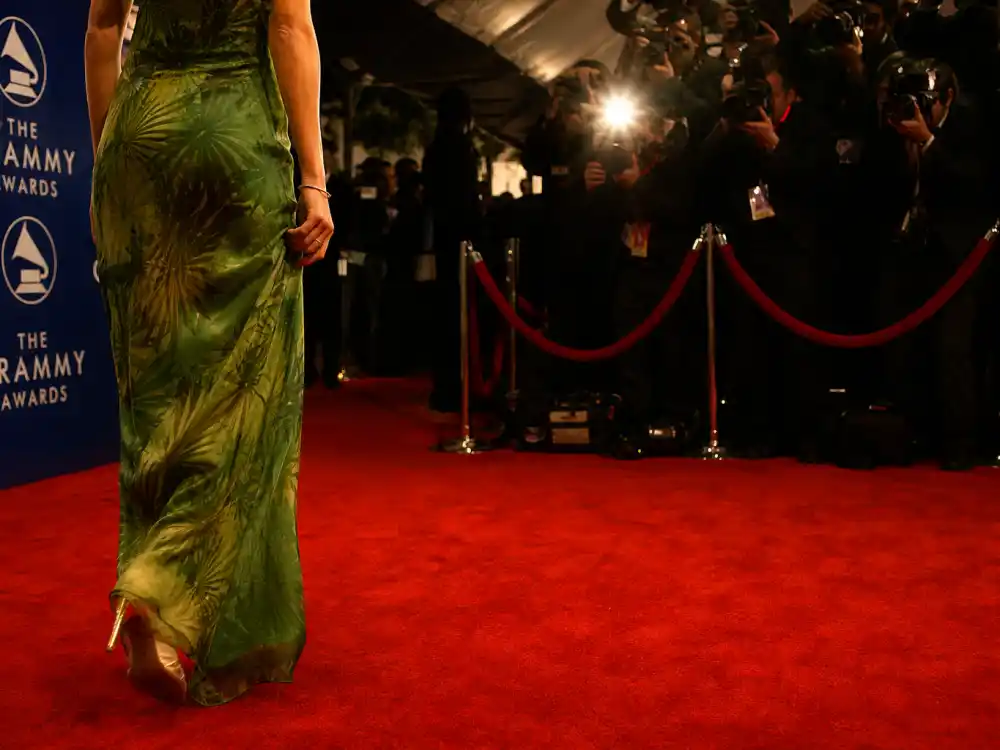
The 42nd Grammy Awards took place at Staples Center in Los Angeles on February 23, 2000 — and Jennifer Lopez arrived in Versace couture that made every other gown on the carpet look cautious. She attended alongside Sean “Diddy” Combs, then her boyfriend, in a dress that combined Old Hollywood draping with a neckline that dropped to the navel. Paparazzi flashes caught the sheer silk chiffon, the palm-and-exotic-flower print in emerald, teal, and gold, and the way the fabric moved when she turned. Fashion editors called it fearless; broadcasters debated it on morning television for weeks. The moment was not a calculated viral stunt — social media did not exist — yet the photograph traveled faster than any red-carpet image before it.
Context matters in any serious reading of Jennifer Lopez green Versace dress history. Lopez was riding a commercial peak: her debut album On the 6 had dropped months earlier, “If You Had My Love” was a global hit, and she was weeks away from headlining the romantic comedy era that would make her a box-office star. The Grammys were her first major awards-show appearance as a crossover music icon. Choosing Versace — then synonymous with supermodel glamour and Italian excess — signaled that she intended to compete on the world’s biggest fashion stage. The dress delivered that message before she reached the step-and-repeat microphones.
Donatella Versace and the Couture Construction
Donatella Versace oversaw the house during one of its most visible decades, and the jungle-print gown belongs to her era of body-conscious, print-heavy glamour. The dress was cut from silk chiffon — lightweight, semi-sheer, and unforgiving on camera — which is why the construction relied on strategic layering and internal structure rather than modesty panels. The tropical motif featured oversized palm fronds and exotic blooms in a palette anchored by emerald green. The neckline extended into a deep V front and an equally dramatic open back. A long train added movement for photographers shooting from low angles on the carpet.
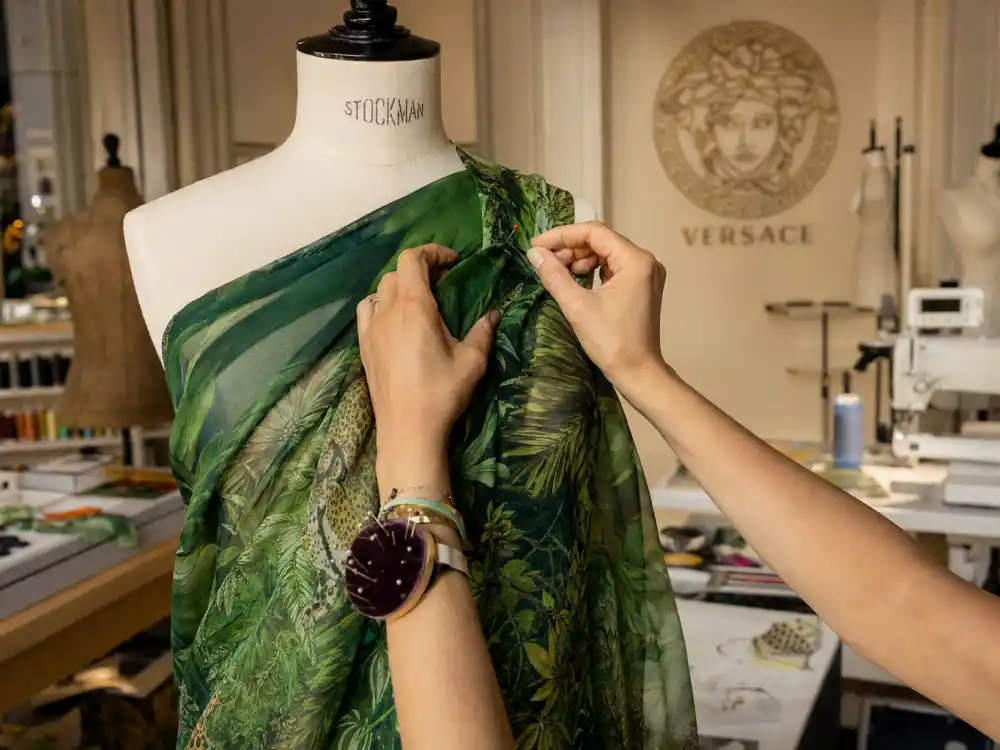
Fashion historians note that Versace had been experimenting with jungle prints since Gianni Versace’s 1990s collections. Donatella pushed the motif toward celebrity dressing rather than runway abstraction. The Grammy gown was not a one-off sketch — it belonged to a house vocabulary of bold print, bare skin, and confident silhouette. That continuity helps explain why the dress still reads unmistakably Versace in museum exhibitions today, even when separated from Lopez’s name on the mannequin card.
The Tropical Print: Why Green Became Iconic
Color and print are half the story in Jennifer Lopez green Versace dress history. Emerald and jungle green read luxurious on silk chiffon under tungsten flash — richer than flat black, more editorial than pastel. The palm-leaf motif referenced Gianni-era Versace escapism: Mediterranean heat, island glamour, and a hint of danger. On Lopez the print felt alive because the fabric moved; every step shifted the pattern alignment and gave photographers a new frame. That kinetic quality is why still images alone could not satisfy public demand — fans wanted every angle, every crop, every comparison shot.
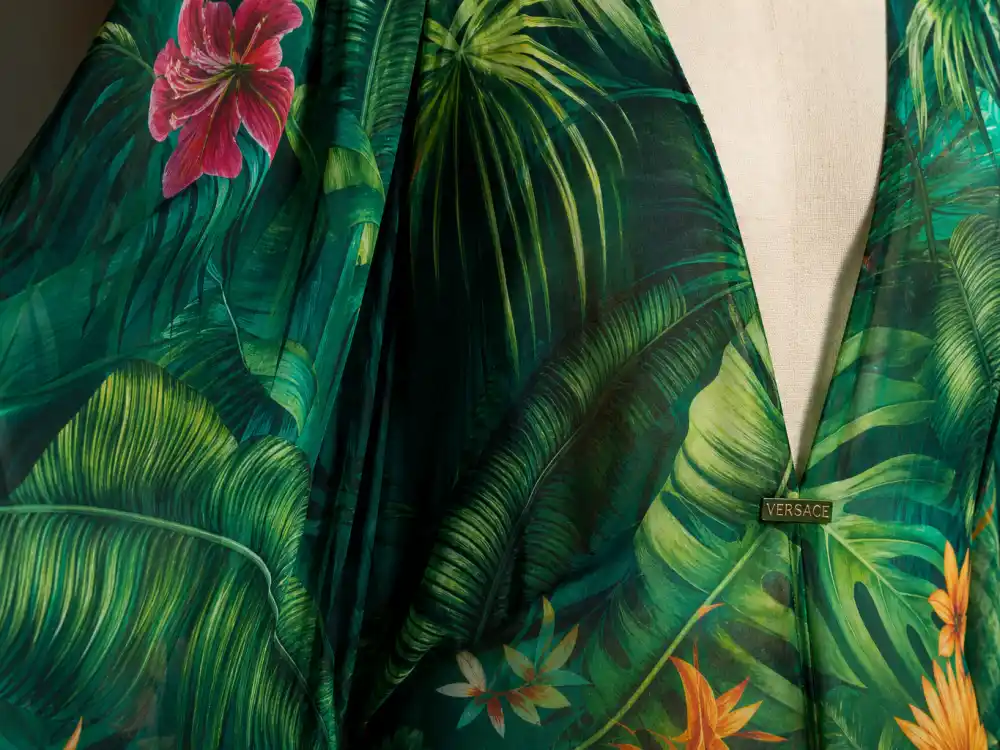
The print also distinguished the dress from other famous Versace moments — the safety-pin gown, the bondage dresses, the metal mesh era. Jungle green chiffon was softer in material but louder in silhouette. Fashion students still study the contrast: fluid fabric versus architectural exposure. Retailers spent years translating the look into ready-to-wear palm prints and deep-V necklines, which is how a single couture loan became a decade of high-street imitation.
Who Wore the Dress Before Jennifer Lopez?
A lesser-known chapter of Jennifer Lopez green Versace dress history involves earlier wearers. Ginger Spice — Geri Halliwell — wore the same dress (or a near-identical house sample) during VH1 Divas Live in 1998. Donatella Versace herself also wore a version to the Met Gala in 1999. Neither appearance produced the cultural detonation of Lopez’s Grammy night. The difference was not the garment alone — it was timing, celebrity wattage, and the sheer volume of simultaneous media channels hungry for a visual story.
That pre-history matters for fashion journalism accuracy. The dress was not fabricated overnight for Lopez; it was a Versace house piece looking for the right moment. Lopez supplied the moment. Fashion archives now list multiple wearers to credit the design studio rather than mythologizing a single fitting session. Still, only one wearer is quoted in Google engineering keynotes — and that is the Lopez Grammy frame.
Red Carpet Shock and the Body-Confidence Era
Before 2000, awards-show necklines trended conservative by today’s standards. Lopez’s Versace appearance accelerated a shift toward body confidence on red carpets — deep necklines, cutouts, sheer panels, and gym-toned silhouettes became standard rather than scandalous. Critics who called the dress too revealing in 2000 sound antiquated in retrospect; the industry normalized daring glamour within a few seasons. Beyoncé, Rihanna, Kim Kardashian, and countless others owe part of that permission structure to the photograph that made networks blur the neckline on broadcast replays.
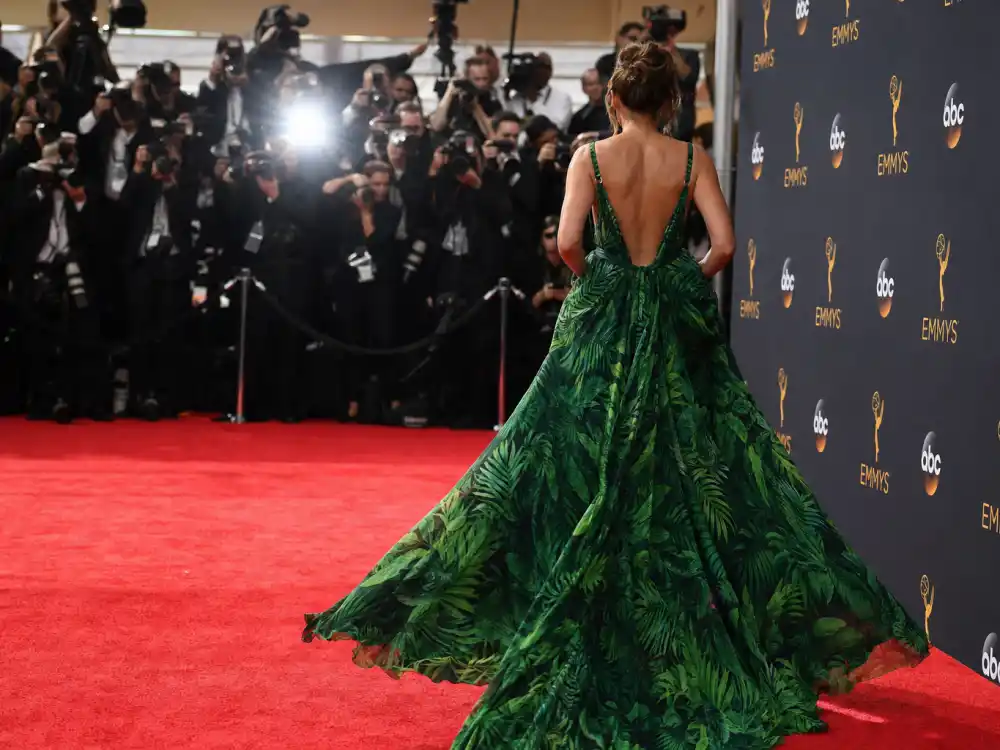
Stylists interviewed in the years since describe the dress as a reference point in pre-event conversations: “Not the full J.Lo, but J.Lo energy.” The phrase captures influence without imitation. The original cannot be repeated — context and shock value are not transferable — but its design language persists every awards season when a star arrives in tropical print and a neckline that stops thumb-scrolling.
Google Images and the Search-Engine Origin Story
The tech chapter of Jennifer Lopez green Versace dress history is now as famous as the fashion chapter. Google executives including Eric Schmidt and co-founder Larry Page have said publicly that overwhelming search demand for photos of Lopez in the green Versace dress — users wanted pictures, not just text links — helped motivate the creation of Google Images, which launched in July 2001. Whether the dress was the sole catalyst or the most memorable anecdote in a broader product roadmap, it became Silicon Valley’s favorite fashion footnote.
The story matters because it quantifies cultural impact in a way couture houses rarely receive. Vogue covers measure prestige; Google search volume measures global curiosity at scale. Fashion historians and tech journalists now cite the same photograph in different textbooks. For Lopez, the anecdote reinforced her status as a visual icon whose image moves markets — music, film, fragrance, and, indirectly, product development at the world’s largest search company.
Media Frenzy: Magazines, Memes, and the Pre-Instagram Cycle
In 2000, distribution meant faxed photo wires, print magazine deadlines, and early entertainment websites refreshing galleries on slow connections. Lopez’s Versace images hit every channel simultaneously. People, Us Weekly, and international tabloids ran the dress for months. Late-night monologues referenced it. Fashion critics wrote essays on decency, empowerment, and branding. The dress generated parody sketches and red-carpet recreations at Halloween parties — the offline equivalent of memes.
Without Instagram Stories or TikTok stitches, the image still achieved total penetration because television and print amplified the same frame. That repetition burned the jungle print into collective memory. Millennials who were children in 2000 recall the dress before they recall the Grammy winners that night — a testament to fashion’s ability to outrank the ceremony it decorates.
2019 Milan Reunion: Versace Spring 2020 Finale
Nearly two decades later, Donatella Versace closed her spring 2020 show by sending Jennifer Lopez down the Milan runway in an updated jungle-print gown — same spirit, contemporary cut, thunderous ovation. The moment was deliberate fashion history theater. Lopez had continued wearing Versace on carpets and in campaigns; the house had remained central to her brand identity. The runway return stitched the 2000 narrative to the present and introduced the dress to Gen Z audiences who knew it from documentaries and social posts rather than live television.
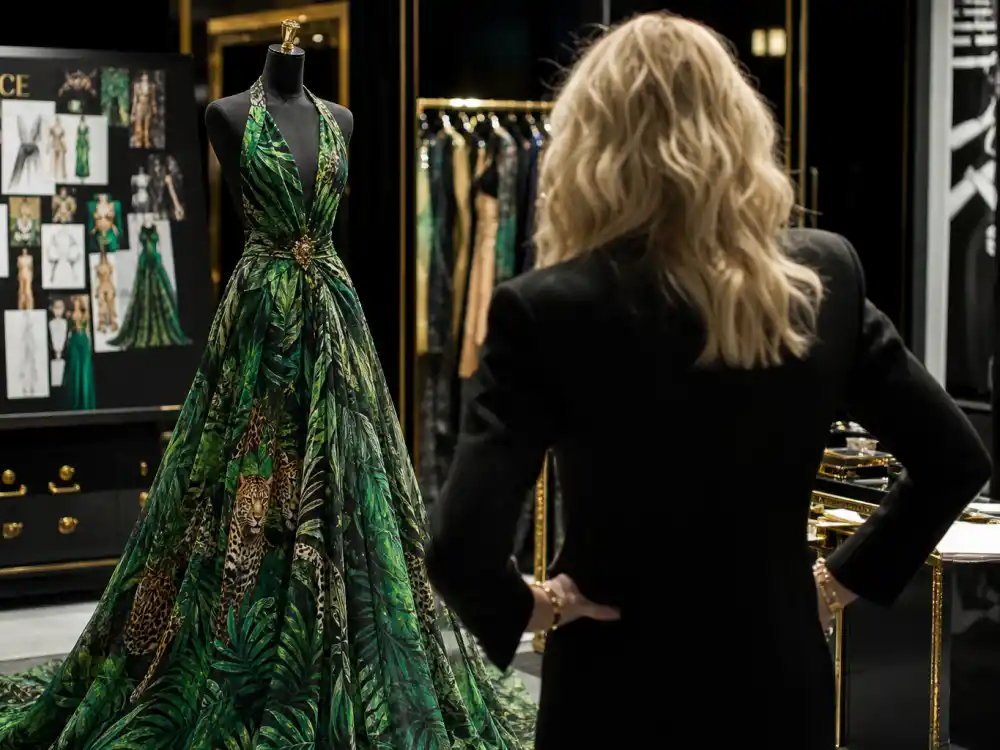
Fashion coverage from Vogue, WWD, and Harper’s Bazaar treated the reunion as a masterclass in heritage marketing done right: emotional, not nostalgic; celebratory, not repetitive. The updated dress used the same palm motif with sharper tailoring and runway lighting instead of Staples Center flash. For students of Jennifer Lopez green Versace dress history, the 2019 bow is the epilogue that confirms the original chapter never closed.
Museum Legacy and Fashion Exhibition Culture
The gown — or representative house versions — has appeared in fashion exhibitions exploring red-carpet politics, Versace archives, and celebrity-as-curator narratives. Museum mannequins display the dress with contextual plaques about search engines, broadcast standards, and Latin representation in Hollywood glamour. That institutional treatment elevates the piece from gossip artifact to design-history object, alongside McQueen armadillo boots and Cher’s Bob Mackie Oscars looks.
Exhibition visitors who never watched the 2000 Grammys live still gasp at the neckline mannequins reproduce. Docents explain the Google anecdote; fashion students sketch the print repeat. The dress functions as a teaching tool for draping, public-image management, and the economics of a single viral photograph in the analog-to-digital transition.
Styling Lessons Designers Still Cite
Working stylists break down Jennifer Lopez green Versace dress history into actionable lessons: choose one hero element (here, neckline plus print), let fabric move for photographers, match garment confidence to career moment, and trust house heritage when the label story aligns with personal brand. Lopez was not borrowing random couture — she was aligning with Versace’s supermodel-era mythology at the exact moment her music career demanded global visual authority.
Hair and makeup completed the equation: Lopez wore her hair up, diamond earrings, minimal jewelry competition, and a glow-forward complexion that kept attention on the dress lines. The styling discipline is why imitations often fail — copying the print without the posture and grooming reads costume. The original worked because every supporting choice stayed quiet.
Cultural Impact Beyond Fashion
The dress intersects with Latin representation in mainstream entertainment, the rise of celebrity image licensing, and debates over who controls a woman’s body on public stages. Lopez has described the moment in interviews as surprising in intensity — she chose a dress she loved, not a manifesto — yet the manifesto attached anyway. Scholars of pop culture cite the photograph when discussing how fashion accelerates celebrity narrative independent of artistic awards won that night.
For Versace, the dress renewed relevance in the American market during a competitive luxury cycle. For Lopez, it crystallized the fusion of Bronx-born relatability and global glamour that still defines her empire. For the internet, it proved image demand could drive product invention. That triple outcome is why keyword searches for Jennifer Lopez green Versace dress history remain steady decades later — the story satisfies fashion curiosity, tech trivia, and celebrity biography in one emerald package.
Common Myths and Corrections
Myth one: Google Images launched the same week as the Grammys. Reality: Google Images debuted in July 2001, with executives citing sustained image-search demand that included — but was not limited to — the Versace photos. Myth two: Lopez was the first woman ever to wear the dress. Reality: Geri Halliwell and Donatella Versace wore earlier versions. Myth three: the dress was a reckless last-minute choice. Reality: house archives and stylist interviews describe a deliberate Versace partnership aligned with Lopez’s rising profile.
Accurate Jennifer Lopez green Versace dress history requires holding all three truths: the dress existed before Lopez, Lopez made it legendary, and technology amplified the legend beyond any red carpet before or since. Fashion journalism that skips any leg of that triangle oversimplifies one of the most documented garments of the digital century.
Why the Dress Still Matters in 2026
Twenty-six years after Staples Center, deep-V necklines and tropical prints still dominate Met Galas, award shows, and resort collections. Documentaries, biopics, and fashion retrospectives continue to use the Grammy frame as shorthand for turn-of-the-millennium glamour. New audiences discover the Google origin story through podcasts and explainer videos, keeping search interest alive. The dress is not a period piece — it is a reference point active stylists invoke when dressing clients for high-risk, high-reward carpets.
For USA Celebs readers tracking celebrity fashion as cultural signal, Jennifer Lopez green Versace dress history remains the benchmark case study: one gown, one night, infinite aftershocks across fashion, media, and technology. No replica will replace the original shock, but every daring green chiffon moment on a red carpet participates in the legacy.
Explore More
- Browse our Fashion section for celebrity style history and red-carpet breakdowns.
- Read what Jennifer Lopez wore to the Met Gala for her later Versace and red-carpet evolution.
- See what Kim Kardashian wore to the Met Gala for another body-confident carpet legacy.
- Compare what Rihanna wore to the Met Gala for modern daring-glamour codes.
- Check celebrity street style for how stars dress off the step-and-repeat.
For background, see coverage from Vogue, Harper’s Bazaar, and the Recording Academy on the 42nd Grammy Awards, Versace archive exhibitions, and red-carpet fashion history spanning Hollywood, music, and design.