

In this article12 sections
- What Happened to M Night Shyamalan? The Short Answer
- Philadelphia Roots and the Indie Filmmaker Mindset
- The Sixth Sense Era: When a Director Owned the Culture
- Unbreakable, Signs, and the Eastrail 177 Vision
- The Critical Falloff: Lady in the Water to After Earth
- Blinding Edge and the Self-Financed Comeback
- Servant, Streaming, and Expanding the Toolkit
- Trap, Knock at the Cabin, and the 2020s Theatrical Bet
- Directorial Style: Cameos, Long Takes, and Twist Discipline
- Why "What Happened to M Night Shyamalan?" Still Trends
- Legacy: Twist-Master, Punchline, and Survivor
- Explore More
What happened to M Night Shyamalan is one of Hollywood’s sharpest director arcs — because for a few years at the turn of the millennium he was not just a filmmaker, he was a brand. Shyamalan arrived with twist endings that rewired how audiences watched thrillers, earned Oscar nominations for writing and directing The Sixth Sense, and became shorthand for “don’t spoil the ending.” Then the punchline turned on him: critics mocked the twists, box-office swings grew wild, and a live-action Avatar: The Last Airbender adaptation became a cautionary tale. This is the full filmmaker answer to what happened to M Night Shyamalan — from Philadelphia suburbs through Blinding Edge Pictures, the Eastrail 177 trilogy, Apple TV+’s Servant, and the lean-budget resurgence that kept him behind the camera into 2026.
If your mental image is a director making a cameo in his own trailer and whispering “I see dead people,” you are remembering the peak — and only the first act. Search traffic for what happened to M Night Shyamalan spikes whenever a new trailer drops, whenever a YouTube essay revisits the twist era, or whenever fans debate whether he fell off or simply outran a fad. Understanding what happened to M Night Shyamalan means tracking a director career with distinct chapters: Indian-American kid shooting on Philadelphia streets, the Sixth Sense earthquake, the early-2000s hit streak, the critical free fall, self-financed horror experiments, the Unbreakable/Split/Glass universe payoff, streaming prestige with Servant, and the 2020s model of tight budgets and theatrical event films like Trap.
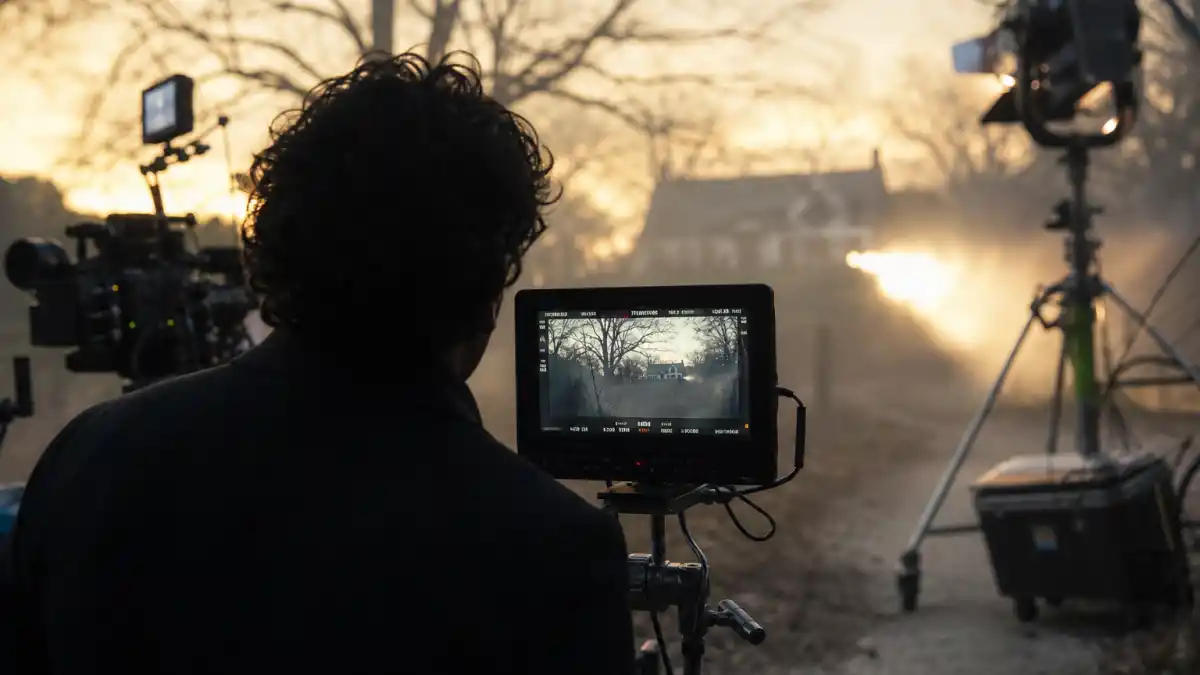
What Happened to M Night Shyamalan? The Short Answer
Here is what happened to M Night Shyamalan through a filmmaker lens, updated through 2026:
- 1970–1990s: Born Manoj Nelliyatu Shyamalan on August 6, 1970, in Mahé, India; raised in affluent Philadelphia suburbs; made Praying with Anger as a teenager and studied film at NYU’s Tisch School.
- 1999: The Sixth Sense became a global phenomenon — $672 million worldwide, six Oscar nominations, and a twist so famous it defined his public identity.
- 2000–2004: Followed with Unbreakable, Signs, and The Village — mixed reviews but major commercial footprints; established Blinding Edge Pictures at a Philadelphia-area studio.
- 2006–2013: Critical and box-office pain: Lady in the Water, The Happening, The Last Airbender, and After Earth became punchlines; studio trust eroded.
- 2015–2019: Self-financed comeback run — The Visit, Split, and Glass proved he could still open movies and complete his long-gestating superhero trilogy.
- 2019–2023: Created and showran Apple TV+ psychological horror series Servant; continued theatrical experiments with Old and Knock at the Cabin.
- 2024–2026: Released concert-thriller Trap (2024); remains an active writer-director producing through Blinding Edge; legacy reassessed as pioneer of event twists and survivor of Hollywood’s harshest director narrative cycles.
Philadelphia Roots and the Indie Filmmaker Mindset
Any honest answer to what happened to M Night Shyamalan starts in Pennsylvania, not Hollywood. Shyamalan’s family moved from India when he was an infant; he grew up in Penn Valley and developed an early obsession with Steven Spielberg — not as fan fiction, but as a blueprint. He made Praying with Anger while still in high school, financed partly with family support, and later returned to Philadelphia repeatedly even after fame.
That regional loyalty matters because Shyamalan’s filmmaking identity is tied to place: suburban dread, cornfields, row-house neighborhoods, and the sense that horror lives next door. When critics later accused him of repeating himself, they were partly reacting to a director who never fully left the geography that shaped him. Fans searching what happened to M Night Shyamalan often forget he was a working indie filmmaker long before Disney marketed his name above the title.
The Sixth Sense Era: When a Director Owned the Culture
What happened to M Night Shyamalan in 1999 looks, in hindsight, like a phenomenon no thriller director has fully replicated. The Sixth Sense — written and directed by Shyamalan, produced with Barry Mendel and Frank Marshall — arrived with minimal spoiler culture infrastructure and exploded into a shared secret. The film grossed roughly $672 million worldwide against a reported $55 million budget and earned Shyamalan Oscar nominations for Best Director and Best Original Screenplay.
Hollywood’s response was immediate: Shyamalan became the auteur studios would bank on for original supernatural drama at a time when franchises were ascendant but not yet all-consuming. His name in marketing meant “event movie with a secret.” The director also began his trademark on-screen cameos — a Hitchcock nod that later fed both fan affection and parody. For a generation, what happened to M Night Shyamalan was synonymous with what happened to the twist ending itself.
Unbreakable, Signs, and the Eastrail 177 Vision
The spine of many what happened to M Night Shyamalan searches is not only The Sixth Sense but the filmmaker’s long-game universe building. Unbreakable (2000) reframed superhero mythology as grounded trauma drama; it underperformed expectations at release but aged into a cult cornerstone. Signs (2002) reunited him with Mel Gibson for a crop-circle invasion story that grossed over $670 million worldwide despite divisive third-act choices. The Village (2004) continued the pattern — big opening weekends, intense secrecy, and endings that split audiences.
Behind the scenes, Shyamalan was planning an Eastrail 177 connected universe years before Marvel’s Phase One dominated pop culture. Split (2016) stealth-connected to Unbreakable via a closing cameo; Glass (2019) paid off the trilogy with Bruce Willis, Samuel L. Jackson, and James McAvoy. For a director mocked as a one-trick pony, completing a twenty-year saga was a statement: he still controlled the long narrative arcs studios rarely patience-finance.
The Critical Falloff: Lady in the Water to After Earth
No complete profile of what happened to M Night Shyamalan can skip the fall — because the comedy industry and film Twitter built careers mocking his mid-2000s slump. Lady in the Water (2006), inspired by a bedtime story for his daughters, drew savage reviews and stories about studio clashes. The Happening (2008) turned environmental anxiety into meme fodder. The Last Airbender (2010) — a Nickelodeon adaptation Shyamalan directed for Paramount — became one of the most ridiculed blockbusters of the 2010s, criticized for casting, pacing, and bending a beloved animated series into muddy spectacle.
After Earth (2013), starring Will and Jaden Smith, extended the losing streak. Shyamalan’s brand shifted from “genius twist director” to “cautionary Hollywood headline” almost overnight. Box-office receipts shrank; studio greenlights grew scarce. The filmmaker who once commanded nine-figure budgets found himself labeled finished by commentators who had never set foot on his Philadelphia lot.
Blinding Edge and the Self-Financed Comeback
What happened to M Night Shyamalan after the slump is the part casual searchers miss: he never stopped directing. He pivoted to Blinding Edge Pictures — his production entity tied to a studio outside Philadelphia — and began self-financing or tightly budgeting projects that could profit without studio interference. The Visit (2015), a found-footage family horror comedy, grossed nearly $98 million worldwide on a reported $5 million budget. Split (2016) returned him to mainstream conversation with $278 million global and a buzzy McAvoy performance.
The model was clear: lower risk, higher control, marketing that leaned on Shyamalan’s still-recognizable name, and scripts built for quick shoots. Glass, Old (2021), and Knock at the Cabin (2023) followed — none universally beloved, but all proof the director could still mount theatrical releases when many peers his age had migrated entirely to streaming deals.
Servant, Streaming, and Expanding the Toolkit
What happened to M Night Shyamalan in the 2020s also includes television — a medium he had flirted with for years. He served as executive producer and directed multiple episodes of Apple TV+’s Servant (2019–2023), a Philadelphia-set psychological horror series about grief, surrogacy, and a possibly supernatural baby. The show ran four seasons, earned a devoted cult audience, and demonstrated Shyamalan could sustain dread across hours, not just third-act reversals.
Streaming gave him runway to explore tone without the opening-weekend microscope of a $100 million misstep. It also kept his Blinding Edge operation busy between theatrical swings — a hybrid career model increasingly common for auteurs who survived the studio system’s boom-and-bust cycles.
Trap, Knock at the Cabin, and the 2020s Theatrical Bet
As of 2026, Shyamalan remains committed to the big screen for the right concept. Knock at the Cabin (2023), adapted from Paul Tremblay’s novel, brought apocalyptic moral horror to theaters with a modest budget and A-list cast. Trap (2024) — a real-time thriller set largely at a pop concert — continued his fascination with contained locations, long takes, and audience manipulation. Reviews were mixed; box office was respectable for a mid-budget original in an IP-dominated market.
The pattern is vintage Shyamalan: high-concept hook, tight geography, third-act swing, and a marketing campaign that asks audiences not to spoil surprises. Whether the twists land is debated film-by-film; that he still gets to make them theatrically is the comeback story embedded in every what happened to M Night Shyamalan query.
Directorial Style: Cameos, Long Takes, and Twist Discipline
Strip away the memes and Shyamalan’s filmmaker fingerprint is coherent. He favors restrained camera movement that erupts into shock, children in peril as emotional anchors, Philadelphia-area locations, and scripts that treat supernatural elements as metaphors for grief or faith. His Hitchcock cameos became ritual; his collaboration with composer Trevor Rabin and later Herdís Stefánsdóttir shaped sonic dread across decades.
Detractors call the twists predictable once you know the template; defenders note that Unbreakable, Split, and even segments of Signs work without the final snap — the dread is in the frame composition and silence. What happened to M Night Shyamalan, stylistically, is less about losing a trick than about audiences growing skeptical of the trick’s marketing.
Why “What Happened to M Night Shyamalan?” Still Trends
Search interest clusters around four engines: 1990s–2000s nostalgia essays, debate over whether he is “back,” curiosity about The Last Airbender disaster lore, and genuine affection for the Eastrail 177 trilogy among comic-book fans. Unlike directors who pivoted entirely to producing or prestige limited series, Shyamalan remains visibly behind the camera — which makes his rise-and-fall-and-rise narrative easy to retell every time he releases a trailer.
The query also intersects with broader conversations about auteur culture in Hollywood. Shyamalan was an early case study in branding a director’s name as the product — a strategy Marvel later applied to franchises, and one that left him exposed when the product stumbled. Every time a young filmmaker breaks out with a single gimmick, someone asks what happened to M Night Shyamalan as a warning and a roadmap.
Legacy: Twist-Master, Punchline, and Survivor
What happened to M Night Shyamalan, ultimately, is a director’s story with three layers. The first is commercial: The Sixth Sense alone would secure a legacy; adding Signs, Split, and profitable micro-budget horrors extends it. The second is cultural: he defined turn-of-the-century event twists and then became the meme of overreach — a dual identity few peers carry. The third is operational: Blinding Edge, Philadelphia production, self-financing, and streaming experiments prove a filmmaker can outlast the studios that briefly treated him as untouchable, then disposable.
If you still wonder what happened to M Night Shyamalan, skip the one-word punchline and read the full arc: Indian-American kid with a Super 8 dream, Oscar-nominated wunderkind, mocked blockbuster director, self-financed horror hustler, trilogy completer, Apple TV+ showrunner, and 2026 thriller auteur still chasing the perfect final shot. The third act is not over — and for a director obsessed with endings, that may be the point.
Explore More
- Browse Celebrities for more what-happened-to and where-are-they-now profiles.
- Read what happened to Tom Shadyac for another director whose Hollywood arc took an unexpected turn.
- See what happened to Bobcat Goldthwait for a comedian who reinvented himself as an acclaimed filmmaker.
- See what happened to Haley Joel Osment for the child star at the center of Shyamalan’s biggest hit.
For background, see M. Night Shyamalan’s Wikipedia profile and reporting from The Hollywood Reporter, Variety, Rolling Stone, and IndieWire on The Sixth Sense, Blinding Edge Pictures, the Eastrail 177 trilogy, Servant, and his self-financed comeback.